
Brahmarshi Vishwamitra 1991

Made by

NTR Charity Trust
Brahmarshi Vishwamitra Plot Summary
Read the complete plot summary and ending explained for Brahmarshi Vishwamitra (1991). From turning points to emotional moments, uncover what really happened and why it matters.
The film traces the journey of Kaushika turning into a sage marked by discipline and power. At Vasishta’s ashram, Kaushika spots Kamadhenu, the divine cow that can grant limitless wishes. He pleads for prosperity, but when Vasishta denies control over the sacred creature, Kamadhenu vanishes. This moment reveals that wisdom and penance can outshine raw might. Kaushika renounces his throne, undertakes a monumental spell of austerity, and rises to the Brahmarshi rank, becoming Vishvamitra, NT Rama Rao. His legend widens as he helps Trishanku realize a dream of reaching heaven in a mortal body. Although Indra thwarts that ascent, Vishvamitra’s relentless resolve leads him to fashion a new heaven, forged entirely through his unwavering will.
In a parallel thread, Vishvamitra’s influence reaches the court of Ayodhya where he seeks a worthy test for righteousness. He selects Harishchandra, Harishchandra/Satyavanta, Nandamuri Balakrishna, to embody supreme duty. Harishchandra relinquishes his throne and embarks on a journey to Kaashi with his loyal companion Nakshatraka. Facing ruin, he agrees to a drastic measure: to safeguard his family’s future, he parts with Chandramathi, Chandramathi, Deepika Chikhalia and their son Lohitha, under a grim bargain that tests every ounce of his integrity. The tale intensifies when a funeral rite compels him to sell his own life and dignity to the burial ground’s keeper, Veerabahu, Veerabahu, Amjad Khan, while Chandramathi’s innocence hangs in balance. A cruel misunderstanding deepens the crisis when Chandramathi is accused of abducting and slaying Kaasiraju’s son, prompting the king to command Harishchandra to perform a harsh judgment. Yet, the truth will out through the sage’s penance and the divine intervention of Vishvamitra, who ultimately legitimizes Harishchandra’s steadfastness.
Centuries later, Vishvamitra’s quest leads him to aid Rama and Lakshmana, bearing gifts of power and insight to aid a perilous yajna. The journey from Ayodhya to Mithila unfolds as Rama confronts Tataka and Maricha’s demonic wards, aided by the blessings of the venerable sage. The episode culminates in the famed Swayamvar of Sita in Mithila, and Rama’s triumph over the world’s revered bow of Shiva, an achievement witnessed and blessed by Vishvamitra before he withdraws to continue his austere path.
A long silvery thread of memory then unspools when Indra, anxious about Vishvamitra’s influence, sends the divine temptress Menaka, Menaka, Meenakshi Sheshadri, to divert him. Their union yields a daughter who is raised by Kanva after Menaka’s departure, and this child becomes Shakuntala, a figure protected by nature and nurtured by the sage’s circle. When Dushyanta, the king of Hastinapur, encounters Shakuntala, he is instantly drawn into a fateful romance, gifting her his wedding ring as a token of love. A moment of distraction during Durvasa’s visit causes Shakuntala to forget to greet the sage, who curses that the one she dreams of will forget her. Though Durvasa softens the curse, the memory remains distant until fate intervenes and the ring—fatefully swallowed by a fish—reappears in the belly of a fish, restoring Dushyanta’s memory only when a fisherman discovers it.
The reunited couple, guided by Vishvamitra’s enduring wisdom, blesses their union and heralds Bharata as a future imperial force, recognizing Shakuntala’s child as part of a destiny larger than individual sorrow. As the years roll forward, Vishvamitra concludes his earthly duties with the sacred Gayatri Mantra, lifting his penance toward universal welfare. The saga ends on a luminous note, with Vishvamitra achieving a final salvation among the stars of the Saptarishi Mandalam, closing a life of discipline, power, and sacrifice.
Brahmarshi Vishwamitra Timeline
Follow the complete movie timeline of Brahmarshi Vishwamitra (1991) with every major event in chronological order. Great for understanding complex plots and story progression.
Kamadhenu incident and Vishvamitra's awakening
The film opens with Kaushika visiting Vasishta's ashram and encountering Kamadhenu, the divine cow who grants wishes. Kaushika begs for prosperity, but when Vasishta denies it, he tries to seize Kamadhenu and the cow disappears. This greed-driven moment sparks Kaushika's transformation into Vishvamitra through severe penance and renunciation of his kingdom.
Trishanku's ascent and the creation of a second heaven
Trishanku, of the Suryavansha, wishes to ascend to heaven in his mortal body. Indra resists and hurls him down, but Vishvamitra refuses to yield to the gods. Through intense penance, Vishvamitra forges a new heaven for Trishanku, defying celestial authority.
Confrontation with Vasishta and Harishchandra's path
In the celestial realm, Vasishta declares that a determined mortal can outmatch even the gods. Vishvamitra then selects Harishchandra, ruler of Ayodhya, as his disciple and endows him with wealth to tempt his virtue. Harishchandra accepts the trial, vowing to pursue truth above all else.
Harishchandra renounces his throne
Harishchandra relinquishes his kingdom without hesitation after Vishvamitra's test. He travels with his ally Nakshatraka toward the path of dharma, leaving behind the comforts of rule. This sacrifice marks the beginning of a brutal test of truth.
Kasi auction and the price of truth
In Kasi, Harishchandra witnesses an auction of people, illustrating the disturbing ways wealth can coerce duty. On Chandramathi's advice, he agrees to sell her and their son Lohitha to secure funds for his vow. He then takes a guard post at the burial grounds to continue his quest for truth.
Lohitha's death and Chandramathi's funeral
Lohitha dies from a snakebite amid the hardship, and Chandramathi conducts his funeral rites. Harishchandra refuses to yield his vow despite the dire situation, maintaining his unwavering honesty. The family’s tragedy tests his resolve to the breaking point.
Chandramathi accused and Harishchandra's duty
Viswamitra reveals that Chandramathi abducted and slain Kaasiraju's son, branding her as guilty. The King orders Chandramathi's punishment and entrusts Harishchandra with carrying out the sentence. He must execute this grim duty while staying true to his vow.
Vindication and the power of penance
Viswamitra reappears and proclaims his cosmic eminence, acknowledging Harishchandra's steadfast spirit. He grants Harishchandra the power of his own penance, restoring divine sanction to his cause. The truth-teller's ordeal is vindicated as cosmic order is reaffirmed.
Rama and Lakshmana join Vishvamitra for the Yaga
Vishvamitra travels to Ayodhya and requests Dasaratha to send Rama and Lakshmana to assist in a sacred Yaga. The brothers receive powerful weapons and, under Vishvamitra’s guidance, vanquish Tataka and Maricha-Subahu to clear the ritual path. This alliance marks Rama’s entry into the grand dharma saga.
Rama's bow test and the Swayamvar at Mithila
Janaka hosts Sita’s swayamvar, and Rama, accompanied by Lakshmana and Vishvamitra, showcases extraordinary prowess. Rama breaks the world-renowned bow of Shiva, earning Vishvamitra’s blessing and signaling his destined role in defending dharma. The event accelerates the epic’s momentum toward Sita’s fate.
Rama, Sita, and the dharma lineage continues
Rama’s triumph culminates in his marriage to Sita, solidifying his position as a just ruler with Vishvamitra’s enduring blessing. The union reinforces the epic’s core ideal of righteousness prevailing over adversity. The couple’s story becomes a cornerstone of the larger narrative.
Shakuntala's birth and the forest upbringing
Thousands of years later, Indra sends Menaka to tempt Vishvamitra, and Shakuntala is born and raised by Kanva in the forest. Dushyanta, king of Hastinapura, meets her and gifts his royal ring as a token of love. This tale foreshadows the later tests of memory and identity.
Durvasa's curse and the memory lapse
Durvasa visits the ashram and Shakuntala forgets to greet him, earning a curse that the one she dreams of will forget her. The sage adds that memory can return when the token is seen, setting the stage for a painful separation. The curse drives a crucial arc of love, loss, and reunion.
The fish ring and Bharata’s birth
Shakuntala becomes pregnant with Bharata, and the ring slips from her finger and is swallowed by a fish. The sequence delays the lovers’ reunion, while Bharata’s future lineage begins to take shape in the forest. The ring’s fate becomes a turning point in the epic’s political destiny.
Gayatri and Vishvamitra's salvation
Viswamitra’s penance culminates atop the Himalayas, where he channels his power for universal welfare by preaching the Gayatri Mantra. The film ends with his salvation as a star among the Saptarishi Mandalam, sealing a life devoted to spiritual and cosmic order.
Brahmarshi Vishwamitra Characters
Explore all characters from Brahmarshi Vishwamitra (1991). Get detailed profiles with their roles, arcs, and key relationships explained.
Vishwamitra (NT Rama Rao)
A former king who renounces the throne to become a Brahmarshi, pursuing ultimate power through long penance. He tests rulers and sages, illustrating how ambition must be tempered by discipline and destiny. His journey links mortal striving with divine will, propelling the epic's key confrontations.
Harichandra (Nandamuri Balakrishna)
A legendary king who chooses truth and duty over comfort, even at the cost of his throne and family. He endures separation, humiliation, and severe trials as part of his vow to dharma. His unwavering resolve tests the limits of loyalty, sacrifice, and integrity.
Chandramathi (Deepika Chikhalia)
Harichandra's wife, who stands by him through extreme hardship. She conceives, endures social humiliation, and makes difficult choices to survive the family’s ordeal. Her steadfast loyalty highlights the complexity of sacrifice within marriage.
Veerabahu (Amjad Khan)
Graveyard king who tests Harichandra's resolve by demanding payment for travel and shelter. He embodies the harsh reality of mortality and the moral price of survival in a world governed by dharma. His presence underscores the tangible costs of truth and duty.
Vashishta (Gummadi)
Sage of the ashram who counsels and challenges Vishwamitra. He embodies the tension between reverence for divine order and practical morality. His guidance shows that wisdom and patience can prevail over brute force in the long run.
Menaka (Meenakshi Sheshadri)
Divine nymph sent to enchant Vishwamitra, whose union with him yields a daughter who becomes Shakuntala. Her presence catalyzes a chain of events affecting fate, lineage, and the boundaries between divinity and desire. Her story highlights the consequences of celestial interference in mortal lives.
Shakuntala
Raised by Kanva after being found by birds, she marries Dushyanta and bears Bharata. Durvasa's curse causes a memory lapse, leading to separation, reconciliation, and the eventual birth of a future ruler. Her arc intersects with Vishwamitra's broader quest for cosmic order, culminating in a united family and a legacy for India.
Brahmarshi Vishwamitra Settings
Learn where and when Brahmarshi Vishwamitra (1991) takes place. Explore the film’s settings, era, and how they shape the narrative.
Time period
Set in ancient mythological India, the narrative unfolds across ages where sages wield immense spiritual power and kings face tests of truth and duty. The timeline encompasses Kaushika's renunciation, the Ramayana-era interludes, and thousands of years of penance that culminate in a universe-scale blessing. It blends legendary events with timeless motifs of fate, dharma, and transformation.
Location
Ayodhya, Kaasi (Kashi), Mithila, Hastinapura, Vasishta's Ashram
The story traverses several legendary Indian locales, beginning at Vasishta's ashram and moving through the royal courts of Ayodhya and Hastinapura to the hermitages and ceremonials of Mithila and Kaasi. These places act as backdrops for divine tests, royal decrees, and sage-led penance, shaping the fates of kings and seekers alike. Each location embodies a facet of dharma, power, and cosmic order that drives the epic's events.
Brahmarshi Vishwamitra Themes
Discover the main themes in Brahmarshi Vishwamitra (1991). Analyze the deeper meanings, emotional layers, and social commentary behind the film.
🔥
Duty vs Power
Vishwamitra's ascent from prince to Brahmarshi frames a collision between personal ambition and a higher moral order. His hunger for influence pushes him to test rulers and sages, showing that strength without virtue can be dangerous. The plot uses this tension to explore how true power must be tempered by discipline and rightful purpose. Across the arc, the story argues that dharma should guide power, not the other way around.
🪷
Penance & Transformation
Harishchandra's ordeals illustrate how relentless penance can redefine a person and reshape reality. Vishwamitra's ascetic prowess emerges through years of self-denial, proving that sustained discipline can alter destinies. The tale uses these trials to probe resilience, sacrifice, and the journey from mortality to wisdom. Transformation is shown as both burden and gateway to cosmic order.
⚖️
Dharma & Sacrifice
Across kings and sages, the film foregrounds duty over personal gain. Characters like Chandramathi and Harichandra face impossible choices that test loyalty, truth, and social obligations. The narrative suggests that sacrifice—of wealth, status, and comfort—preserves the larger fabric of dharma. In doing so, it elevates personal cost to a universal law.

Coming soon on iOS and Android
The Plot Explained Mobile App
From blockbusters to hidden gems — dive into movie stories anytime, anywhere. Save your favorites, discover plots faster, and never miss a twist again.
Sign up to be the first to know when we launch. Your email stays private — always.
Explore the mobile appBrahmarshi Vishwamitra Spoiler-Free Summary
Discover the spoiler-free summary of Brahmarshi Vishwamitra (1991). Get a concise overview without any spoilers.
In a world where the Himalayas cradle the whispers of the divine and the heavens seem within reach, a restless royal named Kaushika abandons his throne to pursue a loftier ambition: the mastery of spiritual power. The film opens amidst sweeping valleys and ancient ashrams, painting a tapestry of mythic India that feels simultaneously timeless and intimately human. Light and shadow play across stone courtyards, while distant chants hint at a deeper rhythm that governs the cosmos, setting the tone for an epic meditation on destiny and devotion.
Guided by the austere sage Vasishta, Kaushika discovers that true authority cannot be seized through force alone. His yearning for the miraculous—embodied in the legendary cow Kamadhenu—collides with a profound lesson that wisdom, tempered by relentless penance, eclipses raw might. This inner conflict propels him onto a path of rigorous asceticism, transforming the former king into the revered sage Vishvamitra. The narrative lingers on his disciplined rituals, the echo of his mantras, and the quiet, almost reverent ambience of his solitary quest.
Vishvamitra’s influence ripples across centuries, touching the lives of monarchs and seekers alike. He becomes a silent catalyst for rulers such as Harishchandra, whose own trials echo the sage’s theme of unwavering duty, and for the heroic twins Rama and Lakshmana, whose journeys are subtly guided by his counsel. Even celestial temptations arrive in the form of the enchanting Menaka, a reminder that the path of enlightenment is ever‑presently tested. Through these intertwined threads, the film hints at a vast, interconnected saga where individual resolve shapes collective destiny.
The tone remains a luminous blend of epic grandeur and intimate spirituality, never shying away from the awe of divine aspiration while keeping the viewer rooted in human frailty. Cinematic vistas of star‑strewn skies and tranquil riverbanks mirror the sage’s inner pilgrimage, suggesting that the ultimate reward lies not in earthly triumphs but in a timeless ascent toward universal harmony.
Movies with Similar Twists and Themes
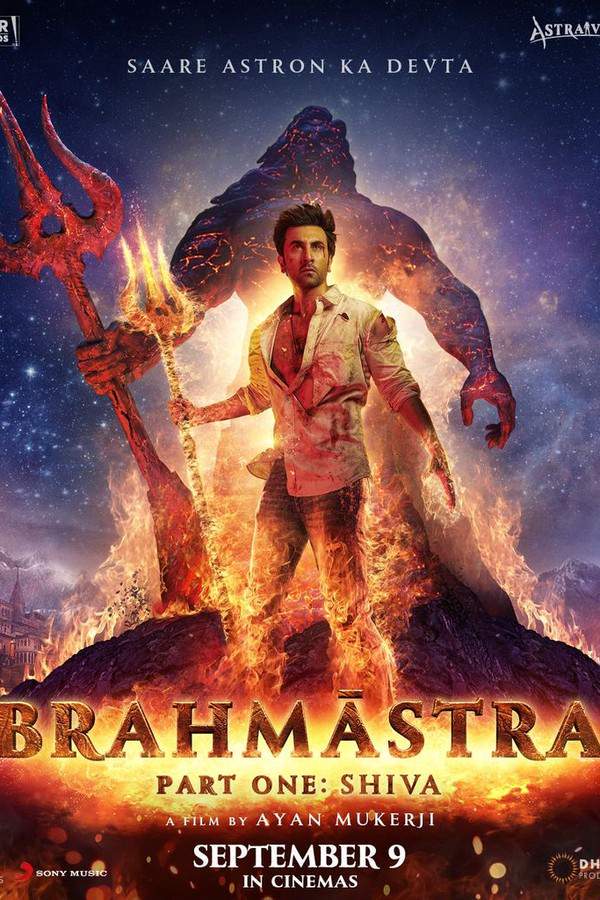
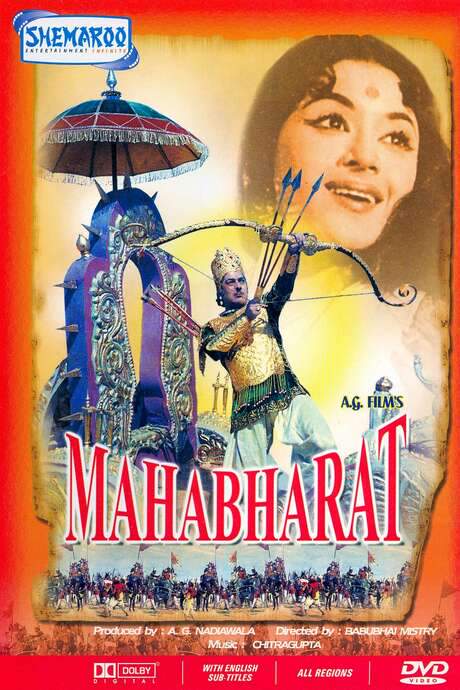
Uncover films that echo the narrative beats, emotional arcs, or dramatic twists of the one you're exploring. These recommendations are handpicked based on story depth, thematic resonance, and spoiler-worthy moments — perfect for fans who crave more of the same intrigue.








Featured on this page

What's After the Movie?
Not sure whether to stay after the credits? Find out!
Check out our other apps:

SAT Sphere
Build confidence for the Digital SAT.

Mori Atlas
Discover wild places worth protecting.

Luntero
Search smarter for a home in Amsterdam.

Plot Explained
Unravel movie endings and hidden clues.

Pokechamp
Dive into Pokémon data and battle logic.

Driving Theory
Get ready for your European theory test.

Movie Dust
Plan your next cinema trip with ease.

Musemap
Find art and culture as you travel.

Selkobase
Compare credentials before committing.

Local Manual
Turn an unfamiliar country into practical next steps.

Lernavi
Compare school systems before your next move.

GymRoam
Find a workout stop wherever your plans take you.
Explore Our Movie Platform
New Movie Releases (2026)
Famous Movie Actors
Top Film Production Studios
Movie Plot Summaries & Endings
Major Movie Awards & Winners
Best Concert Films & Music Documentaries
Movie Collections and Curated Lists
© 2026 What's After the Movie. All rights reserved.
Privacy Policy