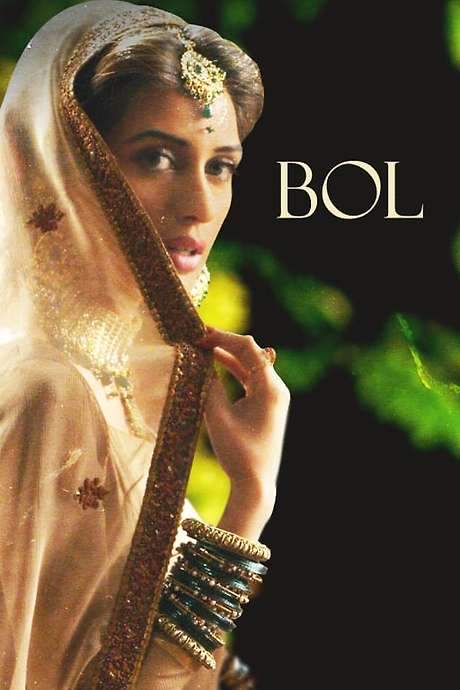
Bol 2011

Directed by

Shoaib Mansoor
Made by

Shoman Productions
Bol Plot Summary
Read the complete plot summary and ending explained for Bol (2011). From turning points to emotional moments, uncover what really happened and why it matters.
The film opens with a woman in jail, Zainab, about to be hanged. A man beside her urges her to speak up and tell her story, promising that it could change lives. At the president’s office, a form is signed to appeal the death sentence, and another form is approved to allow media to record Zainab’s story at the hanging site if the appeal is denied. The scene shifts to the moment before the execution, where her five sisters and mother gather for a final, emotional farewell as a crowd of reporters gathers to document the event. From the hang point, Zainab faces the cameras and begins to recount her life, a story that unfolds against a backdrop of family, faith, and power.
Her childhood begins in a household with a large, devoted family, where her father, Hakim, holds traditional beliefs about gender roles. The family includes a much-watched intersex child, Syed Saifullah Khan, or Saifi, who is deeply loved despite the father’s discomfort. Hakim’s stubborn stance about Saifi’s place in the family contrasts with how the rest of the clan cherishes the child. As Zainab grows up, she marries a man who harasses her for not bearing children, prompting her to return to her father’s home. Her mother endures miscarriages, and Zainab arranges tubal ligation to spare her parents further heartbreak. The escalating tension reveals a man of faith who also guards a complicity with money: Hakim runs a small pharmacy, supports the mosque’s needs, and becomes entangled in a web of moral compromises.
The plot thickens when Saqa Kanjar, a figure connected to a brothel, enters Hakim’s circle, and the mosque assigns him funds in trust. Saifi’s life becomes a flashpoint: Saifi is harassed at a truck-painting job, and a rape changes the course of many lives. An intersex ally helps Saifi, but Hakim’s reaction is to attempt to shield the family from scandal while also trying to protect his own future. When Hakim learns of Saifi’s truth, he commits a violent act—suffocating Saifi with a plastic bag—and then bribes a police officer to keep it quiet, dipping into masjid funds to cover the crime. The pressure mounts as the mosque demands repayment, pushing Hakim toward a desperate bargain.
Saqa Kanjar proposes another option: Hakim must marry and have a baby with Meena, Saqa’s oldest daughter. Saqa’s grim calculus—“the men decide the sex of the baby”—frames Hakim’s new choices. Hakim then agrees to marry Meena, while Hakim learns of Ayesha’s marriage arrangement to a different man arranged by Hakim’s own machinations at the masjid. Meena becomes pregnant, but the baby is a girl, which aligns with Saqa’s plans to keep the girl and secure Saqa’s lineage. Hakim pleads for the baby’s safety, but Saqa rebuffs him and casts him out.
Meena eventually returns with Hakim’s family to present the baby. When Hakim’s wife asks about the mysterious visitor, Hakim misleads her by claiming the baby belongs to his new marriage, and violence follows. The family’s instability pushes them to relocate, seeking a fresh start away from Hakim’s increasingly dangerous world.
Saqa’s influence continues as he arrives to claim Meena’s daughter, and Hakim lashes out, attempting to kill the infant to spare the child a grim future. In a confrontation that mirrors the film’s dark moral questions, Zainab strikes Hakim, killing him, and the two bury the baby’s fate deep in secrets. Zainab then tells Saqa that Hakim killed the baby and that she killed Hakim, a confession that seals her fate as she is caught in a cycle of truth-telling and punishment.
Back in the present, a determined reporter persists in trying to prove Zainab’s innocence, but the evidence remains elusive. The narrative returns to the question at the heart of the story: why is killing considered a sin, while bearing children under desperate and dangerous circumstances is treated as a non-sinful act when the family’s future is at stake? The president, moved by the public discourse, schedules a discussion on the same topic: jab khila nahi saktey tow paida kiyun karty ho.
In the aftermath, Zainab’s sisters channel their grief into resilience, opening a restaurant called Zainab’s Cafe. The venture becomes a beacon of hope and a means to support Meena’s daughter, the child Saqa’s world once threatened. The restaurant’s success marks a quiet triumph for a family that refused to be erased by tragedy. The final scenes follow Meena, now accompanied by a companion, entering the cafe and finding her daughter among the circle of women who have rebuilt their lives, a testament to endurance, sisterhood, and the possibility of renewal amidst enduring hardship.
jab khila nahi saktey tow paida kiyun karty ho
Why is only killing a sin? Why is giving birth without any family planning, not a sin?
- The ending emphasizes transformation over vengeance, turning tragedy into a shared space of community and new beginnings through Zainab’s Cafe and the family’s ongoing solidarity.
Bol Timeline
Follow the complete movie timeline of Bol (2011) with every major event in chronological order. Great for understanding complex plots and story progression.
Zainab awaits execution in jail
Zainab sits in jail awaiting a hanging, her fate hanging in the balance. A man urges her to speak up and tell her story because it could change lives. An assistant to the president brings forms for an appeal and for media coverage at the site.
Presidential approval for media coverage
The president signs the forms that allow media to record the hanging if the appeal is denied. This decision triggers media attention and the arrival of reporters to the site.
Family farewell before execution
Zainab's five sisters and mother visit, sharing tears and a final embrace before she is led away. The family looks on as guards escort her, while the press pushes for a sound bite.
Zainab addresses the press at the hanging site
At the hanging site, a cut-off time is announced as 4:00 AM, heightening the tension. Zainab steps to the microphones and begins to tell her story to the gathered press. Her testimony unfolds against the backdrop of the personal history she shares.
Zainab's family background
She describes growing up with six sisters, a mother, and a father who longs for a son to support the family. The family is loving toward Saifi, the intersex child, despite the father's prejudice.
Saifi's presence and Hakim's disapproval
Hakim's rigidity about gender roles and his distrust of Saifi set the tone for the father's tyranny. Saifi is deeply loved by the mother and siblings, but Hakim's hostility creates undercurrents of danger.
The pact with Saqa and the mosque funds
Hakim is drawn into Saqa's schemes when a broker offers him money to teach Quran to children. Saqa runs a brothel and pressures Hakim using mosque funds, creating a web of corruption.
Hakim marries Meena; Saqa's demand for a baby
Unable to earn money through teaching, Hakim agrees to Saqa's demand that he marry Meena and father a child. Meena is Saqa's oldest daughter and an established prostitute, which makes the arrangement morally complex.
Marriages, pregnancies, and Ayesha's marriage
Hakim's marriage to Meena continues; Meena bears a baby, a girl, reinforcing Saqa's plan. Hakim reacts with anger and possessiveness toward the new family, fueling conflict.
The baby is born; Hakim's violence escalates
Meena gives birth to a girl, a fact that pleases Saqa, who expects to keep the baby within the family. Hakim begs Meena to give him the baby to spare her a cruel fate, and when his pleas fail, he is expelled.
Hakim's attempt to kill the baby and Zainab's intervention
At night, Hakim tries to kill the baby to prevent a grim future. Zainab intervenes and kills Hakim in a fatal knock, then they conceal the infant.
Cover-up and confession
Zainab tells Saqa that Hakim killed the baby and that she killed Hakim in the ensuing confrontation. The confession leads to Zainab's death sentence during the ongoing trial.
Reporter hunts for innocence
A persistent reporter keeps probing for Zainab's innocence, but the evidence remains inconclusive. The media coverage intensifies as the execution date approaches.
The President's response
The president watches the ongoing coverage and schedules a meeting to discuss the case and the possibility of reconsideration. This moment hints at a potential shift in how the case is viewed by those in power.
Zainab's Cafe and final recognition
After the events, Zainab's sisters open Zainab's Cafe, a thriving business that symbolizes renewal. The family also raises Meena's daughter, and in the cafe Meena recognizes her daughter among the crowd, signifying reconciliation.
Bol Characters
Explore all characters from Bol (2011). Get detailed profiles with their roles, arcs, and key relationships explained.
Zainab
Zainab is the central storyteller and survivor who faces a death sentence rather than accept oppression. Through her final interview, she catalyzes a public reckoning with gendered violence and family duty. Her courage sustains her sisters and drives the family toward a more hopeful future. She embodies resilience, sacrifice, and the complexity of moral choices under extreme pressure.
Hakim Shafatullah
The devout, controlling father uses money, religion, and status to suppress dissent and enforce conformity. He orchestrates abuse, bribery, and murder, illustrating the violence of patriarchal authority. His actions trigger a chain of tragedies that drive Zainab to take drastic measures. In the end, his ambition collapses under the weight of truth and guilt.
Saifi (Syed Saifullah Khan)
Intersex child loved by the family, Saifi faces harassment, secrecy, and violence as gender norms collide with protection. Saifi's experiences become a catalyst for the central conflicts, including the murder and the quest for rights.
Saqa Kanjar
An antagonist who profits from exploitation, he manipulates Hakim and others, maintaining a web of crime and bribery. He embodies patriarchal corruption in the service of power and money.
Ayesha
Zainab's daughter who is married off, facing pressure around arranged marriages and family expectations. Her circumstances highlight the clash between autonomy and social duty within a conservative society.
Meena
Meena is Saqa's daughter who bears a baby and endures manipulation. Her journey centers on motherhood, survival, and the hope of a better future for her child.
Mustafa
A supportive neighbor who helps Saifi by securing him a job painting trucks, offering a glimpse of communal kindness amid oppression.
Surrayya Jehan
Zainab's mother, a protective matriarch who stands by her daughters and navigates the family through crisis, encouraging new beginnings.
Zafar Shah
A traditional male figure representing the old guard, his presence underscores the persistent social norms and power structures at play within the community.
Master Akhtar Hussain
An elder teacher who influences the younger generation, his position within the community highlights the tension between religious duty, education, and justice.
President
The state leader who can grant clemency but is ultimately part of a system that interacts with the storyline’s tragedy and public discourse.
President's Wife
Represents the domestic sphere and the social expectations placed on women within the corridors of power, often glimpsed but not central to the plot.
Bol Settings
Learn where and when Bol (2011) takes place. Explore the film’s settings, era, and how they shape the narrative.
Time period
Early 2010s
The events take place in contemporary Pakistan during the 2010s, when media coverage, political offices, and legal procedures shape social discourse. Public attention to the case and the use of the press to tell a personal story reflect the era’s interface between ritual justice and modern communication. The period’s tensions illuminate ongoing debates about gender, class, and power.
Location
Pakistan
Set in contemporary Pakistan, the film unfolds across public spaces—from a jail where a death sentence is carried out to a presidential office and a mosque-supported community. The country’s urban centers and institutions frame the clash between tradition, law, and media scrutiny. The setting reflects a society grappling with gender roles, religious authority, and public visibility.
Bol Themes
Discover the main themes in Bol (2011). Analyze the deeper meanings, emotional layers, and social commentary behind the film.
♀️
Patriarchy
Hakim's insistence on female obedience and his use of religion and money to control the family illustrate how patriarchal norms permeate everyday life. The story shows women bearing the consequences of male dominance and social expectations surrounding fertility and female labor. Zainab's fight to protect her daughters exposes the cost of challenging entrenched gender roles. The film questions whether authority can justify violence against women.
📰
Media and Story
Calling for the press to record her hanging turns Zainab's tale into a public act that exposes abuse and prompts dialogue about justice. Media coverage becomes a catalyst for accountability, revealing hidden wounds within the family and the legal system. The broadcast reframes a death sentence as a moral question for society to answer. The film uses journalism as a tool to spark social reflection and potential reform.
🌱
Family Resilience
Despite tragedy, the sisters unite and redefine their future. They establish Zainab's Cafe, creating economic stability and a space for healing, including support for Meena's daughter. The narrative emphasizes intergenerational bonds and communal care as a response to injustice. The family transforms its suffering into solidarity and entrepreneurship.
⚖️
Justice and Power
The story portrays a flawed justice system influenced by money, status, and political symbols. Bribery, cover‑ups, and institutional pressure reveal how power can distort accountability. The president's involvement hints at potential reforms while maintaining systemic tension. The conclusion suggests that collective action and memory can challenge corrupted structures.

Coming soon on iOS and Android
The Plot Explained Mobile App
From blockbusters to hidden gems — dive into movie stories anytime, anywhere. Save your favorites, discover plots faster, and never miss a twist again.
Sign up to be the first to know when we launch. Your email stays private — always.
Explore the mobile appBol Spoiler-Free Summary
Discover the spoiler-free summary of Bol (2011). Get a concise overview without any spoilers.
In a tightly woven Muslim household, tradition and faith dictate every breath, yet an unspoken tension lurks beneath the veneer of devotion. The family patriarch, Hakim, upholds rigid notions of gender and honor, while the rest of the clan quietly cherishes a child whose very existence challenges those same norms. The intersex sibling, Saifi, becomes both a beloved presence and a silent catalyst for the family’s deeper anxieties, prompting whispered debates about identity, belonging, and the weight of societal expectations.
Against this backdrop, Zainab—one of the five sisters—navigates a world that demands conformity while yearning for personal agency. Her marriage brings its own pressures, and the looming prospect of motherhood forces her to confront the family’s unspoken grief and the delicate balance between duty and desire. The household’s modest pharmacy and its close ties to the local mosque further intertwine economic survival with moral compromise, hinting at the subtle ways power and piety intersect in everyday life.
The film’s tone is intimate and unflinching, blending the quiet rituals of daily life with an undercurrent of looming conflict. It asks unsettling questions about the value of life, the cost of secrecy, and the paradoxes that arise when cultural codes clash with individual truths. Through hushed conversations, lingering glances, and the weight of unsaid words, the story builds a portrait of a family on the brink—torn between preserving its reputation and confronting the profound humanity of the child they struggle to accept. This tension sets the stage for a narrative that lingers long after the final frame, inviting viewers to contemplate the fragile balance between love, tradition, and the right to simply exist.
Featured on this page

What's After the Movie?
Not sure whether to stay after the credits? Find out!
Check out our other apps:

SAT Sphere
Build confidence for the Digital SAT.

Mori Atlas
Discover wild places worth protecting.

Luntero
Search smarter for a home in Amsterdam.

Plot Explained
Unravel movie endings and hidden clues.

Pokechamp
Dive into Pokémon data and battle logic.

Driving Theory
Get ready for your European theory test.

Movie Dust
Plan your next cinema trip with ease.

Musemap
Find art and culture as you travel.

Selkobase
Compare credentials before committing.

Local Manual
Turn an unfamiliar country into practical next steps.

Lernavi
Compare school systems before your next move.

GymRoam
Find a workout stop wherever your plans take you.
Explore Our Movie Platform
New Movie Releases (2026)
Famous Movie Actors
Top Film Production Studios
Movie Plot Summaries & Endings
Major Movie Awards & Winners
Best Concert Films & Music Documentaries
Movie Collections and Curated Lists
© 2026 What's After the Movie. All rights reserved.
Privacy Policy