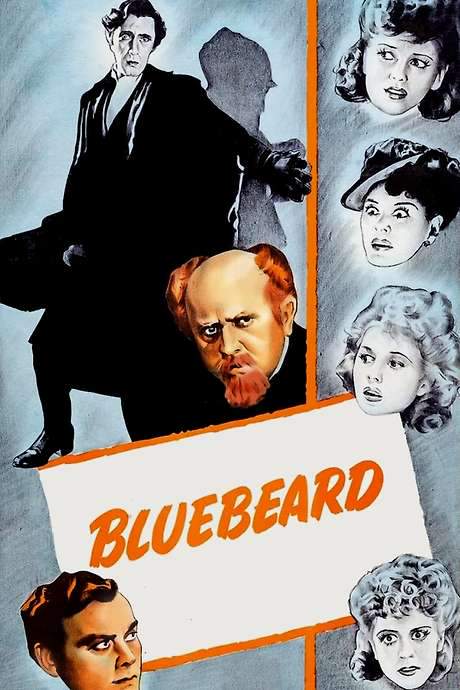
Bluebeard 1944


Directed by

Edgar G. Ulmer
Made by

PRC
Where to Watch Bluebeard
See current US streaming, rental, and purchase options for Bluebeard (1944) via JustWatch.

Amazon Prime Video
HD
Amazon Prime Video with Ads
HD
Artiflix
4K
Bloodstream
HD
Fandor Amazon Channel
SD
FlixFling
SD
fuboTV
HD
IndieFlix
HD
IndieFlix Shorts Amazon Channel
HD
MGM Plus
HD
MGM Plus Roku Premium Channel
HD
MGM+ Amazon Channel
SD
OVID
SD
Philo
HD
Troma NOW
4K
Fawesome
HD
Hoopla
SD
JustWatch TV
HD
Public Domain Movies
SD
Amazon Prime Video Free with Ads
SD
Cineverse
HD
Mometu
HD
Plex
HD
Plex Channel
HD
Pluto TV
SD
Tubi TV
SD
Amazon Video
SD Streaming availability powered by 
Bluebeard Plot Summary
Read the complete plot summary and ending explained for Bluebeard (1944). From turning points to emotional moments, uncover what really happened and why it matters.
All Paris is frightened by the murders attributed to “Bluebeard”. Modiste Lucille is introduced to Gaston Morrell, a puppeteer and painter, by a friend. They are drawn to each other, and she accepts a commission to design costumes for his puppets. Their budding connection adds a glimmer of warmth to a city on edge, and Lucille hopes art and affection might steer Morrell away from darker impulses.
At home, Morrell is confronted by a jealous Renee, who performs in Morrell’s puppet show and is his lover. When she wonders what became of the models who had posed for him, he strangles her and dumps her body in the Seine River. The shocking act marks the first deadly consequence of Morrell’s complex psyche, and Parisian whispers begin to circle around the painter who can conjure beauty on canvas and horror in life.
Art dealer Jean Lamarte is aware of Morrell’s homicidal tendencies, but keeps his secret as Morrell’s paintings fetch high prices. Yet, when he sells Morrell’s latest work to a Duke of Carineaux, he overestimates his own safety. The duke displays the collection, and a guard on duty recognizes the portrait as one of Bluebeard’s victims, pulling Lamarte deeper into a fatal game of greed and exposure.
Inspector Lefevre of the Sûreté calls in one of his best undercover agents, Francine, who happens to be Lucille’s sister. She and her “father” go to Lamarte to have her portrait done. Lamarte is on his guard, but her father is willing to pay a very large commission to find the man responsible for the duke’s painting, and Lamarte’s greed overcomes his caution. The plot thickens as the art world collides with law enforcement in a dance of deception and danger, drawing the siblings of Lucille closer to the truth.
Morrell has decided to give up painting (which triggers his murderous compulsion) out of love for Lucille, but Lamarte pressures him into one last picture to make him financially independent. However, [Francine] recognizes him, having met him briefly earlier at her sister’s apartment, and Morrell has no choice but to dispose of her. Certain that Francine and her father were working for the police, Lamarte tries to flee, but Morrell catches him and kills him too, before escaping. The only clue he leaves behind is the cravat he used to strangle Francine.
At Francine’s funeral, Inspector Lefevre shows Lucille the cravat. She knows it belongs to Morrell, as she had mended it for him. When she confronts Morrell, he tells her the story behind his crimes. As a starving art student, he had nursed back to health a woman who had fainted, fallen in love with her, and painted her portrait. She left without warning. When his painting was chosen to hang in the Louvre, he searched for her to tell the news, only to discover that she was a prostitute. Enraged by her contemptuous response, he strangled her. But ever since then, every model he painted turned into her in his mind, and he was compelled to kill her again and again. When Lucille tells him she is going to the authorities, he starts strangling her too, but the police break in. Lefevre saw that Lucille recognized the cravat and had her followed. After a rooftop chase across the city, Morrell falls to his death into the Seine.
Bluebeard Timeline
Follow the complete movie timeline of Bluebeard (1944) with every major event in chronological order. Great for understanding complex plots and story progression.
Public fear over Bluebeard murders
All Paris is terrified by a string of murders attributed to a killer known as Bluebeard. The city braces itself as fear and rumor spread about who will be next. Authorities struggle to identify a motive as the killings cast a pall over the capital.
Lucille meets Morrell and accepts a commission
Modiste Lucille is introduced to Gaston Morrell by a friend, and the two are quickly drawn to each other. She agrees to design costumes for his puppets, initiating a professional and romantic partnership. The collaboration marks the start of Morrell's dangerous preoccupation with women in his art.
Renee confronts Morrell and is killed
At home, Morrell's jealous lover Renee confronts him after suspecting his infidelity. In a fit of fury, he strangles her and disposes of the body in the Seine. The murder confirms Morrell's lethal turn and his control over his own life and art.
Art dealer Lamarte knows the truth but keeps it secret
Jean Lamarte, an art dealer, suspects Morrell's homicidal tendencies but keeps quiet to protect his profits. Morrell's unsettling paintings fetch high prices, which makes Lamarte complicit through neglectful silence. The dealer's greed threatens to unravel the killer's facade.
Duke's exhibition reveals a Bluebeard victim
Lamarte sells Morrell's last painting to a duke, hoping to secure a final payoff. When the duke exhibits the collection, a guard recognizes the portrait as one of Bluebeard's victims. The discovery brings law enforcement closer to Morrell's trail.
Lefevre enlists Francine to investigate
Inspector Lefevre calls in Francine, an undercover agent who is Lucille's sister, to probe Morrell's crimes. Francine and her 'father' visit Lamarte to have her portrait done, signaling the start of a dangerous game. The plan is to flush Morrell out through art and identification.
Morrell is pressured into one last painting
Morrell contemplates quitting painting out of love for Lucille, but Lamarte pressures him into producing one final work. The promise of financial freedom and reputational payoff drives him forward despite his misgivings. The painting becomes the spark that may seal his fate.
Francine recognizes Morrell
Francine recognizes Morrell, having met him briefly at her sister's apartment, and Morrell realizes he cannot risk exposure. He decides to eliminate Francine to protect his secret. The confrontation hastens the killer's crossing from art to murder.
Morrell eliminates Francine and Lamarte
After realizing the sister is connected to the police, Morrell eliminates Francine to silence the women who could expose him. Lamarte attempts to flee, but Morrell catches him and kills him as well. He leaves behind the cravat used to strangle Francine, a clue that will surface later.
Funeral reveals the cravat clue
At Francine's funeral, Inspector Lefevre shows Lucille the cravat Morrell used to strangle Francine. Lucille recognizes it as the one she had mended for him, confirming her suspicion of his guilt. The evidence tightens the case against Morrell.
Morrell reveals his motive and mind-set
Morrell recounts his past: as a starving art student he nursed a woman back to health who later vanished, and he painted her portrait. When his painting is chosen for the Louvre, he searches for her only to learn she was a prostitute, which enrages him and leads to her strangulation. Since then, every model he paints becomes that memory and drives him to kill again and again.
Lucille decides to go to the authorities; confrontation escalates
Lucille declares she will report the crimes to the authorities. Morrell begins strangling her as she resists, and the police break in just in time to intervene. Lefevre's earlier suspicions of the cravat help coordinate the intervention.
Final rooftop pursuit and Morrell's death
Lefevre had Lucille followed after she recognized the cravat, leading to a rooftop chase across Paris. Morrell loses his grip and falls into the Seine, dying as the authorities close in. Lucille survives to tell the tale as the Bluebeard killings come to an end.
Bluebeard Characters
Explore all characters from Bluebeard (1944). Get detailed profiles with their roles, arcs, and key relationships explained.
Gaston Morrell (John Carradine)
A puppeteer and painter whose charm masks a homicidal compulsion. His artistic success masks a growing fixation on the women he paints, transforming them into his lost muse. He strangles Renee, then continues to kill whenever a new model awakens the same image in his mind. His final act is a desperate attempt to escape, ending with a plunge into the Seine.
Lucille (Jean Parker)
A modiste drawn to Morrell by a mix of attraction and opportunity. She designs costumes for his puppets and becomes entangled in his crime spiral. She confronts the danger Morrell represents, and ultimately faces the truth about his murders. Her resolve to cooperate with authorities marks a turning point in the pursuit of justice.
Francine (Teala Loring)
Inspector Lefevre’s undercover agent and Lucille’s sister. She enters Morrell’s world to gather evidence and breaks ties with danger, recognizing the killer on sight. Her pursuit ends tragically when Morrell murders her, leaving a crucial clue behind—the cravat.
Jean Lamarte (Ludwig Stössel)
A shrewd art dealer who knows Morrell’s crimes but remains complicit through the profits of Morrell’s paintings. He pressures Morrell into producing one last work for financial independence and tries to flee when danger closes in. Morrell eliminates him, removing a key witness and purchaser from the equation.
Inspector Lefevre (Nils Asther)
A seasoned Sûreté inspector who coordinates the pursuit of the Bluebeard killer. He uses Francine to infiltrate the art world and pursue Morrell, guiding the investigation toward the murderer. He reveals the critical link between the cravat and Morrell at Francine’s funeral, sealing the case.
Renee (Sonia Sorel)
Morrell’s jealous lover who performs in his puppet show and fears abandonment. She is one of his earliest victims, her disappearance a catalyst for the wave of killings. Her relationships with Morrell help illuminate the killer’s volatile temperament.
The Duke of Carineaux (George Irving)
A duke who buys Morrell’s latest painting, unknowingly linking Morrell’s success to a wider circle of aristocratic ones. His recognition of the painting propels the police to connect Morrell’s art with the murders. He embodies the social elite’s taste that sustains Morrell’s facade of genius.
Bluebeard Settings
Learn where and when Bluebeard (1944) takes place. Explore the film’s settings, era, and how they shape the narrative.
Location
Paris, France, Seine River, Louvre Museum
Paris is the noir backdrop for the murders attributed to Bluebeard, reflecting a city of high fashion, art markets, and tight-lipped secrecy. The Seine serves as a grim disposal site for Morrell’s victims, anchoring the killer’s brutality to a famous river. The Louvre becomes a public stage for Morrell’s fame, linking his artistic success to the dark acts behind the scenes. The city’s grandeur and shadowy corners drive the tension between creator and crime.
Bluebeard Themes
Discover the main themes in Bluebeard (1944). Analyze the deeper meanings, emotional layers, and social commentary behind the film.
🎨
Art Obsession
Morrell’s fixation on an imagined muse drives him to murder, turning painting into a ritual of control and denial. Each completed work replays the lost lover in his mind, blurring lines between art and life. The pursuit of beauty becomes a dangerous compulsion that eclipses morality.
🕵️
Investigation
The Sûreté orchestrates an undercover pursuit, with Francine infiltrating Morrell’s circle to uncover the truth. Clues like the cravat tie Morrell’s past to the crimes, gradually tightening the net. The process of discovery foregrounds justice as a patient, methodical effort.
💔
Jealousy & Power
Renee’s possession as Morrell’s lover and rival exposes the film’s jealousy-driven tension. Lucille’s defiance and mounting danger highlight how love and ambition fuel a deadly chain of events. The exploitative dynamics of art, sex, and status propel Morrell toward ever more violent acts.

Coming soon on iOS and Android
The Plot Explained Mobile App
From blockbusters to hidden gems — dive into movie stories anytime, anywhere. Save your favorites, discover plots faster, and never miss a twist again.
Sign up to be the first to know when we launch. Your email stays private — always.
Explore the mobile appBluebeard Spoiler-Free Summary
Discover the spoiler-free summary of Bluebeard (1944). Get a concise overview without any spoilers.
Paris shivers under a pall of dread, its elegant boulevards haunted by whispered rumors of a lethal presence known only as “Bluebeard.” The city’s glittering fashion world – a parade of young models, lavish gowns, and glittering soirées – has become the backdrop for an unsettling wave that threatens to turn beauty into terror. Amid the gaslit streets and smoky cafés, a fragile tension hangs in the air, as art and danger mingle like perfume and smoke.
Lucille, a talented modiste, is drawn into this uneasy climate when a mutual friend introduces her to Gaston Morrell, a charismatic puppeteer and painter whose work seems to capture both the fragility and the fever of the times. Their collaboration on a series of puppet costumes sparks a tentative romance, offering a brief sanctuary of creativity and affection against the looming menace that grips the capital. As their artistic partnership deepens, the pair find themselves navigating the fine line between inspiration and obsession, each seeking solace in the other’s world.
Around them, the circles of influence thicken. Renee, a performer entwined in Morrell’s shows, adds a note of jealousy and intrigue, while Jean Lamarte, a shrewd art dealer, eyes the lucrative market that Morrell’s striking paintings command. Concurrently, Inspector Lefevre of the Sûreté assembles an undercover team, dispatching his sister Francine to infiltrate the glittering art scene under the guise of a portrait commission. Their covert presence weaves law‑enforcement into the tapestry of high society, hinting at a collision between the pursuit of justice and the seductive allure of the artistic elite.
Against this richly rendered tableau of 1920s Paris – a city of light, shadows, and whispered secrets – the story balances seductive romance with an undercurrent of menace. The characters, bound by ambition, desire, and fear, move through a world where every brushstroke and stitched seam may conceal a darker truth, inviting the audience to wonder whether love can truly survive amid a city haunted by its own beauty.
Movies with Similar Twists and Themes
Uncover films that echo the narrative beats, emotional arcs, or dramatic twists of the one you're exploring. These recommendations are handpicked based on story depth, thematic resonance, and spoiler-worthy moments — perfect for fans who crave more of the same intrigue.




Featured on this page

What's After the Movie?
Not sure whether to stay after the credits? Find out!
Check out our other apps:

SAT Sphere
Build confidence for the Digital SAT.

Mori Atlas
Discover wild places worth protecting.

Luntero
Search smarter for a home in Amsterdam.

Plot Explained
Unravel movie endings and hidden clues.

Pokechamp
Dive into Pokémon data and battle logic.

Driving Theory
Get ready for your European theory test.

Movie Dust
Plan your next cinema trip with ease.

Musemap
Find art and culture as you travel.

Selkobase
Compare credentials before committing.

Local Manual
Turn an unfamiliar country into practical next steps.

Lernavi
Compare school systems before your next move.

GymRoam
Find a workout stop wherever your plans take you.
Explore Our Movie Platform
New Movie Releases (2026)
Famous Movie Actors
Top Film Production Studios
Movie Plot Summaries & Endings
Major Movie Awards & Winners
Best Concert Films & Music Documentaries
Movie Collections and Curated Lists
© 2026 What's After the Movie. All rights reserved.
Privacy Policy