What Is Black Cop About?
The premise of Black Cop in 242 words, with nothing given away. The full story follows below.
In a bustling city that feels both familiar and hostile, a Black police officer walks a tightrope between duty and personal history. Ronnie carries the weight of his father’s cautionary words and the lingering sting of childhood slurs, a reminder that his uniform can be both shield and target. The streets pulse with a mix of everyday life and underlying tension, where every interaction carries the risk of misunderstanding, and the very badge he wears amplifies the divide between his identity and the community he serves.
The film’s tone is gritty and introspective, blending raw realism with moments of uneasy quiet that let Ronnie’s inner thoughts surface. Through subtle imagery and recurring visual motifs, the story hints at the psychological strain of being caught between two worlds—one that expects fairness and another that watches his every move through a lens of suspicion. The atmosphere is charged with a simmering frustration that never fully erupts, leaving the audience to feel the pressure building beneath the surface.
Surrounding Ronnie are colleagues who recognize the shift in his demeanor, a silent acknowledgment that something is amiss. Their presence adds layers of tension and camaraderie, suggesting that the department itself is a microcosm of the larger social fractures at play. As the narrative unfolds, the film invites viewers to contemplate the fine line between justice and vengeance, drawing them into a world where the protagonist’s struggle is both personal and emblematic of a broader, unresolved conflict.
What Happens in Black Cop?
The complete story of Black Cop, from the first scene to the last, in 905 words (about 4 minutes). Spoilers throughout. Names in the text link to 18 cast member pages.
Spoilers ahead
The film opens with a quiet, reflective monologue spoken by Ronnie Rowe, a Black Canadian cop who recalls his childhood and the way insults still echo in his life as an officer. A little boy once taunted him with a candy‑bar name, and when words failed to stop the hurt, the young Ronnie struck back with a textbook raised like a shield. The narration dwells on how his race isolates him within the badge, a tension sharpened by a father’s warning—his father, Bob Mann, who died before Ronnie earned his badge, told him that if he’s ever stopped by the police he should put his hands up and freeze, a lesson Ronnie admits he never truly followed. This opening thread threads through the rest of the film, setting up a conscience that never fully quiets.
In the present day, Ronnie goes for a jog with his earphones in, and a white officer tries to stop him over a burglary report in the neighborhood. Because the earphones muffle the commands, he fails to hear the order and does not comply, which escalates into aggression on the part of the officer. The encounter ends with Ronnie briefly restrained but released once the other officer discovers he’s a cop. The incident leaves him rattled and increasingly strained at work, and it sparks a disturbing new vision: an imaginary Black boy named Kyle emerges, a haunting reminder of violence tied to police encounters.
One day, Ronnie overhears a police radio broadcast about two Black youths to be arrested on unfamiliar grounds of suspicion. In a decisive, reckless moment, he switches off his GPS and speeds to the scene, where he confronts the situation with abrupt force: he incapacitates the other officer, strips him of the uniform, cuffing him, and dumps him into a dumpster. The act marks a turning point, signaling the extent of his loss of restraint and blurring the line between protection and punishment.
Just a friendly game of Baseball
From here, the story shifts into the second act, where Ronnie’s power trip expands and his behavior becomes increasingly abusive. He targets white civilians with harassment and violence, and the film intercuts with interview‑style monologues in which he frames himself as a victim of racism, stubbornly denying that he has become part of the problem. Within the police department, reports of civilian harassment begin to circulate, and detectives and colleagues search for a rogue cop behind the incidents. The tension tightens as a rookie officer, played by Sophia Walker, known in the narrative as Rookie Cop, starts noticing the pattern. She sees him near the sites of harassment and begins to connect the dots, casting suspicion on Ronnie’s recent erratic behavior and his unexplained departures from crime scenes. The crowd and the city around him become a stage for a broader struggle, with movement figures contributing to the atmosphere: the crowd’s energy is shaped by voices like the Rally Leader Koumbie, the Student Taylor Olson, and the figure of Hoodie Simon Mutabazi, while the Demonstrator Kirsten Olivia Taylor and the ethereal presence of The Host, voiced by Lanette Ware, weave in surreal textures to Ronnie’s escalating inner crisis. The cast expands the human tapestry of the story, including the Driver Ambyr Dunn and other roles that populate the protests and confrontations.
Zombie no go Stop
The final act intensifies as Ronnie’s mental strain fractures his sense of self. He begins talking aloud to an imagined self while alone in his car, and the tension peaks when the Rookie Cop confronts him about the bodycam incident and his attempt to erase evidence from the earlier assault. In a gripping turn, Ronnie defends his actions by clinging to a moral justification, but the pressure proves unsustainable. He ultimately resigns from the police force, giving up his badge, and leaves his patrol car behind as he steps out of the traditional role of law enforcement. The narrative then follows his pivot toward a Black rights movement, marking a vow to reframe his life and channel his energy into a different kind of advocacy, even as the memories of Kyle and the earlier incidents continue to haunt him. The film’s final moments linger on the tension between justice, accountability, and the lure of collective action, leaving the audience to ponder how far a person can drift from their convictions before choosing a new path.
The film’s texture is enhanced by a supporting tableau of characters from the cast, including the White Cop Sebastien Labelle, the Running Man Christian Murray, the Pissed Dad Bob Mann, and the Hard Cop Jeff Schwager, whose brief appearances anchor the world in tangible, lived-in detail. The Driver Ambyr Dunn and the Blipster Emmanuel John populate the more grounded scenes, while the Passenger Matthew McIntyre and the Customer Ira Henderson offer small, human beats that remind us life goes on beyond the central conflict. The film’s ensemble is completed by the Resisting Youth Nathan D. Simmons, the Quiet Youth Devon Taylor, and the Poet Andre Fenton, each adding depth to the movement’s mosaic and the everyday echoes of a city under strain.
Overall, the story tracks a man’s descent and a community’s response, balancing intimate psychological pressure with collective protest. It asks tough questions about power, accountability, and what it means to belong to a city that is at once yours and not yours, offering a stark, thought-provoking meditation on race, policing, and the possibility of redemption.
Black Cop Timeline: Every Key Event in Order
12 key events in the order they happen, from “Childhood insult and the warning he ignored” to “He quits the badge and joins the movement”. 9 events name a place, across 9 locations.
- 1
Childhood insult and the warning he ignored
As a child, Ronnie is called a demeaning nickname related to a candy bar. He retaliates by striking the boy with his textbook, a moment that foreshadows his later use of force. His father tells him that if stopped by the police, he should put his hands up and freeze, advice Ronnie admits he never truly followed.
When:childhood
- 2
The present-day memory of parental warning
In the present, Ronnie reflects on his father's warning and his sense of alienation as a Black police officer. He recalls how being stopped or questioned as a cop still makes him feel vulnerable and suspicious. This internal conflict sets up his later counterproductive reactions.
When:present
- 3
Detained at a burglary call due to earphones
While jogging, Ronnie is stopped by a white officer who suspects a burglary. Because Ronnie can't hear him, the officer becomes aggressive and detains him briefly. Once the officer discovers Ronnie is a fellow cop, he releases him, but the incident leaves Ronnie stressed and on edge.
When:present Where:Neighborhood street
- 4
Kyle, the imaginary boy, appears
After the stoppage, Ronnie begins seeing an imaginary Black boy named Kyle who was recently shot in a police incident. The haunting sight unsettles him and blurs the line between reality and memory. Kyle's presence foreshadows Ronnie's deteriorating grip on reality.
Where:In Ronnie's mind
- 5
Confronting another cop’s plan to arrest two kids
Ronnie overhears a plan to arrest two Black kids on the street without evidence. He disables his GPS, races to the scene, knocks the other officer unconscious, and dumps him in a dumpster while stripping the uniform and cuffing him. This act marks a dramatic escalation of his vigilante behavior.
When:present Where:City street
- 6
The friendly game of baseball becomes a motif
The department dubs the events a 'friendly game of Baseball' as a metaphor for the harassment. Ronnie begins abusing and beating white civilians, signaling a dangerous shift from cop to aggressor. Public reports begin to surface, suggesting a pattern rather than isolated incidents.
When:Part 2 Where:City
- 7
Monologues reveal his perceived victimhood
Interviews and monologues show Ronnie presenting himself as a victim of racism, insisting he has not contributed to the problem. He frames his violence as a consequence of systemic bias against him. The internal narrative clashes with the reality of his actions.
When:Part 2
- 8
Department suspects an impersonator
With multiple civilian harassment incidents, police suspect someone dressed as a cop is behind the attacks. Investigators try to identify and stop the figure, unaware it is Ronnie. The tension builds as the team narrows down the suspect list.
When:Part 2 Where:Police department
- 9
The Black female colleague suspects Ronnie
A Black female fellow officer notices Ronnie's changed behavior and sees him leaving the area of one harassment incident. Her suspicions grow as she connects the pattern to his presence. She becomes a key ally in uncovering his actions.
When:Part 2 Where:City/precinct
- 10
Ronnie's mental decline: talks to his own image
Ronnie's mental state worsens; he begins talking to an imagined self in his car. This internal dialogue marks a clear break from reality as guilt and paranoia take hold. The scene heightens the sense of an impending crisis.
When:Between Part 2 and Part 3 Where:In his car
- 11
The bodycam is almost destroyed
The Black female officer catches Ronnie trying to destroy the bodycam of the cop he knocked out in Part 1. The attempt is thwarted or noticed, exposing his deranged actions. He tries to mount a moral defense for his behavior.
When:Part 3 Where:Police site
- 12
He quits the badge and joins the movement
Ronnie shuns the badge, giving up his police car and resigns. He then joins a Black rights movement, choosing collective action over individual authority. The end positions him as a participant in social struggle rather than law enforcement.
When:End of Part 3 Where:City streets; movement
Who Are the Main Characters in Black Cop?
2 characters, among them Black Cop (Ronnie Rowe Jr.) and Rookie Cop (Sophia Walker): who each one is and the part they play in the story. Every profile links to the actor’s page.
-
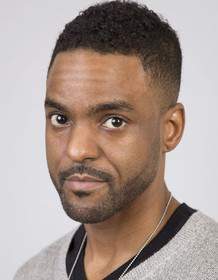
Black Cop (Ronnie Rowe Jr.)
Played by Ronnie Rowe
Ronnie is a Black Canadian police officer who navigates racial alienation and personal trauma. His stress from a discriminatory encounter triggers a descent into abusive behavior, including detaining and assaulting civilians. Imaginary encounters with Kyle reveal the psychological toll of policing and racial trauma.
- 👮 Cop
- 🖤 Race
- 🔥 Power
- RC
Rookie Cop (Sophia Walker)
Played by Sophia Walker
A Black female officer who suspects Ronnie's escalating harassment and changes in behavior. She represents accountability within the police, investigating the incidents and pressuring the department to confront the suspect.
- 👮 Cop
- 🕵️♀️ Investigation
- 💡 Accountability
Where and When Is Black Cop Set?
Black Cop is set in Canada and Urban City (Present day). Here is why the time and place matter to the story.
When
Present day
The film unfolds in the present day, placing its drama in a contemporary urban setting. It uses current police procedures, radios, bodycams, and street encounters to ground the story in real-world policing debates.
Where
Canada, Urban City
Set in urban Canada, the story unfolds across streets, patrol routes and police precincts. The city serves as a backdrop to tense interactions between officers and civilians, highlighting racial dynamics and systemic pressures. The environment emphasizes a contemporary policing climate rather than a rural setting.
- 🏙️ Urban setting
- 🇨🇦 Canadian backdrop
- 👮 Police environment
What Are the Themes of Black Cop?
3 ideas the story keeps returning to, among them Racism, Power and Corruption and Mental Struggle.
-
01
Racism
The film centers on race as a structuring force in both personal and professional life. Ronnie's experiences with prejudice from childhood meet modern-day policing challenges, shaping his responses. The narrative shows how race can color perceptions, treatment, and the use of power, blurring the lines between victim and aggressor.
-
02
Power and Corruption
Ronnie's urge to control and punish others grows as he feels alienated by the system. He abuses authority, detaining civilians and beating white pedestrians, creating a moral collapse. The investigation by colleagues and his eventual decision to abandon the badge highlight the consequences of unchecked power. The film probes whether power corrupts or simply reveals inner truths under stress.
-
03
Mental Struggle
Ronnie's mental strain intensifies as he interacts with an imagined Kyle and voices in his head. The stress surfaces in his car conversations and erratic decisions, signaling a break from reality. The film uses these moments to explore guilt, paranoia, and the moral cost of his actions. Ultimately, he relinquishes his badge and seeks a path with a black rights movement.
What Kind of Film Is Black Cop?
Tense in tone, with steady pacing and a moderate story, going by the plot summary.
- Tone
- Tense
- Pacing
- Steady
- Story
- Moderate
- Intensity
- High
- Ending
- Ambiguous
A tense and psychologically oppressive drama that follows a Black officer's emotional breakdown and descent into vigilantism, creating a stressful and morally ambiguous viewing experience.
- tense
- angry
- oppressive
- unsettling
- frustrated
- thought-provoking
- racial profiling
- police brutality
- systemic racism
- identity crisis
Content notes: police brutality, racial harassment, psychological distress.
Quiz
How well do you remember Black Cop? Test yourself on the story.