
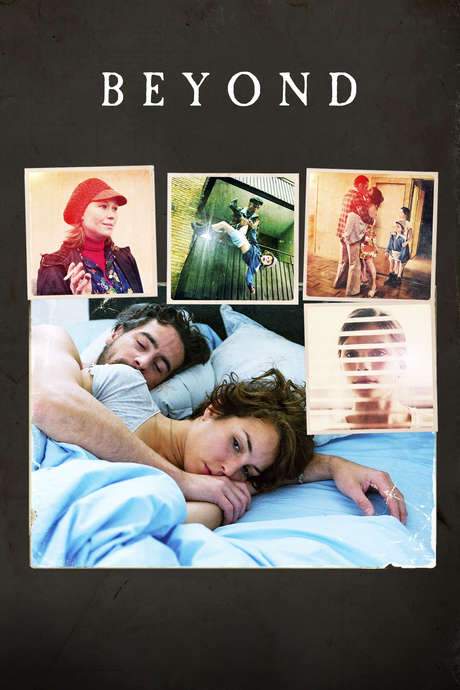
What Is Beyond About?
The premise of Beyond in 278 words, with nothing given away. The full story follows below.
On Saint Lucia’s day, the peaceful rhythms of a young Swedish family are suddenly interrupted. Leena, who has built a warm and contented life with her husband Johan and their two young daughters, receives an unexpected call from a hospital in her childhood hometown. Her estranged mother is dying and wishes to say goodbye — a request that threatens to undo the careful distance Leena has maintained for years. The news draws her back to a place and a past she has fought hard to forget.
The six-hundred-kilometer journey to Ystad becomes far more than a physical trip; it is a descent into memories that Leena has long suppressed. As the child of Finnish immigrants, she grew up in a home where love and hardship coexisted uneasily, and where circumstances eventually left wounds that never fully healed. Returning now, as an adult and a mother herself, stirs emotions she can barely articulate — and struggles even more to contain.
Though Johan offers steadfast support, he cannot fully grasp the depth of what his wife carries. Their young daughters, unaware of the shadows trailing their mother, accompany them into a world they have never known. As Leena prepares to face the woman who shaped — and scarred — her earliest years, she must navigate the impossible tension between protecting her own family and finally confronting the one she came from.
This is a film about the legacies we inherit and the silences we maintain in the name of survival. It explores the fragile terrain between memory and truth, asking what it means to heal when the people who wounded us are the same ones we must one day face.
What Happens in Beyond?
The complete story of Beyond, from the first scene to the last, in 400 words (about 2 minutes). Spoilers throughout. Names in the text link to 3 cast member pages.
Spoilers ahead
On Saint Lucia’s Day, the cheerful rhythm of a young Swedish family’s life is disrupted by a phone call that changes everything. Leena learns that her mother, with whom she has been estranged for years, is dying and longs to bid farewell. Johan struggles to grasp the depth of his wife’s distress, yet he musters the resolve to urge her to take their two little girls and drive to the grandmother who lies hospitalized hundreds of kilometers away.
The drive back toward Ystad becomes a quiet pilgrimage through memory. The bustling sense of a future home gives way to recollections of a childhood shadowed by pain. The parents, Finnish immigrants, are painted as a tight-knit, hard‑working pair who slowly lose that cohesion as alcohol begins to fracture the family. The weight of those years rests most heavily on Sakari, Leena’s younger brother, whose fate is revealed in a final, devastating dialogue between Leena and their mother. He was taken from the family by social services and placed in an orphanage, and years later he died from an overdose. Leena has carried this guilt for a long time, haunted by the sense that she could have done more to protect him and by a lingering anger toward her parents for losing a child to the system of care and circumstance.
Back from the hospital, the tension within the car and within Leena’s heart finds its way into the family dynamic. The couple’s long‑held wounds begin to surface in a burst of irrational fury: she lashes out at their daughters and then turns on her husband, a volatile eruption that echoes the violence she witnessed during her own childhood. This moment, fraught with pain, marks a brutal recognition of the cycles that have shaped her life and the family she hoped to protect.
Yet the story circles toward a cathartic turning point. In the wake of this crisis, Leena experiences a powerful release, shedding a weight she has carried for years. She melts into a liberating cry, a moment of raw honesty that allows her to re‑center herself. In that breath of renewed clarity, she reaches for connection with the people she loves most: her patient and understanding husband and her beloved daughters. The scene closes on a note of renewed tenderness and fragile hope, as the family moves toward healing together, each member navigating the delicate balance between memory and forgiveness.
Beyond Timeline: Every Key Event in Order
12 key events in the order they happen, from “Phone call on Saint Lucia's day disrupts family life” to “Catharsis: liberation and embrace”. 12 events name a place, across 10 locations.
- 1
Phone call on Saint Lucia's day disrupts family life
Leena receives an unexpected phone call that her mother is dying and wants to say goodbye. The news unsettles the quiet happiness of the Swedish family. Johan and Leena exchange worried glances as the atmosphere tightens with fear and uncertainty.
When:Saint Lucia's day Where:Leena's home
- 2
Decision to travel to the hospital
Despite initial resistance, Johan convinces Leena to leave with their two daughters to reach the grandmother who is hospitalized 600 km away. The plan is driven by a need to say goodbye and to confront the looming loss. The family begins a tense journey that blends hope with anxiety.
When:Shortly after the call Where:Home and road
- 3
Road trip to the hospital
The drive unfolds with silences and small talks about fate, health, and the fragility of life. The girls ask questions, while Leena and Johan try to hold onto a fragile thread of optimism. The distance becomes a mirror for their uncertain emotional landscape.
Where:On the road
- 4
Return toward Ystad and the memory flood
After a tense stop at the hospital, the family begins the long return to Ystad. On the way, Leena's thoughts drift, and a stream of painful memories from her childhood starts to surface. The present journey is suddenly inseparable from the past.
Where:On the road back to Ystad
- 5
Return to Ystad sparks painful memories
Back in Ystad, Leena is overwhelmed by memories of a childhood marked by poverty and instability. The echo of past hurts sharpens her awareness of her current fragilities. She begins to see how the present is inseparable from the old wounds.
Where:Ystad
- 6
Childhood: immigrant parents and alcohol
She recalls her Finnish immigrant parents who were loving but consumed by alcohol. The memory highlights a resilience she carried as a child amid chaos. The scene foreshadows how past violence and care mingle in her adult life.
When:Past Where:Childhood home
- 7
Sakari is taken away by social services
In the recollection, Sakari is removed from the family by social services and placed in an orphanage. The separation becomes a defining wound that haunts Leena for years. It marks the moment when family stability begins to fracture.
When:Past Where:Family home
- 8
Sakari's death years later
Sakari dies years later from an overdose, forgotten by the world. Leena carries the remorse of not doing enough to help her brother and shielding him from harm. The tragedy deepens the guilt that shapes her relationships long after.
When:Years after childhood Where:Orphanage/Unknown
- 9
Remorse and lack of forgiveness
Leena wrestles with forgiveness toward her parents for losing Sakari and failing to protect him. The weight of guilt becomes a undercurrent in her attempts to build a stable family life. The past continues to press into her present decisions.
When:Memory Where:Memory
- 10
Leena's outburst against her daughters
Back from the hospital trip, Leena lashes out at her two daughters in an irrational burst. The moment exposes the accumulation of tension and unresolved pain from her childhood. It signals a crisis point for the family dynamics.
When:Return from hospital Where:Home
- 11
Outburst towards Johan and the turning point
In a sudden, intense moment, Leena also yells at Johan, venting years of restraint and hurt. The violence of the moment mirrors the patterns she witnessed in her youth. It becomes a crucial turning point toward catharsis.
When:Immediate after the daughters' outburst Where:Home
- 12
Catharsis: liberation and embrace
The emotional storm culminates as Leena experiences a liberating cry that marks an end to her long suppression. She finds a way to return to herself and embraces Johan and her daughters. The family discovers a fragile but renewed sense of connection through a painful but necessary catharsis.
When:After the outbursts Where:Home
Who Are the Main Characters in Beyond?
5 characters, among them Leena (Noomi Rapace), Johan (Ola Rapace) and Sakari Moilanen (Junior Blad): who each one is and the part they play in the story. Every profile links to the actor’s page.
-

Leena (Noomi Rapace)
Played by Noomi Rapace
A strong, mature woman haunted by a painful childhood and the guilt of not protecting her brother. Her life is defined by resilience despite past violence and neglect that shaped her sense of self. The hospital trip becomes a flashpoint that forces her to confront long-buried memories and the consequences of her family's trauma.
- 💔 Trauma
- 🧭 Memory
- 👪 Family
- J(
Johan (Ola Rapace)
Played by Ola Rapace
Leena's husband, patient and supportive, who tries to understand his wife's turmoil. He acts as a stabilizing force during the crisis and a bridge to heal the family. He respects the daughters and strives to keep the family together amid painful revelations.
- 💖 Support
- 🎭 Drama
- 🏡 Family
- SM
Sakari Moilanen (Junior Blad)
Played by Junior Blad
Leena's younger brother, taken from the family by social services; he dies in an orphanage from an overdose. His memory haunts Leena and fuels her determination to protect her daughters and seek answers about what happened to him.
- 💔 Tragedy
- 🧠 Trauma
- 🌫️ Loss
- AM
Aili Moilanen (Outi Mäenpää)
Played by Outi Mäenpää
Leena and Sakari's mother, an immigrant from Finland whose struggles with alcohol and volatile behavior contribute to the family’s cycle of violence. Her fragility and eventual death become a pivotal, defining moment in Leena's emotional history.
- 🌀 Addiction
- 👪 Family
- 🕯️ Regret
- L-
Leena - as Child (Tehilla Blad)
Played by Tehilla Blad
The childhood version of Leena appears in memories that reveal her strength even in adversity. This period shows the seeds of resilience formed in the crucible of family turbulence and violence, shaping her adult reactions.
- 🧒 Childhood
- 🕯️ Memory
- 🌱 Resilience
Where and When Is Beyond Set?
Beyond is set in Ystad and Sweden (Present day). Here is why the time and place matter to the story.
When
Present day
Set in present-day Sweden, the narrative unfolds around a family crisis triggered by a Saint Lucia's Day phone call. It highlights contemporary social realities such as immigrant family dynamics, alcohol-related violence, and the lasting impact of childhood trauma. The time frame emphasizes personal memory and healing rather than historical events.
Where
Ystad, Sweden
In the film, Ystad serves as the intimate backdrop where Leena's memories resurface. The coastal town's quiet atmosphere contrasts with the intense family drama playing out within its surroundings. The return to Ystad after a hospital visit becomes a catalyst for confronting a painful childhood and immigrant family history.
- 🏡 Small-town Sweden
- 🕯️ Family secrets
- 🌧️ Emotional storms
- 🧭 Memory and guilt
What Are the Themes of Beyond?
3 ideas the story keeps returning to, among them Trauma, Memory and Family.
-
01
Trauma
Beyond centers on intergenerational trauma rooted in poverty, immigrant family tensions, and alcohol abuse. Leena's childhood is shadowed by violence and neglect, which resurfaces when a hospital trip pulls her back toward memories in Ystad. The film shows how past pain informs present decisions, especially in moments of crisis. The story suggests that acknowledging and facing painful memories is a step toward healing.
-
02
Memory
Memory serves as a compass that guides Leena through present fears and past wounds. The return to Ystad triggers flashbacks to her fragile childhood, where small acts of care contrasted with intimidation. The film uses memory as both burden and gateway to understanding, shaping Leena's actions and responses. The narrative shows that memory can illuminate the path to forgiveness, even when it hurts.
-
03
Family
Family dynamics are strained by migration and hardship; the immigrant parents struggle with alcohol and violence, affecting Leena and Sakari. The film depicts a fragile loyalty within a close-knit family that is torn apart by tragedy. The moment of the mother's death becomes a catalyst for a cathartic reckoning and reconciliation.
What Kind of Film Is Beyond?
Melancholic in tone, with slow pacing and a straightforward story, going by the plot summary.
- Tone
- Melancholic
- Pacing
- Slow
- Story
- Straightforward
- Intensity
- Medium
- Ending
- Bittersweet
A somber and reflective drama that follows a woman's painful journey back to her traumatic childhood home, culminating in a cathartic emotional release and bittersweet reconciliation.
- melancholic
- somber
- reflective
- tense
- cathartic
- painful
- family trauma
- grief and loss
- childhood memories
- parental abandonment
Content notes: alcoholism, child neglect, drug overdose, death of a sibling, domestic abuse, emotional trauma.
Where to Watch Beyond
Stream it on Amazon MX Player and Amazon Prime Video, or rent or buy it from Amazon Video. US availability and prices from JustWatch.
Stream 6
 Amazon MX Player
  Amazon Prime Video
  Amazon Prime Video Free with Ads
  Amazon Prime Video with Ads
  Fandango at Home Free
  Fawesome
 Rent or buy 1

Streaming availability in the US, powered by 
