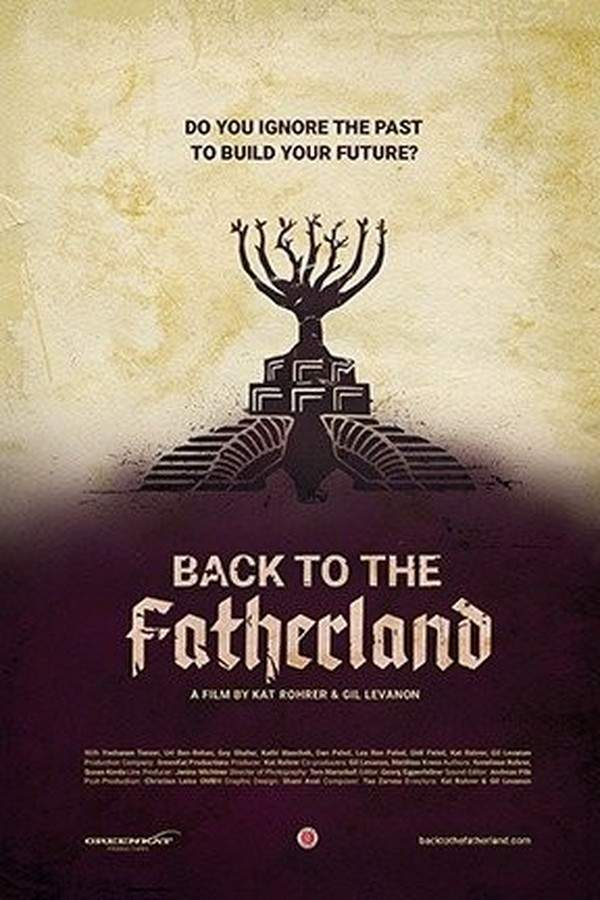


Where to Watch Back to the Fatherland
See current US streaming, rental, and purchase options for Back to the Fatherland (2019) via JustWatch.

Chai Flicks
HD
Kanopy
HD
Amazon Video
SD
Apple TV Store
HD Streaming availability powered by 
Back to the Fatherland Plot Summary
Read the complete plot summary and ending explained for Back to the Fatherland (2019). From turning points to emotional moments, uncover what really happened and why it matters.
Life in Israel is often fraught with stress, yet this is not the sole reason young individuals are choosing to distance themselves from the “holy land.” Many secular, liberal Jews feel marginalized, voiceless in the fabric of Israeli society.
Enter Gil Levanon and Katharina Maschek, two filmmakers who forged a bond during their college days in New York City a decade ago. Their backgrounds are starkly contrasting; Gil hails from Israel, while Kat comes from Austria. The differences in their family histories further highlight their unique perspectives: Gil is the granddaughter of a Holocaust survivor, while Kat is descended from a Nazi officer.
Within this complex backdrop, we are introduced to three Israeli grandchildren and their respective grandparents. Gil Levanon revisits her roots by consulting her grandfather Yochanan Tenzer, grappling with the notion of relocating to Berlin. Her apprehension about his reaction is palpable, especially knowing that at just 15 years old, his parents sent him away from Germany for safety, leaving him never to see them again. Yochanan’s deep-seated distrust of Germany compels him to respond to Gil’s aspirations with a definitive statement: > “No, never!”
Yochanan’s vehement rejection, coupled with the increasing trend of secular Israeli youth relocating to Germany and Austria, inspires Gil and Kat on an exploratory journey. They set out to locate other descendants of Holocaust survivors who made similar choices. Their quest leads them to Dan Peled and Guy Shahar, two young men who have already committed to the life that Gil is still contemplating.
Having moved to Berlin a few years back, Dan, a budding sculptor, faces disapproval from his grandmother Lea Ron Peled, who struggles to comprehend and accept his decision. In an attempt to find closure and understanding, Dan invites his 91-year-old grandmother on a poignant journey to Vienna, the city of her youth. Through this powerful trip, long-held tensions begin to dissolve, offering a chance for reconciliation between generations. Who could have predicted that Lea’s return to the landmarks of her past anguish would spark such harmony between her and her grandson?
Back to the Fatherland Timeline
Follow the complete movie timeline of Back to the Fatherland (2019) with every major event in chronological order. Great for understanding complex plots and story progression.
Arrival in New York
Gil Levanon and Katharina Maschek meet during their college days in New York City, forming a strong bond despite their differing backgrounds. This meeting serves as the foundation for their collaborative journey of exploration regarding their roots and cultural heritage.
Contrasting Backgrounds
Gil comes from Israel and is the granddaughter of a Holocaust survivor, while Kat hails from Austria and is descended from a Nazi officer. Their contrasting family histories shape their perspectives on identity, belonging, and their respective ties to the troubled history of their ancestors.
Consulting with Grandfather
Gil decides to reach out to her grandfather, Yochanan Tenzer, to discuss her feelings about potentially relocating to Berlin. This conversation is fraught with tension, as Yochanan's traumatic past makes him vehemently against any association with Germany.
Yochanan's Refusal
Yochanan reacts strongly to Gil's aspirations of moving to Berlin, urging her with a stern response, 'No, never!' His deep-seated distrust of Germany stems from his childhood experiences during World War II, where he was separated from his family for safety.
Growing Trend Among Youth
Despite Yochanan's rejection, there is a noticeable trend among secular Israeli youth choosing to relocate to Germany and Austria. This societal shift sparks curiosity in Gil and Kat, motivating them to explore the reasons behind such decisions and what it means for identity.
Exploratory Journey Begins
Motivated by Yochanan's response, Gil and Kat embark on a quest to find other descendants of Holocaust survivors who have chosen to move to Europe. They seek to capture the complexities of their experiences and the profound ties to their heritage.
Meeting Dan and Guy
During their journey, Gil and Kat come across Dan Peled and Guy Shahar, two young men who have already relocated to Berlin. Through their stories, they gain insights into the emotional struggles faced by those who made similar life-changing decisions.
Dan's Artistic Pursuit
Dan, an aspiring sculptor, grapples with his decision to live in Berlin, facing disapproval from his grandmother, Lea Ron Peled. This tension underscores the differing generational perspectives on trauma, belonging, and cultural identity.
A Journey to Vienna
In a bid to find closure and understanding, Dan invites his 91-year-old grandmother, Lea, on a poignant trip to Vienna, the city of her youth. This journey aims to bridge the gap between their experiences, fostering dialogue about their intertwined history.
Reconciliation and Healing
As they traverse the landmarks of Lea's past, long-held tensions begin to dissolve. Through shared experiences and dialogue, the trip sparks moments of reconciliation, allowing both Dan and Lea to confront and heal from their painful histories.
Reflection on Identity
Following the journey, Gil reflects on the meaning of identity and belonging in the context of her family's history. This introspection is influenced heavily by her grandfather’s experiences and the stories shared throughout their exploration.
Cultural Legacy
The film culminates in a broader conversation about the cultural legacy left behind by the Holocaust and the ways in which young Israelis grapple with this history. It highlights the complexities of their choices in a modern context, revealing insights into the ongoing impact of the past.
Back to the Fatherland Characters
Explore all characters from Back to the Fatherland (2019). Get detailed profiles with their roles, arcs, and key relationships explained.
Gil Levanon
Gil is a driven filmmaker grappling with her identity and heritage. As the granddaughter of a Holocaust survivor, she is deeply affected by her family's history. Her quest for answers about her roots leads her to explore difficult conversations with her grandfather, illuminating her struggles with the notion of relocating abroad.
Katharina Maschek
Katharina, known as Kat, is an Austrian filmmaker whose contrasting background to Gil enriches their collaborative journey. She navigates her identity in relation to her family's past, which adds a layer of complexity to her bond with Gil as they explore their shared yet diverse experiences.
Yochanan Tenzer
Yochanan is a Holocaust survivor whose experiences profoundly shape his perspective on Germany and migration. His protective instincts toward his family manifest in his vehement rejection of Gil's aspirations, reflecting the weight of historical trauma on personal choice.
Dan Peled
Dan is a young sculptor who embodies the complexities of modern Israeli youth. His decision to move to Berlin is met with familial disapproval, highlighting generational tensions. Through his journey with his grandmother, he seeks closure and understanding amidst their conflicting sentiments.
Lea Ron Peled
Lea is Dan's 91-year-old grandmother, whose past experiences shape her understanding of her grandson's choices. Her journey back to Vienna symbolizes a confrontation with her history, offering opportunities for healing and connection across generations.
Back to the Fatherland Settings
Learn where and when Back to the Fatherland (2019) takes place. Explore the film’s settings, era, and how they shape the narrative.
Time period
The narrative unfolds in contemporary times, reflecting the ongoing challenges faced by secular, liberal Jews in Israeli society. This era is characterized by increased conversations around identity, migration, and the legacy of the Holocaust, particularly as young people grapple with their heritage and future paths.
Location
Israel, Berlin, Vienna
The film traverses multiple locations, primarily focusing on Israel, where complex societal issues arise for young individuals. Berlin serves as a significant backdrop for the story, representing a place of refuge and new beginnings, particularly for those with ties to historical trauma. Vienna, on the other hand, symbolizes a journey of reconciliation and the exploration of familial roots.
Back to the Fatherland Themes
Discover the main themes in Back to the Fatherland (2019). Analyze the deeper meanings, emotional layers, and social commentary behind the film.
🕊️
Identity
Identity plays a central role in the film, as characters confront their heritage and the impacts of history on their lives. Through personal journeys, they seek to redefine themselves against the backdrop of their familial legacies. The film emphasizes the complexity of identity, especially for those with roots in cultures marked by division and trauma.
🤝
Reconciliation
Reconciliation is a pivotal theme, particularly in the relationship between Dan and his grandmother, Lea. Their journey to Vienna highlights the subtle yet profound healing that can occur when individuals confront their pasts together. The film poignantly illustrates how shared experiences can bridge generational divides and foster understanding.
🌍
Migration
Migration emerges as a significant theme, exploring the choices young Israelis make to leave their homeland in search of belonging and acceptance abroad. This reflects broader global narratives regarding displacement and the quest for a sense of home, particularly for descendants of those affected by historical traumas.

Coming soon on iOS and Android
The Plot Explained Mobile App
From blockbusters to hidden gems — dive into movie stories anytime, anywhere. Save your favorites, discover plots faster, and never miss a twist again.
Sign up to be the first to know when we launch. Your email stays private — always.
Explore the mobile appBack to the Fatherland Spoiler-Free Summary
Discover the spoiler-free summary of Back to the Fatherland (2019). Get a concise overview without any spoilers.
In a world where the bright promise of a homeland meets the quiet pull of distant histories, a new generation of Israelis quietly questions where belonging truly resides. The documentary opens on bustling streets and tranquil neighborhoods, contrasting the hectic pace of modern Israel with the lingering echoes of a century‑old trauma that still shapes families. Against a backdrop of contemporary doubts and the lingering weight of memory, young people contemplate a move to Europe—specifically Austria and Germany—not for escape, but for a search for identity that feels both forward‑looking and reverent of the past.
Gil Levanon and Katharina Maschek serve as the film’s compassionate guides. Their friendship, forged a decade ago in a New York classroom, is a study in contrast: Gil carries the lineage of a Holocaust survivor, while Katharina’s ancestry traces back to a Nazi officer. Their differing inheritances frame the documentary’s central tension, prompting a shared curiosity about what it means to live in places that hold both ancestral pain and the possibility of renewal. Through their lenses, the audience is invited to witness the uneasy dance between history and hope.
The story then turns to three Israeli grandchildren and the elders who raised them. Yochanan Tenzer, Gil’s own grandfather, embodies the lingering distrust that many feel toward Germany, his refusal echoing a generational ache. Dan Peled, a young sculptor who has already settled in Berlin, grapples with his grandmother Lea Ron Peled’s bewilderment and quiet resistance to his choice. Meanwhile, Guy Shahar follows a similar path, his own aspirations shadowed by the weight of his family’s narrative. Each relationship is presented with a tender intimacy, hinting at the delicate negotiations between personal desire and collective memory.
The film’s tone is contemplative and lyrical, weaving archival footage with present‑day portraits to create a visual tapestry that feels both documentary and poetic. It invites viewers to linger on moments of quiet reflection—sunlit cafés, whispered conversations, lingering glances at historic streets—while quietly probing the universal question: can the next generation rewrite the maps of their heritage without erasing the scars that shaped it?
Featured on this page

What's After the Movie?
Not sure whether to stay after the credits? Find out!
Check out our other apps:

SAT Sphere
Build confidence for the Digital SAT.

Mori Atlas
Discover wild places worth protecting.

Luntero
Search smarter for a home in Amsterdam.

Plot Explained
Unravel movie endings and hidden clues.

Pokechamp
Dive into Pokémon data and battle logic.

Driving Theory
Get ready for your European theory test.

Movie Dust
Plan your next cinema trip with ease.

Musemap
Find art and culture as you travel.

Selkobase
Compare credentials before committing.

Local Manual
Turn an unfamiliar country into practical next steps.

Lernavi
Compare school systems before your next move.

GymRoam
Find a workout stop wherever your plans take you.
Explore Our Movie Platform
New Movie Releases (2026)
Famous Movie Actors
Top Film Production Studios
Movie Plot Summaries & Endings
Major Movie Awards & Winners
Best Concert Films & Music Documentaries
Movie Collections and Curated Lists
© 2026 What's After the Movie. All rights reserved.
Privacy Policy