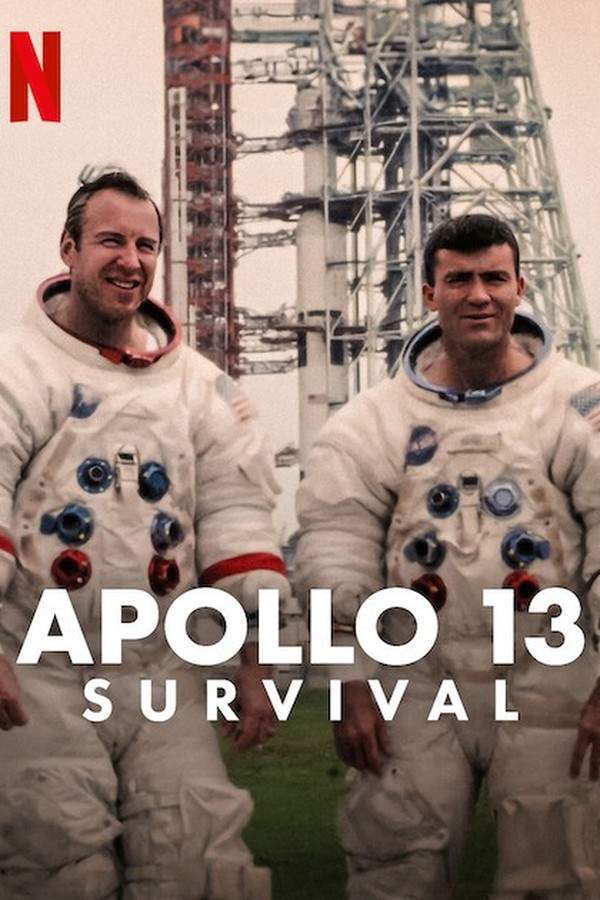
Apollo 13: Survival 2024


Directed by

Peter Middleton
Made by

Fee Fie Foe Films
Where to Watch Apollo 13: Survival
See current US streaming, rental, and purchase options for Apollo 13: Survival (2024) via JustWatch.


Streaming availability powered by 
Apollo 13: Survival Plot Summary
Read the complete plot summary and ending explained for Apollo 13: Survival (2024). From turning points to emotional moments, uncover what really happened and why it matters.
From the Cape Kennedy launch complex in 1970, the documentary revisits NASA’s bold plan for Apollo 13, the third lunar-landing attempt following the triumphs of Apollo 11 and Apollo 12. The mission aimed to land on a fresh patch of the Moon, collect samples, and return them to Earth for study, a move designed to cement American leadership in space exploration. Despite public superstition about the number 13, NASA pressed ahead, even scheduling the launch for 7:13 pm to make a bold statement about the nation’s resolve.
At the heart of the story is Jim Lovell, a 42-year-old Navy veteran and four-time space traveler who would command Apollo 13. A devoted family man, he had long dreamed of a Moon landing and had come close before, including his flight on Apollo 8, which ventured near the lunar surface. Lovell had joined NASA in 1962 after a career as a fighter pilot, and his leadership would be put to the ultimate test as the mission unfolded. He had once been the backup to Neil Armstrong for Apollo 11, a detail that underscored his pivotal role in the era’s space ambitions. His wife, Marilyn Lovell, offers a deeply personal lens into the mission, recounting a whirlwind courtship that began on their prom night and the difficult choice to support a future in space even as the risks grew. Marilyn’s perspective highlights the human stakes behind the technical drama, and the couple’s bond stands as a quiet counterpoint to the public spectacle of launch and orbit.
Joining Lovell were two other pilots with very different trajectories. Fred Haise served as Lunar Module Pilot, a former Navy jet pilot who had once aimed for a journalism path before dedicating himself to spaceflight. On the ground, Ken Mattingly appeared as the mission’s respected science-minded CMP, having topped his class in training and been slated as the backup for Apollo 11 before an unforeseen illness altered the crew lineup. Because of that illness, Jack Swigert stepped in to fly as CMP, while Mattingly shifted into a support role with flight-director responsibilities. The shifting crew dynamics are presented with a focus on how sudden decisions shaped the expedition’s fate.
The operation’s brain trust is profiled through the NASA leadership and flight controllers who guided the mission from Earth. Gene Kranz oversaw a team that could number well over a dozen steady hands in the control room, and his approach to problem-solving defined the mission’s turn toward survival. Supporting Kranz were other key figures in mission operations, including Glynn Lunney as part of the flight-director cadre whose calm, methodical thinking helped steer the team through crisis. The documentary also weaves in archival voices from the era, including scenes featuring prominent figures who shaped public understanding of the mission’s stakes.
The launch itself, set for April 11, 1970, proceeds with the three-stage rocket powering into space. Early success gives way to trouble when the central and fifth engines fail to perform as planned, though the remaining engines keep the vehicle on course. The crew proceeds to Earth orbit, and for a time the mission seems within reach of its original lunar objective. Then, about 55 hours into the flight, as the spacecraft hurtles roughly 200,000 nautical miles from Earth, alarms erupt. A rapid loss of pressure and a breach in the service module reveal a potentially catastrophic failure: a spray of gas and liquid escapes into space, oxygen and water leak away, and one of the spacecraft’s sensors malfunctions. What began as a mission to the Moon suddenly becomes a tense rescue operation, demanding ingenuity, grit, and teamwork.
With the lunar landing off the table, the crew and ground control pivot to a secondary course that requires ingenuity and resourcefulness. The Lunar Module—intended to descend to the Moon’s surface—must now serve as a lifeboat, sustaining the astronauts for a perilously long return to Earth. Power and oxygen are rationed, and life-support needs dictate a careful balance of procedures. The team must perform critical maneuvers with limited resources, including manual activation of thrusters when automated systems cannot be trusted. One dramatic moment involves a precise, manually guided burn to adjust the spacecraft’s trajectory, a testament to human skill under extreme pressure.
As preparations continue, the balance between human endurance and technical prowess becomes the documentary’s core message. Mission control, the crew in space, and the broader public watch with anxious hope as the team scrambles to extend life-support, conserve energy, and keep the craft on a path home. The Ground crew’s painstaking calculations, the astronauts’ disciplined execution, and the resilience of everyone involved converge in a narrative that underscores a shared responsibility to safeguard life in space.
Eventually, the crew’s ordeal culminates in a dramatic re-entry and a tense moment of radio silence as Earth’s atmosphere fades the signals temporarily. When contact is reestablished, the crew announce that they are safe, and Apollo 13 makes a successful splashdown in the South Pacific. The three survivors—[Jim Lovell], [Fred Haise], and Jack Swigert—emerge as symbols of courage and collaboration under pressure, transforming a mission born of ambition into a story of resilience that resonated far beyond the space program.
Beyond the technical milestones, the documentary emphasizes a unifying thread: in the face of danger, people across nations and roles—astronauts, flight controllers, journalists, and ordinary citizens—come together in a shared wish for a safe return. The film’s layered portrayal draws on voices from the era, including on-screen appearances and archival material featuring notable figures such as [Richard Nixon], [Walter Cronkite], and others who framed the public narrative of Apollo 13. Through these voices and the intimate portraits of Lovell and his family, the film renders a balanced, human-centered account of a mission that could have ended in tragedy but instead became a testament to ingenuity, teamwork, and hope. The story endures not only as a technological feat but as a moment when science, leadership, and courage intersected to remind the world of our capacity to rise to extraordinary challenges.
Apollo 13: Survival Timeline
Follow the complete movie timeline of Apollo 13: Survival (2024) with every major event in chronological order. Great for understanding complex plots and story progression.
Cape Kennedy preparations for Apollo 13
Images from Cape Kennedy show NASA gearing up for a third moon-landing attempt following Apollo 11 and 12. The mission aims to land on a new lunar site and bring back samples for research. Despite superstition around the number 13, NASA sets the launch time at 7:13 pm.
Crew assignments and last-minute swap
Jim Lovell leads Apollo 13 with Fred Haise and Jack Swigert as crew members. Ken Mattingly is replaced days before launch due to German measles, with Swigert taking his CMP role. Mattingly shifts to a support role with Gene Kranz's team.
Launch day and early engine anomaly
Apollo 13 lifts off from Cape Kennedy toward Earth orbit. Within minutes, the central and fifth engines show issues and shut down unexpectedly, but four other engines operate normally. Ground control reassures the crew as countdown continues.
Transit to lunar vicinity and initial success
The crew completes the initial Earth-orbit rounds, gaining momentum for the journey to the Moon. Everything seemed on track until the crisis unfolds later in flight. The mission's goal to land on the Moon remains in design, but the crew's fate hangs in balance.
Major malfunction and oxygen leak
Around 55 hours into the mission, alarms erupt and a spray is seen escaping the spacecraft. A failed pressure sensor and the subsequent loss of oxygen and water cripple the service module. The planned lunar landing becomes an emergency rescue mission.
Decision to use Lunar Module as lifeboat
With the service module failed, the astronauts abandon the plan to land and instead use the Lunar Module as a lifeboat to survive the journey home. Mission control pivots from exploration to survival and coordination.
Power, oxygen rationing and life-support management
To stretch limited resources, power and oxygen are rationed and cycles run to preserve life support. The crew and ground team must carefully manage supplies as they drift toward Earth. The LM provides crucial life support during the critical period.
Manual trajectory corrections and thruster burns
With computer systems strained, the crew conducts manual burns to adjust the course. The main LM engine is used for speed, while other maneuvers are executed to keep the craft on a return path. Each burn requires precise timing and ground support.
Orbit adjustments and re-entry trajectory fix
Mission control determines the spacecraft's re-entry angle is too shallow. A second burn is executed, this time performed manually with Earth in visual sight rather than relying on faulty computers. The goal is to ensure a safe bend into Earth's atmosphere.
Return to Earth and splashdown
The Lunar Module endures the final approach as it re-enters Earth's atmosphere. After a moment of radio silence, contact is re-established and the crew announces they are all right. Apollo 13 crashes into the South Pacific Ocean where rescue teams retrieve them.
Public and global reaction
Lovell's narration emphasizes the crisis's unifying effect across nations and politics. The extraordinary survival story inspired hope as people worldwide prayed for the astronauts. The mission's legacy shifts from lunar landing to human resilience.
Marilyn Lovell's perspective and promise
The film follows Marilyn Lovell, who as wife and mother supported Jim's space career while fearing for his safety. She had made him promise this would be his last mission, a vow tested by the crisis. Her experience highlights the personal cost of space exploration.
Post-mission investigation and miscalculation
In later reflections, investigators point to a pre-launch miscalculation that contributed to the accident and the leak. The incident prompts NASA to re-examine safety protocols and redesign procedures. The close call leads to a stronger emphasis on crew safety.
Apollo 13: Survival Characters
Explore all characters from Apollo 13: Survival (2024). Get detailed profiles with their roles, arcs, and key relationships explained.
Jim Lovell
Jim Lovell is an experienced NASA astronaut and mission commander who guides Apollo 13 with calm, decisive leadership. He balances professional duty with his role as a husband and father back home, bearing the weight of the crew's safety. His steady judgment under pressure is central to the recovery plan.
Fred Haise
Fred Haise serves as the Lunar Module Pilot, bringing technical skill and a steady demeanor to the mission. His background includes a shift from journalism interests to aerospace, reflecting a practical, adaptable mindset. He grapples with uncertainty as the mission's goals shift from landing to survival.
Jack Swigert
Jack Swigert joins Apollo 13 as a replacement CMP, adaptable and quick-thinking in crisis. He demonstrates composure and readiness to contribute crucially when the mission's trajectory changes. His quick actions help stabilize the situation aboard the craft.
Ken Mattingly
Ken Mattingly is the academically brilliant CMP who originally prepared for Apollo 13 but was grounded due to illness. He remains connected as an integral assistant to the flight director, bringing knowledge and strategic thinking to the mission's planning phase.
Marilyn Lovell
Marilyn Lovell provides the human, emotional perspective on the mission, supporting Jim’s career while fearing for his safety. Her perspective anchors the personal stakes of the crisis and the impact on a family waiting at home.
Gene Kranz
Gene Kranz, the Flight Director, leads the mission control team with meticulous planning and calm authority. He coordinates a multi-person, high-pressure operation, emphasizing safety and mission success through disciplined execution.
Glynn Lunney
Glynn Lunney serves as another Flight Director overseeing the control room, contributing to the strategic responses. He embodies the collaborative problem-solving culture that defined NASA’s crisis management during Apollo.
Thomas Paine
Thomas Paine, as Head of NASA, is depicted as a strategic leader overseeing the broader organizational response to the Apollo 13 crisis. His role frames the political and administrative support behind the mission’s survival efforts.
Apollo 13: Survival Settings
Learn where and when Apollo 13: Survival (2024) takes place. Explore the film’s settings, era, and how they shape the narrative.
Time period
April 1970
Set in the height of the Space Race, the events take place in April 1970 during NASA's Apollo program. The era is marked by rapid technical advances, televised missions, and public interest in lunar exploration. The timeline follows the launch, crisis, and daring return from space.
Location
Cape Kennedy launch site (Cape Canaveral, Florida), Mission Control Center (Houston, Texas), South Pacific Ocean
The story unfolds around Cape Kennedy, where the Saturn V rocket lifts off on a historic mission. It moves between the high-tech nerve center of NASA's Mission Control in Houston and the perilous void of space, culminating in a remote ocean splashdown in the South Pacific. The settings reflect the real-world machinery, monitoring, and recovery operations that defined the Apollo era.
Apollo 13: Survival Themes
Discover the main themes in Apollo 13: Survival (2024). Analyze the deeper meanings, emotional layers, and social commentary behind the film.
🧭
Survival
Astronauts and mission control race against scarce power, oxygen, and time as their spacecraft falters. The crisis turns the voyage into a fight for life, demanding rapid risk assessment and improvisation. The theme centers on resilience under extreme circumstances.
🤝
Teamwork
Success hinges on coordinated efforts between crew, flight controllers, and support staff across continents. Every decision depends on clear communication, trust, and the willingness to override personal risk for collective safety. The film honors collaborative problem-solving under pressure.
🧰
Ingenuity
Ground and flight teams devise creative solutions to repurpose equipment and manage resources. With limited tools, they perform mental math, manual guidance, and improvised maneuvers to keep the crew alive. The narrative highlights human ingenuity as a core driver of the rescue.

Coming soon on iOS and Android
The Plot Explained Mobile App
From blockbusters to hidden gems — dive into movie stories anytime, anywhere. Save your favorites, discover plots faster, and never miss a twist again.
Sign up to be the first to know when we launch. Your email stays private — always.
Explore the mobile appApollo 13: Survival Spoiler-Free Summary
Discover the spoiler-free summary of Apollo 13: Survival (2024). Get a concise overview without any spoilers.
In the early 1970s, the United States stands at the pinnacle of space exploration, its triumphs on the lunar surface still echoing across a world hungry for progress. NASA’s launch pads at Cape Kennedy hum with the confidence of a nation that has already proven it can set foot on the Moon, and the next mission is poised to deepen that legacy. Against a backdrop of Cold‑War rivalry and public fascination, the third lunar expedition is framed as a bold statement of ingenuity and resolve, its very schedule stamped with the daring time of 7:13 p.m. to mock superstition itself.
At the heart of this venture are three seasoned pilots. Jim Lovell, a veteran commander whose calm demeanor hides the pressure of fulfilling a lifelong dream of walking on the Moon, carries the weight of his family’s hopes and a promise that this will be his final flight. Fred Haise, once an aspiring sports reporter turned astronaut, brings a youthful tenacity and a quiet sense of humor that balances the team’s dynamics. Jack Swigert, the backup commander thrust into the role at the last moment, exudes a steady confidence forged by years of perseverance within NASA’s demanding selection process. Together they embody the blend of technical mastery and human vulnerability that defines the program’s most ambitious crews.
The film settles into a tone that is both reverent and suspenseful, capturing the immense isolation of a spacecraft drifting nearly a quarter‑million miles from home. The vastness of space is rendered as both a frontier of wonder and a precarious arena where a single malfunction can upend every calculation. The narrative watches the crew’s quiet camaraderie and the palpable tension of an unforgiving environment, hinting at the extraordinary resourcefulness that will be required without revealing the outcomes.
On the ground, the mission’s fate rests in the capable hands of flight director Gene Kranz and his tightly knit team of controllers, whose dedication and collective expertise form a silent, watchful chorus. Their presence adds a layer of grounded humanity to the soaring aspirations above, suggesting that the true drama unfolds as much in the control rooms as it does among the stars.
Featured on this page

What's After the Movie?
Not sure whether to stay after the credits? Find out!
Check out our other apps:

SAT Sphere
Build confidence for the Digital SAT.

Mori Atlas
Discover wild places worth protecting.

Luntero
Search smarter for a home in Amsterdam.

Plot Explained
Unravel movie endings and hidden clues.

Pokechamp
Dive into Pokémon data and battle logic.

Driving Theory
Get ready for your European theory test.

Movie Dust
Plan your next cinema trip with ease.

Musemap
Find art and culture as you travel.

Selkobase
Compare credentials before committing.

Local Manual
Turn an unfamiliar country into practical next steps.

Lernavi
Compare school systems before your next move.

GymRoam
Find a workout stop wherever your plans take you.
Explore Our Movie Platform
New Movie Releases (2026)
Famous Movie Actors
Top Film Production Studios
Movie Plot Summaries & Endings
Major Movie Awards & Winners
Best Concert Films & Music Documentaries
Movie Collections and Curated Lists
© 2026 What's After the Movie. All rights reserved.
Privacy Policy