

Apocalipsur Plot Summary
Read the complete plot summary and ending explained for Apocalipsur (2007). From turning points to emotional moments, uncover what really happened and why it matters.
In 1991 Medellín, a tight-knit group of friends navigates life under the shadow of brutal drug violence and a volatile political climate. The story centers on a group whose loyalties, loves, and fears intertwine as they move through a city where danger seems to lurk around every corner. At the heart of their world is El Flaco, a young man whose choices test the bonds that hold him and his friends together.
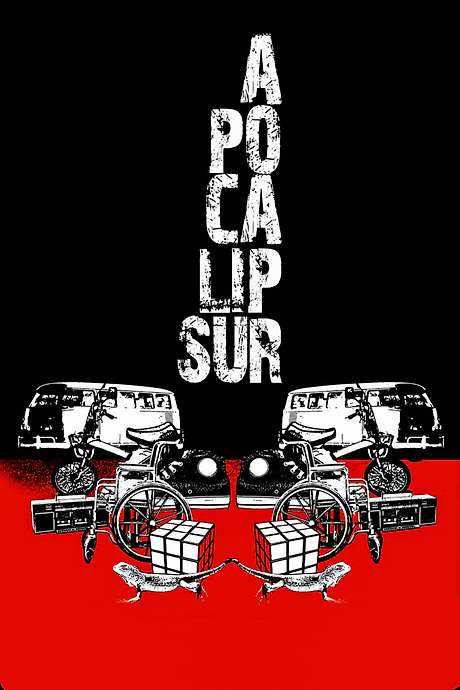
Before leaving for exile in Switzerland, El Flaco shaves his head and throws a farewell party with live rock music, a moment that feels both defiant and fragile. He departs after threats against his mother, a decision that casts a long shadow over those he leaves behind. Months later, El Flaco returns to a Medellín that has not changed much in its fevered cycle of violence; yet the dynamics within the group have shifted. Caliche and Malala—their relationship now in place—are a couple, though Malala still harbors feelings for El Flaco. The reunion ride home from the airport becomes a time capsule of memories, as Caliche, Comadreja, and Pipe—the wheelchair-bound friend—join El Flaco in a battered Volkswagen van nicknamed Bola de Nieve. The exchange on that ride centers on recollections, shared jokes, and the ache of a friendship stretched by time and the city’s unrest. Malala’s mood sours as she realizes Caliche kept the plan to pick up El Flaco from her, a reminder that trust among friends remains a delicate thing.
The film shifts between present tense and flashbacks as the riders drift through memories of their chaotic past. One haunting memory recalls a kidnapping that bonded El Flaco and Caliche under threat of death. They were seized because El Flaco was the son of a judge investigating a narco case, and Caliche was targeted over a dispute involving his father. In a twist of fate, their captors are killed during a rescue operation, and the teens manage a perilous escape. Those early ordeals haunt the road alone as they pass signs of the ongoing drug war—military helicopters overhead, police checkpoints, and posters of Escobar that plaster the walls of the city.
The conversation among friends expands into a critique of the broader forces at work in Colombia’s conflict. They discuss the role of the United States in the drug trade, the terrible logic of prohibition, and how these forces amplify the violence that tears through neighborhoods. Caliche, in a moment of reckless candor, reveals cocaine remnants he found in his mother’s boyfriend’s stash, a detail that underscores how closely their world is linked to the drugs that drive the war.
Interwoven with the present-day road trip are more memories of their youth. A particularly stark flashback shows El Flaco and Comadreja being chased by police while riding bikes, smoking marijuana, and enduring a brutal, dehumanizing encounter that ends only when the officers abandon them after a street crime diverts attention. The film uses these vignettes to show how the city’s police and its streets have always been a perilous classroom for the young people who live there.
At a roadside café, Malala drops a bombshell that changes the mood of the entire group: on the night El Flaco left for Switzerland, Malala learned she was pregnant with Caliche’s child but chose to terminate the pregnancy. El Flaco overhears the confession in the bathroom, and the moment triggers a flood of emotion that leaves him broken. Caliche and Malala argue, their friction revealing how love, guilt, and responsibility collide under the strain of their environment, yet they eventually find a path back to each other.
Humor and mischief shadow darker memories as Comadreja and Pipe stage a prank on the café owner, posing as a foreigner. The friends also recollect a wilder night when they picked up a transgender sex worker named María Antonieta; a young El Flaco, high and amused, kisses her, mistaking her for a foreigner. These memories are not mere escapism; they reveal a generation learning to cope with a world where danger and desire sit side by side.
As the group nears the airport, the mood softens into a melancholy about El Flaco’s solitary life in exile—imagining him barefoot in the snow of Switzerland. They pull Pipe’s wheelchair behind the van as they approach a vacant lot near José María Córdova Airport, waiting for their friend to return. In a final, almost darkly comic twist of fate, Comadreja forgets to close the van door, and El Flaco’s iguana, Marihuana, escapes into the world they are leaving behind. The scene sets the stage for the film’s devastating reveal.
In a shattering turn, it is disclosed that El Flaco died in exile. The friends are not gathering to welcome him back, but to recover his body. They return to Medellín with his coffin, a transport that becomes a conduit for reflection on lost youth and a generation battered by the forces around them. The ride back is punctuated by misfortune: the van runs over the escaped iguana, and in the chaos, El Flaco’s coffin slips into a stream. The film closes on a solemn note, a double loss that feels like the reincarnation the group once imagined for their friend—the human life he once lived and the animal life he hoped to become.
The closing dedication appears on screen: “For El Flaco, Carlos Bernal, who disappeared in Geneva (Switzerland) on October 23, 1991.” It lingers as a sober reminder of the real people behind the stories, the disappearances that punctuated a generation’s years, and the complex, tender, sometimes painful bonds of friendship that endure even when life itself is slipping away.
Papito, Hernando Casanova makes a memorable impression within the group as the elder presence who anchors their shared experiences, a figure whose memory lingers as the others navigate a city that never fully lets them go.
Apocalipsur Timeline
Follow the complete movie timeline of Apocalipsur (2007) with every major event in chronological order. Great for understanding complex plots and story progression.
Farewell party before exile
In Medellín, a farewell party marks El Flaco's impending departure for Switzerland after threats against his mother. He shaves his head and says goodbye to Caliche, Comadreja, Pipe, and Malala as live rock music plays, signaling a looming separation and the weight of looming violence. The gathering highlights how exile and danger are reshaping the group.
El Flaco's return and reunion at the airport
Months after leaving, El Flaco returns to Medellín and is picked up by his friends in their old Volkswagen van Bola de Nieve. Caliche, Comadreja, and Pipe drive him home, while Malala is upset that Caliche didn’t warn her about the reunion. The ride rekindles their bond even as unresolved tensions surface.
Reminiscences during the road trip
As they travel through the city, the friends reminisce about their chaotic past and current lives. The landscape shows the ongoing drug war with helicopters, checkpoints, and posters. They discuss the United States' role in the conflict and question the costs of prohibition.
Kidnapping memory and escape
Flashback to El Flaco and Caliche being kidnapped and held in a makeshift cell. They bond under the threat of death, and a rescue mission leads to the captors' deaths, allowing the teens to escape. The event hardens their friendship and exposes the brutality surrounding them.
Signs of the drug war in the city
The group passes through a Medellín steeped in conflict: military helicopters, police checkpoints, and posters of Escobar. The atmosphere underscores how the violence touches daily life. They discuss how politics and crime interlock in their city.
Cocaine remnants and risky bragging
Caliche shares remnants of cocaine he stole from his mother's boyfriend, revealing the normalcy of crime in their circle. The confession deepens the sense of danger surrounding their future. The moment blends humor with a sobering look at how casually crime enters their lives.
Police beat and abandonment flashback
A flashback shows El Flaco and Comadreja being caught by police while biking and smoking marijuana. The officers beat them and abandon them on the street when a different crime diverts attention. The scene exposes systemic brutality and recurring danger in their youth.
Malala's abortion confession
At a roadside café, Malala reveals she learned she was pregnant with Caliche's child but chose to have an abortion. El Flaco overhears the confession in the bathroom and breaks down in tears. Caliche and Malala argue but ultimately reconcile, underscoring the costs of their environment.
Pranks and memories of María Antonieta
Comadreja and Pipe pull a prank on the café owner, pretending Comadreja is a foreigner. The friends recall a wild night when they picked up María Antonieta, a transgender sex worker, and El Flaco, high, kissed her, mistaking her for a foreigner. The moment blends humor with fleeting innocence lost to the war.
Approaching the airport and imagining exile life
As they near the airport, the friends reflect on El Flaco's lonely life in Switzerland, imagining him barefoot in the snow. They drag Pipe's wheelchair behind the van, remembering his disability as part of their shared history. The moment fuses longing with the practical awkwardness of their journey.
The vacant lot reveal and iguana escapes
They reach a vacant lot near the airport where Comadreja forgets to close the van door, allowing El Flaco's iguana, Marihuana, to escape. The group learns that El Flaco had died in exile and they have come to recover his body. The emotional weight shifts from nostalgia to tragedy.
Return with the coffin and the final dedication
On the way back to Medellín, the van accidentally runs over the escaped iguana and the coffin falls into a stream. The friends reflect on lost youth and the devastation of their generation. The film closes with a dedication: For El Flaco, Carlos Bernal, who disappeared in Geneva on October 23, 1991.
Apocalipsur Characters
Explore all characters from Apocalipsur (2007). Get detailed profiles with their roles, arcs, and key relationships explained.
El Flaco
The group's central figure, El Flaco leaves for Switzerland after threats against his mother and later returns to a Medellín unchanged by violence. He embodies the loneliness and dislocation of exile, and his death in Geneva shapes the film’s melancholic hinge. His past as the son of a judge involved in a narco case adds depth to his character and the risks he bears.
Caliche
A pragmatic, loyal friend who navigates love and danger with plainspoken honesty. He begins dating Malala, while memories of El Flaco linger, highlighting the complexities of loyalty within the circle. His bravado masks a sensitivity to the fragility of their world.
Comadreja
The prankster and schemer of the group, Comadreja provides wit and mischief during tense moments. His camaraderie with Pipe and the others anchors the group’s dynamic even as violence intensifies around them.
Pipe
The boy in a wheelchair who remains a central part of the circle, reminding everyone of vulnerability and resilience. Pipe offers a grounded perspective amid chaos and endures the journey with quiet steadiness.
Malala
Caliche’s girlfriend who reveals a painful truth about an abortion following a pregnancy with Caliche. Malala’s inner conflict illuminates themes of choice, consequence, and the emotional toll of violence. Her evolving relationships reveal competing loyalties within the group.
Papito
An elder figure within the world of the film, Papito represents tradition and authority amid upheaval. His presence highlights family dynamics and the generational perspectives that shape the characters’ lives.
Apocalipsur Settings
Learn where and when Apocalipsur (2007) takes place. Explore the film’s settings, era, and how they shape the narrative.
Time period
1991
Set in 1991 Medellín, the film captures a year when narco-violence and political conflict dominated public life. The narrative cuts between a farewell, an exile, and a late return, showing how time fragments friendships and innocence. Flashbacks reveal moments of captivity, police brutality, and the endurance of a youth shaped by danger. The era is defined by both local turmoil and the global reach of the drug war.
Location
Medellín, Colombia; José María Córdova Airport vicinity
Medellín serves as the gritty backdrop of the film, a city torn by drug violence and political upheaval in the early 1990s. The story moves through crowded neighborhoods, roadside cafes, and checkpoints that mark daily life under cartel power. The sequence near José María Córdova Airport anchors the drama in a real urban space, highlighting exile, arrival, and the consequences of a violent era.
Apocalipsur Themes
Discover the main themes in Apocalipsur (2007). Analyze the deeper meanings, emotional layers, and social commentary behind the film.
💔
Friendship
A core throughline is the bond among Caliche, Comadreja, Pipe, Malala, and El Flaco. Their camaraderie persists amid threats, heartbreak, and the city’s violence. Shared memories and humor anchor the group when danger looms. The farewell and return ritual crystallize how friendship endures even as youth is tested.
⚖️
Violence and Consequences
Drug violence, kidnappings, police brutality, and political repression color the narrative. The friends move through helicopters, checkpoints, and propaganda posters that map danger onto everyday routes. Past traumas—captivity, abuse, exile—echo in the present. The film insists that violence permanently reshapes lives and tomorrows.
🌍
Exile and Memory
El Flaco’s departure to Switzerland and his death in exile frame exile as both physical and existential. Memory is treated as a resource and a burden, revisited to confront loss. The journey to the airport with the coffin becomes a meditation on what remains when a generation is lost. Themes of identity and diaspora mingle with the film’s melancholy ending.
🎭
Youth and Identity
The narrative repeatedly returns to adolescence under siege—romance, bravado, and vulnerability clash with harsh reality. Actions reveal the tension between aspirational selves and a world stacked against them. Humor and danger alternate, underscoring a fading innocence. The conclusion suggests that youth’s vitality persists even amid tragedy.

Coming soon on iOS and Android
The Plot Explained Mobile App
From blockbusters to hidden gems — dive into movie stories anytime, anywhere. Save your favorites, discover plots faster, and never miss a twist again.
Sign up to be the first to know when we launch. Your email stays private — always.
Explore the mobile appApocalipsur Spoiler-Free Summary
Discover the spoiler-free summary of Apocalipsur (2007). Get a concise overview without any spoilers.
In the restless streets of early‑1990s Medellín, a close‑knit circle of young people tries to carve out moments of freedom while the city pulses with danger and uncertainty. The backdrop is a place where music blares from cracked windows, military helicopters trace the sky, and the ever‑present buzz of the drug trade hovers like a storm on the horizon. Within this charged atmosphere, the film balances gritty realism with a lingering, almost nostalgic humor that keeps the tone both urgent and oddly tender.
The story centers on El Flaco, who has spent several months away in Europe after receiving threats that forced him to protect his family. He returns to the same chaotic neighborhood, hoping to reconnect with the friends who have become his anchor. On his homecoming, he finds his old crew—Caliche, a restless romantic; Malala, whose loyalty is as fierce as her hidden emotions; Comadreja, the mischievous prankster; and Pipe, navigating life from a wheelchair—still gathering around a battered Volkswagen van that they lovingly nickname “Bola de Nieve.” Their interactions are animated by sharp banter, shared memories, and an undercurrent of unspoken tension that hints at the ways time and fear have reshaped their bonds.
Guided by the older presence of Papito, who offers a steady, grounding perspective, the friends embark on a low‑key road trip that becomes a moving tableau of the city’s contradictions. The journey threads together fleeting moments of laughter, the weight of lingering threats, and the bittersweet realization that each mile traveled is both an escape and a confrontation with their past. As the van rolls past checkpoints, graffiti, and familiar landmarks, the audience is invited to feel the pulse of Medellín—a place where youthful exuberance collides with an ever‑looming sense of fragility, leaving the characters—and the viewers—wondering how much can truly be left behind.
Featured on this page

What's After the Movie?
Not sure whether to stay after the credits? Find out!
Check out our other apps:

SAT Sphere
Build confidence for the Digital SAT.

Mori Atlas
Discover wild places worth protecting.

Luntero
Search smarter for a home in Amsterdam.

Plot Explained
Unravel movie endings and hidden clues.

Pokechamp
Dive into Pokémon data and battle logic.

Driving Theory
Get ready for your European theory test.

Movie Dust
Plan your next cinema trip with ease.

Musemap
Find art and culture as you travel.

Selkobase
Compare credentials before committing.

Local Manual
Turn an unfamiliar country into practical next steps.

Lernavi
Compare school systems before your next move.

GymRoam
Find a workout stop wherever your plans take you.
Explore Our Movie Platform
New Movie Releases (2026)
Famous Movie Actors
Top Film Production Studios
Movie Plot Summaries & Endings
Major Movie Awards & Winners
Best Concert Films & Music Documentaries
Movie Collections and Curated Lists
© 2026 What's After the Movie. All rights reserved.
Privacy Policy