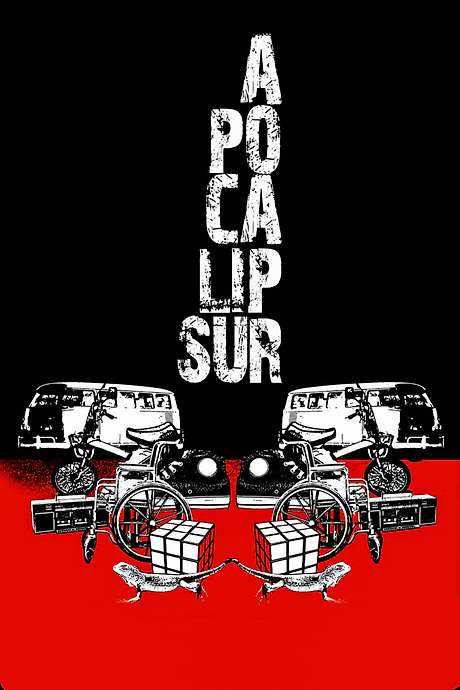
Apocalipsur 2007

Runtime

100 mins

Language

Spanish

Spanish

   El Flaco returns to Medellin after hiding for some months in London because he was threaten. Things did not change much.

El Flaco returns to Medellin after hiding for some months in London because he was threaten. Things did not change much.

Does Apocalipsur have end credit scenes?

No!

Apocalipsur does not have end credit scenes. You can leave when the credits roll.

Meet the Full Cast and Actors of Apocalipsur

Explore the complete cast of Apocalipsur, including both lead and supporting actors. Learn who plays each character, discover their past roles and achievements, and find out what makes this ensemble cast stand out in the world of film and television.


Take the Ultimate Apocalipsur Movie Quiz

Challenge your knowledge of Apocalipsur with this fun and interactive movie quiz. Test yourself on key plot points, iconic characters, hidden details, and memorable moments to see how well you really know the film.


Apocalipsur Quiz: Test your knowledge of the 2007 Colombian film Apocalipsur, covering characters, key events, and thematic details.

What is the nickname of the battered Volkswagen van that the friends travel in?

Full Plot Summary and Ending Explained for Apocalipsur

See more

Read the complete plot summary of Apocalipsur, including all major events, twists, and the full ending explained in detail. Explore key characters, themes, hidden meanings, and everything you need to understand the story from beginning to end.


In 1991 Medellín, a tight-knit group of friends navigates life under the shadow of brutal drug violence and a volatile political climate. The story centers on a group whose loyalties, loves, and fears intertwine as they move through a city where danger seems to lurk around every corner. At the heart of their world is El Flaco, a young man whose choices test the bonds that hold him and his friends together.

Before leaving for exile in Switzerland, El Flaco shaves his head and throws a farewell party with live rock music, a moment that feels both defiant and fragile. He departs after threats against his mother, a decision that casts a long shadow over those he leaves behind. Months later, El Flaco returns to a Medellín that has not changed much in its fevered cycle of violence; yet the dynamics within the group have shifted. Caliche and Malala—their relationship now in place—are a couple, though Malala still harbors feelings for El Flaco. The reunion ride home from the airport becomes a time capsule of memories, as Caliche, Comadreja, and Pipe—the wheelchair-bound friend—join El Flaco in a battered Volkswagen van nicknamed Bola de Nieve. The exchange on that ride centers on recollections, shared jokes, and the ache of a friendship stretched by time and the city’s unrest. Malala’s mood sours as she realizes Caliche kept the plan to pick up El Flaco from her, a reminder that trust among friends remains a delicate thing.

The film shifts between present tense and flashbacks as the riders drift through memories of their chaotic past. One haunting memory recalls a kidnapping that bonded El Flaco and Caliche under threat of death. They were seized because El Flaco was the son of a judge investigating a narco case, and Caliche was targeted over a dispute involving his father. In a twist of fate, their captors are killed during a rescue operation, and the teens manage a perilous escape. Those early ordeals haunt the road alone as they pass signs of the ongoing drug war—military helicopters overhead, police checkpoints, and posters of Escobar that plaster the walls of the city.

The conversation among friends expands into a critique of the broader forces at work in Colombia’s conflict. They discuss the role of the United States in the drug trade, the terrible logic of prohibition, and how these forces amplify the violence that tears through neighborhoods. Caliche, in a moment of reckless candor, reveals cocaine remnants he found in his mother’s boyfriend’s stash, a detail that underscores how closely their world is linked to the drugs that drive the war.

Interwoven with the present-day road trip are more memories of their youth. A particularly stark flashback shows El Flaco and Comadreja being chased by police while riding bikes, smoking marijuana, and enduring a brutal, dehumanizing encounter that ends only when the officers abandon them after a street crime diverts attention. The film uses these vignettes to show how the city’s police and its streets have always been a perilous classroom for the young people who live there.

At a roadside café, Malala drops a bombshell that changes the mood of the entire group: on the night El Flaco left for Switzerland, Malala learned she was pregnant with Caliche’s child but chose to terminate the pregnancy. El Flaco overhears the confession in the bathroom, and the moment triggers a flood of emotion that leaves him broken. Caliche and Malala argue, their friction revealing how love, guilt, and responsibility collide under the strain of their environment, yet they eventually find a path back to each other.

Humor and mischief shadow darker memories as Comadreja and Pipe stage a prank on the café owner, posing as a foreigner. The friends also recollect a wilder night when they picked up a transgender sex worker named María Antonieta; a young El Flaco, high and amused, kisses her, mistaking her for a foreigner. These memories are not mere escapism; they reveal a generation learning to cope with a world where danger and desire sit side by side.

As the group nears the airport, the mood softens into a melancholy about El Flaco’s solitary life in exile—imagining him barefoot in the snow of Switzerland. They pull Pipe’s wheelchair behind the van as they approach a vacant lot near José María Córdova Airport, waiting for their friend to return. In a final, almost darkly comic twist of fate, Comadreja forgets to close the van door, and El Flaco’s iguana, Marihuana, escapes into the world they are leaving behind. The scene sets the stage for the film’s devastating reveal.

In a shattering turn, it is disclosed that El Flaco died in exile. The friends are not gathering to welcome him back, but to recover his body. They return to Medellín with his coffin, a transport that becomes a conduit for reflection on lost youth and a generation battered by the forces around them. The ride back is punctuated by misfortune: the van runs over the escaped iguana, and in the chaos, El Flaco’s coffin slips into a stream. The film closes on a solemn note, a double loss that feels like the reincarnation the group once imagined for their friend—the human life he once lived and the animal life he hoped to become.

The closing dedication appears on screen: “For El Flaco, Carlos Bernal, who disappeared in Geneva (Switzerland) on October 23, 1991.” It lingers as a sober reminder of the real people behind the stories, the disappearances that punctuated a generation’s years, and the complex, tender, sometimes painful bonds of friendship that endure even when life itself is slipping away.

Papito, Hernando Casanova makes a memorable impression within the group as the elder presence who anchors their shared experiences, a figure whose memory lingers as the others navigate a city that never fully lets them go.

Uncover the Details: Timeline, Characters, Themes, and Beyond!

Mobile App Preview

Coming soon on iOS and Android

The Plot Explained Mobile App

From blockbusters to hidden gems — dive into movie stories anytime, anywhere. Save your favorites, discover plots faster, and never miss a twist again.

Sign up to be the first to know when we launch. Your email stays private — always.

Explore the mobile app

Discover Film Music Concerts Near You – Live Orchestras Performing Iconic Movie Soundtracks

Immerse yourself in the magic of cinema with live orchestral performances of your favorite film scores. From sweeping Hollywood blockbusters and animated classics to epic fantasy soundtracks, our curated listings connect you to upcoming film music events worldwide.

Explore concert film screenings paired with full orchestra concerts, read detailed event information, and secure your tickets for unforgettable evenings celebrating legendary composers like John Williams, Hans Zimmer, and more.

Concert Film CTA - Music Note
Concert Film CTA - Green Blue Wave

Apocalipsur Themes and Keywords

Discover the central themes, ideas, and keywords that define the movie’s story, tone, and message. Analyze the film’s deeper meanings, genre influences, and recurring concepts.


drug traffickingfriend
Movie Wiki CTA - Movie Book

Unlock the World of Movies with Our Comprehensive Wiki

Dive into our Movie Wiki for in-depth film encyclopedia entries, including cast biographies, production trivia, plot synopses, behind-the-scenes facts, and thematic analyses. Whether you’re researching iconic directors, exploring genre histories, or discovering hidden easter eggs, our expertly curated movie database has everything you need to fuel your cinematic passion.

Movie Wiki CTA - Green Blue Wave

Similar Movies To Apocalipsur You Should Know About

Browse a curated list of movies similar in genre, tone, characters, or story structure. Discover new titles like the one you're watching, perfect for fans of related plots, vibes, or cinematic styles.


© 2026 What's After the Movie. All rights reserved.

Privacy Policy