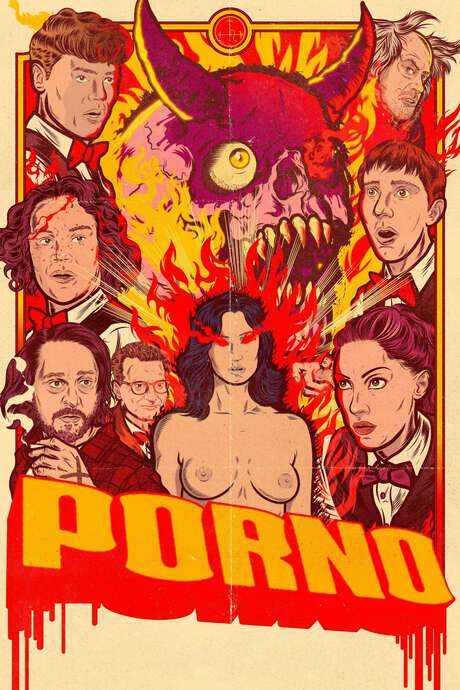
What Is Antiporno About?
The premise of Antiporno in 310 words, with nothing given away. The full story follows below.
In the hushed, hyper-controlled world of a celebrated Japanese artist, Kyôko Suzuki moves through fame as though it were both her armor and her cage. She is a renowned writer and creator whose work has earned her a gilded existence, yet every interview, every camera-ready moment, feels like another turn of a wheel she cannot stop. The film sets its tone with a quiet, almost surgical attention to the gap between a person’s public polish and the private selves they cannot quite silence — a tension that hums beneath every polished surface.
Into this fragile atmosphere arrives Noriko, an older assistant brought in to help prepare for a high-profile magazine interview. Their dynamic crackles with unease: deference from one side, expectation from the other, and a creeping sense that the rituals of professional life are only the surface of something far less stable. The encounter is staged within the framework of a provocative reinterpretation of the classic Roman Porno series, reimagined through a Japanese cinematic lens that prizes ambiguity, discomfort, and the strange intimacy of being watched.
As the interview unfolds, the boundaries between conversation, performance, and something more invasive begin to soften. Kyôko wrestles with self-doubt and a deepening sense that every exchange is also an act — observed, judged, and quietly directed by forces she cannot fully see. The film lingers in this liminal space, drawing on soft-core drama not for spectacle but as a mirror for the performative nature of identity, gender, and intimacy itself.
Rich in mood and steeped in the textures of Japanese art-house cinema, the film offers a thought-provoking meditation on how identity is constructed, performed, and sometimes imprisoned. It invites viewers into a world where the gaze of others becomes inescapable, where intimacy is both currency and wound, and where every carefully composed frame holds the quiet promise of something about to slip.
What Happens in Antiporno?
The complete story of Antiporno, from the first scene to the last, in 581 words (about 3 minutes). Spoilers throughout.
Spoilers ahead
Kyôko Suzuki, [Ami Tomite], is a renowned artist and writer who feels trapped in a solitary gilded cage of success, speaking to the phantom memory of her dead sister [Ami Fukuda] as Taeko Suzuki. The grip of fame shadows every move, turning her creative life into a performance that never quite ends. When her assistant Noriko arrives—[Mariko Tsutsui]—to help prepare for a high-profile interview with a prominent lifestyle magazine, the atmosphere thickens with nerves, power, and a growing sense of unease. Kyôko wrestles with nausea and self-doubt, and, to shore up her dwindling confidence, subjects her older assistant to a sequence of ritual humiliations in front of others, a private game that spills into the public space of their small entourage. As the scene unfolds, the interviewer and a visitor join in the disturbing ritual, and the dynamics of control begin to feel almost ritualistic, almost staged, as if every act is a rehearsal for a larger narrative that might be controlling them all.
Cut!
What begins as a controlled performance on camera reveals a harsher truth: the two women have been acting in a pornographic film, their lines and roles collapsing into one another. Noriko reveals herself to be the prima donna of the pair, frustrated with Kyôko’s amateurishness and casting her into humiliations that echo the scripted sequence. The layers of their true personalities—two actresses both craving validation and wielding power—unfold alongside Kyôko’s own hidden past. The boundary between fiction and reality blurs further as Kyôko starts to question when the take will truly end, wondering who is directing whom in this endless loop of definitions and roles.
In a weighty flashback, Kyôko and Taeko sit at the family dinner with their parents, a scene that exposes a disturbingly casual approach to sex and desire. Taeko declares she is considering suicide and goes on to influence a classmate to kill her, a moment that marks the most piercing memory for Kyôko. The dinner table becomes a mosaic of trauma, revealing the way Kyôko absorbed lessons about intimacy from her parents’ own intimate moments and their troubled approach to sex education. The film then moves back and forth through time, with Kyôko continuing to perform and to drift through memories as if life were a script she could rehearse and rewrite, caught in a loop of action and reaction, a sensation some readers might describe as a Truman Show delusion or derealisation.
As the performances intensify, the roles within the pornographic film shift: Noriko’s earlier domination flips, and a chilling argument about freedom emerges—“freedom of women is essentially given by man and woman is not master of their own freedom.” In the following scene, Kyôko shouts her perspectives into the camera, while Taeko seems to flicker into view, alive enough to offer a birthday cake. The boundary between presence and absence, memory and illusion, feels thinner, the sense of being observed and judged intensifying with every cut and pause.
The conclusion is a relentless, operatic descent into the psyche of two women who are never merely themselves. Kyôko’s laughter erupts, maniacal and unrestrained, as paint spills across the floor in a riot of color that mirrors the chaos of memory and self-performance. When the moments quiet and she finally relaxes, Kyôko lies exhausted on the floor, seeking a way out of the endless loop of judgment and expectation that has become her life, still asking—perhaps almost rhetorically—for an exit from the surveillance of the self and the gaze of others.
Antiporno Timeline: Every Key Event in Order
12 key events in the order they happen, from “Preparation for interview and initial humiliations” to “Exit sought but uncertainty remains”. 12 events name a place, across 8 locations.
- 1
Preparation for interview and initial humiliations
Kyōko, a renowned artist, awaits a lifestyle magazine interview while living in a gilded, isolating studio. Noriko arrives to help prepare, and Kyōko wrestles with nausea and self-doubt as she acts to soothe her insecurities. To ease her tension, she subjects her older assistant to a series of ritual humiliations in front of the others.
Where:Kyōko's studio
- 2
Interviewer arrives; performance intensifies
As the session unfolds, the interviewer and the visitor watch and participate, turning the planned interview into a shared sadistic performance. The line between host and subject blurs as power dynamics shift and the staff becomes complicit.
Where:Studio set
- 3
Cut reveals film within a film; Noriko's counterplay
A director yells Cut, revealing that Kyōko and Noriko have been performing a pornographic scene rather than a real interview. Noriko reveals herself as a prima donna frustrated with Kyōko's amateurish acting and begins to humiliates her in ways echoing the scripted takes.
Where:Film set
- 4
Layers and truth emerge through repeats
With each repetition of the scene, the true personalities of the two actresses and Kyōko's background come into sharper focus. The boundaries between fiction and personal history begin to feel increasingly porous.
Where:Film set
- 5
Reality eclipses fiction; the director's endgame
Kyōko struggles to know when the director will end the take as the line between what is real and what is staged becomes impossibly thin. The room feels like a trap where performance supersedes genuine emotion.
Where:Film set
- 6
Dinner table flashback: Taeko's crisis
A flashback shows Kyōko and Taeko at a dinner with their parents, where sex is discussed casually and unashamedly. Taeko declares she is considering suicide and tries to persuade a classmate to help, marking Kyōko's deepest emotional wound.
When:Childhood Where:Family dining room
- 7
Trauma from parents' intimacy and flawed sex education
The memory widens to reveal Kyōko's ongoing trauma from witnessing her parents' intimate moments and the inadequate sex education she received. These memories haunt her as she navigates adulthood and art.
When:Childhood Where:Family home
- 8
Derealisation intensifies; life as acting
Back in the present, Kyōko continues to act through life, slipping in and out of time and reality as though her entire existence were a performance. She craves the director's approval, living with a Truman Show–style delusion.
Where:Various locations
- 9
Final role reversal: Noriko's challenge to freedom
The two women swap roles within the porn production, and Noriko boldly argues that freedom for women is granted by men rather than earned, forcing Kyōko to confront her own beliefs about power and autonomy.
Where:Film set
- 10
Camera monologue; Taeko appears alive with a cake
In the next shot, Kyōko shouts her views into the camera while Taeko appears alive and brings a birthday cake, merging memory and present into a single unnerving tableau.
Where:Film set
- 11
Maniacal laughter; the room floods with paint
Kyōko laughs maniacally on the floor as paint splashes around her, an eruption of chaos that signals her emotional break. After a moment, she calms and gazes outward, seeking an exit from the labyrinth of roles.
Where:Studio floor
- 12
Exit sought but uncertainty remains
The final image lingers on Kyōko sprawled on the floor, still searching for a way out of performance and memory, leaving the audience with a haunting ambiguity about what is real.
When:End Where:Studio
Who Are the Main Characters in Antiporno?
6 characters, among them Taeko Suzuki (Ami Fukuda), Kyoko Suzuki (Ami Tomite) and Noriko (Mariko Tsutsui): who each one is and the part they play in the story. Every profile links to the actor’s page.
- TS
Taeko Suzuki (Ami Fukuda)
Played by Ami Fukuda
Taeko is Kyoko's sister who died earlier in life; her memory haunts Kyoko and frames much of her psychological landscape. In the dinner-table flashbacks, Taeko's casual talk about sex contrasts with the darker undercurrents that shape Kyoko's worldview. Taeko's death becomes Kyoko's most painful memory, fueling the film's exploration of memory and guilt.
- 🧠 Family
- 💔 Trauma
- 🎭 Memory
-

Kyoko Suzuki (Ami Tomite)
Played by Ami Tomite
Kyoko is a renowned artist and writer who feels trapped by the gilded cage of her own success. She speaks to the phantom memory of Taeko as she navigates a brutal, ritualized process of humiliation that is staged for a magazine interview. The line between performance and reality increasingly blurs, and she craves the director's approval as if it were truth.
- 🎨 Artist
- 🧠 Introspection
- 🎭 Performance
-
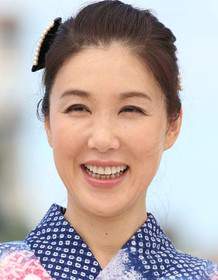
Noriko (Mariko Tsutsui)
Played by Mariko Tsutsui
Noriko is Kyoko's assistant who participates in the scripted humiliations and private power plays behind the scenes. She is described as a prima donna who resents Kyoko's amateurishness, mirroring the film's own themes of competition and control. The meta-narrative pushes the idea that freedom is negotiated through the gaze of others.
- 🔗 Power
- 🎭 Assistant
- 🧪 Performance
- OH
One Hundred (Fujiko)
Played by Fujiko
A character within the film's on-screen performances, presented under the in-film persona of One Hundred. The role participates in the layered scenes that blend film production with the characters' private dynamics. Its inclusion underscores the film's commentary on commodified sexuality and performative identities.
- 🎬 In-film
- 🧭 Meta
- 🎭 Performer
- HI
Honoka Ishibashi
Played by Honoka Ishibashi
An actor in the ensemble of the film's meta-narrative, contributing to the provocative performances that drive the plot. Her presence helps highlight the collaborative nature of the staged events and the show's power dynamics.
- 🎭 Ensemble
- 🗝️ Role
- 👥 Cast
- TS
Tsuyoshi Suzuki (Yûya Takayama)
Played by Yûya Takayama
Kyoko's father, whose presence and memories in flashbacks help explain the family's complex attitudes toward sex and education. The dinner-table scenes expose a flawed, permissive environment that shapes Kyoko's perception of intimacy and performance. The father's role in the family's dynamic underscores the film's exploration of intergenerational trauma.
- 👨👩👧 Family
- 🧠 Trauma
- 🧭 Memory
Where and When Is Antiporno Set?
Antiporno is set in Kyoko's gilded studio and luxury residence (Modern day). Here is why the time and place matter to the story.
When
Modern day
The narrative unfolds in present-day settings, primarily inside Kyoko's studio. It intercuts with flashbacks to Kyoko's childhood and family life, revealing the trauma shaped by Taeko's memory. The film moves between immediate performance and memory, creating a liminal sense of time.
Where
Kyoko's gilded studio, luxury residence
The space is a lavish, secluded arena that reflects Kyoko's fame and control over her image. It functions as a stage for interviews and the ritual performances that drive the film's drama. The environment exaggerates the tension between art and exploitation.
- 🎨 Art
- 🏛️ Luxury
- 🔒 Isolation
What Are the Themes of Antiporno?
4 ideas the story keeps returning to, among them Reality-Performance, Power and Memory-Trauma.
-
01
Reality-Performance
The film continually tests what is real versus what is staged. Characters enact scripted scenes that mirror their real lives, blurring boundaries. This meta-layering questions whether freedom comes from authentic desire or crafted image.
-
02
Power
Power dynamics drive the cruelty and submission in the studio. The director, Kyoko, Noriko, and Taeko engage in ritual humiliations that expose gendered control. The meta-narrative suggests that control can be both oppressive and performative.
-
03
Memory-Trauma
Kyoko's memory of Taeko and her parents' intimate moments haunt present actions. The flashbacks reveal how early experiences shape behavior and perception. Trauma surfaces as a craving for approval and fear of judgment.
-
04
Derealization
Reality and filmic illusion collapse into a sense of derealization. Kyoko questions when the take ends and whether she is living or acting. The narrative echoes a Truman Show-like delusion, where boundaries between self and performative role dissolve.
What Kind of Film Is Antiporno?
Dark in tone, with variable pacing and a very complex story, going by the plot summary.
- Tone
- Dark
- Pacing
- Variable
- Story
- Very complex
- Intensity
- High
- Ending
- Ambiguous
A surreal and psychologically intense descent into trauma, identity, and performance where the boundaries between art, memory, and reality dissolve into an oppressive, disorienting experience.
- claustrophobic
- surreal
- oppressive
- dreamlike
- unsettling
- disorienting
- identity
- memory
- performance
- sister bond
Content notes: suicide, sexual humiliation, incestuous themes, psychological abuse, self-harm.
Quiz
How well do you remember Antiporno? Test yourself on the story.