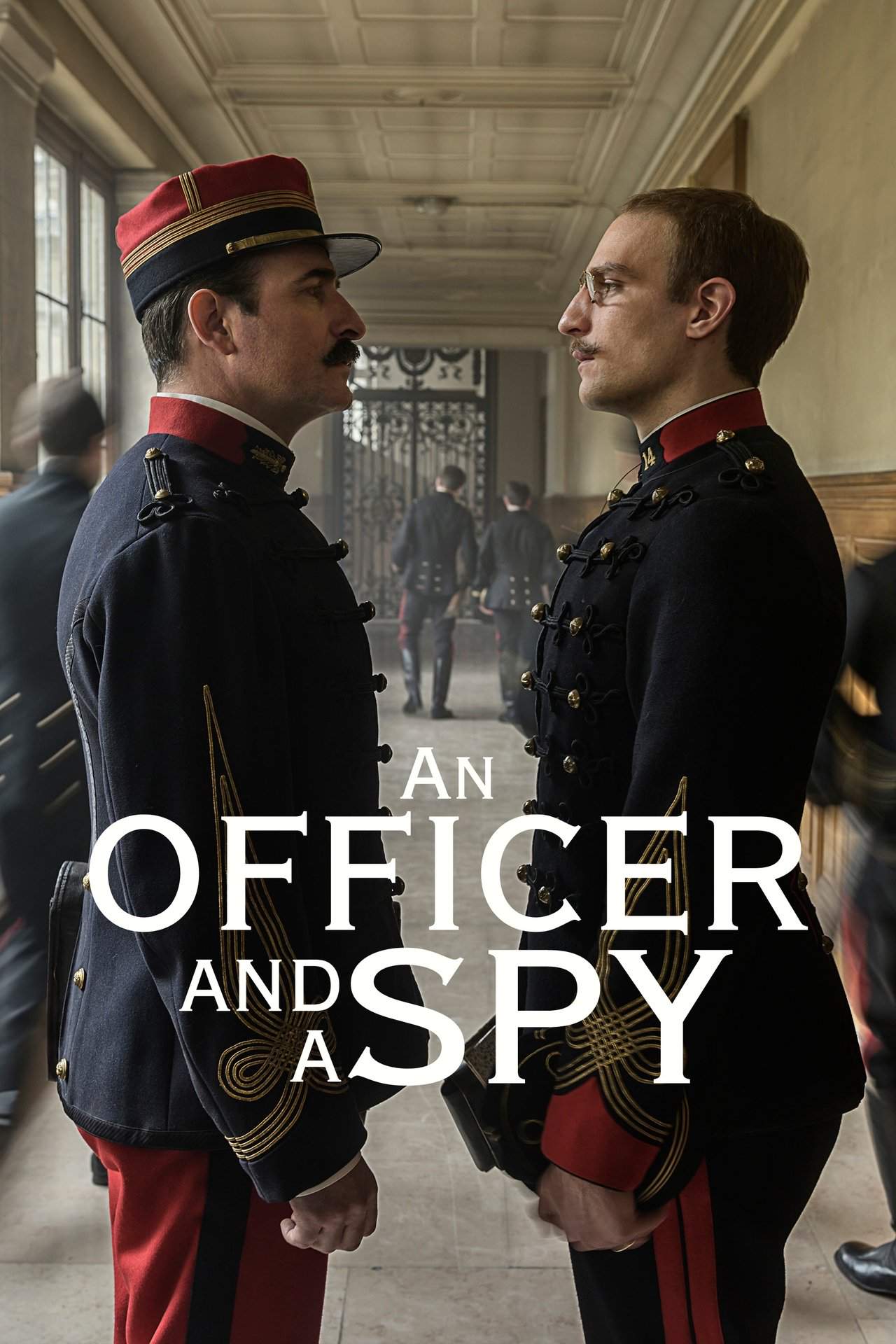
An Officer and a Spy 2025
Directed by

Roman Polanski
Made by

Légende Films
An Officer and a Spy Plot Summary
Read the complete plot summary and ending explained for An Officer and a Spy (2025). From turning points to emotional moments, uncover what really happened and why it matters.
The story begins in 1894, with Alfred Dreyfus, a French army captain, being accused of high treason for allegedly passing military secrets to Germany. He is swiftly convicted and sentenced to exile on Devil’s Island, a remote penal colony. This case sparks widespread controversy in France, partly because Dreyfus was Jewish, fueling anti-Semitic sentiments and deepening the public’s divided opinion.
One year later, Georges Picquart, a respected officer and former teacher of Dreyfus, is appointed head of the secret service section in the French army, known as the Deuxième Bureau. Despite his alleged anti-Semitic tendencies, Picquart begins to suspect that the trial was rushed and biased, influenced heavily by Dreyfus’s Jewish background. During his review of the case, Picquart notices inconsistencies in the dossier, particularly regarding the so-called bordereau, the document used as evidence of Dreyfus’s guilt. After a thorough investigation, Picquart uncovers that the bordereau was not authored by Dreyfus but by another officer, Major Ferdinand Walsin Esterhazy—a revelation that hints at a deeper conspiracy.
Still convinced of Dreyfus’s innocence, Picquart attempts to reopen the case, aiming to clear his name and arrest Esterhazy. However, he faces fierce opposition from his superiors, who fear that exposing the truth could lead to a scandal, revealing corruption within the army. They also see Dreyfus, as a Jewish man, as an ideal scapegoat to conceal the real culprit. Facing pressure, Picquart is removed from his position and sent away on a mission far from Paris. Nevertheless, he refuses to stay silent and eventually manages to reconnect with his friend Louis Leblois, a lawyer, who begins to rally support for Dreyfus’s exoneration. With help from other allies including the famed writer Émile Zola, a campaign against injustice begins to unfold.
The campaign’s momentum leads to Zola’s iconic publication of the open letter titled J’accuse in the newspaper L’Aurore, where he fiercely criticizes the flawed trial process and exposes the corruption involving high-ranking officials and military officers. His boldness draws harsh repercussions; he is tried for defamation and sentenced to a year in prison after false testimonies are revealed during the trial. Meanwhile, the nation remains sharply divided, with some factions still believing in Dreyfus’s guilt and others demanding justice for the wrongly accused. The situation escalates as Lieutenant Colonel Hubert Henry testifies against Dreyfus but later perjures himself, ultimately confessing and dying shortly after in what appears to be a suicide.
With Henry’s deposition confirmed, Picquart is acquitted and released, and Dreyfus is given a second trial in Rennes in 1899. Before the trial, his lawyer Fernand Labori is attacked, preventing him from defending Dreyfus. Despite a lighter sentence, Dreyfus is convicted again. Still, he receives a pardon from the government, acknowledging the injustice but stopping short of full exoneration. Dreyfus, exhausted but dignified, accepts this resolution, although Picquart continues to fight for his innocence, remaining committed to justice.
Seven years later, Dreyfus is eventually acquitted and officially reintegrated into the army, symbolizing that justice has finally prevailed. In 1907, Picquart is appointed Minister of War, partly due to recognition of the wrongful conviction, which also redeemed his reputation. Dreyfus, seeking acknowledgment for the years lost and his degraded rank, confronts Picquart to request a meeting. Nevertheless, their ideals diverge as political tides shift, and Picquart cannot fully fulfill Dreyfus’s wishes. The two men part ways, with mutual respect but no further contact, leaving behind a story of injustice, perseverance, and the profound struggle for truth in a divided France.
An Officer and a Spy Timeline
Follow the complete movie timeline of An Officer and a Spy (2025) with every major event in chronological order. Great for understanding complex plots and story progression.
Dreyfus Is Accused of Treason
In 1894, Captain Alfred Dreyfus, a Jewish officer in the French army, is found guilty of passing military secrets to Germany. He is condemned and exiled to Devil's Island, sparking controversy due to the bias against his Jewish background. The trial and conviction become a symbol of injustice and anti-Semitism in France.
Picquart Begins Investigation
A year later, Georges Picquart, a former teacher of Dreyfus and now head of the secret service, notices irregularities in Dreyfus' case. Despite alleged anti-Semitic sentiments, Picquart suspects the trial was biased and starts to investigate the authenticity of the evidence.
Discovery of True Spy
Picquart uncovers that the document used to convict Dreyfus, known as the bordereau, was not written by him but by Major Ferdinand Walsin Esterhazy. This discovery suggests that Esterhazy is the real spy and that Dreyfus was wrongfully accused.
Picquart Faces Opposition
Attempting to reopen Dreyfus' case and expose Esterhazy, Picquart encounters resistance from his superiors who fear scandal and the potential revelation of army corruption. Picquart is then relieved of his duties and sent away on a distant mission.
Picquart Reconnects and Organizes Support
Despite being removed, Picquart returns secretly and informs lawyer Louis Leblois about the miscarriage of justice. Together, they establish a committee involving politicians and intellectuals to seek Dreyfus' rehabilitation, gaining momentum with public support.
Zola Publishes "J'accuse"
Writer Émile Zola publishes the famous open letter "J'accuse" in the newspaper L'Aurore, vehemently criticizing the army's cover-up and exposing the flaws in Dreyfus' trial. Zola's act sparks a nationwide debate on justice and anti-Semitism.
Zola's Trial and Sentence
Following the publication, Zola is tried for defamation and sentenced to a year in prison after false testimonies are revealed. The country remains divided, with many supporting and opposing Dreyfus' innocence, fueling public unrest.
Dreyfus Re-Trial and Imprisonment
Dreyfus is again convicted in a retrial held in Rennes; the proceedings are marred by violence, and his sentence is somewhat lightened due to mitigating circumstances. Soon after, he is pardoned by the government for his wrongful imprisonment.
Dreyfus's Forced Acceptance
Exhausted and discouraged, Dreyfus accepts the pardon, though he wishes to clear his name completely. Picquart, still committed, fights for full exoneration, but Dreyfus withdraws from further fights, feeling defeated.
Full Exoneration and Reintegration
Seven years later, new evidence leads to Dreyfus's full acquittal, and he is reinstated into the army. The case becomes a symbol of justice victory, although the scars of the miscarriage remain.
Picquart as Minister of War
In 1907, Picquart is appointed Minister of War, recognizing his role in exposing the injustice. Dreyfus approaches Picquart seeking acknowledgment for his lost rank, but Picquart cannot fulfill this request due to changed political circumstances, leading to their eventual parting.
An Officer and a Spy Characters
Explore all characters from An Officer and a Spy (2025). Get detailed profiles with their roles, arcs, and key relationships explained.
Jean-Alfred Desvernine (Damien Bonnard)
A character representing the military and governmental authority, possibly involved in the cover-up or investigation. His presence underscores the institutional resistance to revealing the truth during the affair.
Pauline Monnier (Emmanuelle Seigner)
Likely a character representing the societal or familial perspective, possibly supporting or opposing the truth-seeking efforts. Her role adds personal depth to the political narrative.
Alfred Dreyfus (not explicitly named in cast, implied as the wrongly accused)
The central figure whose wrongful conviction sparks the entire narrative. His character embodies the themes of prejudice, injustice, and resilience amid exile and condemnation.
Georges Picquart (Jean Dujardin)
A determined officer and the protagonist, Picquart investigates the irregularities and fights against institutional corruption. His character represents integrity and moral courage.
An Officer and a Spy Settings
Learn where and when An Officer and a Spy (2025) takes place. Explore the film’s settings, era, and how they shape the narrative.
Time period
1894–1907
Set in the late 19th and early 20th centuries, the movie covers a tumultuous period in French history. This era was characterized by political instability, rising anti-Semitic sentiments, and debates over justice and sovereignty. The events span from Dreyfus's wrongful conviction to his eventual exoneration and rehabilitation.
Location
France, Devil's Island
The film primarily takes place in France, the center of the political and military turmoil surrounding the Dreyfus Affair. Devil's Island is depicted as the remote penal colony where Alfred Dreyfus is exiled, symbolizing justice and injustice. France during this period was marked by political tensions, anti-Semitism, and a struggle for truth.
An Officer and a Spy Themes
Discover the main themes in An Officer and a Spy (2025). Analyze the deeper meanings, emotional layers, and social commentary behind the film.
🕊️
Injustice
The film explores the miscarriage of justice faced by Dreyfus, highlighting the destructive impact of prejudice and corruption. It sheds light on how political and social pressures can distort truth and justice, and the fight to overturn wrongful convictions.
📝
Truth & Justice
A major theme is the pursuit of truth, exemplified by Picquart's investigations and Zola's courageous 'J'accuse' article. The movie underscores the importance of integrity in the judicial system and the moral obligation to defend innocent lives against systemic cover-ups.

Coming soon on iOS and Android
The Plot Explained Mobile App
From blockbusters to hidden gems — dive into movie stories anytime, anywhere. Save your favorites, discover plots faster, and never miss a twist again.
Sign up to be the first to know when we launch. Your email stays private — always.
Explore the mobile appAn Officer and a Spy Spoiler-Free Summary
Discover the spoiler-free summary of An Officer and a Spy (2025). Get a concise overview without any spoilers.
In the waning days of the 19th‑century French Republic, a nation bruised by political rivalry and simmering anti‑Semitic sentiment finds its honor tested by a scandal that reaches from the polished corridors of the Élysée to the bleak, wind‑howled stones of a distant penal outpost. When a promising young officer is abruptly stripped of rank and condemned to exile on the infamous Devil’s Island, the very fabric of the army’s reputation begins to fray, casting a shadow over France’s ideals of justice and duty.
Alfred Dreyfus becomes the reluctant symbol of a case that polarizes a country, his personal fate intertwined with larger questions of loyalty, prejudice, and the price of truth. As the story unfolds, the audience is introduced to Georges Picquart, a disciplined and methodical officer newly placed at the helm of the army’s secret‑service bureau. His ascent places him squarely in the eye of the vortex, where he must navigate a labyrinth of bureaucracy, secrecy, and an unspoken code that guards the institution’s reputation above all else.
The film paints Paris and its military establishments with a muted, almost sepia‑toned atmosphere, where candle‑lit offices crackle with whispered reports and the clatter of typewriters becomes a metronome for rising tension. The looming presence of the remote island—its icy cliffs and endless horizon—serves as a stark visual metaphor for isolation and the weight of accusation. Within this backdrop, the tone oscillates between brooding intensity and moments of quiet, introspective resolve, reflecting the inner conflicts of men bound by duty yet haunted by doubt.
Through meticulous period detail and a restrained, atmospheric score, the narrative invites viewers to contemplate the fragile balance between personal conviction and institutional pressure. It sets the stage for a compelling exploration of how one man’s quest for vindication can ripple through a society on the brink of moral reckoning, leaving the audience eager to see whether truth can ever truly break free from the chains of prejudice and power.
Featured on this page

What's After the Movie?
Not sure whether to stay after the credits? Find out!
Check out our other apps:

SAT Sphere
Build confidence for the Digital SAT.

Mori Atlas
Discover wild places worth protecting.

Luntero
Search smarter for a home in Amsterdam.

Plot Explained
Unravel movie endings and hidden clues.

Pokechamp
Dive into Pokémon data and battle logic.

Driving Theory
Get ready for your European theory test.

Movie Dust
Plan your next cinema trip with ease.

Musemap
Find art and culture as you travel.

Selkobase
Compare credentials before committing.

Local Manual
Turn an unfamiliar country into practical next steps.

Lernavi
Compare school systems before your next move.

GymRoam
Find a workout stop wherever your plans take you.
Explore Our Movie Platform
New Movie Releases (2026)
Famous Movie Actors
Top Film Production Studios
Movie Plot Summaries & Endings
Major Movie Awards & Winners
Best Concert Films & Music Documentaries
Movie Collections and Curated Lists
© 2026 What's After the Movie. All rights reserved.
Privacy Policy