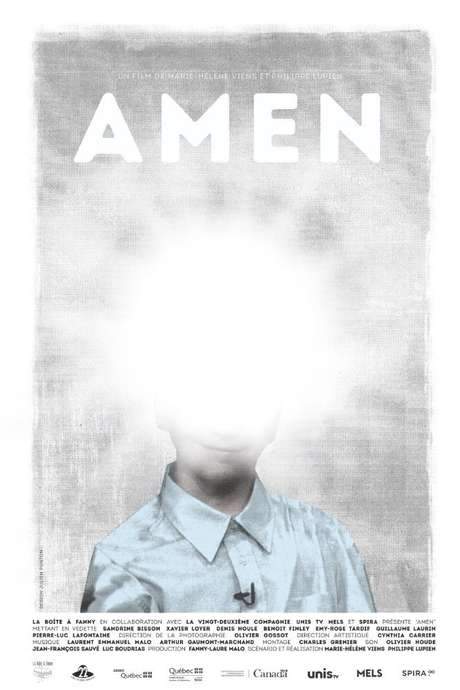
Amen 2017

Directed by

Philippe Lupien
Made by

La Boîte à Fanny
Amen Plot Summary
Read the complete plot summary and ending explained for Amen (2017). From turning points to emotional moments, uncover what really happened and why it matters.
In a stark, unflinching look at moral collapse during World War II, the narrative follows Kurt Gerstein, a Waffen-SS officer assigned to the SS Hygiene Institute. He develops and refines processes meant to purify resources and combat typhus, among them a hydrogen cyanide compound called Zyklon B. The horror dawns on him when he realizes this same method is being weaponized to annihilate Jews and other groups labeled as undesirables in extermination camps. What begins as a scientific assignment quickly becomes a crisis of conscience as Gerstein faces the grim realization that his work is fueling murder on an industrial scale.
Haunted by the truth, Gerstein seeks to alert the world, starting with the Catholic Church. He attempts to reach Pope Pius XII and urge action, but he finds the Vatican slow to respond, offering only cautious and noncommittal condemnations that feel distant from the catastrophe unfolding in Europe. The thread of hope arrives in the form of Riccardo Fontana, a young Jesuit priest who shares Gerstein’s concern and becomes the pair’s ally in trying to illuminate what is happening to the Jews. Together they press for awareness, and Fontana pleads with the pope, yet the Vatican’s response remains muffled, more a stance of abstention than intervention.
As the situation deteriorates, Gerstein travels to Rome to present his case directly, but the opportunity to speak with the Pope is blocked. Meanwhile, the Nazis tighten their grip on the city, and soon Italian Jews are being rounded up for transport to the death camps. Fontana, compelled by a sense of duty, urges the Pope to intervene in person at the train station to halt the deportations. The Pope declines, arguing that stepping onto the platform would impose hardship on Christians living under Nazi rule. In a powerful gesture of solidarity and mourning, Fontana marks himself with the yellow Star of David and volunteers to be loaded onto the deportation train with the Jews.
At the camp, Fontana faces interrogation by the camp’s formidable head, a figure simply known as the Doctor, who wields considerable influence over the regime’s actions. The Doctor recognizes Fontana’s status as a Catholic priest but allows him to stay with the prisoners and even to work in the crematorium. Yet this mercy proves chillingly temporary, as the Doctor ultimately orders Fontana to be gassed. Gerstein, moved to try and save Fontana, fights to intervene, but Fontana remains steadfast in his commitment to the people around him. The Doctor then escorts Gerstein out of the camp, and the grim machinery of slaughter continues while a pathos-filled mass grave near the camp is revealed through the night’s march of trucks and soldiers.
Back home, Gerstein compiles and preserves the evidence of Nazi atrocities and attempts to deliver it to the Allies. His testimony is reviewed, but the legal and political processes of accountability falter in the face of war’s totality. Ultimately, Gerstein is arrested, and, after a formal reading of the charges, is found dead by hanging in his cell. In the film’s closing arc, the Doctor, seeking escape, speaks with a Cardinal in Rome, asking for help to flee the country, asserting simply, “I’m a doctor, just a physician.” The Cardinal agrees to assist, arranging passage toward Argentina as the war’s consequences continue to unfold and as the Doctor’s own fate remains tied to the moral coda of his desperate choices.
The story is a meditation on courage under pressure, the limits of institutional power, and the personal costs of trying to bear witness in the face of incomprehensible violence. It keeps its focus on the human stakes—the choices made by those who speak up, the pressures exerted by those who stay silent, and the way faith, duty, and humanity collide in the darkest hours of history.
Featuring performances by Xavier Loyer, Denis Houle, Sandrine Bisson, Benoît Finley, and Émy-Rose Tardif.
Amen Timeline
Follow the complete movie timeline of Amen (2017) with every major event in chronological order. Great for understanding complex plots and story progression.
Gerstein's role and discovery
Kurt Gerstein, an SS officer in the Hygiene Institute, designs programs for water purification and vermin destruction. He is shocked to learn that Zyklon B, intended for disease control, is being used to exterminate Jews and other undesirables. The revelation unsettles him and sets the stage for his moral conflict during the war.
Efforts to warn the Pope
Gerstein attempts to inform Pope Pius XII about the gassings, hoping for decisive action. He is appalled by the lack of response from the Catholic hierarchy, as condemnations feel timid and vague. The only person visibly moved by the tragedy is Riccardo Fontana, a young Jesuit priest.
Fontana joins the effort
Fontana aligns with Gerstein to raise awareness and push for stronger condemnation. They persist in appealing to church leaders, seeking a more forceful stance from the Vatican. Their collaboration marks a fragile bridge between religious conscience and wartime atrocity.
Gerstein travels to Rome
Gerstein travels to Rome to speak directly with the Pope and present his evidence, but the German occupation blocks him from meeting the Pope. The obstacle underscores the reach of Nazi power even within the heart of the Catholic world. The mission illustrates the peril of crossing authority during the war.
Rome falls under Nazi control
As the Germans tighten their grip, Rome begins deportations of Italian Jews to death camps. The deportations unfold rapidly, signaling a grim acceleration of the genocide under Nazi occupation. The city becomes a frontline of moral crisis for those resisting the orders.
Fontana's act of protest at the train
To protest the deportations, Fontana places a yellow Star of David badge on himself and presents at the train station to be deported with the Jews. He chooses solidarity with the victims over personal safety, drawing attention to the atrocity. His act becomes a potent symbol within the collapsing moral order.
Fontana's fate at the camp
At the camp's crematorium complex, Fontana is interrogated by the camp's powerful Doctor but is allowed to stay with the Jews and work there. Ultimately, the Doctor orders that Fontana be gassed, sealing his grim destiny. The encounter highlights the precarious position of individuals who resist the regime.
Gerstein's failed rescue attempt
Gerstein attempts to intervene for Fontana, but the Doctor remains unmoved by his pleas. The Doctor escorts Gerstein out of the camp as the murders continue, illustrating the limits of individual action against totalitarian machinery. The scene underscores the mass scale of the genocide unfolding around them.
Mass graves and questions of escape
The perspective witnesses German troops digging up and burning bodies in a mass grave near the camp. The Doctor asks Gerstein if he knows anyone who could help him escape Germany, revealing the desperation and danger that persist even as the war presses toward its end. The moment tightens the sense of impending catastrophe.
Gerstein brings evidence to the Allies
Gerstein returns home and compiles extensive documentation of Nazi atrocities, delivering it to Allied authorities. Despite their willingness to review the material, he remains at risk under German authority. The act represents one last bid to awaken the world to the crimes being committed.
Gerstein's arrest and death
Despite cooperating with the Allies, Gerstein is arrested and, after the charges are read, is found hanged in his cell. His death underscores the peril faced by those who sought to expose the truth and hold the perpetrators accountable. His sacrifice casts a long shadow over the narrative’s moral arc.
Escape plans for the Doctor
In the aftermath, the Doctor is seen speaking with a Cardinal in Rome, asking for help leaving the country. The Cardinal agrees to assist in sending him to Argentina, seeking safety after the war. This closing note leaves a glimmer of possible refuge amid the collapse of the regime.
Amen Characters
Explore all characters from Amen (2017). Get detailed profiles with their roles, arcs, and key relationships explained.
Kurt Gerstein
A Waffen-SS officer who designs purification programs but is horrified by their use for extermination. He is morally conflicted and driven by a sense of responsibility to expose the truth, risking his own safety to inform others, including the Pope and Allied forces.
Riccardo Fontana
A young Jesuit priest who partners with Gerstein to raise awareness about the Holocaust. He demonstrates steadfast faith and willingness to act, even at great personal risk, including volunteering to work at the crematorium and facing deportation.
The Doctor
Head of the camp and a friend of Gerstein, a physician who rationalizes the killings and uses his influence to manipulate events. He ultimately orders Fontana to be gassed, but later seeks escape from Germany with help from a Cardinal.
Amen Settings
Learn where and when Amen (2017) takes place. Explore the film’s settings, era, and how they shape the narrative.
Time period
World War II era (1939-1945)
The events occur during the Second World War, as Germany expands across Europe and implements mass murder policies. The SS Hygiene Institute and the use of Zyklon B anchor the period's supposed rationality corroding into atrocity. The narrative sits in a time of urgent moral choices, secrecy, and the struggle to reveal the truth before Allied victory.
Location
Rome, Vatican City, Nazi extermination camps in Europe
The story unfolds across Rome and the Vatican, while the war rages across Nazi-occupied Europe. The setting shifts from the fortified gates of the Vatican to the grim realities of extermination camps, crematoria, and mass graves. Key scenes take place at trains departing Jews from occupied Europe and at the camp, where life and death collide under the Nazi regime.
Amen Themes
Discover the main themes in Amen (2017). Analyze the deeper meanings, emotional layers, and social commentary behind the film.
🕯️
Moral Responsibility
The film centers on the obligation to bear witness to genocide. Gerstein and Fontana wrestle with personal risk to expose crimes, illustrating that moral duty persists even when institutions stay silent. It emphasizes that individual courage can illuminate collective culpability and provoke action.
🏛️
Institutional Silence
The Vatican and other authorities respond with cautious condemnation or inaction. The narrative probes how faith communities and political power can falter in the face of atrocity. Silence becomes a form of complicity that haunts every decision.
📜
Documentation and Witness
Gerstein compiles evidence of the atrocities in an attempt to deliver it to the Allies. The power and fragility of documentation are shown as beacons amid wartime denial and delay. The film underscores how truth-telling confronts indifference and seeks accountability.
✝️
Faith under Pressure
Fontana's Catholic faith is tested as he acts in defense of victims despite institutional limits. The clash between religious duty and political reality is explored through acts of solidarity and sacrifice. Faith becomes both a source of courage and a potential liability under a genocidal regime.

Coming soon on iOS and Android
The Plot Explained Mobile App
From blockbusters to hidden gems — dive into movie stories anytime, anywhere. Save your favorites, discover plots faster, and never miss a twist again.
Sign up to be the first to know when we launch. Your email stays private — always.
Explore the mobile appAmen Spoiler-Free Summary
Discover the spoiler-free summary of Amen (2017). Get a concise overview without any spoilers.
In a world where the ordinary edges of childhood are blurred by a weighty divine mission, Adam steps onto the stage of an unseen battle between hope and finality. At eleven, he is convinced that a celestial summons compels him to become a messenger, carrying a warning that the Last Day draws ever nearer. The film swathes his quiet town in a haze of quiet dread, where everyday moments are tinged with a sense that something profound—and terrifying—is about to be revealed.
The tone balances stark realism with a lingering, almost reverent mysticism. Light filters through dust‑laden windows as Adam moves through familiar streets, yet every glance he offers, every hand he lays upon, hints at a deeper power to heal and ready those around him for what lies ahead. The atmosphere is both intimate and expansive, suggesting that the stakes of his message ripple far beyond his own small world, touching on the timeless symbols of the Father, the Son, and the Holy Ghost that hover like unseen witnesses.
As the clock ticks, Adam navigates the delicate line between childlike wonder and the gravitas of an alleged divine appointment. He encounters neighbors, friends, and strangers whose readiness to hear his Final News becomes a subtle dance of belief, skepticism, and yearning. The film invites viewers to linger on the tension between faith and doubt, urging a contemplation of what it means to bear a prophecy when the world still spins on ordinary concerns. In this suspended moment, the audience is left poised on the brink, waiting to see whether those he meets can truly hear the warning before the inevitable dawn.
Featured on this page

What's After the Movie?
Not sure whether to stay after the credits? Find out!
Check out our other apps:

SAT Sphere
Build confidence for the Digital SAT.

Mori Atlas
Discover wild places worth protecting.

Luntero
Search smarter for a home in Amsterdam.

Plot Explained
Unravel movie endings and hidden clues.

Pokechamp
Dive into Pokémon data and battle logic.

Driving Theory
Get ready for your European theory test.

Movie Dust
Plan your next cinema trip with ease.

Musemap
Find art and culture as you travel.

Selkobase
Compare credentials before committing.

Local Manual
Turn an unfamiliar country into practical next steps.

Lernavi
Compare school systems before your next move.

GymRoam
Find a workout stop wherever your plans take you.
Explore Our Movie Platform
New Movie Releases (2026)
Famous Movie Actors
Top Film Production Studios
Movie Plot Summaries & Endings
Major Movie Awards & Winners
Best Concert Films & Music Documentaries
Movie Collections and Curated Lists
© 2026 What's After the Movie. All rights reserved.
Privacy Policy