
Air Doll 2009

Directed by

Hirokazu Kore-eda
Made by

Eisei Gekijo
Air Doll Plot Summary
Read the complete plot summary and ending explained for Air Doll (2009). From turning points to emotional moments, uncover what really happened and why it matters.
Middle-aged Hideo, Itsuji Itao, lives alone with an inflatable sex doll he calls Nozomi, Bae Doona. The doll is his closest companion; he dresses her, talks to her over dinner, takes her for walks in a wheelchair, and has sex with her. The arrangement is quiet but intimate, a routine that masks a deeper loneliness and a longing for connection in a world that feels distant.
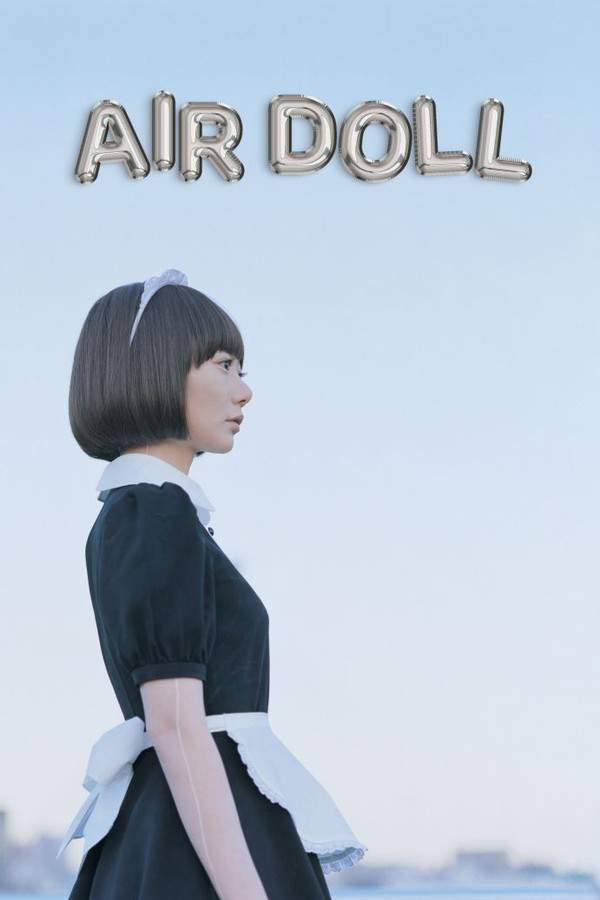
While Hideo is at work, Nozomi comes to life. She dresses in her maid’s outfit and explores the world outside their apartment with childlike wonder, a fresh curiosity that contrasts with Hideo’s stagnant routine. She soon takes a job in a video store and becomes romantically involved with Junichi, Arata Iura. Their bond grows in the margins of ordinary life, as she learns to navigate emotions and desires she hadn’t imagined as a doll. When she accidentally cuts herself and deflates, Junichi repairs the tear with adhesive tape and re-inflates her, a small act that feels like a fragile bridge between two different kinds of being.
One day, Hideo visits the store; Nozomi serves him, embarrassed, but he does not recognize her. Her boss assumes Hideo is her boyfriend and that she is cheating on Junichi, coercing Nozomi into sex. The power dynamics become tangled: the human world pressures a non-human creation to perform intimacy, while Hideo’s own relationship to Nozomi remains stagnant and withdrawn. At their home, Hideo discovers Nozomi is no longer a doll. He asks her to return to lifelessness, as he finds human relationships
“annoying”.
Hurt, she runs away and begins a quest to understand her own worth beyond someone else’s use. Nozomi goes to the factory where she was manufactured and meets her maker. He explains that he believes all the dolls have hearts, judging by the expressions on their faces when they are returned, revealing the kind of treatment they received. When she asks what happens to used dolls, he says he throws them out with the garbage, a stark reminder of the disposable nature of artificial companions and the fragility of artificial lives.
Nozomi tells Junichi she will do whatever he wants for him. He asks to let out her air and re-inflate her as he did in the video store, a request that exposes the blurred lines between care and control. Afterwards, as he sleeps, she attempts to return the favor; finding no plug, she cuts him with scissors, and attempts to stem the blood flow with adhesive tape. Junichi dies, and she leaves his body with the garbage. Heartbroken, she removes the tape sealing her own wound and allows herself to deflate, to be collected with the garbage, completing a haunting arc that probes longing, abuse, and the haunting question of what makes a person whole.
Air Doll Timeline
Follow the complete movie timeline of Air Doll (2009) with every major event in chronological order. Great for understanding complex plots and story progression.
Hideo's solitary life with Nozomi
Middle-aged Hideo lives alone with an inflatable sex doll named Nozomi. She is his closest companion, dressed and spoken to at dinner, and taken for walks in a wheelchair. The doll provides routine company and intimacy in his otherwise quiet existence.
Nozomi comes to life when Hideo is at work
While Hideo is away, Nozomi awakens and comes to life in the apartment. She dresses in a maid outfit and looks at the world outside with curious wonder. The awakening marks the start of her excursions beyond being a mere doll.
Nozomi explores the world and lands a job
Nozomi wanders into the outside world with fresh eyes and curiosity. She soon secures a job at a nearby video store and starts interacting with customers. This new life brings her closer to Junichi and deepens the line between toy and person.
Nozomi falls for Junichi
At the video store, Nozomi forms a romantic bond with Junichi and spends time with him beyond professional duties. Their relationship deepens as she experiences affection and companionship she never had before. The romance complicates her earlier attachments to Hideo.
Nozomi injures herself and is re-inflated
Nozomi accidentally cuts herself, causing a leak that deflates her. Junichi repairs the tear with adhesive tape and re-inflates her, restoring her form and continuing their relationship. The incident underscores her fragile, doll-like vulnerability even as she enjoys real affection.
Hideo visits the video store; Nozomi serves him without recognition
Hideo stops by the video store and Nozomi serves him at the counter, unaware that the mannequin-like appearance contains a real consciousness. Her boss assumes Hideo is her boyfriend and accuses Nozomi of cheating with Junichi, coercing her into sex. The scene blurs the line between fantasy and manipulation in her new life.
Home confrontation and the revelation of Nozomi's humanity
After the troubling encounter, Nozomi returns home to find that Hideo does not recognize her as anything but a doll. He dismisses human relationships as annoying and asks her to return to lifelessness. The personal rift drives Nozomi to reconsider her existence.
Nozomi runs away
Hurt by Hideo's rejection, Nozomi runs away from their home. She makes her way toward the factory where she was manufactured in search of answers about her identity. The escape marks the end of her quiet life with Hideo.
Nozomi meets the maker at the factory
At the factory, Nozomi encounters her creator, who explains that dolls may possess hearts and can reveal their treatment by the faces they show upon being returned. He reveals that used dolls are discarded. The conversation deepens Nozomi's understanding of her own status and agency.
Nozomi resolves to please Junichi again
Nozomi decides she will do whatever Junichi wants to prove she can love him. She returns to him with the intention of accepting his desires and letting out air and re-inflating her as he preferred. The power dynamic shifts from a romantic fantasy to a transactional arrangement.
Nozomi's attempted mercy killing and Junichi's death
While Junichi sleeps, Nozomi tries to return the favour by emptying air and re-inflating her as he did; unable to find a plug, she cuts him with scissors and attempts to stem the blood with adhesive tape. Junichi dies as a result. She abandons his body, overwhelmed by fear and heartbreak.
Nozomi deflates and is disposed of as garbage
Heartbroken, Nozomi removes the tape sealing her own wound and deflates again. She is collected with the garbage, her fate sealed by a world that discards dolls. The ending underscores the bleak cycle of commodified companionship.
Air Doll Characters
Explore all characters from Air Doll (2009). Get detailed profiles with their roles, arcs, and key relationships explained.
Hideo (Itsuji Itao)
A middle-aged man who lives alone with Nozomi and treats the doll as his closest companion. He resents real, messy relationships and prefers a predictable, controllable form of companionship over genuine human contact.
Nozomi (Bae Doona)
A life-like inflatable doll who comes to life when alone with Hideo. She explores the world with curiosity, forms a romantic bond with Junichi, and experiences longing and hurt. Her ultimate deflation and disposal underscore the fragility of her existence.
Junichi (Arata Iura)
A video store employee who is drawn to Nozomi and develops a romantic connection with her. He embodies genuine affection but also becomes a casualty of the complex dynamics surrounding Nozomi's awakening.
Video Shop Owner (Ryo Iwamatsu)
The video-store manager who misreads Nozomi's relationship with Hideo and coerces her in a moment of vulnerability. His actions illustrate how others instrumentalize Nozomi's presence.
Air Doll Settings
Learn where and when Air Doll (2009) takes place. Explore the film’s settings, era, and how they shape the narrative.
Location
Hideo's apartment, Video store, Doll factory
The story centers on a quiet urban apartment where a middle-aged man lives with an inflatable doll he calls Nozomi. When Nozomi comes to life, she ventures into the outside world, visiting a video store and encountering others in a city that feels both intimate and impersonal. The locations—his private home, the public video shop, and the factory where dolls are made—highlight the tension between solitary life and the social world they try to inhabit.
Air Doll Themes
Discover the main themes in Air Doll (2009). Analyze the deeper meanings, emotional layers, and social commentary behind the film.
🫂
Loneliness
Hideo's life is defined by isolation; Nozomi's awakening creates a shared space of longing that never fully resolves. The film contrasts a man's need for predictable companionship with Nozomi’s emerging consciousness. Their evolving dynamic questions whether proximity alone can satisfy the ache for connection. It also shows how loneliness can push people toward unconventional forms of companionship.
🤖
Humanity
Nozomi's awakening raises questions about what makes life and feeling real. The maker's claim that dolls have hearts highlights the divide between manufactured desire and genuine emotion. The interactions with Junichi and others reveal the limits of artificial companionship and the value of empathy beyond appearance. The film invites viewers to consider what it means to be truly alive.
🧸
Objectification
Nozomi begins as a product intended for companionship, owned by Hideo. The video store encounter shows her treated as an object of desire within a market of needs. The factory's disposal of used dolls underscores the commodification and disposability of such artificial beings. The relationships she forms expose how care can become transactional and dehumanizing.
💀
Mortality
The climax centers on mortality as Junichi dies and Nozomi deflates, choosing an end to her life-sustaining presence. Nozomi's act of releasing her own air signals autonomy amid vulnerability and heartbreak. The film suggests life, memory, and affection are fragile, and that the boundaries between living and existing are delicate.

Coming soon on iOS and Android
The Plot Explained Mobile App
From blockbusters to hidden gems — dive into movie stories anytime, anywhere. Save your favorites, discover plots faster, and never miss a twist again.
Sign up to be the first to know when we launch. Your email stays private — always.
Explore the mobile appAir Doll Spoiler-Free Summary
Discover the spoiler-free summary of Air Doll (2009). Get a concise overview without any spoilers.
In a modest apartment on the outskirts of a bustling city, Hideo lives a solitary routine, his only companion an inflatable, life‑size doll he has named Nozomi. Their daily existence blurs the line between object and confidant: he dresses her, shares meals, and even takes her for walks in a wheelchair, treating the silent figure as if she were a living presence. The film opens with a quiet, almost tender portrait of this unconventional partnership, setting a tone that balances the absurd with a lingering sense of yearning.
One seemingly ordinary morning, Nozomi awakens with a curiosity that propels her beyond the confines of the apartment. Concealed from her owner, she slips into the streets, where neon signs and the hum of everyday life contrast sharply with the stillness of her former world. It is in this cityscape that she encounters Junichi, a young employee at a local video shop. Their meeting sparks an unexpected connection, and Nozomi soon finds herself drawn into the rhythm of the shop, learning its quirks and earning a place among its staff. The narrative hints at a blossoming romance, framed by the whimsical notion of an artificial being seeking authentic affection.
As Nozomi navigates this dual existence—half hidden, half integrated—the film gently explores the delicate balance between illusion and reality. The tone remains subtly bittersweet, weaving moments of gentle humor with an undercurrent of existential contemplation. The city itself becomes a character, its streets offering both freedom and uncertainty to a being crafted for a different purpose. Through her eyes, viewers glimpse a world where the ordinary is tinged with the extraordinary, prompting questions about what it truly means to be loved, to belong, and to breathe life into the inanimate.
The story pauses on the cusp of deeper revelations, leaving the audience to wonder how far Nozomi can stretch the boundaries of her newfound life, and what fragile threads might unravel when desire meets the confines of her very construction.
Movies with Similar Twists and Themes
Uncover films that echo the narrative beats, emotional arcs, or dramatic twists of the one you're exploring. These recommendations are handpicked based on story depth, thematic resonance, and spoiler-worthy moments — perfect for fans who crave more of the same intrigue.
Featured on this page

What's After the Movie?
Not sure whether to stay after the credits? Find out!
Check out our other apps:

SAT Sphere
Build confidence for the Digital SAT.

Mori Atlas
Discover wild places worth protecting.

Luntero
Search smarter for a home in Amsterdam.

Plot Explained
Unravel movie endings and hidden clues.

Pokechamp
Dive into Pokémon data and battle logic.

Driving Theory
Get ready for your European theory test.

Movie Dust
Plan your next cinema trip with ease.

Musemap
Find art and culture as you travel.

Selkobase
Compare credentials before committing.

Local Manual
Turn an unfamiliar country into practical next steps.

Lernavi
Compare school systems before your next move.

GymRoam
Find a workout stop wherever your plans take you.
Explore Our Movie Platform
New Movie Releases (2026)
Famous Movie Actors
Top Film Production Studios
Movie Plot Summaries & Endings
Major Movie Awards & Winners
Best Concert Films & Music Documentaries
Movie Collections and Curated Lists
© 2026 What's After the Movie. All rights reserved.
Privacy Policy