
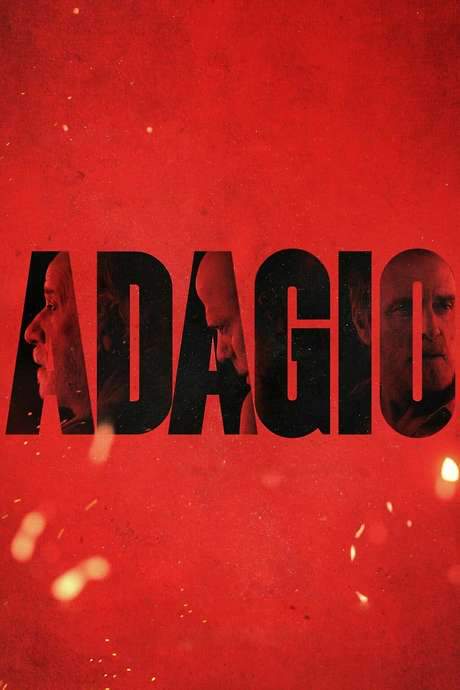
What Is Adagio About?
The premise of Adagio in 256 words, with nothing given away. The full story and the ending follow below.
The film opens in a Rome that seems to be breathing fire. Blackouts flicker through the streets, and sudden sparks turn familiar avenues into a smoky labyrinth where the ordinary and the dangerous blur together. The city’s atmosphere is oppressive yet electric, a pressure cooker of tension that turns every corner into a potential flashpoint. In this volatile backdrop, power and silence move in tandem, shaping a world where every whispered deal feels as dangerous as the flames licking the skyline.
At the heart of the chaos is Manuel, a sixteen‑year‑old whose lineage ties him to a vanished underworld. The son of a former gangster, he suddenly finds himself entangled in a web of blackmail and crooked cops, forced to navigate a night that threatens to consume him. Driven by a mixture of youthful defiance and the weight of his family’s legacy, he seeks any foothold that might keep him from being swallowed whole by the city’s relentless grip.
His search leads him to the aging allies of his father, figures who still carry the echo of the Magliana gang’s old codes. Polniuman—now blind but fiercely loyal—offers a hidden sanctuary, while Cammello, a weary veteran confronting his own mortality, embodies the bittersweet blend of camaraderie and risk that defines their world. Together, these seasoned characters hint at a fragile network of honor and sacrifice, set against the relentless roar of a city ablaze. The tone remains gritty and unflinching, inviting viewers to linger in the uneasy tension that pulses through every shadowed alley and flickering streetlamp.
What Happens in Adagio?
The complete story of Adagio, from the first scene to the last, in 571 words (about 2 minutes). Spoilers throughout. Names in the text link to 5 cast member pages.
Spoilers ahead
The film unfolds over a harrowing 24 hours in Rome, a city choking under fires and blackouts that bend the day into a tense, smoke-laden maze. Manuel, a 16-year-old boy, slips into a gay sex party where alcohol and drugs flow freely and are openly used. His mission is to film and implicate a minister present there for exploitation of child prostitution. Yet as he records, he discovers the building is wired with hidden cameras and is suddenly confronted with the chilling realization that he himself has just been filmed snorting cocaine. Real fear drives him to run, lungs burning and nerves jangling.
The person who gave him the assignment is Vasco, a corrupt policeman who trades in compromising material for money on behalf of high-ranking figures. After Manuel’s escape, Vasco launches a ruthless manhunt, turning the hunt into a city-wide chase through the smoke and sparks of the night.
Manuel seeks shelter with Polniuman, an old friend of his father Daytona and, like Daytona, a former member of the Magliana gang. The man, now blind, agrees to help the boy and sends him to Cammello, another aged associate recently released from prison on medical grounds. Cammello, however, is more preoccupied with his terminal illness and his own last days with his wife, and he drives Manuel away, unwilling to take risks or commitments beyond his final moments.
Vasco tracks down Polniuman’s home by following signals from Manuel’s mobile, and the two end up shooting at close range. Polniuman is badly wounded, and Vasco strangles him to death, closing a brutal chase with a final, choking breath.
At Manuel’s insistence, the next day Cammello finds him a temporary bed on his terrace, then reconnects with [Daytona], now haunted by dementia. Daytona confronts Vasco and is kidnapped, and Vasco kills him. After consulting files that reveal Daytona’s ties to Cammello, Vasco places a transceiver under a table in Cammello’s apartment, turning the space into a surveillance trap.
Manuel discovers his house under the watch of Vasco’s colleagues and slips back to Cammello’s residence. The old man decides to accompany Manuel to a train station so the boy can leave the city. On the way, Manuel reveals that Vasco had photographed him performing fellatio on another adult for money, using that image to blackmail him into infiltrating the sex party and filming the minister.
Cammello returns home, finds the hidden transceiver, and heads for Tiburtina station, where fires and train cancellations throw the chaos of the day into sharper relief. There, he encounters Vasco and Bruno searching for Manuel. A violent confrontation erupts, and Cammello is killed in the shoot-out; Vasco is mortally wounded and dies shortly after.
At the police station, Manuel sees broadcasts of the minister’s stubborn refusal to resign, a moment shaped by the absence of corroborating evidence. He encounters one of Vasco’s sons and hands him his headphones, a poignant relic from the night’s events. Outside, the city’s fires and blackouts march on, leaving a bleak sense of ongoing unrest.
In the closing credits, the fates of the film’s key players are laid bare: Polniuman and Cammello are taken to the morgue, while Daytona’s body is recovered crushed inside the car in which he had been locked, a stark, final image of the night’s brutal cost.
This is a hard-edged, unflinching portrait of power, silence, and survival, where every action is weighed against a city already burning from within.
Adagio Timeline: Every Key Event in Order
15 key events in the order they happen, from “Vasco assigns Manuel to infiltrate the party” to “Closing: aftermath and continuing fires”. 15 events name a place, across 14 locations.
- 1
Vasco assigns Manuel to infiltrate the party
Vasco, a corrupt policeman, tasks Manuel with infiltrating a gay sex party to obtain compromising material against a minister. The objective is to use sexual exploits and leverage against powerful figures. Manuel accepts the assignment, stepping into a dangerous underworld that will pull him deeper into the case.
When:Evening before the party Where:Rome (police office to party locale)
- 2
Manuel infiltrates the sex party
Manuel slips into the party where alcohol and drugs flow freely among adults. He records footage of attendees and the minister he is meant to expose. The atmosphere is tense, and the risk of being discovered is high.
When:Night Where:The party venue, Rome
- 3
Hidden cameras revealed; Manuel realizes he's being filmed
During the surveillance, Manuel discovers hidden cameras watching the party, and he realizes he has already been filmed snorting cocaine. The setup seems designed to trap him in a web of blackmail. Startled and hunted, he escapes the building as alarms go off.
When:Night Where:Party building
- 4
Vasco intensifies pursuit
Vasco intensifies the pursuit of Manuel, using his connections to track the boy through Rome. The chase unfolds as fires and blackouts begin to plague the city. Time is running out as Manuel tries to stay ahead.
When:Following night to morning Where:Rome
- 5
Manuel seeks refuge with Polniuman
Manuel seeks safety with Polniuman, an old associate of Daytona and a former Magliana member. The blind man agrees to help but sends Manuel to Cammello, another aging criminal with knowledge of Rome's underworld. Manuel hopes the route to safety runs through these connections.
When:Next day Where:Polniuman's home
- 6
Cammello grudgingly helps but pushes Manuel away
Cammello initially agrees to help but quickly chases Manuel away, preferring to spend his last days with his wife rather than host the boy. The encounter reveals a grim, weary man who has little patience for new trouble. Manuel remains on his own, navigating the dangerous city.
When:Next day Where:Cammello's residence
- 7
Vasco finds Polniuman's home; deadly confrontation
Vasco tracks down Polniuman's home using signals from Manuel's phone, leading to a confrontation. A gunfight erupts, and Polniuman is badly wounded before Vasco finishes him by strangling him. The death underscores the lethal reach of the corrupt network.
When:That night Where:Polniuman's home
- 8
Next day: terrace bed and meeting Daytona
On Manuel's insistence, Cammello provides a temporary bed on his terrace. He then meets Daytona, now suffering from dementia, highlighting a humanity fragile within a world of crime. The scene marks a temporary lull before more violence.
When:Next day morning Where:Cammello's terrace; Daytona's residence
- 9
Vasco abducts and kills Daytona
Vasco confronts Daytona, abducts him, and kills him soon after. The murder shows how far the corruption extends and how vulnerable those connected to the players are. The loss drives Manuel toward the next steps in his precarious plan.
When:Shortly after the meeting Where:Daytona's location
- 10
Transceiver planted in Cammello's apartment
Vasco consults files linking Daytona to Cammello and places a transceiver under the table in Cammello's apartment. He uses the hidden device to monitor Manuel and to exert control from the shadows. The threat of exposure hangs over both men.
When:Later that day Where:Cammello's apartment
Show the other 5 events of Adagio Hide the last 5 events
- 11
Manuel's home is watched; plan to flee begins
Manuel's home is monitored by Vasco's colleagues, forcing him to seek safety with Cammello again. Cammello agrees to accompany him toward a train station so he can leave Rome. En route, Manuel reveals that Vasco photographed him performing a sexual act and used it as leverage to coerce him into the original mission.
When:Late day Where:Between Manuel's home and Tiburtina station
- 12
Chaos at Tiburtina; shoot-out; deaths
Tiburtina station is chaotic due to ongoing fires and train cancellations. Cammello confronts Vasco and Bruno there, leading to a fatal shoot-out in which Cammello is killed and Vasco is mortally wounded. The city reels as blackouts continue to plague the night.
When:Evening Where:Tiburtina station, Rome
- 13
Minister refuses to resign; lack of evidence
At a police station, Manuel sees TV reports that the minister refuses to resign because there is no corroborating evidence. The case remains unresolved in the public eye, underscoring the corruption that proliferates without solid proof. The moment highlights the fragility of Manuel's involvement.
When:Evening to night Where:Police station, Rome
- 14
Manuel returns a personal token to Vasco's son
Manuel meets one of Vasco's sons and hands over his headphones, offering a small moment of humanity amid the violence. The gesture hints at the complex lives tangled in the web of crime and corruption. A brief human connection cuts through the surrounding chaos.
When:After Where:Rome streets
- 15
Closing: aftermath and continuing fires
The closing credits reveal the ongoing blackouts and fires across Rome. The morgue holds Polniuman and Cammello's corpses while Daytona's car, with his body inside, is crushed in a junkyard. The city remains in turmoil as the events settle into memory.
When:Closing credits Where:Morgue; Junkyard
Who Are the Main Characters in Adagio?
7 characters, among them Manuel Coretti (Gianmarco Franchini), Vasco (Adriano Giannini) and Polniuman (Valerio Mastandrea): who each one is and the part they play in the story. Every profile links to the actor’s page.
- MC
Manuel Coretti (Gianmarco Franchini)
Played by Gianmarco Franchini
A sixteen-year-old boy who infiltrates a gay sex party to film a minister accused of exploiting a minor. Tasked by Vasco, he steps into a web of coercion and danger that blurs morality and survival. As the plot reveals cameras and surveillance around him, he must navigate the consequences of his actions and the violence that follows.
- 🧒 Protagonist
- 🕵️ Infiltrator
- ⚖️ Morally conflicted
- V(
Vasco (Adriano Giannini)
Played by Adriano Giannini
A corrupt policeman who uses Manuel's mission to obtain compromising material from a minister's circle. He relentlessly hunts Manuel after the escape, leveraging surveillance, blackmail, and connections to maintain power.
- 🕵️♂️ Antagonist
- 💰 Corruption
- 🔒 Blackmailer
- P(
Polniuman (Valerio Mastandrea)
Played by Valerio Mastandrea
An old friend of Manuel's father and a former Magliana gang member. Now blind, he shelters Manuel at first and offers a wary loyalty rooted in a lifetime of crime. His presence underscores the persistent pull of Rome's criminal past.
- 🧭 Mentor
- 💔 Loyalty
- 🕳️ Old Rome
-
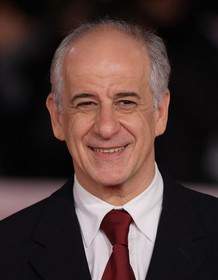
Daytona (Toni Servillo)
Played by Toni Servillo
A former crime boss and friend of Polniuman, now suffering from dementia. He confronts Vasco and is kidnapped, representing the weight of the past in the present crisis.
- 🧓 Aging
- 🗝️ Power
- 🕯️ Legacy
-

Cammello (Pierfrancesco Favino)
Played by Pierfrancesco Favino
An old acquaintance with knowledge of Rome's underworld, recently released from prison and suffering from terminal illness. He helps Manuel briefly but is drawn back into violence and is killed.
- 🧭 Ex-con
- 🩺 Terminal illness
- 🗡️ Tragedy
- B(
Bruno (Francesco Di Leva)
Played by Francesco Di Leva
An old associate who knows the minister and the plan, pulled into the chase as the hunt intensifies.
- 🧩 Confidant
- 🧠 Criminal network
- P(
Politico (Mario Pirrello)
Played by Mario Pirrello
A minister at the sex party who becomes the target of the footage. His political fate hinges on the evidence and the leverage held by those who control the narrative.
- 🏛️ Politics
- 🔒 Pressure
Where and When Is Adagio Set?
Adagio is set in Rome and Italy (Present day). Here is why the time and place matter to the story.
When
Present day
Set over a single 24-hour period in modern Rome, the film unfolds as fires burn and power outages ripple through the city. The day highlights fraying institutions and the precarious balance between crime and authority. It situates the story squarely in contemporary times, where technology and corruption intersect in everyday life.
Where
Rome, Italy
Rome, Italy is depicted as a city fractured by fires and rolling blackouts. The urban landscape appears fragile and crime-scarred, with dimmed streets and crowded transit hubs shaping the action. The decimated setting becomes a tense backdrop for Manuel's mission and the pervasive surveillance that follows.
- 🌆 City
- 🔥 Crisis
- 🕯️ Blackouts
- 💰 Corruption
What Are the Themes of Adagio?
3 ideas the story keeps returning to, among them Corruption, Surveillance and Crisis & Decay.
-
01
Corruption
Powerful figures exploit a city in crisis to shield illicit actions and protect their interests. Vasco leverages Manuel's undercover assignment to extract compromising material from a minister and his circle. The minister's political fate depends on hidden alliances, surveillance, and money. The film uses this thread to critique how wealth and influence corrode justice.
-
02
Surveillance
Hidden cameras, signal tracking, and covert transceivers thread through the plot, turning the city into a surveillance trap. Manuel discovers he has been filmed and blackmailed, a weapon wielded by Vasco. The pursuit shows how the powerful watch and manipulate, eroding privacy in public spaces. It invites reflection on technology's role in modern crime.
-
03
Crisis & Decay
Fires and blackouts reveal the fragility of urban life and the persistence of crime in a decaying city. The film juxtaposes the old guard of Rome with a city in turmoil, where loyalty and survival are constantly tested. The atmosphere of crisis drives the plot toward tragedy while exposing the limits of institutions to protect the vulnerable.
How Does Adagio End?
The last act of Adagio and what it means, in 274 words. The ending lands as bleak. Big spoilers: read the plot summary first if you have not seen it.
The final act, in full
In the film’s closing moments Cammello finally decides to act. After refusing to involve his own family any further, he drives the terrified sixteen‑year‑old Manuel toward the nearest train station, hoping a quick departure will keep the boy out of the corrupt police’s reach. The city’s raging fire has halted the scheduled train, leaving the platform empty and the streets in chaos. While Cammello is waiting, Vasco and his accomplice Bruno arrive, having tracked Manuel through a hidden listening device.
Cammello watches the showdown unfold from the shadows. When Vasco pulls out his weapon and aims at the boy, Cammello springs into the fray, firing his own gun. Bruno falls instantly, and Vasco, already wounded in the neck, collapses as the bullet finally stops his relentless pursuit. With the two officers dead, the immediate threat to Manuel evaporates. The police later escort the shaken teenager to a precinct, where he learns that the scandal‑plagued minister—caught in the compromising footage that set the whole plot in motion—has resigned.
The deaths of the three aging underworld figures—Cammello, Daytona and their former comrades—serve as a bleak yet poetic finale. Their violent ends are portrayed as a final, desperate attempt to shield a new generation from the rot that consumed them. In a quiet, resonant gesture, Manuel hands his favorite headphones to the son of the man who tried to kill him, a silent act of mercy that hints at the possibility of breaking the cycle of vengeance. The burning city, the blackouts, and the lingering ash all underscore the end of an era, while Manuel’s survival suggests that hope, however fragile, can still flicker amid the darkness.
What Kind of Film Is Adagio?
Dark in tone, with fast pacing and a moderate story, going by the plot summary.
- Tone
- Dark
- Pacing
- Fast
- Story
- Moderate
- Intensity
- High
- Ending
- Bleak
A relentless and oppressive neo-noir thriller that unfolds over a tense 24 hours in a burning Rome, plunging the viewer into a desperate chase where corruption and violence lead to tragic, hopeless outcomes.
- tense
- oppressive
- gritty
- anxious
- claustrophobic
- cynical
- father son relationship
- corruption
- blackmail
- revenge
Content notes: murder, kidnapping, assault, child exploitation, drug use, blackmail.
Quiz
How well do you remember Adagio? Test yourself on the story.


