
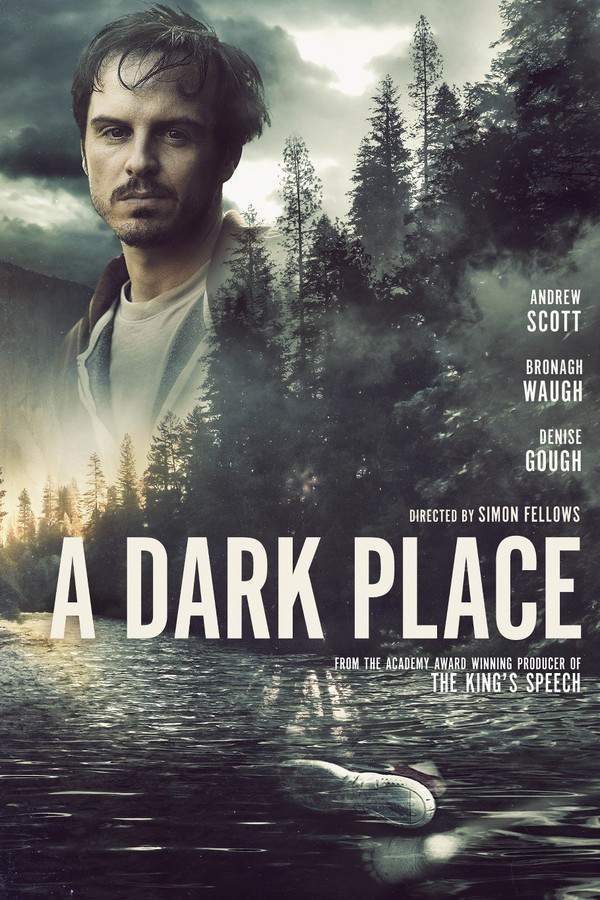
What Is A Dark Place About?
The premise of A Dark Place in 267 words, with nothing given away. The full story follows below.
In a seemingly tranquil suburban enclave, the sudden disappearance of a child shatters the veneer of safety that the residents have long taken for granted. The community’s orderly façade begins to crack, revealing quiet rivalries, unspoken histories, and a collective unease that lingers in the streets and homes alike. The atmosphere is thick with a low‑key dread, a sense that beneath the well‑kept lawns lies something far more unsettled than anyone is willing to admit.
Donald Devlin is an unassuming sanitation worker whose life is already marked by personal challenges. He cares for his wheelchair‑bound mother, navigates a fragile bond with his teenage daughter, and manages the realities of anxiety and autism. Though ordinary in many respects, Donald carries the weight of a troubled past that fuels a relentless empathy for the grieving family. His quiet determination anchors the story, offering a window into a man trying to reconcile his inner turmoil with the pressing need to protect his community.
As rumors swirl and hidden connections begin to surface, Donald finds himself drawn into a web of local authority and familiar faces that are anything but simple. Interactions with Sheriff Mooney, a figure whose presence feels both protective and ominous, and Donna Reutzel, a co‑worker whose loyalty hints at unexpected depths, add layers of tension to his quest. Even Dr. Pomorski, a respected professional in town, becomes a point of curiosity. The film’s tone balances brooding suspense with human vulnerability, inviting viewers to wonder what secrets lie beneath the quiet streets and how far one man will go to confront the shadows that threaten to consume them.
What Happens in A Dark Place?
The complete story of A Dark Place, from the first scene to the last, in 695 words (about 3 minutes). Spoilers throughout. Names in the text link to 4 cast member pages.
Spoilers ahead
In a small town, a local boy goes missing, and sanitation worker Donald Devlin grows steadily more unsettled by what the community accepts as an accident. He’s not convinced the boy drowned; his instincts push him toward a harder, more troubling possibility. Across the quiet streets, Donald carries a heavy personal load: he cares for his wheelchair-bound mother, Betty Devlin, and he tries to keep a fragile bond with his teenage daughter, Tara. The unraveling mystery becomes a mirror for his own anxieties and the way his autism shapes perception, patience, and persistence. The film’s tone sits between suspense and empathy, inviting viewers to notice the small details that others might overlook while also watching a man navigate love, duty, and a mind that questions what he sees and what he fears.
As Donald presses forward, he encounters a web of partial truths. An old classmate who works for the police offers ambiguous, unsatisfying answers that only deepen the sense that something far more insidious is at play; the exchange hints at corruption and avoidance rather than clarity. The tension between what’s said and what remains hidden becomes a constant drumbeat, and the investigation begins to feel less like solving a mystery and more like mapping the limits of Donald’s courage under pressure. A recurring presence—Griff Furst in the role of a former classmate—appears as a reminder that authority and memory can blur together, casting doubt on the reliability of what people tell him.
The danger grows when Donald is lured to a remote overpass and confronted by two masked men who force him toward a desperate, life-or-death choice. They try to push him into jumping, a brutal tactic meant to break him emotionally and physically. The moment is interrupted by Donna Reutzel, a sanitation colleague, who confronts the attackers with a revolver and chases them away with swift, decisive gunfire. Donna’s intervention brings a jolt of relief and a reminder that others in the community are willing to stand up for Donald even as the danger escalates. The assault leaves visible scars and intensifies Donald’s resolve to keep searching for the truth, even as his behavior becomes more anxious and erratic.
In his continuing inquiry, Donald uncovers a troubling history: Dr. Pomorski, a physician who has previously visited the Zeigler household, is connected to the larger pattern of abuse tied to the disappearance. The discovery is chilling because it reframes the case from a local mystery to a story about systemic harm and the people who enable it. Donald also learns of the Sheriff’s close ties to Pomorski, a revelation that adds a layer of peril to his quest and raises questions about who can be trusted when the stakes are so high. The emotional weight of these findings pushes Donald toward a breaking point, and his longing for truth collides with the fear of what admitting that truth could do to the people he loves.
With nostalgia and social isolation pressing in, Donald’s behavior becomes a public concern at work, and he faces warnings from colleagues and overt threats from the Sheriff, who hints at fatal consequences should Donald persist. The mounting pressure drives him toward a final, personal confrontation with Pomorski that is both resolute and doomed. After gathering courage from memories of his daughter and the fragile thread of connection he maintains with his family, Donald makes a decisive journey to Pomorski’s residence. The confrontation is quiet and controlled in appearance, but its consequences reverberate with the weight of years of hidden abuse and corrupted power.
When Pomorski returns home, Donald is waiting with a calm, almost emotionless expression that masks the storm inside. Pomorski attempts to flee toward the fields, but Donald’s resolve holds firm. He follows and, with a single arrow, ends Pomorski’s life. The moment is stark and definitive, and the scene settles into an unsettling calm as Donald sits on a fence beside the body, awaiting the arrival of the police. Sheriff Benjamin Mooney watches with a mix of concern and suspicion as officers close in, and Donald raises his hands in surrender, the tension finally giving way to a grim, sobering quiet on the country road.
A Dark Place Timeline: Every Key Event in Order
13 key events in the order they happen, from “Missing boy spurs Donald's concern” to “Aimless wait and surrender”. 13 events name a place, across 13 locations.
- 1
Missing boy spurs Donald's concern
A local boy goes missing, and Donald Devlin, a sanitation worker, becomes deeply concerned for the child and his grieving mother. He resolves to help and suspects foul play beyond a simple accident.
When:Morning Where:Town
- 2
Body found in the town's creek
The body of the boy is recovered from the town's creek, and Donald suspects drowning may not be the cause. He begins to question what happened and resolves to investigate on his own.
When:Morning Where:Town's creek
- 3
Donald's personal struggles take a front seat
As he pursues clues, Donald grapples with anxiety and autism while caring for his wheelchair-bound mother. His efforts to balance family duties with reopening the mystery paint a portrait of a man under pressure. The investigation becomes a lifeline and a battleground for his mental health.
When:Daytime Where:Donald's home and town
- 4
Sheriff Mooney targets him
Donald's efforts draw the attention of Sheriff Mooney, who uses legal threats and taunts about his mental health to try to shut him down. The sheriff's corruption looms as a dangerous obstacle to uncovering the truth.
When:Afternoon Where:Sheriff's office
- 5
Ambiguous clues from an old classmate
An old classmate working for the police offers cryptic, unreliable information, leaving Donald with more questions than answers. The interaction deepens his sense that someone in authority might be protecting a wrongdoer.
When:Evening Where:Police contact point
- 6
Overpass ambush
Donald is lured to a remote overpass and attacked by two masked men who force him to consider suicide at gunpoint. Donna Reutzel intervenes, firing her revolver and driving the assailants away. The assault solidifies the danger surrounding the case.
When:Night Where:Remote overpass
- 7
Donna's intervention reassures Donald
Donna's confrontation with the attackers disrupts the plan to silence Donald. She saves him from immediate harm and marks a temporary turning point in his investigation. The event also underscores the community's involvement in the case.
When:Night Where:Overpass
- 8
Revealing Pomorski's past
Donald uncovers that Dr. Joel Pomorski has a history of child abuse and was a frequent visitor to the Zeiglers' home before the boy disappeared. The discovery links Pomorski to the missing child and raises questions about the sheriff's ties to him. The truth begins to take shape, though danger remains.
When:Afternoon Where:Pomorski's residence and Zeiglers' home
- 9
Sheriff Mooney's ties exposed
Donald learns of Sheriff Mooney's close connections with Pomorski, further complicating his case. The knowledge puts Donald at greater risk as he confronts systemic corruption.
When:Evening Where:Town hall / Sheriff’s office
- 10
Workplace warnings and a beating
Co-workers issue warnings about Donald's behavior, and Sheriff Mooney physically beats him, escalating the threat. The beating intensifies Donald's resolve to seek the truth despite personal danger.
When:Evening Where:Workplace
Show the other 3 events of A Dark Place Hide the last 3 events
- 11
Preparing to confront Pomorski
Feeling nostalgia and social alienation, Donald visits his teenage daughter and retrieves a bow and arrow from her closet. He plans to confront Pomorski, signaling a drastic step toward closure of the case. The domestic setting contrasts with the looming confrontation.
When:Evening Where:Daughter's home
- 12
Killing Pomorski
Donald drives to Pomorski's residence and, after Pomorski attempts to flee, shoots him with a single arrow. The moment marks a decisive turn from investigation to lethal action. He remains emotionless as he completes his act.
When:Night Where:Pomorski's residence
- 13
Aimless wait and surrender
Donald sits on a fence beside Pomorski's body, waiting for the police to arrive. He drops the bow and arrow, raises his hands, and is subdued by officers as Sheriff Mooney watches with concern. The scene closes the cycle of his quest for justice.
When:Night Where:Country road outside Pomorski's house
Who Are the Main Characters in A Dark Place?
14 characters, among them Donald Devlin (Andrew Scott), Betty Devlin (Sandra Ellis Lafferty) and George Arzerodt (Jared Bankens): who each one is and the part they play in the story. 13 of them link to the actor’s page.
-

Donald Devlin (Andrew Scott)
Played by Andrew Scott
An anxious sanitation worker who cares for his wheelchair-bound mother and forms a bond with his teenage daughter. His determination to uncover the truth amid personal health challenges drives him to question authority and risk confrontation with powerful figures. His pursuit reveals how personal resilience can become a double-edged blade when entangled with corruption.
- 🧠 autism spectrum
- 🧭 relentless pursuit
- 👨👧👦 family responsibility
-

Betty Devlin (Sandra Ellis Lafferty)
Played by Sandra Ellis Lafferty
Donald’s mother, wheelchair-bound, serves as an emotional anchor in his life. Her presence underscores the caregiver dynamic and the pressures Donald faces at home while dealing with the investigation. She provides a stabilizing influence amid the town’s unrest.
- 👵 elder resilience
- 🧷 caregiver
- 🏡 family center
-

George Arzerodt (Jared Bankens)
Played by Jared Bankens
An old classmate who offers ambiguous information through the police channel. His role hints at murky past connections within the community. He embodies the unreliable leads that complicate Donald’s quest for the truth.
- 🕵️♂️ ambiguous informant
- 🧩 murky past
- 🗺️ unreliable leads
- JZ
Jerry Zeigler (Jason Davis)
Played by Jason Davis
A member of the Zeigler family involved in the broader circle around the case; his involvement ties the Zeiglers to the house visits and dynamics surrounding Dr. Pomorski. His actions contribute to the sense of a web of influence over the disappearance.
- 👨👦 family ties
- 🧩 linked mystery
- 🏠 household connections
-

Linda Connolly (Denise Gough)
Played by Denise Gough
A member of the Connolly family connected to the central figures in the town; the summary does not specify her exact role, but she is part of the network surrounding the investigation. Her presence hints at family or community stakes in the case.
- 👩👧👦 family link
- 🕵️♂️ community stake
- 🧩 peripheral influence
- T(
Tara (Becky Wahlstrom)
Played by Becky Wahlstrom
Donald’s teenage daughter, a focal point of his personal life and motivation. Her existence frames Donald’s longing to protect his family and adds emotional weight to his decisions. The bow-and-arrow moment underscores family ties and legacy.
- 👧 daughter
- 💬 family ties
- 🏹 parental protection
- DR
Donna Reutzel (Bronagh Waugh)
Played by Bronagh Waugh
A sanitation colleague who confronts the attackers and offers support to Donald. Her courage and willingness to challenge danger contrast with the town’s corruption and fear.
- 🛡️ protector
- 🔫 courage
- 🤝 colleague solidarity
- WC
Wendy Connolly (Christa Beth Campbell)
Played by Christa Beth Campbell
A member of the Connolly family connected to the broader network around the case. The summary does not detail her specific actions, but she is part of the community context that frames the investigation.
- 🧭 family connection
- 🧩 unknown role
- 🚪 relational ties
- JZ
Justin Zeigler (Christian Finlayson)
Played by Christian Finlayson
Another member of the Zeigler family involved in the case’s circle. The summary references the Zeiglers’ residence in relation to the investigation, indicating family involvement in the events.
- 👨👦 family member
- 🧩 family ties
- 🏠 household involvement
- MH
Max Himmler (Griff Furst)
Played by Griff Furst
An old classmate who works for the police and provides information that affects Donald’s investigation. His presence underscores the town’s internal connections to authority.
- 🕵️♂️ police link
- 🧭 insider knowledge
- 👤 former classmate
- SB
Sheriff Benjamin Mooney (Michael Rose)
Played by Michael Rose
The local lawman whose corrupt ties and dismissive attitude toward Donald’s mental health create a hostile environment for the investigation. His threats and power dynamics serve as a central obstacle.
- 🏛️ corruption
- ⚖️ abuse of power
- 🔒 intimidation
- DJ
Dr. Joel Pomorski
A doctor with a history of abuse who frequented the Zeiglers’ home and becomes a focal point in the case. His connection to powerful figures amplifies the stakes of the investigation.
- 🧪 abusive history
- ⚖️ legal/ethical breach
- 🏠 proximity to family
-

Unknown character (J.D. Evermore)
Played by J.D. Evermore
A cast member listed as J.D. Evermore; the summary does not specify this character’s name or role, but they are part of the film's ensemble around the case.
- ❓ unknown role
- 🧩 potential clue
- 🗝️ link to case
-

Catherine Dyer
Played by Catherine Dyer
Cast member whose exact in-film role is not detailed in the summary; she is part of the town’s cast that interacts with the investigation.
- 🎭 supporting figure
- 🕵️♂️ town involvement
- 🧩 ancillary influence
Where and When Is A Dark Place Set?
A Dark Place is set in Small Town, local creek, remote overpass and rural countryside. Here is why the place matters to the story.
Where
Small Town, local creek, remote overpass, rural countryside
The story unfolds in a quiet, blue-collar town built around a local creek. Key locations include a remote overpass and open farmland, emphasizing the isolation residents feel. The town’s familiar streets versus the darker corners of authority create a tense backdrop for the investigation and confrontation.
- 🏘️ Small town
- 🌊 Creek setting
- 🚧 Rural roads
What Are the Themes of A Dark Place?
4 ideas the story keeps returning to, among them Vigilantism, Mental Health and Corruption.
-
01
Vigilantism
Donald’s belief that he must act outside the system pushes him toward violent resolution. The film examines the moral costs and consequences when a private pursuit of justice collides with official law enforcement. Tension builds as personal commitment overrides procedural boundaries, leading to a climactic act of violence.
-
02
Mental Health
Donald’s anxiety and autism shape how he perceives danger and processes information. The story shows the stigma and misinterpretation he faces from authorities, complicating the pursuit of truth. The narrative considers how mental health intersects with crime investigation and community judgment.
-
03
Corruption
The sheriff’s ties to Dr. Pomorski reveal a corrupt network that can obstruct justice. Power and fear influence decisions and shield wrongdoing within local authority structures. The plot exposes how influence and money can derail investigations and protect abusers.
-
04
Trauma
Grief, nostalgia, and social alienation color Donald’s actions and relationships. The film treats trauma as a driving force behind both empathy and escalating danger. The resolution confronts the lasting impact of violence on individuals and families.
What Kind of Film Is A Dark Place?
Dark in tone, with steady pacing and a straightforward story, going by the plot summary.
- Tone
- Dark
- Pacing
- Steady
- Story
- Straightforward
- Intensity
- High
- Ending
- Bittersweet
A tense and somber thriller that follows an anxious sanitation worker as his obsessive investigation into a child's death exposes town corruption and forces him to confront his own fragile mental state.
- anxious
- tense
- gritty
- melancholic
- oppressive
- lonely
- crime investigation
- mental health
- grief and loss
- corruption
Content notes: child death, child sexual abuse, suicide coercion, violence, psychological abuse.
Quiz
How well do you remember A Dark Place? Test yourself on the story.
