

- Born
- April 14, 1941
- Birthplace
- Lida, Byelorussian Soviet Socialist Republic, USSR
- Full name
- Apolonia Raksa
- Citizenship
- Polish
- Occupations
- Actress, singer, model
- Years active
- 1960-1999
- Spouses
- Andrzej Kostenko
- Children
- 1
Pola Raksa's Career in Numbers
Pola Raksa's films in numbers — as an actor, not counting appearances as themselves: when they were made, the genres Pola Raksa works in most and the milestones along the way. The filmography runs from The Devil from Seventh Grade (1960) to Aria for an Athlete (1979), and the 1960s were the busiest decade.
Pola Raksa Movies by Decade
- 1960s 8
- 1970s 1
The 1960s were Pola Raksa's busiest decade, with 8 films.
Pola Raksa Movies by Genre
- Drama 3
- War 3
- Mystery 1
- Romance 1
- Family 1
Drama is the genre Pola Raksa has worked in most, with 3 films, ahead of war (3).
Pola Raksa Career Milestones
- First film
- The Devil from Seventh Grade 1960
- Biggest box office hit
- The Saragossa Manuscript $13.4K worldwide
- Newest film
- Aria for an Athlete 1979
Pola Raksa Filmography: Every Movie
Every film Pola Raksa is credited on, newest first, with the role, the box office and the Movie Echo Score. Re-order the list to see the best-rated films or the biggest hits first.
- 1979
 Aria for an Athlete as Cecylia · Drama
 - 1968
 Four Tankmen and a Dog Part Four as Marusia "Ogoniok" · Drama
 - 1968
 Four Tankmen and a Dog Part Three as Marusia "Ogoniok" · War
 - 1968
 Four Tankmen and a Dog Part Two as Marusia "Ogoniok" ("A Dog's Claw") · Drama
 - 1967
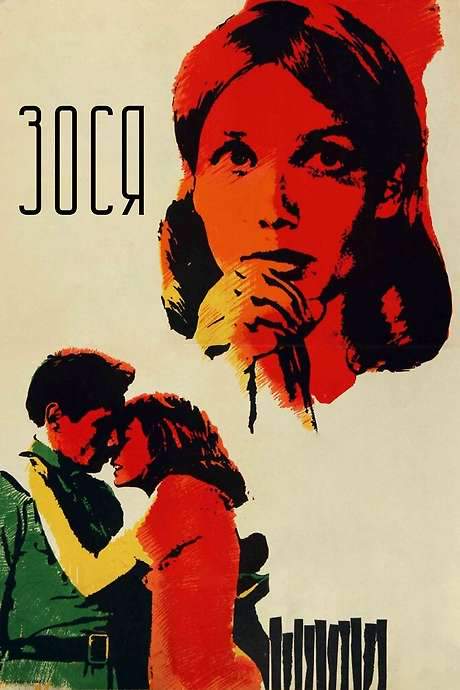 Zosya as Zosya · War
 - 1965
 The Ashes as Helena de With · War
 - 1965
 The Saragossa Manuscript as Inezilia · Mystery Worldwide box office: $13.4K
 - 1964
 No More Divorces as Krysia (Segment 2) · Romance
 - 1960
 The Devil from Seventh Grade as Wanda Gąsowska · Family
Who Is Pola Raksa?
Pola Raksa was born in Lida, Byelorussian Soviet Socialist Republic, USSR in 1941. Credited on films since 1960, as an actor. The background, training and the roles that shaped the career.
Apolonia "Pola" Raksa, born on April 14, 1941, in Lida, then part of the Byelorussian Soviet Socialist Republic in the USSR, emerged as one of Poland's most enduring cinematic icons. Born to Edward Raksa, her early life was irrevocably shaped by the chaos of World War II, forcing her family to flee the German Nazi-occupied territory in 1943 when she was merely two years old. Following the war's conclusion, the Raksa family established their new home in Wrocław's western Lesnica neighborhood, where young Pola completed her secondary education at Liceum Ogólnokształcące No. 1. Demonstrating considerable academic aptitude, she initially pursued higher education at Wrocław University within the Department of Philology, concentrating specifically on Polish Language studies. However, her true passion revealed itself through her involvement with the university's student theater Kalambur, where she first experienced the transformative power of performance and stagecraft. Raksa's serendipitous entry into professional entertainment occurred during the 1950s when a perceptive reporter from Dookoła Świata magazine encountered her in a humble bar mleczny (Polish cafeteria), subsequently featuring the striking young woman as the publication's "Girl of the Week." This fortuitous exposure generated immediate modeling opportunities and small film cameos, gradually illuminating her path toward a dedicated acting career. Recognizing her theatrical destiny, she made the decisive choice to abandon her philological studies, relocating to Łódź to matriculate at the prestigious National Film School in Łódź, from which she graduated in 1964. That pivotal year witnessed both her cinematic debut in Szatan z siódmej klasy and her theatrical inauguration, beginning with Teatr Powszechny in Łódź (1964-1968) before her transition to Warsaw's acclaimed Teatr Współczesny. Her extensive filmography encompasses significant roles in Wojciech Has's masterpiece Rękopis znaleziony w Saragossie (1964), Andrzej Wajda's Popioły (1965), and the beloved television series Czterej pancerni i pies, where her portrayal of the nurse Marusia captured national affection. During her peak popularity throughout the 1960s and 1970s, she garnered international recognition including the Prize of the Soviet Screen at the 1967 Moscow International Film Festival, multiple Silver Mask awards, and the Golden Cross of Merit in 1974. In 2003, decades after her formal retirement from active screen performance in 1999, readers of Super Express honored her as the greatest Polish blonde actress of all time. Her personal life included marriage to cinematographer and director Andrzej Kostenko, with whom she shared a son, Marcin Kostenko, prior to their divorce.
Pola Raksa: Questions & Answers
How many movies Pola Raksa has made, the biggest hit, the best-rated film, the award record and more, answered from the filmography above.
How many movies has Pola Raksa been in?
Pola Raksa is credited on 9 films, from 1960 to 1979. The filmography on this page lists every one of them, newest first, with the role and the Movie Echo Score.
What is Pola Raksa's highest-grossing movie?
The Saragossa Manuscript (1965) is Pola Raksa's biggest box office hit, with $13.4K worldwide. Across every film with box office figures, Pola Raksa's movies have made $13.4K.
Pola Raksa's biggest hits What is Pola Raksa's newest movie?
The most recent film on Pola Raksa's filmography is Aria for an Athlete (1979), in the role of Cecylia.
The Best Pola Raksa Movies, Ranked
Top rated, most awarded and biggest box office hits from 9 credits.
Coming soon to your phone
The Plot Explained Movie Summary App
From blockbusters to hidden gems: plot summaries, endings explained and timelines on your phone. Save your favorites and never miss a twist again.
Be the first to know when it launches. Your email stays private, always. Learn more about the app
