

- Born
- January 16, 1890
- Birthplace
- Dvůr Králové, Bohemia, Austria-Hungary
- Full name
- Karl W. Freund
- Citizenship
- Austria-Hungary, United States
- Occupations
- Cinematographer, director, camera operator
- Years active
- 1907-1960
- Spouses
- Susette Liepmannssohn, Gertrude Hoffman
- Children
- 1
Karl Freund's Career in Numbers
Karl Freund's films in numbers — as a director, not counting appearances as themselves: when they were made, the genres Karl Freund works in most and the milestones along the way. The filmography runs from Michael (1924) to Mad Love (1935), and the 1930s were the busiest decade.
Karl Freund Movies by Decade
- 1920s 1
- 1930s 4
The 1930s were Karl Freund's busiest decade, with 4 films.
Karl Freund Movies by Genre
- Romance 2
- Comedy 1
- Horror 1
Romance is the genre Karl Freund has worked in most, with 2 films, ahead of comedy (1).
Karl Freund Filmography: Every Movie
Every film Karl Freund is credited on, newest first, with the role, the box office and the Movie Echo Score. 4 as director and 1 as actor. Re-order the list to see the best-rated films or the biggest hits first.
Movies Directed by Karl Freund
4


Karl Freund Movies as an Actor
1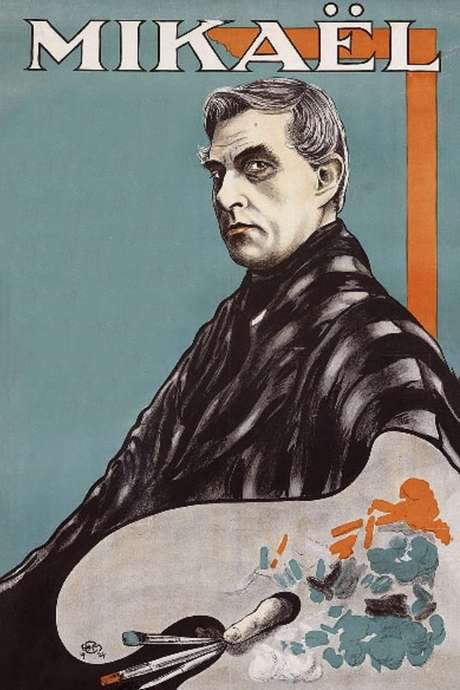
Karl Freund in Documentaries & Specials
1
Who Is Karl Freund?
Karl Freund was born in Dvůr Králové, Bohemia, Austria-Hungary in 1890. Credited on films since 1924, as a director. The background, training and the roles that shaped the career.
Karl W. Freund (January 16, 1890 – May 3, 1969) was a pioneering German Bohemian and American cinematographer and film director whose groundbreaking contributions to cinema fundamentally shaped the visual language of modern filmmaking. Born in Dvůr Králové, Bohemia, then part of Austria-Hungary, Freund moved with his family to Berlin at the age of eleven, where his fascination with the burgeoning medium of film would soon take root. His career began remarkably early in 1905, when at just fifteen years old he was hired as an apprentice projectionist for Alfred Duskes films. By 1907, he had begun working at the International Cinematograph and Light Effect Society, and he soon transitioned into a newsreel cameraman, subsequently joining Sascha-Film in Vienna. Freund's early career saw him relocate to Belgrade to establish a film laboratory for the Brothers Savic, and he was drafted into the Imperial Army during World War I, though he was released from duty after only three months. During the silent film era, Freund established himself as one of the most innovative cinematographers in the industry, working on over 100 films, including the iconic German Expressionist masterpieces The Golem (1920) and The Last Laugh (1924).
Freund is widely celebrated as the pioneer of the unchained camera technique, arguably the most important stylistic innovation of 20th-century cinema, which liberated the camera from its static tripod and allowed it to move freely around the set. He famously wore cameras strapped to his stomach while walking through scenes, mounted them on carts along tracks, and employed cranes to achieve dynamic, fluid shots that revolutionized visual storytelling. His collaboration with director Fritz Lang produced the legendary science-fiction epic Metropolis (1927), and he also co-wrote and served as cinematographer on Berlin: Symphony of a Metropolis (1927). After immigrating to the United States in 1929, Freund continued to shape cinematic history, photographing Dracula (1931)—where he essentially took over direction from a disengaged Tod Browning—and winning an Academy Award for Best Cinematography for The Good Earth (1937). As a director, Freund helmed two iconic horror films: The Mummy (1932) starring Boris Karloff and Mad Love (1935) starring Peter Lorre. In the 1950s, Freund was persuaded by Desi Arnaz to serve as cinematographer for I Love Lucy (1951–1957), where he perfected the flat lighting system that became the industry standard for multi-camera sitcoms, using BNC Mitchell cameras on dollies to capture the live audience experience. In 1944, Freund founded the Photo Research Corporation of Burbank, which developed innovative products like the Norwood Director incident light meter and the Spectra spot brightness meter, the latter of which accompanied 1950s Project ManHigh balloon missions to nearly 100,000 feet altitude and earned Freund two Academy Awards for technical achievement. Freund died at St. John's Hospital in Santa Monica, California, at the age of 79, leaving behind a transformative legacy in both cinema and television.
Karl Freund: Questions & Answers
How many movies Karl Freund has made, the biggest hit, the best-rated film, the award record and more, answered from the filmography above.
How many movies has Karl Freund been in?
Karl Freund is credited on 6 films, from 1924 to 1941. 1 of them as an actor and 4 as a director. The filmography on this page lists every one of them, newest first, with the role and the Movie Echo Score.
What is Karl Freund's newest movie?
The most recent film on Karl Freund's filmography is You Can’t Fool a Camera (1941), in the role of Himself.
The Best Karl Freund Movies, Ranked
Top rated, most awarded and biggest box office hits from 6 directing credits.
Coming soon to your phone
The Plot Explained Movie Summary App
From blockbusters to hidden gems: plot summaries, endings explained and timelines on your phone. Save your favorites and never miss a twist again.
Be the first to know when it launches. Your email stays private, always. Learn more about the app
