
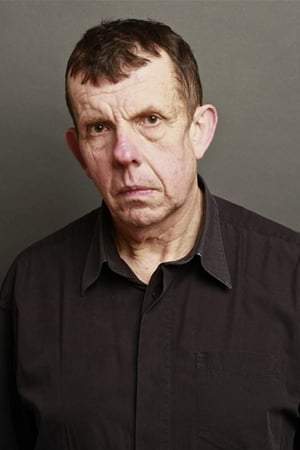
John Locke: Movies & Box Office
- films
- 7
- on screen
- 1939–2025
- box office
- $97.6M
- average score
- 77
- Born
- August 29, 1632
- Birthplace
- Wrington, Somerset, England
- Citizenship
- English
- Occupations
- philosopher, physician, writer, political theorist, educator
- Years active
- 1656-1704
The Best John Locke Movies
The highest-rated films John Locke is credited on, by the Movie Echo Score that blends critic reviews, audience ratings and lasting impact. Vindication Swim (2025) scores highest, at 88. The full ranking adds the biggest box office hits and the most awarded films.
John Locke's Career in Numbers
John Locke's films in numbers — as an actor, not counting appearances as themselves: when they were made, the genres John Locke works in most and the milestones along the way. The filmography runs from Dick Tracy’s G-Men (1939) to Vindication Swim (2025), and the 2020s were the busiest decade.
John Locke Movies by Decade
- 1930s 1
- 1960s 1
- 2010s 2
- 2020s 3
The 2020s were John Locke's busiest decade, with 3 films.
John Locke Movies by Genre
- Biography 2
- Drama 2
- Fantasy 1
- Romance 1
- Action 1
Biography is the genre John Locke has worked in most, with 2 films, ahead of drama (2).
John Locke Career Milestones
- First film
- Dick Tracy’s G-Men 1939
- Biggest box office hit
- The Favourite $95.9M worldwide
- Best-rated film
- Vindication Swim Movie Echo Score 88
- Newest film
- Vindication Swim 2025
John Locke Filmography: Every Movie
Every film John Locke is credited on, newest first, with the role, the box office and the Movie Echo Score. Rated films average a score of 77. Re-order the list to see the best-rated films or the biggest hits first.
- 2025
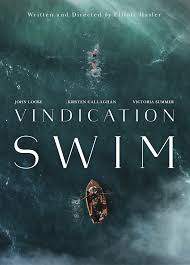 Vindication Swim as Harold Best · Biography Worldwide box office: $114K Movie Echo Score: 88
 - 2022
 Vindication Swim as Harold Best · Drama Movie Echo Score: 85
 - 2021
 Alice, Through the Looking as Old Banker · Fantasy
 - 2019
 Teen Spirit as Gary the Bartender · Drama Worldwide box office: $1.57M Movie Echo Score: 51
 - 2018
 The Favourite as Eviction Courtier · Biography Worldwide box office: $95.9M Movie Echo Score: 85
 - 1969
 Model Shop as Spirit Band Member (uncredited) · Romance
 - 1939
 Dick Tracy’s G-Men as Newscaster · Action
Who Is John Locke?
Credited on films since 1939, as an actor. The background, training and the roles that shaped the career.
John Locke (29 August 1632 – 28 October 1704) was an English philosopher and physician whose writings helped shape the Enlightenment and modern liberal thought. Born in a modest thatched cottage in Wrington, Somerset, he was the son of a parish clerk and a Puritan mother, and he entered Westminster School on the patronage of the MP Alexander Popham before matriculating at Christ Church, Oxford in 1652. Although initially dissatisfied with the classical curriculum, Locke pursued studies in medicine, earning a BA in 1656, an MA in 1658, and a bachelor of medicine in 1675, during which time he formed lasting friendships with scientists such as Robert Boyle and Thomas Sydenham. His friendship with the future Earl of Shaftesbury opened doors to political service, leading to appointments as Secretary to the Board of Trade and Plantations (1667‑1674) and Secretary to the Lords Proprietors of Carolina, experiences that informed his later economic and colonial writings. Locke’s most influential works—An Essay Concerning Human Understanding (1690), Two Treatises of Government (1689/90), and A Letter Concerning Toleration (1689)—argued for the mind as a tabula rasa, for natural rights to life, liberty and property, and for the separation of church and state, ideas that resonated in the American Revolution and the drafting of the U.S. Declaration of Independence. His theory of property, based on labour mixed with nature, and his social‑contract arguments against absolute monarchy provided a philosophical foundation for constitutional government and the principle of consent of the governed. Despite his profound impact, Locke never married, living much of his later life at the country house of Lady Masham in High Laver, Essex, where he died in 1704 and was buried in the local churchyard. Scholars continue to study his extensive library of over three thousand volumes, his meticulous commonplace books, and his correspondence, which reveal a mind deeply engaged with the scientific, theological, and political debates of his era. Today, Locke is celebrated as the “father of liberalism,” a title reflected in his enduring influence on modern political philosophy, education theory, and the development of empirical epistemology.
John Locke: Questions & Answers
How many movies John Locke has made, the biggest hit, the best-rated film, the award record and more, answered from the filmography above.
How many movies has John Locke been in?
John Locke is credited on 7 films, from 1939 to 2025. The filmography on this page lists every one of them, newest first, with the role and the Movie Echo Score.
What is John Locke's highest-grossing movie?
The Favourite (2018) is John Locke's biggest box office hit, with $95.9M worldwide, ahead of Teen Spirit (2019) ($1.57M). Across every film with box office figures, John Locke's movies have made $97.6M.
John Locke's biggest hits What is the best John Locke movie?
By the Movie Echo Score, which blends critic reviews, audience ratings and lasting impact, John Locke's best-rated film is Vindication Swim (2025) with a score of 88, followed by Vindication Swim (2022) (85).
Best John Locke movies, ranked What is John Locke's newest movie?
The most recent film on John Locke's filmography is Vindication Swim (2025), in the role of Harold Best.
Who does John Locke work with most often?
John Locke shares the most films with James Wilby (2 films) and Douglas Hodge (2 films).
The Best John Locke Movies, Ranked
Top rated, most awarded and biggest box office hits from 7 credits.
Coming soon to your phone
The Plot Explained Movie Summary App
From blockbusters to hidden gems: plot summaries, endings explained and timelines on your phone. Save your favorites and never miss a twist again.
Be the first to know when it launches. Your email stays private, always. Learn more about the app
