

- Born
- January 1, 1894
- Birthplace
- Újvidék, Kingdom of Hungary, Austria-Hungary
- Full name
- Svetislav Petrović
- Citizenship
- Serbian
- Occupations
- Actor, Singer
- Years active
- 1918-1962
- Spouses
- Friedel Schuster
Iván Petrovich's Career in Numbers
Iván Petrovich's films in numbers — as an actor, not counting appearances as themselves: when they were made, the genres Iván Petrovich works in most and the milestones along the way. The filmography runs from The Secret Spring (1923) to The Journey (1959), and the 1950s were the busiest decade.
Iván Petrovich Movies by Decade
- 1920s 2
- 1930s 1
- 1940s 2
- 1950s 3
The 1950s were Iván Petrovich's busiest decade, with 3 films.
Iván Petrovich Movies by Genre
- Romance 2
- Crime 2
- Drama 2
- Music 1
- History 1
Romance is the genre Iván Petrovich has worked in most, with 2 films, ahead of crime (2).
Iván Petrovich Career Milestones
- First film
- The Secret Spring 1923
- Biggest box office hit
- Elevator to the Gallows $432K worldwide
- Newest film
- The Journey 1959
Iván Petrovich Filmography: Every Movie
Every film Iván Petrovich is credited on, newest first, with the role, the box office and the Movie Echo Score. Re-order the list to see the best-rated films or the biggest hits first.
- 1959
 The Journey as Szabó Bácsi · Romance
 - 1958
 Elevator to the Gallows as Horst Bencker · Crime Worldwide box office: $432K
 - 1952
 The Devil Makes Three as Sigmund Neffs · Crime
 - 1949
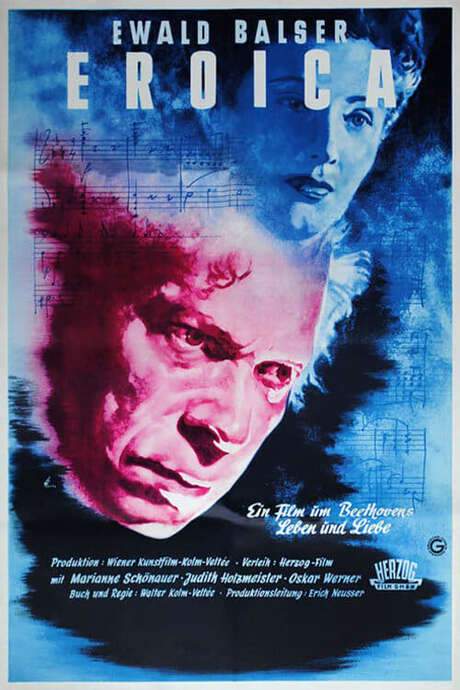 Eroica as Fürst Lichnowsky · Music
 - 1948
 The Trial as Staatsanwalt Egressy · Drama
 - 1936
 Wer zuletzt küßt… as Prinz Carlo Alba · Romance
 - 1926
 The Magician as Dr. Arthur Burdon · Drama
 - 1923
 The Secret Spring as Lieutenant de Hagen · History
Who Is Iván Petrovich?
Iván Petrovich was born in Újvidék, Kingdom of Hungary, Austria-Hungary in 1894. Credited on films since 1923, as an actor. The background, training and the roles that shaped the career.
Iván Petrovich, born Svetislav Petrović on January 1, 1894, in Újvidék, Austria-Hungary (modern-day Novi Sad, Serbia), was a remarkably versatile Serbian film actor and singer who became the first Yugoslav performer to achieve genuine international cinematic stardom. Originally trained as an engineer at Budapest's Polytechnic academy, Petrovich possessed extraordinary athletic gifts that led him to compete as a swimmer at the 1912 Stockholm Summer Olympics, while simultaneously nurturing his talents as a violinist and vocalist throughout his youth. His father, Mladen, worked as a tailor who crafted uniforms for the Serbian army, instilling in young Svetislav a strong connection to his heritage despite the cosmopolitan trajectory his life would eventually take. Following his compulsory service in the Austro-Hungarian army during World War I, the ambitious performer relocated to Vienna, where destiny intervened in the form of director Mihály Kertész—later renowned as Hollywood's Michael Curtiz—who found his birth name too cumbersome for international audiences and rechristened him "Iván." Kertész subsequently directed him in The Sunflower Woman (1918) and the particularly successful The Star of Damascus (1920), establishing the foundation for a prolific trajectory that would span over four decades and encompass approximately one hundred films across multiple continents, languages, and production contexts.
The 1920s marked Petrovich's ascendancy as an international matinee idol, particularly in French cinema where he became celebrated as "the most cherished lover of the French cinema," portraying sophisticated Latin lovers opposite leading ladies like Nita Naldi and Arlette Marchal. During this period, he also attracted significant Hollywood attention through Rex Ingram's The Magician (1926) and The Garden of Allah (1927), briefly positioning him as a potential successor to Rudolph Valentino following the latter's premature death. Unlike many silent film stars who faded with the advent of talkies, Petrovich navigated the transition to sound with remarkable dexterity, leveraging his sonorous voice and aristocratic bearing to excel in character roles as noblemen, military officers, and priests. However, his pronounced accent ultimately proved an insurmountable obstacle to sustained Hollywood success, forcing him to concentrate his efforts on European productions. He became a stalwart of German cinema during the 1930s, appearing in over forty pre-war films including Victoria and Her Hussar (1931) and Alraune (1928), and survived the war years by moving between Hungary and Germany, even covertly supporting captured Serbian officers despite dangerous Nazi surveillance. His post-war career included significant supporting roles in cinematic classics like The Trial (1948) and Louis Malle's Elevator to the Gallows (1958), while he simultaneously served as a radio announcer for Radio Free Europe in Munich. This diverse body of work cemented his complex legacy as an enduring icon of European cinema until his death from stomach cancer in 1962.
Iván Petrovich: Questions & Answers
How many movies Iván Petrovich has made, the biggest hit, the best-rated film, the award record and more, answered from the filmography above.
How many movies has Iván Petrovich been in?
Iván Petrovich is credited on 8 films, from 1923 to 1959. The filmography on this page lists every one of them, newest first, with the role and the Movie Echo Score.
What is Iván Petrovich's highest-grossing movie?
Elevator to the Gallows (1958) is Iván Petrovich's biggest box office hit, with $432K worldwide. Across every film with box office figures, Iván Petrovich's movies have made $432K.
Iván Petrovich's biggest hits What is Iván Petrovich's newest movie?
The most recent film on Iván Petrovich's filmography is The Journey (1959), in the role of Szabó Bácsi.
The Best Iván Petrovich Movies, Ranked
Top rated, most awarded and biggest box office hits from 8 credits.
Coming soon to your phone
The Plot Explained Movie Summary App
From blockbusters to hidden gems: plot summaries, endings explained and timelines on your phone. Save your favorites and never miss a twist again.
Be the first to know when it launches. Your email stays private, always. Learn more about the app
