

- Born
- September 1, 1889
- Birthplace
- Los Angeles, California, U.S.
- Citizenship
- American
- Occupations
- Actor
- Years active
- 1919-1958
Glenn Anders's Career in Numbers
Glenn Anders's films in numbers — as an actor, not counting appearances as themselves: when they were made, the genres Glenn Anders works in most and the milestones along the way. The filmography runs from Sally of the Sawdust (1925) to M (1951), and the 1950s were the busiest decade.
Glenn Anders Movies by Decade
- 1920s 1
- 1930s 2
- 1940s 2
- 1950s 4
The 1950s were Glenn Anders's busiest decade, with 4 films.
Glenn Anders Movies by Genre
- Comedy 4
- Crime 2
- Adventure 1
- Thriller 1
- Drama 1
Comedy is the genre Glenn Anders has worked in most, with 4 films, ahead of crime (2).
Glenn Anders Career Milestones
- First film
- Sally of the Sawdust 1925
- Biggest box office hit
- The Lady from Shanghai $3.35K worldwide
- Newest film
- M 1951
Glenn Anders Filmography: Every Movie
Every film Glenn Anders is credited on, newest first, with the role, the box office and the Movie Echo Score. Re-order the list to see the best-rated films or the biggest hits first.
- 1951
 Behave Yourself! as Pete the Pusher · Crime
 - 1951
 Tarzan’s Peril as Andrews · Adventure
 - 1951
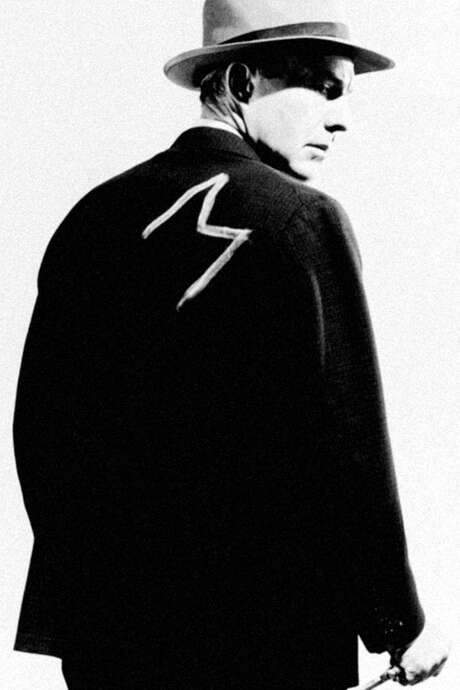 M as Riggert · Thriller
 - 1950
 Nancy Goes to Rio as Arthur Barrett · Comedy
 - 1947
 The Lady from Shanghai as George Grisby · Crime Worldwide box office: $3.35K
 - 1941
 Nothing But the Truth as Dick Donnelly · Comedy
 - 1934
 By Your Leave as Freddie Wilkins · Comedy
 - 1930
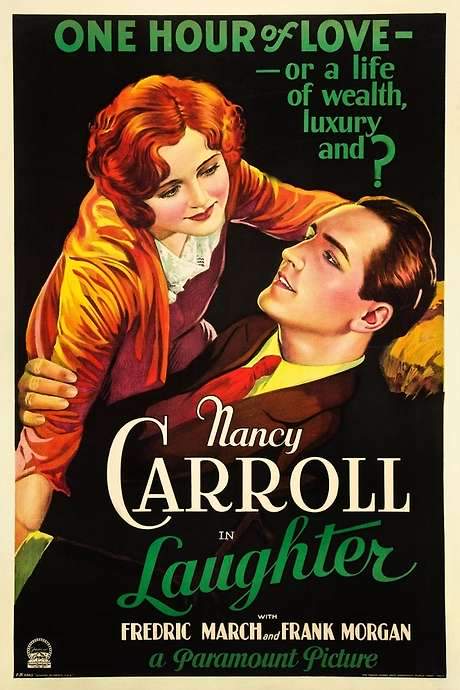 Laughter as Ralph Le Sainte · Comedy
 - 1925
 Sally of the Sawdust as Leon - the Acrobat (as Glen Anders) · Drama
Who Is Glenn Anders?
Glenn Anders was born in Los Angeles, California, U.S. in 1889. Credited on films since 1925, as an actor. The background, training and the roles that shaped the career.
Glenn Anders was born on September 1, 1889, in Los Angeles, California, to a father of Swedish birth and an American mother hailing from Vermont, a multicultural heritage that would inform his nuanced approach to character acting throughout his career. He received his foundational training at the prestigious Wallace Dramatic School in his native city, where he developed the technical skills that would serve him throughout his decades-long career in entertainment. Anders began his professional journey performing in repertory theatre with the Los Angeles Stock Company, making his stage debut in a production of Shakespeare's Macbeth, which provided him with invaluable classical training. Seeking to diversify his performance experience and reach broader audiences, he subsequently ventured into the world of vaudeville, touring extensively across the United States on the prestigious Orpheum Circuit, one of the most prominent entertainment circuits of the era. In 1919, seeking greater artistic opportunities, Anders relocated to New York City, where he enrolled at Columbia University, undertaking rigorous academic study from 1919 to 1921 while simultaneously launching what would become a prolific and distinguished career on Broadway.
Anders made his Broadway debut in 1919 with the production Just Around the Corner, and quickly established himself as a leading man, scoring his first major triumph in 1921 when he landed the male lead in The Demi-Virgin, a controversial farce that generated significant publicity while achieving substantial box office success. Over the subsequent decades, he solidified his reputation as one of the American theatre's most reliable and versatile performers, appearing in an impressive three Pulitzer Prize-winning productions: Hatcher Hughes' Hell Bent for Heaven (1924) as Andy Lowry, Sidney Howard's They Knew What They Wanted (1924) as Joe, and Eugene O'Neill's ambitious nine-act epic Strange Interlude (1928), where he delivered a nuanced performance as Ned Darrell. His extensive theatrical resume further included significant roles in O'Neill's Dynamo (1929) as Reuben Light, Philip Barry's Hotel Universe (1930) as Pat Farley, Rose Franken's Another Language (1932) as Victor Hallam, Samson Raphaelson's Skylark (1939) as Bill Blake, and Moss Hart's Light Up the Sky (1948) as Carleton Fitzgerald, culminating with his final Broadway appearance in Time Remembered during the 1957-1958 season. While primarily celebrated for his stage work, Anders made selective but memorable forays into film and television, most notably delivering a chilling performance as the scheming, unscrupulous lawyer Arthur Bannister in Orson Welles' noir masterpiece The Lady from Shanghai (1947), and appearing in Joseph Losey's 1951 remake of Fritz Lang's classic thriller M. He spent his final years at the Actors' Fund Home in Englewood, New Jersey, where he died on October 26, 1981, at the age of 92, leaving behind a legacy as one of American theatre's most dedicated and accomplished character actors.
Glenn Anders: Questions & Answers
How many movies Glenn Anders has made, the biggest hit, the best-rated film, the award record and more, answered from the filmography above.
How many movies has Glenn Anders been in?
Glenn Anders is credited on 9 films, from 1925 to 1951. The filmography on this page lists every one of them, newest first, with the role and the Movie Echo Score.
What is Glenn Anders's highest-grossing movie?
The Lady from Shanghai (1947) is Glenn Anders's biggest box office hit, with $3.35K worldwide. Across every film with box office figures, Glenn Anders's movies have made $3.35K.
Glenn Anders's biggest hits What is Glenn Anders's newest movie?
The most recent film on Glenn Anders's filmography is Behave Yourself! (1951), in the role of Pete the Pusher.
Who does Glenn Anders work with most often?
Glenn Anders shares the most films with Hans Conried (2 films) and Frank Morgan (2 films).
The Best Glenn Anders Movies, Ranked
Top rated, most awarded and biggest box office hits from 9 credits.
Coming soon to your phone
The Plot Explained Movie Summary App
From blockbusters to hidden gems: plot summaries, endings explained and timelines on your phone. Save your favorites and never miss a twist again.
Be the first to know when it launches. Your email stays private, always. Learn more about the app
