

- Born
- March 11, 1891
- Birthplace
- Urbis, Thann, Alsace, German Empire
- Citizenship
- German
- Occupations
- Film actor, Stage actor
- Years active
- 1919-1952
Gertrud Wolle's Career in Numbers
Gertrud Wolle's films in numbers — as an actor, not counting appearances as themselves: when they were made, the genres Gertrud Wolle works in most and the milestones along the way. The filmography runs from The Three from the Filling Station (1930) to Nights on the Road (1952), and the 1930s were the busiest decade.
Gertrud Wolle Movies by Decade
- 1930s 6
- 1950s 3
The 1930s were Gertrud Wolle's busiest decade, with 6 films.
Gertrud Wolle Movies by Genre
- Drama 3
- Comedy 3
- Family 1
- Music 1
- War 1
Drama is the genre Gertrud Wolle has worked in most, with 3 films, ahead of comedy (3).
Gertrud Wolle Career Milestones
- First film
- The Three from the Filling Station 1930
- Newest film
- Nights on the Road 1952
Gertrud Wolle Filmography: Every Movie
Every film Gertrud Wolle is credited on, newest first, with the role, the box office and the Movie Echo Score. Re-order the list to see the best-rated films or the biggest hits first.
- 1952
 Nights on the Road as Frau Jaguweit · Drama
 - 1950
 Two Times Lotte as Fräulein Linnekogel · Family
 - 1950
 Frauenarzt Dr. Prätorius Comedy
 - 1939
 Robert Koch, der Bekämpfer des Todes as Reinemachefrau · Drama
 - 1934
 The English Marriage as Lady Buckley · Comedy
 - 1933
 Victor and Victoria Music
 - 1933
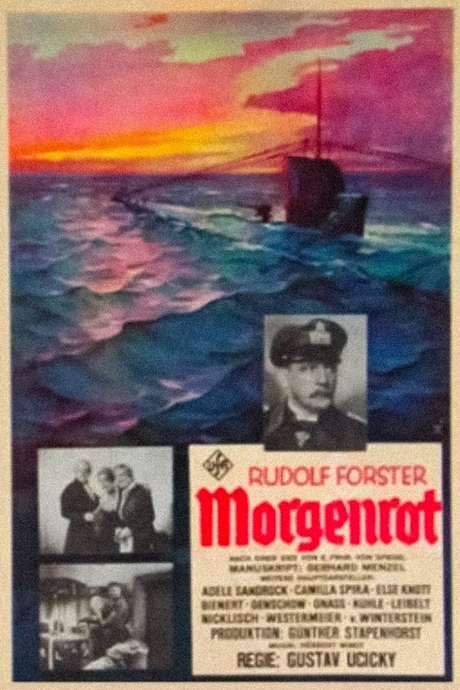 Dawn War
 - 1931
 The Private Secretary as Pensionsmutter · Comedy
 - 1930
 The Three from the Filling Station as Sekretärin · Drama
Who Is Gertrud Wolle?
Gertrud Wolle was born in Urbis, Thann, Alsace, German Empire in 1891. Credited on films since 1930, as an actor. The background, training and the roles that shaped the career.
Gertrud Wolle was a distinguished German film and stage actress born on March 11, 1891, in Urbis, Thann, Alsace, which was then part of the German Empire. Before establishing herself in the performing arts, Wolle spent two years working as a nanny, an experience that provided her with practical life knowledge and observational skills regarding human behavior and domestic dynamics. Seeking to pursue her passion for performance, she enrolled in drama school in Berlin, where she underwent rigorous training in theatrical arts and developed the technical foundation necessary for her future career. Her professional breakthrough came in September 1916 when she joined the prestigious Deutsches Theater, one of Germany's most renowned theatrical institutions, where she made her significant debut performing in Johann Wolfgang von Goethe's masterpiece Faust. This early theatrical engagement not only showcased her dramatic capabilities but also established her presence within Germany's vibrant cultural scene, positioning her for the transition from stage to screen that would define her professional legacy.
Throughout her prolific career spanning from 1919 to 1952, Wolle became extraordinarily typecast as the quintessential eccentric older woman, a specialty that began during the silent film era and persisted with remarkable consistency throughout the advent and dominance of sound cinema. With the introduction of talking pictures, she found herself in constant demand, appearing in an enormous quantity of productions where she specialized in portraying shrill, ridiculous, yet endearing characters that provided essential comic relief to German cinema audiences. Her extensive filmography encompassed numerous small but memorable roles including secretaries, teachers, headmistresses, saleswomen, employees, and neighbors—parts that, while modest in screen time, contributed significantly to the texture and humor of the films in which she appeared. The sheer volume of her cinematic work throughout the 1930s and 1940s left her with limited opportunities to return to theatrical performances, though she did stage a brief comeback during the post-1945 film industry restructuring, performing at venues such as the Stadttheater Passau before resuming her film career. Her cultural significance was formally acknowledged in 1944 when she was included in the Reich Ministry of Public Enlightenment and Propaganda's Gottbegnadeten list, identifying her as one of Hitler's "irreplaceable artists" and securing her continued employment during the war years. Wolle remained active in her characteristic screen roles until her death on July 6, 1952, in Munich, West Germany, cementing her status as one of the most recognizable and prolific character actresses of Germany's classical cinema period.
Gertrud Wolle: Questions & Answers
How many movies Gertrud Wolle has made, the biggest hit, the best-rated film, the award record and more, answered from the filmography above.
How many movies has Gertrud Wolle been in?
Gertrud Wolle is credited on 9 films, from 1930 to 1952. The filmography on this page lists every one of them, newest first, with the role and the Movie Echo Score.
What is Gertrud Wolle's newest movie?
The most recent film on Gertrud Wolle's filmography is Nights on the Road (1952), in the role of Frau Jaguweit.
Who does Gertrud Wolle work with most often?
Gertrud Wolle shares the most films with Anton Walbrook (2 films) and Reinhold Schünzel (2 films).
The Best Gertrud Wolle Movies, Ranked
Top rated, most awarded and biggest box office hits from 9 credits.
Coming soon to your phone
The Plot Explained Movie Summary App
From blockbusters to hidden gems: plot summaries, endings explained and timelines on your phone. Save your favorites and never miss a twist again.
Be the first to know when it launches. Your email stays private, always. Learn more about the app
