
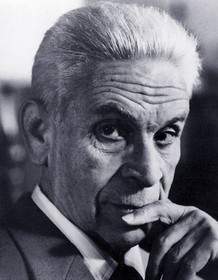
Ernst Deutsch: Movies & Box Office
- films
- 10
- on screen
- 1920–1949
- box office
- $1.42M
- Born
- September 16, 1890
- Birthplace
- Prague, Bohemia, Austria-Hungary
- Citizenship
- Austrian, American
- Occupations
- Actor
- Years active
- 1916-1966
- Spouses
- Anuschka Fuchs
Ernst Deutsch's Career in Numbers
Ernst Deutsch's films in numbers — as an actor, not counting appearances as themselves: when they were made, the genres Ernst Deutsch works in most and the milestones along the way. The filmography runs from From Morning to Midnight (1920) to The Third Man (1949), and the 1940s were the busiest decade.
Ernst Deutsch Movies by Decade
- 1920s 2
- 1930s 1
- 1940s 6
The 1940s were Ernst Deutsch's busiest decade, with 6 films.
Ernst Deutsch Movies by Genre
- Drama 5
- Mystery 1
- Horror 1
- War 1
- Comedy 1
Drama is the genre Ernst Deutsch has worked in most, with 5 films, ahead of mystery (1).
Ernst Deutsch Career Milestones
- First film
- From Morning to Midnight 1920
- Biggest box office hit
- The Third Man $1.42M worldwide
- Newest film
- The Third Man 1949
Ernst Deutsch Filmography: Every Movie
Every film Ernst Deutsch is credited on, newest first, with the role, the box office and the Movie Echo Score. Re-order the list to see the best-rated films or the biggest hits first.
Ernst Deutsch Movies as an Actor
9- 1949
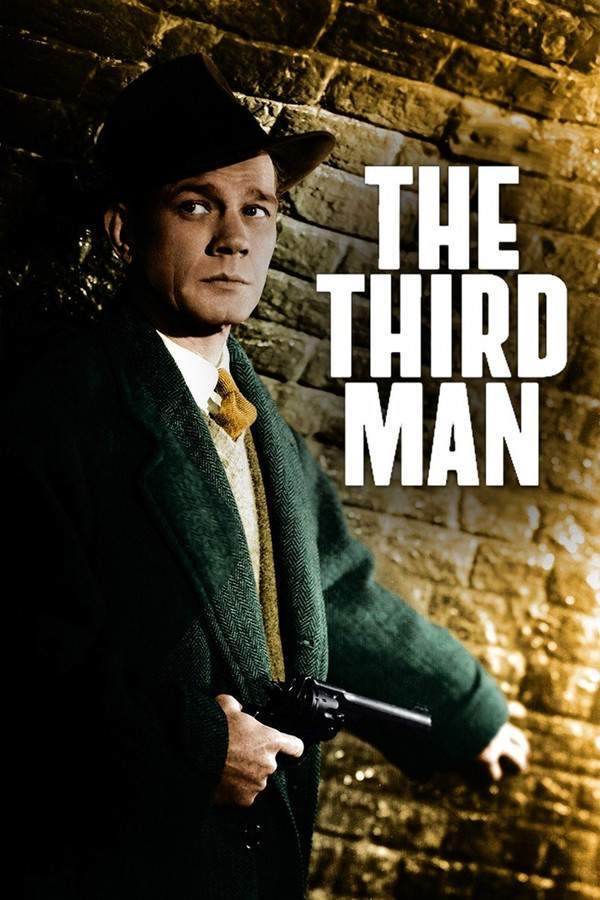 The Third Man Mystery Worldwide box office: $1.42M
 - 1948
 The Trial as Tempeldiener Scharf · Drama
 - 1945
 Isle of the Dead as Dr. Drossos · Horror
 - 1942
 Reunion in France as Captain · War
 - 1940
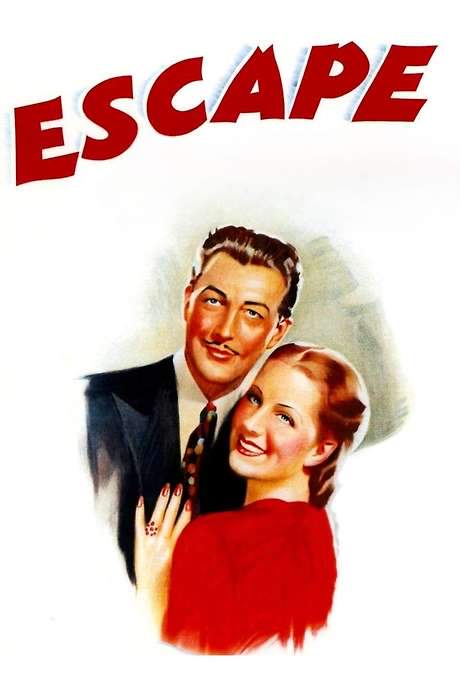 Escape as Baron von Reiber (uncredited) · Drama
 - 1940
 The Man I Married as Otto · Drama
 - 1939
 Nurse Edith Cavell as Dr. Schroeder, Public Prosecutor · Drama
 - 1923
 The Ancient Law as Baruch Mayer · Drama
 - 1920
 From Morning to Midnight as Kassierer · Comedy
Ernst Deutsch in Documentaries & Specials
1
Who Is Ernst Deutsch?
Ernst Deutsch was born in Prague, Bohemia, Austria-Hungary in 1890. Credited on films since 1920, as an actor. The background, training and the roles that shaped the career.
Ernst Deutsch was born on 16 September 1890 in Prague, then part of Bohemia in the Austro‑Hungarian Empire, to a Jewish merchant family. He grew up in a cultured environment, attending a local high school where he excelled at tennis, achieving a seventh‑place ranking on the Austro‑Hungarian list, and later served in the imperial army before turning to the stage. His professional debut came in 1914 at the People's Theatre in Vienna under the direction of Berthold Viertel, and after a brief stint in Prague he was recruited by Edgar Licho to join the Albert Theatre in Dresden in 1916. Deutsch’s breakthrough arrived that same year when he created the title role in Walter Hasenclever’s avant‑garde play The Son, a performance that cemented his reputation as a leading Expressionist actor and led to further acclaimed roles such as Franz Moor in Schiller’s The Robbers and Moritz in Wedekind’s Spring Awakening. Between 1916 and 1933 he appeared on major Berlin stages, toured South America, and built an extensive silent‑film résumé of more than forty titles, including the iconic role of the Rabbi Famulus in Paul Wegener’s The Golem (1920).**
**In 1933, facing growing Nazi persecution, Deutsch fled Germany, living briefly in Vienna, Prague and Zürich before emigrating to the United States in 1938. He adopted the Anglicised name Ernest Dorian and began a second cinematic chapter in Hollywood, often cast as German officers or aristocratic villains, most famously as Baron Kurtz in Carol Reed’s classic noir The Third Man (1949). After World II he returned to Europe, joining the Burgtheater in Vienna where he performed the title role of Nathan the Wise more than two thousand times, and later re‑established himself in Berlin’s theatrical scene. In 1948 he received the Volpi Cup for Best Actor at the Venice Film Festival for his performance in Der Prozeß. Ernst Deutsch died on 22 March 1969 in West Berlin and was interred in the Jewish cemetery on the city’s outskirts, leaving a legacy that spans Expressionist theatre, silent cinema, and post‑war film noir.
Ernst Deutsch: Questions & Answers
How many movies Ernst Deutsch has made, the biggest hit, the best-rated film, the award record and more, answered from the filmography above.
How many movies has Ernst Deutsch been in?
Ernst Deutsch is credited on 10 films, from 1920 to 1949. The filmography on this page lists every one of them, newest first, with the role and the Movie Echo Score.
What is Ernst Deutsch's highest-grossing movie?
The Third Man (1949) is Ernst Deutsch's biggest box office hit, with $1.42M worldwide. Across every film with box office figures, Ernst Deutsch's movies have made $1.42M.
Ernst Deutsch's biggest hits What is Ernst Deutsch's newest movie?
The most recent film on Ernst Deutsch's filmography is The Third Man (1949).
The Best Ernst Deutsch Movies, Ranked
Top rated, most awarded and biggest box office hits from 10 credits.
Coming soon to your phone
The Plot Explained Movie Summary App
From blockbusters to hidden gems: plot summaries, endings explained and timelines on your phone. Save your favorites and never miss a twist again.
Be the first to know when it launches. Your email stays private, always. Learn more about the app
