

- Born
- March 23, 1901
- Birthplace
- Saint Petersburg, Russian Empire
- Full name
- Andrei Engelman
- Citizenship
- Russian, German
- Occupations
- Film actor
- Years active
- 1924-1952
Andrews Engelmann's Career in Numbers
Andrews Engelmann's films in numbers — as an actor, not counting appearances as themselves: when they were made, the genres Andrews Engelmann works in most and the milestones along the way. The filmography runs from Mare Nostrum (1926) to Fantomas Against Fantomas (1949), and the 1920s were the busiest decade.
Andrews Engelmann Movies by Decade
- 1920s 3
- 1930s 3
- 1940s 2
The 1920s were Andrews Engelmann's busiest decade, with 3 films.
Andrews Engelmann Movies by Genre
- Drama 4
- Thriller 1
- Fantasy 1
- History 1
Drama is the genre Andrews Engelmann has worked in most, with 4 films, ahead of thriller (1).
Andrews Engelmann Career Milestones
- First film
- Mare Nostrum 1926
- Newest film
- Fantomas Against Fantomas 1949
Andrews Engelmann Filmography: Every Movie
Every film Andrews Engelmann is credited on, newest first, with the role, the box office and the Movie Echo Score. Re-order the list to see the best-rated films or the biggest hits first.
- 1949
 Fantomas Against Fantomas as Un fou · Thriller
 - 1943
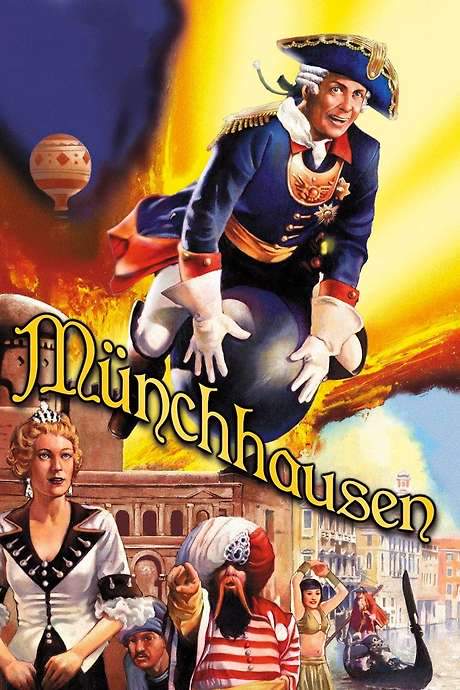 Münchhausen as Fürst Potemkin · Fantasy
 - 1939
 Water for Canitoga as Ruski · Drama
 - 1937
 The Pearls of the Crown as James - le voleur · History
 - 1934
 I Spy as CO
 - 1929
 Diary of a Lost Girl as The Reformatory's Dean · Drama
 - 1929
 Cagliostro Drama
 - 1926
 Mare Nostrum as Submarine Commander (as André von Engelman) · Drama
Who Is Andrews Engelmann?
Andrews Engelmann was born in Saint Petersburg, Russian Empire in 1901. Credited on films since 1926, as an actor. The background, training and the roles that shaped the career.
Andrews Engelmann, born Andrei Engelman on March 23, 1901, in Saint Petersburg, Russian Empire, established himself as a distinctive and enduring presence in European cinema during the early to mid-twentieth century. Following his origins in the imperial Russian capital, he relocated to Germany where he would build the majority of his substantial acting career, becoming particularly known for his specialization in portraying Russian characters despite his German professional base and adopted nationality. His career trajectory impressively encompassed both the silent film era and the transition to sound cinema, allowing him to demonstrate remarkable versatility across different cinematic periods, evolving technologies, and various national film industries. Throughout the 1920s and 1930s, Engelmann appeared in numerous significant productions, consistently bringing authenticity and gravitas to roles that required Eastern European characteristics while working primarily within the extensive German studio system. His extensive filmography includes appearances in over forty motion pictures spanning from 1924 until the early 1950s, encompassing substantial work in both German and British cinema. Notable among his performances are roles in classic films such as Diary of a Lost Girl (1929) directed by G. W. Pabst, Moulin Rouge (1928), and the ambitious fantasy epic Münchhausen (1943). These diverse roles demonstrated his considerable ability to navigate various genres from intense melodrama to swashbuckling adventure with remarkable skill and screen presence. Throughout the turbulent 1930s and 1940s, he maintained steady employment in the German film industry, appearing in numerous productions that reflected the era's complex political landscape, including the colonial-themed Carl Peters (1941) and the nationalistic drama Above All Else in the World (1941). Following the Second World War, Engelmann continued to contribute to European cinema, appearing in international productions such as Mystery in Shanghai (1950) and The Secret of the Mountain Lake (1952) before eventually retiring from the screen. He spent his final decades in peaceful retirement in Switzerland, where he died in Basel on February 25, 1992, at the age of ninety, leaving behind a diverse and culturally significant body of work that illustrated the unique cultural intersections between his Russian heritage and the German film production landscape.
Andrews Engelmann: Questions & Answers
How many movies Andrews Engelmann has made, the biggest hit, the best-rated film, the award record and more, answered from the filmography above.
How many movies has Andrews Engelmann been in?
Andrews Engelmann is credited on 8 films, from 1926 to 1949. The filmography on this page lists every one of them, newest first, with the role and the Movie Echo Score.
What is Andrews Engelmann's newest movie?
The most recent film on Andrews Engelmann's filmography is Fantomas Against Fantomas (1949), in the role of Un fou.
The Best Andrews Engelmann Movies, Ranked
Top rated, most awarded and biggest box office hits from 8 credits.
Coming soon to your phone
The Plot Explained Movie Summary App
From blockbusters to hidden gems: plot summaries, endings explained and timelines on your phone. Save your favorites and never miss a twist again.
Be the first to know when it launches. Your email stays private, always. Learn more about the app
