

Alex Joffé: Movies & Box Office
- films
- 7
- as director
- 4
- on screen
- 1955–1968
- box office
- $21.1K
- Born
- November 18, 1918
- Birthplace
- Alexandria, Egypt
- Full name
- Alexandre Joffé
- Citizenship
- French
- Occupations
- Film director, screenwriter
- Years active
- 1946-1986
- Spouses
- Renée Asseo
- Children
- 3
Alex Joffé's Career in Numbers
Alex Joffé's films in numbers — as an actor and a director, not counting appearances as themselves: when they were made, the genres Alex Joffé works in most and the milestones along the way. The filmography runs from The Hussars (1955) to The Hotshots (1968), and the 1960s were the busiest decade.
Alex Joffé Movies by Decade
- 1950s 2
- 1960s 5
The 1960s were Alex Joffé's busiest decade, with 5 films.
Alex Joffé Movies by Genre
- Drama 2
- Comedy 1
- Thriller 1
- Crime 1
- Fantasy 1
- War 1
Drama is the genre Alex Joffé has worked in most, with 2 films, ahead of comedy (1).
Alex Joffé Career Milestones
- First film
- The Hussars 1955
- Biggest box office hit
- Shoot the Piano Player $21.1K worldwide
- Newest film
- The Hotshots 1968
Alex Joffé Filmography: Every Movie
Every film Alex Joffé is credited on, newest first, with the role, the box office and the Movie Echo Score. 4 as director and 3 as actor. Re-order the list to see the best-rated films or the biggest hits first.
Movies Directed by Alex Joffé
4



Who Is Alex Joffé?
Alex Joffé was born in Alexandria, Egypt in 1918. Credited on films since 1955, as both an actor and a director. The background, training and the roles that shaped the career.
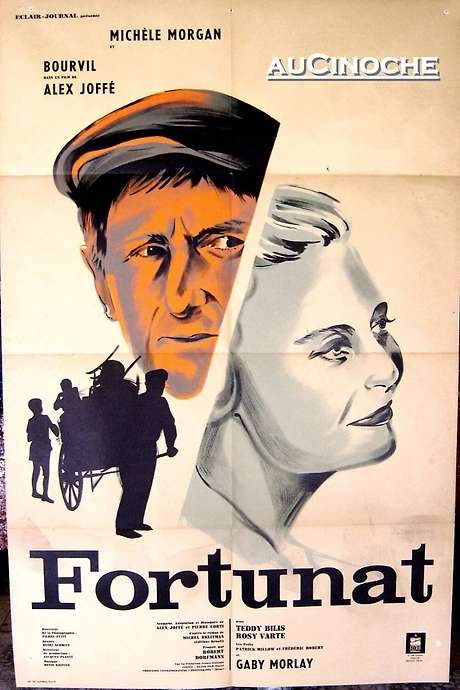
Alex Joffé, born Alexandre Joffé on 18 November 1918 in Alexandria, Egypt, was a distinguished French film director and screenwriter whose career spanned four decades in the French cinema industry. Although he was born in Egypt, his family background and professional life were deeply rooted in France, where he eventually established himself as a notable figure in mid-20th century French filmmaking. His Egyptian birthplace was part of a vibrant cosmopolitan community that produced many influential cultural figures during that era. Joffé began his career in 1946 and remained active in the film industry until 1986, working both behind the camera and as a writer. As a director, he is perhaps best remembered for films such as Les Hussards (1955), which featured legendary French actors like Bourvil, Bernard Blier, Louis de Funès, and Georges Wilson, and Fortunat (1960), a charming comedy starring Bourvil and the iconic Michèle Morgan. He also directed La Grosse Caisse (1965) and Les Cracks (1968), both of which starred the beloved Bourvil, with whom he clearly enjoyed a fruitful professional partnership. His directorial debut came in 1946 with Six heures à perdre, starring André Luguet and Denise Grey. Beyond his directorial work, Joffé was an incredibly prolific screenwriter, contributing to numerous films throughout his career. His writing credits include early works like Don't Shout It from the Rooftops (1943), Florence est folle (1944), and Adieu chérie (1946), as well as later projects such as Monte Carlo Baby (1951), Taxi (1953), and the French version of We'll Go to Monte-Carlo (1951). He also wrote the screenplay for several Spanish-language productions, including El supersabio (1948) and El Mago (1949), demonstrating his versatility as a writer in the international film industry. On a personal note, Joffé was married to Renée Asseo, and together they had three children, including the director Arthur Joffé, as well as two daughters, Marion (born 1952) and Nina (born 1956). Through his mother's side of the family, he was related to the respected author and journalist Salomon Malka, who is known for his biographies of philosophers Emmanuel Lévinas and Franz Rosenzweig, as well as to theatre professor, director, and playwright Avraham Oz. This rich cultural and intellectual heritage likely influenced his artistic sensibilities and storytelling abilities throughout his career. In addition to his work behind the scenes, Joffé occasionally appeared in front of the camera as an actor. His acting credits include roles in Amour de poche (1957), directed by Pierre Kast, François Truffaut's celebrated Tirez sur le pianiste (1960), and Hôtel du Paradis (1986), directed by Jana Boková, which marked his final appearance on screen. Alex Joffé passed away on 18 August 1995 in Paris, France, at the age of 76, leaving behind a substantial legacy in French cinema through his many contributions as both a director and screenwriter.
Alex Joffé: Questions & Answers
How many movies Alex Joffé has made, the biggest hit, the best-rated film, the award record and more, answered from the filmography above.
How many movies has Alex Joffé been in?
Alex Joffé is credited on 7 films, from 1955 to 1968. 3 of them as an actor and 4 as a director. The filmography on this page lists every one of them, newest first, with the role and the Movie Echo Score.
What is Alex Joffé's highest-grossing movie?
Shoot the Piano Player (1960) is Alex Joffé's biggest box office hit, with $21.1K worldwide. Across every film with box office figures, Alex Joffé's movies have made $21.1K.
Alex Joffé's biggest hits What is Alex Joffé's newest movie?
The most recent film on Alex Joffé's filmography is The Hotshots (1968), which Alex Joffé directed.
The Best Alex Joffé Movies, Ranked
Top rated, most awarded and biggest box office hits from 7 credits.
Coming soon to your phone
The Plot Explained Movie Summary App
From blockbusters to hidden gems: plot summaries, endings explained and timelines on your phone. Save your favorites and never miss a twist again.
Be the first to know when it launches. Your email stays private, always. Learn more about the app
