
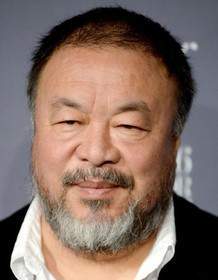
Ai Weiwei: Movies & Box Office
- films
- 17
- as director
- 1
- on screen
- 2009–2025
- box office
- $1.43M
- average score
- 44
- Born
- August 28, 1957 (age 69)
- Birthplace
- Beijing, China
- Citizenship
- Chinese
- Occupations
- contemporary artist, documentarian, activist, architect, designer, photographer, sculptor
- Years active
- 1978-present
- Spouses
- Lu Qing
- Children
- 1
Ai Weiwei's Career in Numbers
Ai Weiwei's films in numbers — as an actor, not counting appearances as themselves: when they were made, the genres Ai Weiwei works in most and the milestones along the way. The filmography runs from Ai Weiwei: Without Fear or Favour (2010) to Eric Ravilious: Drawn to War (2022), and the 2010s were the busiest decade.
Ai Weiwei Movies by Decade
- 2010s 6
- 2020s 2
The 2010s were Ai Weiwei's busiest decade, with 6 films.
Ai Weiwei Movies by Genre
- Documentary 6
- Sci-Fi 1
- Drama 1
Documentary is the genre Ai Weiwei has worked in most, with 6 films, ahead of sci-fi (1).
Ai Weiwei Career Milestones
- First film
- Ai Weiwei: Without Fear or Favour 2010
- Biggest box office hit
- Ai Weiwei: Never Sorry $882K worldwide
- Newest film
- Eric Ravilious: Drawn to War 2022
Ai Weiwei Filmography: Every Movie
Every film Ai Weiwei is credited on, newest first, with the role, the box office and the Movie Echo Score. 1 as director and 7 as actor. Rated films average a score of 44. Re-order the list to see the best-rated films or the biggest hits first.
Movies Directed by Ai Weiwei
1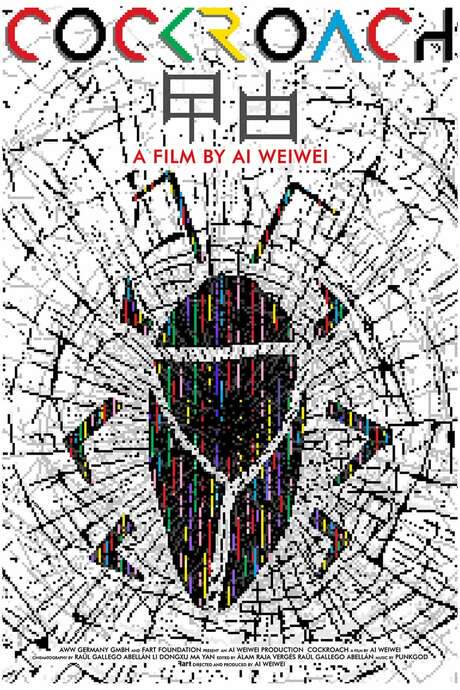
Ai Weiwei Movies as an Actor
7- 2022
 Eric Ravilious: Drawn to War Documentary Worldwide box office: $502K
 - 2019
 Propaganda: The Art of Selling Lies Documentary
 - 2017
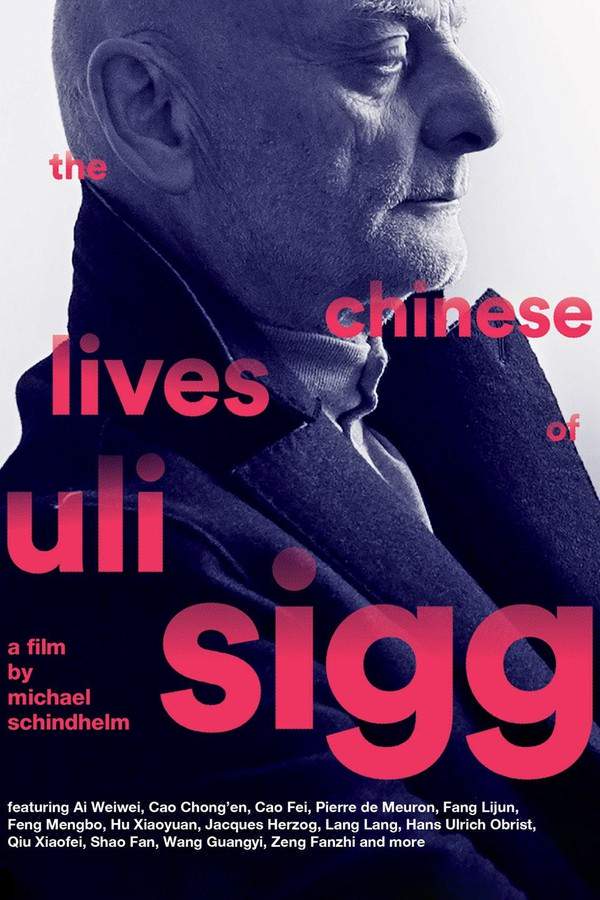 The Chinese Lives of Uli Sigg Documentary
 - 2014
 The Sand Storm Sci-Fi
 - 2014
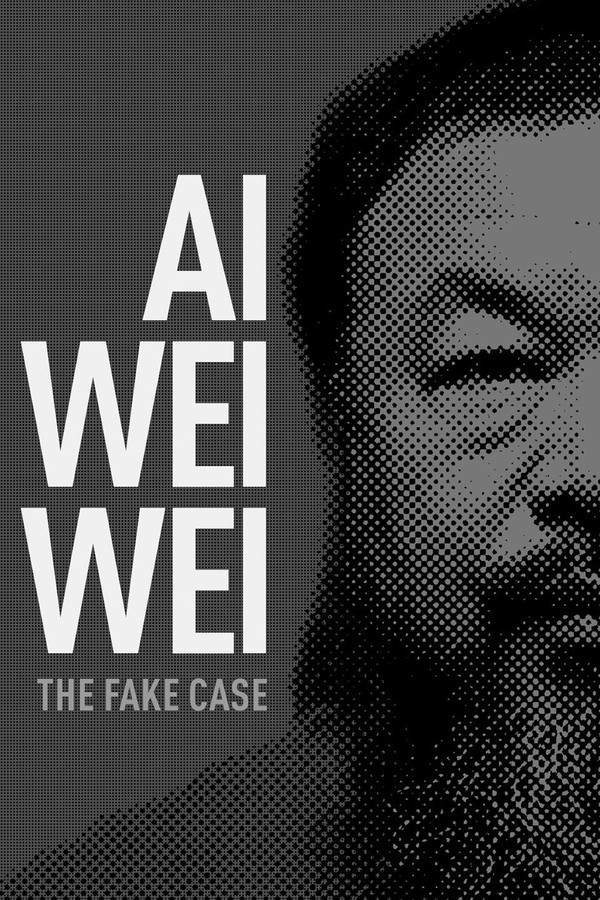 Ai Weiwei: The Fake Case Drama Worldwide box office: $45.3K
 - 2012
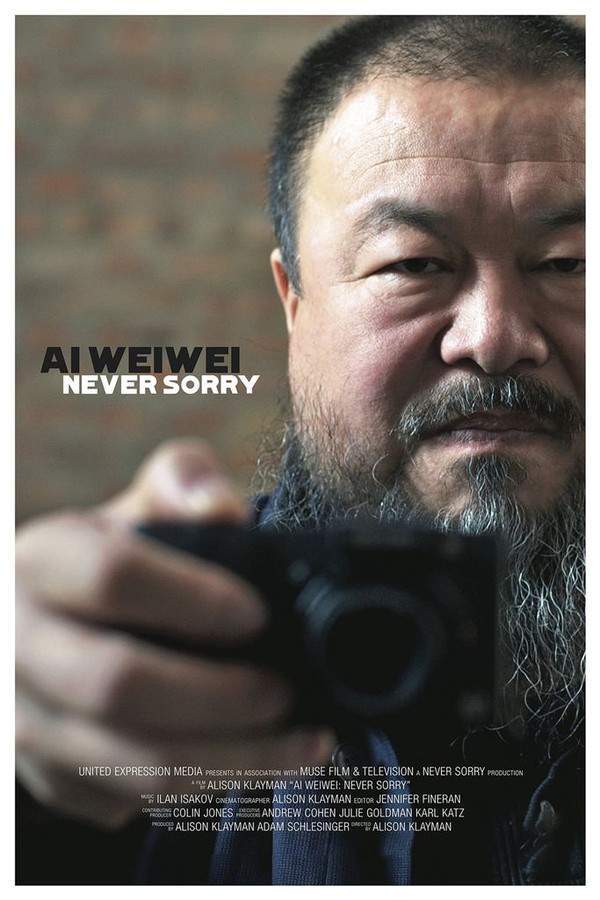 Ai Weiwei: Never Sorry Documentary Worldwide box office: $882K
 - 2010
 Ai Weiwei: Without Fear or Favour Documentary
Ai Weiwei in Documentaries & Specials
9- 2025
 Ai Weiwei’s Turandot as Self · Music
 - 2023
 Clockwork Orange: The Prophecy as Himself · Documentary
 - 2023
 Ithaka as Self · Documentary Movie Echo Score: 44
 - 2023
 Laogai: Prison Nation - Inside China’s Ruling System as Self - Interviewee · Documentary
 - 2019
 Vincent van Gogh Superstar as Self · Documentary
 - 2019
 Ai Weiwei: Yours Truly as Self · Documentary
 - 2018
 Why Are We Creative? as Self · Documentary
 - 2014
 Flowers of Taipei: Taiwan New Cinema as Self · Documentary
 - 2009
 Disturbing the Peace as Self · Documentary
Who Is Ai Weiwei?
Ai Weiwei was born in Beijing, China in 1957 and is 69 years old. Credited on films since 2009, as an actor. The background, training and the roles that shaped the career.
Ai Weiwei (b. 1957‑08‑28 in Beijing, China) emerged from a childhood marked by political persecution, as his poet father Ai Qing was denounced during the Anti‑Rightist Movement and the family was exiled to a labour camp in Heilongjiang when Ai was only one year old. The harsh conditions of the far northwest left an indelible imprint on his worldview, a theme that resurfaces in his later installations that juxtapose personal trauma with collective memory. After the Cultural Revolution ended, the family returned to Beijing in 1976 and Ai enrolled at the Beijing Film Academy to study animation, quickly co‑founding the avant‑garde “Stars” collective in 1978, which launched his lifelong commitment to experimental art. From 1981 to 1993 he lived in the United States, absorbing influences from Marcel Duchamp, Andy Warhol and Jasper Johns, and forging friendships with figures such as poet Allen Ginsberg, experiences that broadened his conceptual vocabulary. Upon returning to China in 1993 he helped create the Beijing East Village art scene, founded the FAKE Design studio in 2003, and collaborated with architects Herzog & de Monument on the iconic Bird’s Nest stadium, while simultaneously producing provocative works like Dropping a Han Dynasty Urn and the monumental Sunflower Seeds at Tate Modern.\n\nAi’s career is inseparable from his activism; he has relentlessly exposed government corruption, most famously leading a citizens’ investigation into the 2008 Sichuan earthquake school collapses, publishing thousands of victims’ names despite official censorship. His public criticism of authoritarian policies led to a high‑profile arrest at Beijing Capital Airport in 2011, a 81‑day detention, and continuous surveillance, events that inspired powerful pieces such as S.A.C.R.E.D. and Man in a Cube. After his 2015 passport was returned, Ai established studios in Berlin, Cambridge and Montemor‑o‑Novo, Portugal, while continuing to create socially resonant works—Law of the Journey (a 230‑foot inflatable refugee boat), Trace (portraits of political prisoners), and Middle Finger in Pink, a recent pop‑culture statement. Married to artist Lu Qing, he is the father of a son born in 2009, and remains a vocal advocate for human rights, freedom of expression, and the transformative power of art worldwide.
Ai Weiwei: Questions & Answers
How many movies Ai Weiwei has made, the biggest hit, the best-rated film, the award record and more, answered from the filmography above.
How many movies has Ai Weiwei been in?
Ai Weiwei is credited on 17 films, from 2009 to 2025. 7 of them as an actor and 1 as a director. The filmography on this page lists every one of them, newest first, with the role and the Movie Echo Score.
What is Ai Weiwei's highest-grossing movie?
Ai Weiwei: Never Sorry (2012) is Ai Weiwei's biggest box office hit, with $882K worldwide, ahead of Eric Ravilious: Drawn to War (2022) ($502K). Across every film with box office figures, Ai Weiwei's movies have made $1.43M.
Ai Weiwei's biggest hits What is the best Ai Weiwei movie?
By the Movie Echo Score, which blends critic reviews, audience ratings and lasting impact, Ai Weiwei's best-rated film is Ithaka (2023) with a score of 44.
Best Ai Weiwei movies, ranked How old is Ai Weiwei?
Ai Weiwei is 69 years old, born on August 28, 1957 in Beijing, China.
What is Ai Weiwei's newest movie?
The most recent film on Ai Weiwei's filmography is Ai Weiwei’s Turandot (2025), in the role of Self.
The Best Ai Weiwei Movies, Ranked
Top rated, most awarded and biggest box office hits from 17 credits.
Coming soon to your phone
The Plot Explained Movie Summary App
From blockbusters to hidden gems: plot summaries, endings explained and timelines on your phone. Save your favorites and never miss a twist again.
Be the first to know when it launches. Your email stays private, always. Learn more about the app
