Valley of Flowers 2007


A timeless Himalayan legend follows a love that endures an unrelenting battle with death, tracing the couple’s devotion from the remote mountain life of the early 19th century through the dizzying, neon‑lit streets of present‑day Tokyo, juxtaposing ancient tradition with modern chaos while exploring the fragile persistence of affection across centuries.


Does Valley of Flowers have end credit scenes?
No!
Valley of Flowers does not have end credit scenes. You can leave when the credits roll.
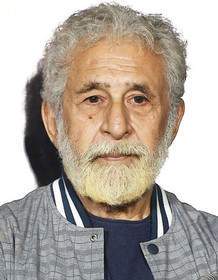
Meet the Full Cast and Actors of Valley of Flowers
Explore the complete cast of Valley of Flowers, including both lead and supporting actors. Learn who plays each character, discover their past roles and achievements, and find out what makes this ensemble cast stand out in the world of film and television.


External Links and Streaming Options
Discover where to watch Valley of Flowers online, including streaming platforms, rental options, and official sources. Compare reviews, ratings, and in-depth movie information across sites like IMDb, TMDb, Wikipedia or Rotten Tomatoes.






Take the Ultimate Valley of Flowers Movie Quiz
Challenge your knowledge of Valley of Flowers with this fun and interactive movie quiz. Test yourself on key plot points, iconic characters, hidden details, and memorable moments to see how well you really know the film.
Valley of Flowers (2007) Quiz: Test your knowledge of the film Valley of Flowers with these ten mixed‑difficulty questions.
Who portrays the bandit leader Jalan in the film?
Full Plot Summary and Ending Explained for Valley of Flowers
Read the complete plot summary of Valley of Flowers, including all major events, twists, and the full ending explained in detail. Explore key characters, themes, hidden meanings, and everything you need to understand the story from beginning to end.
From the edge of the wilderness, a band of bandits led by Jalan Milind Soman lives by its own code, roaming free and taking what they please from Silk Route travelers. They operate with a rough justice of their own making, savoring the power that comes from scorn for the world’s rules. One day, fortune smiles in the form of a demonic mask that catches Jalan’s eye, hinting at something darker and more alluring than plunder. It’s then that a woman arrives—Ushna Mylène Jampanoï —who says she knows Jalan from dreams she has seen only in her sleep. She asks to join the group, and, despite the cautions of his companions, Jalan is already spellbound by her beauty and the aura that surrounds her, so he welcomes her into their caravan.
Ushna quickly becomes more than a muse; she becomes the group’s strategic mind and Jalan’s constant companion. Her presence reshapes the band’s dynamic: she guides the thieves across landscapes, reveals hidden routes, and proves to be an exceptional horse rider who can keep up with Jalan during daring escapes. She tells tales of oceans that lie beyond their sight, and she seems to carry a secret power that makes her indispensable to Jalan’s ambitions. Their bond deepens into a love that defies the band’s rigid rules, a fusion of desire and destiny that pushes them toward a fate neither of them could have anticipated.
As the lovers plot to rewrite their futures, Ushna begins to reveal a profound knowledge of the world around them—landscapes, routes, and points of leverage—that helps them pull off more audacious heists. Yet the couple’s hunger for something more than wealth soon spirals beyond ordinary crime. They consult an astrologer who warns that their union was never meant to last. Refusing this grim verdict, they decide to chase a higher, more dangerous prize: the shadowy forces that govern Fortune and Energy, a theft of life itself that would alter the very fabric of fate. Their quest leads them to steal what is not theirs: the power to levitate, part of a meditating Yogi’s discipline, and—most critically—the shadows of wealthy targets.
With new powers in hand, Jalan and Ushna fly high, literally lifting into the air during an intimate moment witnessed by Jampa La [Jampa Kalsang Tamang], a member of Jalan’s crew who struggles to reconcile loyalty with the revelation of Ushna’s almost-supernatural abilities. The revelation fractures the band’s unity. The others accuse Jalan of breaking the group’s sacred rules by treating Ushna as more than a prize, and the resulting clash leads to a fatal accident: Jalan’s impulsive actions end with Jampa La’s death, driving a wedge between Jalan and the rest of the gang. Hak-Chi [Anil Yadav] rebukes Jalan as the group splinters, leaving Jalan and Ushna to face the consequences together.
Meanwhile, those who suffer at the hands of Jalan’s group seek protection from Yeti [Naseeruddin Shah], a mysterious, wise guardian who patrols the region. Yeti quickly recognizes Ushna from the victims’ stories and sets out with three bounty hunters to confront the lovers. The chase is intense, and Ushna manages a narrow escape on horseback, while Jalan is pulled into a river’s depths. When Ushna finally confronts Yeti in his tent, she asks about Jalan’s fate. Yeti warns her that their union may be doomed by the very nature of what she is, yet she rejects the warning and disappears again as Yeti readies his Chöd tools to capture her.
After a brief separation, Ushna eventually discovers Jalan at a monastery recovering from his injuries. The lovers set their sights on another monastery where a Yogi extracts the breath to craft an Elixir of life—an act that promises immortality. Ushna, who longs for a life spent in their natural spans together, dreams of the Valley of Flowers, but the two decide to seize the Elixir and keep a reserve for days to come. Their flight is short-lived; Yeti arrives once more, and Jalan, in a misguided display of pride, shoots Ushna to prove their immortality. Yeti rebukes Jalan for meddling with powers they should not touch, and the ballad of their love ends in tragedy as Ushna dies despite the elixir’s supposed promise, leaving Jalan to wander a life of unending, hollow immortality.
The narrative then shifts two centuries into modern Tokyo, where Jalan’s presence is felt across time and space—the famous Time-Walk scene tracks his feet as they traverse wild landscapes, blooming pastures, wartorn scenes, and metallic streets. In this era, Jalan adopts the alias Jalan Otsal, an Indian doctor who legally practices euthanasia and runs the Valley of Flowers Corporation. His controversial work stirs protests, and his life becomes an ongoing spectacle—an almost mythical figure who survives a 62-story jump with no injury, livestreamed to a skeptical city.
In the same city, Sayuri—portrayed by a performer named Sayuri in the film—emerges as the reincarnation of Ushna. She is a pub singer who becomes captivated by the telecast that features Jalan’s leap, racing to the police to rescue him. The two bind in a shared sense of fate: this is not their first reunion, and Sayuri hints that she has remembered Jalan in every previous life, carrying a timeless ache of separation deep within her. Their bond deepens in a subway train, where Sayuri confesses that she has fulfilled her Karma across five reincarnations, and now she cannot bear another parting.
In a pivotal ascent to ecological and spiritual balance, Jalan and Sayuri attempt to seize a new form of power: the Elixir, which Jalan had preserved. They awaken again in a temple, only to be confronted by the moral gravity of their quest. Sayuri’s longing for a life of simple happiness clashes with Jalan’s fatal charisma, and Yeti—a figure bound by the laws of Karma and impermanence—appears to remind them of the Buddha’s teaching that true balance can arise only through sacrifice. He presents the symbolic White Flower, a final gesture that cements the cosmic order. The memory of Ushna—the first love that could not be—recedes as Sayuri dissolves into fumes, and the demon mask that first sparked Jalan’s dangerous quest is retrieved by Yeti, sealing an ending that is as mythic as it is mournful.

Coming soon on iOS and Android
The Plot Explained Mobile App
From blockbusters to hidden gems — dive into movie stories anytime, anywhere. Save your favorites, discover plots faster, and never miss a twist again.
Sign up to be the first to know when we launch. Your email stays private — always.
Explore the mobile appWatch Trailers, Clips & Behind-the-Scenes for Valley of Flowers
Watch official trailers, exclusive clips, cast interviews, and behind-the-scenes footage from Valley of Flowers. Dive deeper into the making of the film, its standout moments, and key production insights.
Valley of Flowers Other Names and Titles
Explore the various alternative titles, translations, and other names used for Valley of Flowers across different regions and languages. Understand how the film is marketed and recognized worldwide.
Quick Links: Summary, Cast, Ratings, More

What's After the Movie?
Not sure whether to stay after the credits? Find out!
Check out our other apps:

SAT Sphere
Build confidence for the Digital SAT.

Mori Atlas
Discover wild places worth protecting.

Luntero
Search smarter for a home in Amsterdam.

Plot Explained
Unravel movie endings and hidden clues.

Pokechamp
Dive into Pokémon data and battle logic.

Driving Theory
Get ready for your European theory test.

Movie Dust
Plan your next cinema trip with ease.

Musemap
Find art and culture as you travel.

Selkobase
Compare credentials before committing.

Local Manual
Turn an unfamiliar country into practical next steps.

Lernavi
Compare school systems before your next move.

GymRoam
Find a workout stop wherever your plans take you.
Explore Our Movie Platform
New Movie Releases (2026)
Famous Movie Actors
Top Film Production Studios
Movie Plot Summaries & Endings
Major Movie Awards & Winners
Best Concert Films & Music Documentaries
Movie Collections and Curated Lists
© 2026 What's After the Movie. All rights reserved.
Privacy Policy