Union of Salvation 2019

Russian forces have occupied Paris, elevating Russia to the world's leading power. A group of young, privileged officers, certain that equality and freedom are within reach, believe the time for change is now. Fueled by ambition and conviction, they are prepared to risk everything – their status, fortunes, relationships, and even their nation – to achieve their vision of a new world order. Their certainty and sacrifices will shape the course of history.

Does Union of Salvation have end credit scenes?
No!
Union of Salvation does not have end credit scenes. You can leave when the credits roll.
Meet the Full Cast and Actors of Union of Salvation
Explore the complete cast of Union of Salvation, including both lead and supporting actors. Learn who plays each character, discover their past roles and achievements, and find out what makes this ensemble cast stand out in the world of film and television.
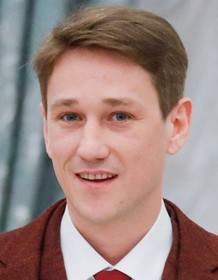
Anton Shagin
Kondraty Ryleev, poet, journalist

Petar Zekavica
Fedor Schwartz, colonel, commander of the Semenov regiment
Larisa Malevannaya
Ekaterina Nelidova, maid of honor Alexandra Fedorovna
Maksim Matveev
prince Sergey Trubetskoy, Colonel of the Guard, Duty Officer of the General Staff
Marta Timofeeva
Varya, Ryleev's daughter
Dmitry Palamarchuk
Vasily Mikulin, Colonel
Vladislav Reznik
Petr Golenishchev-Kutuzov, Alexander's adjutant
Igor Petrenko
Baranov, grenadier of the Chernigov regiment, demoted major
Vladislav Vetrov
Gustav Gebel, Lieutenant Colonel Commander of the Chernigov Regiment
Pavel Priluchnyy
Pavel Pestel, Colonel Commander of the Vyatka Regiment
Aleksey Guskov
Prince Alexey Shcherbatov, the military governor-general of Kiev
Alexandr Domogarov
Count Mikhail Miloradovich, military governor-general of St. Petersburg
Vitaly Kishchenko
Emperor Alexander I
Pavel Barshak
Veniamin Soloviev, Baron, Head Captain of the Chernigov Regiment
Ingeborga Dapkūnaitė
Princess Belskaya, Anna's mother
Aleksandr Ratnikov
Chistov, Major of the Chernigov Regiment
Sergey Zharkov
Boychenko, private Semenov regiment
Aleksey Oding
Fedor Geismaer, Baron, Cavalry General
Sergey Vlasov
Ivan Dibich, Adjutant General, Chief of General Staff
Marina Konyashkina
Trubetskoy's wife
Efim Petrunin
Ivan Sukhinov, Lieutenant of the Chernigov Regiment
Sergey Koltakov
Nikolay Mordvinov, senator
Aleksandr Stroev
Petr Frederiks, Baron, Adjutant General, Actual Privy Councilor
Yura Borisov
Anton Arbuzov, lieutenant of the Guards crew
Artyom Tkachenko
Amphelt, Colonel
Pavel Vorozhtsov
Arkady Mayboroda, Captain of the Vyatka Regiment
Sergey Peregudov
Artamon Muravyov, Colonel, Commander of the Akhtyr Hussars
Sergey Umanov
Evsey, Muravyev-Apostol's batman
Anton Momot
Dmitry Schepin-Rostovsky, Captain of the Life Guards Moscow Regiment
Mārtiņš Kalita
Glinka (Bashutsky), adjutant of Count Miloradovich
Aleksandr Ustyugov
Anton Feoktistov
Anastasiy Kuzmin, Lieutenant, Commander of the 5th Musketeer Company of the Chernigov Regiment
Ivan Kolesnikov
Nikolai Pavlovich, brother of Alexander I
Ivan Yankovsky
Mikhail Bestuzhev-Ryumin, second lieutenant of the Poltava Infantry Regiment
Aleksandr Karpov
Elena Lotova
Alexandra Feodorovna, Nikolay Pavlovich's wife
Sergey Agafonov
Petr Kakhovsky, retired lieutenant
Sofya Ernst
Anna Belskaya
Kirill Zaytsev
Mikhail Bestuzhev-Ryumin
Mikhail Eliseev
Alexey Yushnevsky, the quartermaster general of the 2nd army, state councilor
Rostislav Bershauer
Lerner, gendarme
Leonid Bichevin
Sergey Muravyov-Apostol, lieutenant colonel of the Chernigov regiment
Dmitry Lysenkov
Evgeny Obolensky, Prince, Lieutenant Life Guards of the Finnish Regiment
Klim Berdinsky
little Alexander, Nikolay Pavlovich's son
Vladimir Gartsunov
Aleksandr Lazarev Jr.
Alexander Benkendorf, cavalry general
Sergey Goroshko
Yuriy Baturin
Alexander Chernyshev, General
Kirill Kuznetsov
Mikhail Shchepillo, Lieutenant of the Chernigov Regiment
Andrey Martynov
Ippolit Muravyov-Apostol, ensign of the quartermaster
Alexandr Metelkin
Nikolay Panov, Lieutenant Life Guards Grenadier Regiment
Maksim Blinov
Ilya Bakunin, ensign
Varvara Gusinskaya
Ryleev's wife
Alexey Potemkin
Karl Karlovich Merder, educator of little Alexander
Oleg Ots
adjutant Mukhanov
Alexandr Prokopyev
nobleman
External Links and Streaming Options
Discover where to watch Union of Salvation online, including streaming platforms, rental options, and official sources. Compare reviews, ratings, and in-depth movie information across sites like IMDb, TMDb, Wikipedia or Rotten Tomatoes.






Full Plot Summary and Ending Explained for Union of Salvation
Read the complete plot summary of Union of Salvation, including all major events, twists, and the full ending explained in detail. Explore key characters, themes, hidden meanings, and everything you need to understand the story from beginning to end.
In 1808, Emperor Napoleon I visits a Paris boarding house that is shown to hold a cadre of promising students. Among them, Sergey Muravyov-Apostol, the son of a Russian diplomat, catches the emperor’s eye with his liberal outlook and restless energy, signaling the stirrings of ideas that will pulse through his future years. The scene sets the stage for a life that will drift between elite privilege and rebellious conviction, a tension that threads the film’s entire arc.
Fast forward to March 1814, after the French have been defeated and Paris is under Allied triumph. During a grand review of the Life Guards of the Semyonovsky Regiment by Tsar Alexander I, the officers—Muravyov-Apostol among them—toast to victory, only to be met with the tsar’s cool refusal when champagne is offered in their honor. The moment crystallizes a divide between a regime eager to reward discipline and officers who crave reform, hinting at the pressure points that will later pull these men toward dissent.
By 1820, Muravyov-Apostol has grown increasingly unsettled by autocratic rule and begins to align with a circle of reform-minded peers in Saint Petersburg. Here he encounters Kondraty Ryleyev, a poet, and Mikhail Bestuzhev-Ryumin, a bold veteran, as well as Pavel Pestel, a determined organizer, and Prince Sergey Trubetskoy, a measured commander with a strategic mind. Their conversations—often held in social and cultural circles, such as a theater night hosted by Governor-General Miloradovich—ignite a shared interest in rethinking governance. When a riot erupts at the theater, the group finds itself forced to retreat, and the tsar’s punitive responses—severe demotions, dismissals, and transfers—underscore the costs of speaking out. In this atmosphere, the seeds of a clandestine movement take root, even as the official machinery of state continues to clamp down on dissent.
In Kiev, the conspirators embed themselves within the 29th Chernigov Infantry Regiment. Muravyov-Apostol and Bestuzhev-Ryumin work to win over veteran troops, while Pestel and other reform-minded officers press their case. Pestel makes a chilling bid to recruit Muravyov-Apostol for a plan to assassinate the tsar during another troop review and to march on St. Petersburg with revolutionary force. To conceal their tampering with regimental funds, Pestel compels Captain Arkady Mayboroda to sign a falsified receipt, confessing a private loan that never occurred. Mayboroda, in turn, alerts Alexander to the conspiracy, prompting a cautious, quiet response from the tsar, who cancels the review and keeps the matter contained for the moment. The event deepens a sense of impending upheaval that will color every subsequent move.
Alexander I’s death ushers in a crisis of dynastic succession. The succession is engineered in secret—Alexander had discussed a plan for a potential future ruler with Nicholas, the younger brother, though Constantine is publicly proclaimed as the new tsar. Miloradovich, who had hosted earlier conversations and who fears unrest, pressures Nicholas to swear fealty to Constantine, even as intrigue continues behind the scenes. Mayboroda’s letter, accidentally discovered among Alexander’s papers, exposes the reformists’ conspiracy and triggers mass arrests. Pestel, though ill, burns incriminating documents and accepts arrest, a symbolic surrender that underscores the fragility of reformist ambitions in an autocratic system.
Ryleyev learns of the imperial succession crisis through Count Nikolay Mordvinov and quickly informs Trubetskoy and the rest of the reformist circle. Impatience and a sense of historical opportunity drive them to act, and they decide to exploit the confusion that follows Alexander’s death. In Kiev, Muravyov-Apostol and Bestuzhev-Ryumin mobilize the Chernigov Regiment to push toward St. Petersburg in support of their cause, even as Gebel—the regiment’s commander—resists their advances and is repeatedly stabbed in the encounter. The insurgents’ plans begin to collide with the reality of loyalist resistance.
The following January sees the Chernigov Regiment intercepted near Rzhevsky by loyalist troops bearing artillery. Muravyov-Apostol, recognizing the doomed nature of the coup, takes a bold stand, leading a final act of defiance by bearing the regimental banner and advancing to negotiate. His courage inspires some of his subordinate officers to press on, but artillery fire and loyalist charges eventually overwhelm the rebels, and Muravyov-Apostol is wounded as the conflict tests the limits of loyalty and rebellion.
In the aftermath, Trubetskoy is publicly admonished, and Ryleyev faces arrest while remaining defiant in his convictions. By the summer of 1826, the five leaders of the uprising—Kakhovsky, Bestuzhev-Ryumin, Muravyov-Apostol, Ryleyev, and Pestel—are dragged from their positions to the gallows. The executions unfold with brutal inevitability: some ropes snap, forcing a reluctant redo of the process, while a bloodied Muravyov-Apostol imagines an alternate version of history during the moment of his death, a brief, brutal meditation on power, loyalty, and the cost of reform.
Throughout these decades, the film traces a tapestry of intersecting loyalties and competing visions. The characters move through political salons, military barracks, and the backrooms of power, where reformist zeal collides with the stubborn inertia of a state that fears losing control. The plot stretches from the glittering theater nights of Saint Petersburg to the frozen banks of the Neva, where the rebels’ hopes meet the hard truth of a regime determined to hold its ground. It is a story of idealists who challenge a rigid order and pay at the most personal level for their beliefs, a chronicle of courage in the face of overwhelming odds, and a meditation on whether revolutionary change can ever truly be willed into existence within a system designed to resist it.
There are intimate strands amid the broad historical arc: the familial ties and personal loyalties that pull the reformists toward and away from one another; the strategic calculations that shape every decision; and the human costs—reputations, friendships, and lives—that accumulate as the years press on. The film does not offer easy answers. Instead, it presents a measured portrait of a transitional era in which the drive for liberty and the weight of tradition collide in a struggle that reshapes a nation. As the years unfold, the characters endure the consequences of their choices, and the audience is left to weigh the price of ideals against the price of power.
In this sweeping historical drama, Kondraty Ryleyev, Sergey Muravyov-Apostol, Mikhail Bestuzhev-Ryumin, Pavel Pestel, and Sergey Trubetskoy emerge as figures who embody the turbulent spirit of the era, while a larger cast—spanning figures like Tsar Alexander I, Miloradovich, and a spectrum of generals, nobles, and officers—helps illuminate a complex network of ambition, reform, and rebellion that ultimately defines the historical moment. The film offers a dense, richly textured portrayal of a pivotal chapter in Russian history, anchored in carefully drawn character work and a disciplined, historically grounded narrative.

Coming soon on iOS and Android
The Plot Explained Mobile App
From blockbusters to hidden gems — dive into movie stories anytime, anywhere. Save your favorites, discover plots faster, and never miss a twist again.
Sign up to be the first to know when we launch. Your email stays private — always.
Explore the mobile appWatch Trailers, Clips & Behind-the-Scenes for Union of Salvation
Watch official trailers, exclusive clips, cast interviews, and behind-the-scenes footage from Union of Salvation. Dive deeper into the making of the film, its standout moments, and key production insights.
Union of Salvation Themes and Keywords
Discover the central themes, ideas, and keywords that define the movie’s story, tone, and message. Analyze the film’s deeper meanings, genre influences, and recurring concepts.
Union of Salvation Other Names and Titles
Explore the various alternative titles, translations, and other names used for Union of Salvation across different regions and languages. Understand how the film is marketed and recognized worldwide.
Similar Movies To Union of Salvation You Should Know About
Browse a curated list of movies similar in genre, tone, characters, or story structure. Discover new titles like the one you're watching, perfect for fans of related plots, vibes, or cinematic styles.






Quick Links: Summary, Cast, Ratings, More

What's After the Movie?
Not sure whether to stay after the credits? Find out!
Check out our other apps:

SAT Sphere
Build confidence for the Digital SAT.

Mori Atlas
Discover wild places worth protecting.

Luntero
Search smarter for a home in Amsterdam.

Plot Explained
Unravel movie endings and hidden clues.

Pokechamp
Dive into Pokémon data and battle logic.

Driving Theory
Get ready for your European theory test.

Movie Dust
Plan your next cinema trip with ease.

Musemap
Find art and culture as you travel.

Selkobase
Compare credentials before committing.

Local Manual
Turn an unfamiliar country into practical next steps.

Lernavi
Compare school systems before your next move.

GymRoam
Find a workout stop wherever your plans take you.
Explore Our Movie Platform
New Movie Releases (2026)
Famous Movie Actors
Top Film Production Studios
Movie Plot Summaries & Endings
Major Movie Awards & Winners
Best Concert Films & Music Documentaries
Movie Collections and Curated Lists
© 2026 What's After the Movie. All rights reserved.
Privacy Policy