Tito and Me 1992

Ten‑year‑old Zoran, a student at a Yugoslav school, wins a contest for the best essay about Josip Broz Tito. As his prize, he joins his classmates on the “Revolutionary Trails” march, a school trip that leads them to Kumrovec, the small village where Tito was born, offering a vivid glimpse of history through a child’s eyes.

Does Tito and Me have end credit scenes?
No!
Tito and Me does not have end credit scenes. You can leave when the credits roll.
Meet the Full Cast and Actors of Tito and Me
Explore the complete cast of Tito and Me, including both lead and supporting actors. Learn who plays each character, discover their past roles and achievements, and find out what makes this ensemble cast stand out in the world of film and television.
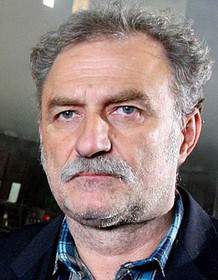
Lazar Ristovski
Raja

Bogdan Diklić
Stojan (Zoran's uncle)
Dragoslav 'Dragan' Nikolić
Kole (Gane's father)
Anica Dobra
Zoran's mother
Branimir Brstina
Strahinja (Đura's father)
Miki Manojlović
Zoran's father
Ljiljana Dragutinović
Zoka (Zoran's aunt)
Vojislav Brajović
Josip Broz Tito
Vesna Trivalić
Teacher
Jelena Živković
Svetlana (Zoran's sister cousin)
Nebojša Dugalić
Policeman
Žarko Laušević
Borko
Milutin Dapčević
Kengur (Karamehmetović Siniša)
Olivera Marković
Zoran's grandmother
Rade Marković
Zoran's grandfather
Dimitrije Vojnov
Zoran Mihajlovic
Olja Bećković
Đura's mother
Milivoje 'Mića' Tomić
Curator Mihinović
Milena Vukosav
Jasna Vukobrat
Miodrag Tomović
Tito's adjutant
External Links and Streaming Options
Discover where to watch Tito and Me online, including streaming platforms, rental options, and official sources. Compare reviews, ratings, and in-depth movie information across sites like IMDb, TMDb, Wikipedia or Rotten Tomatoes.





Take the Ultimate Tito and Me Movie Quiz
Challenge your knowledge of Tito and Me with this fun and interactive movie quiz. Test yourself on key plot points, iconic characters, hidden details, and memorable moments to see how well you really know the film.
Tito and Me Quiz: Test your knowledge of the 1992 film *Tito and Me* with these ten questions ranging from easy to challenging.
What is Zoran's father's profession?
Full Plot Summary and Ending Explained for Tito and Me
Read the complete plot summary of Tito and Me, including all major events, twists, and the full ending explained in detail. Explore key characters, themes, hidden meanings, and everything you need to understand the story from beginning to end.
Set in socialist Yugoslavia during the 1950s, the film follows Zoran Dimitrije Vojnov Mihajlovic, a portly 10-year-old who shares a crowded Belgrade apartment with his artists’ parents, his aunt, uncle, and grandmother. His mother and father are artists—his father a pianist and his mother a ballerina—yet their creative world clashes with the stricter routines of the extended household, making Zoran’s everyday life feel cramped and tense.
In this era when land reform and state control reshape homes and loyalties, Zoran’s parents remain skeptical of Josip Broz Tito’s rule, even as the boy worships Tito as his personal hero. School lessons fortify that devotion, presenting Tito as the greatest man who ever lived, and Zoran clings to that belief with a child’s unwavering faith. When his poem, Why I Like the President, is judged the best in a Belgrade school contest, he earns a coveted camping trip for politically favored families, along with his crush, Jasna Milena Vukosav, an older orphan girl.
The camping trip is led by Raja Lazar Ristovski, a ruthless party member whose control and mockery sharpen a fierce rivalry with Zoran. While the other kids tease him for his weight and appearance, Zoran remains determined, dreaming not only of meeting Tito but also of gaining Jasna’s affection. The tension between him and Raja grows when Zoran witnesses the tall boy Kengur Milutin Dapčević kissing Jasna, which intensifies his insecurity and jealousy. As the days unfold, the group’s play takes a dark, absurd turn: Raja and Kengur stage themselves as ghosts, terrifying the younger campers as they spend the night at a historic castle.
Things come to a head when Raja catches Zoran trying to steal a ring he intended to give Jasna. The disciplinary moment seems decisive as Raja orders Zoran to head home by train. Yet, on the platform, a surprising solidarity forms: other students gather around, and they rally to support him, deciding that Zoran should continue the trip. The journey culminates at Tito’s childhood home, where Zoran is asked to deliver a speech. In a quiet, defining moment, he revises his own poem on stage, confessing that he loves his parents more than Tito and, in a frank line, admitting that he doesn’t even like Tito that much.
The narrative resolves at a banquet where all the children are meant to meet Tito, but Zoran emerges disenchanted. While the others crowd into the reception room, he slips away to the buffet, savoring a simple, personal moment of pleasure amid the propagandistic surroundings.
Through these incidents, the film paints a portrait of a boy negotiating fantasy and reality, ideology and affection, in a world where art, family, and state power intersect in complicated, often comic, ways. The surrounding family members—Zoran’s mother Anica Dobra, his father Miki Manojlović, and his relatives such as Zoka Ljiljana Dragutinović, his grandmother Olivera Marković, and his grandfather Rade Marković—offer a tapestry of generational voices that illustrate the era’s contradictions. Tito’s circle is glimpsed through brief, telling moments, including Tito’s adjutant Miodrag Tomović, as the film quietly questions how iconography shapes everyday life for ordinary people.

Coming soon on iOS and Android
The Plot Explained Mobile App
From blockbusters to hidden gems — dive into movie stories anytime, anywhere. Save your favorites, discover plots faster, and never miss a twist again.
Sign up to be the first to know when we launch. Your email stays private — always.
Explore the mobile appDiscover Film Music Concerts Near You – Live Orchestras Performing Iconic Movie Soundtracks
Immerse yourself in the magic of cinema with live orchestral performances of your favorite film scores. From sweeping Hollywood blockbusters and animated classics to epic fantasy soundtracks, our curated listings connect you to upcoming film music events worldwide.
Explore concert film screenings paired with full orchestra concerts, read detailed event information, and secure your tickets for unforgettable evenings celebrating legendary composers like John Williams, Hans Zimmer, and more.


Tito and Me Themes and Keywords
Discover the central themes, ideas, and keywords that define the movie’s story, tone, and message. Analyze the film’s deeper meanings, genre influences, and recurring concepts.
Tito and Me Other Names and Titles
Explore the various alternative titles, translations, and other names used for Tito and Me across different regions and languages. Understand how the film is marketed and recognized worldwide.
Similar Movies To Tito and Me You Should Know About
Browse a curated list of movies similar in genre, tone, characters, or story structure. Discover new titles like the one you're watching, perfect for fans of related plots, vibes, or cinematic styles.




Quick Links: Summary, Cast, Ratings, More

What's After the Movie?
Not sure whether to stay after the credits? Find out!
Check out our other apps:

SAT Sphere
Build confidence for the Digital SAT.

Mori Atlas
Discover wild places worth protecting.

Luntero
Search smarter for a home in Amsterdam.

Plot Explained
Unravel movie endings and hidden clues.

Pokechamp
Dive into Pokémon data and battle logic.

Driving Theory
Get ready for your European theory test.

Movie Dust
Plan your next cinema trip with ease.

Musemap
Find art and culture as you travel.

Selkobase
Compare credentials before committing.

Local Manual
Turn an unfamiliar country into practical next steps.

Lernavi
Compare school systems before your next move.

GymRoam
Find a workout stop wherever your plans take you.
Explore Our Movie Platform
New Movie Releases (2026)
Famous Movie Actors
Top Film Production Studios
Movie Plot Summaries & Endings
Major Movie Awards & Winners
Best Concert Films & Music Documentaries
Movie Collections and Curated Lists
© 2026 What's After the Movie. All rights reserved.
Privacy Policy