The Projectionist 1970


A projectionist bored with his everyday life begins fantasizing about his being one of the superheroes he sees in the movies he shows.


Does The Projectionist have end credit scenes?
No!
The Projectionist does not have end credit scenes. You can leave when the credits roll.
Meet the Full Cast and Actors of The Projectionist
Explore the complete cast of The Projectionist, including both lead and supporting actors. Learn who plays each character, discover their past roles and achievements, and find out what makes this ensemble cast stand out in the world of film and television.
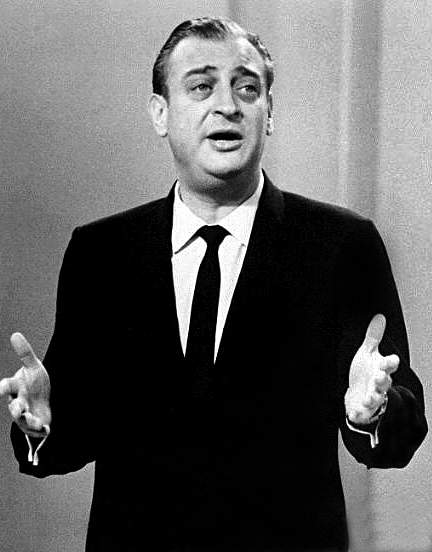
Rodney Dangerfield
Renaldi / The Bat

Chuck McCann
Projectionist / Captain Flash
Robert King
The Premiere M.C.
Ina Balin
The Girl
João Fernandes
Man on Street (uncredited)
Alex Stevens
Usher / Henchman
Robert Staats
The Pitchman
Rita Bennett
Harem Girl (uncredited)
Sam Stewart
Usher / Henchman
Lucky Kargo
Usher / Henchman
Jára Kohout
Candy Man / Scientist
External Links and Streaming Options
Discover where to watch The Projectionist online, including streaming platforms, rental options, and official sources. Compare reviews, ratings, and in-depth movie information across sites like IMDb, TMDb, Wikipedia or Rotten Tomatoes.





Take the Ultimate The Projectionist Movie Quiz
Challenge your knowledge of The Projectionist with this fun and interactive movie quiz. Test yourself on key plot points, iconic characters, hidden details, and memorable moments to see how well you really know the film.
The Projectionist (1970) Quiz: Test your knowledge of the 1970 film *The Projectionist* with these ten questions ranging from easy to challenging.
What is the name of the projectionist who works at the Midtown Theater?
Full Plot Summary and Ending Explained for The Projectionist
Read the complete plot summary of The Projectionist, including all major events, twists, and the full ending explained in detail. Explore key characters, themes, hidden meanings, and everything you need to understand the story from beginning to end.
Renaldi, Rodney Dangerfield, runs the Midtown Theater in Midtown Manhattan with a sharp tongue and a steady stream of barbs for his staff, an iron grip that leaves the place feeling more like a factory than a stage. Behind the scenes, the projection booth is where the real pulse of the building lives, and there, Chuck McCann — the projectionist — spends long hours tending the reels and letting his imagination drift toward grand adventures. He isn’t simply spinning films; he’s conjuring up a alter ego, Captain Flash, a bright, brazen savior who could outwit any villain who crosses his path. The contrast between Renaldi’s loud, petty tyranny and Chuck’s secret daydreams sets the tone for a story that blends backstage realities with pop-eyed fantasy.
In Chuck’s orbit, a gleaming spark appears in the form of a mysterious woman he’s seen before, the luminous The Girl Ina Balin. She becomes a beacon in his otherwise colorless world, and her presence hints at the possibility that life outside the projection booth could have rhythm and romance if the right moment arrives. The dynamic between day-to-day control and dreams of bold heroism becomes a central thread as Renaldi’s rule grows increasingly invasive, punishing even the smallest acts of defiance and turning the theater’s corridors into a pressure chamber where secrets simmer just beneath the surface.
As the day wears on, Chuck’s reverie deepens. He isolates himself in the booth, rewinding reels and tuning into a radio broadcast that sounds like a manifesto of doom. The narrator proclaims, “the way I see things, I’m not very optimistic at all, I just don’t think there’s much hope for the future,” a line that stings with precarity and foreshadows the film’s blend of science-fiction anxiety and comic bravura. The radio grinds into a dramatic trailer for a fictional feature, “The Terrible World of Tomorrow,” promising catastrophes that range from dehumanization and racial strife to the horrors of technology gone awry. The juxtaposition of a hopeful, if silly, fantasy world with a menacing, near-future nightmare amplifies Chuck’s longing for a life that resembles the heroic narratives he adores and imitates.
The story then tilts toward a caper-pulp adventure where the lines between illusion and danger blur. The Bat, Renaldi’s on-screen alias in Chuck’s imagination, is a larger-than-life villain who commands six henchmen and seeks to seize the aging European scientist’s X-ray device, a device that could tilt power in dangerous directions. The scientist, a venerable figure who speaks with a marked accent and runs the candy concession, is, in the story, an object of pursuit and a conduit for high-stakes intrigue. The scientist’s daughter — The Girl — becomes involved in the conflict in a way that defies the theater’s usual routine. In a flash of courage and skill, The Girl proves she’s more than a pretty face: she is capable and determined, and she teams up with Captain Flash to oppose The Bat’s world-spanning plan.
The tension escalates as The Bat abducts the scientist’s daughter, threatening to bend the world to his will. Yet Captain Flash—born from Chuck’s own hopeful fantasies—refuses to surrender to fear. The two unlikely allies stage a counteroffensive that fuses wit, ingenuity, and sheer nerve. The chase spills out of the projection booth and into a crescendo of action, where choreography, timing, and grit turn the moment into something almost musical. The confrontation is a clash of brains and brawn as Chuck’s daydreams translate into tangible, physical courage.
In a climactic turn that blends pulp melodrama with a playful reverie, the Bat is outmaneuvered by Captain Flash, and The Girl’s karate prowess proves decisive in turning the tide. With the villain toppled, the pair don’t simply walk away; they celebrate a startling, jubilant victory that feels less like a finale and more like a new opening chapter. The two break into a Busby Berkeley-style musical flourish, a dazzling finale that merges fantasy with reality, and ends with a jubilant, almost cinematic kiss-and-dance moment that promises a brighter horizon beyond the theater’s walls.
Along the way, several supporting figures help color the world. The Projectionist Chuck is surrounded by a chorus of ushers and staff who populate the theater’s insides and echoes, including Robert Lee and Alex Stevens as part of the crew, and Robert Staats as the pitchman who threads through the oddities of theater life. Even the friendlier edges of the theater’s world, such as Harry Hurwitz the Friendly Usher and the uncredited Ina Balin as The Girl, add texture to a story that thrives on character detail and backstage rhythms. The film’s energy is rounded out by a cast of quirky, vivid personalities who populate the theater’s backstage and audience-facing worlds, including Chuck McCann in the lead projectionist’s seat and Rodney Dangerfield as the volatile Renaldi, whose presence looms large even as Chuck’s imagination steals the scene.
Ultimately, the movie preserves its quirky, hopeful heart: a lonely man’s fantasies collide with a real-world caper, a dangerous scheme is thwarted, love and courage win out, and a little musical magic erupts from the most unlikely of places. It is a celebration of escapism that never forgets the tenderness beneath the bravado, a reminder that even in a world governed by oversight and surveillance, a daydream can still be a doorway to something grand and liberating. > the way I see things, I’m not very optimistic at all, I just don’t think there’s much hope for the future

Coming soon on iOS and Android
The Plot Explained Mobile App
From blockbusters to hidden gems — dive into movie stories anytime, anywhere. Save your favorites, discover plots faster, and never miss a twist again.
Sign up to be the first to know when we launch. Your email stays private — always.
Explore the mobile appWatch Trailers, Clips & Behind-the-Scenes for The Projectionist
Watch official trailers, exclusive clips, cast interviews, and behind-the-scenes footage from The Projectionist. Dive deeper into the making of the film, its standout moments, and key production insights.
The Projectionist Themes and Keywords
Discover the central themes, ideas, and keywords that define the movie’s story, tone, and message. Analyze the film’s deeper meanings, genre influences, and recurring concepts.

Unlock the World of Movies with Our Comprehensive Wiki
Dive into our Movie Wiki for in-depth film encyclopedia entries, including cast biographies, production trivia, plot synopses, behind-the-scenes facts, and thematic analyses. Whether you’re researching iconic directors, exploring genre histories, or discovering hidden easter eggs, our expertly curated movie database has everything you need to fuel your cinematic passion.

Similar Movies To The Projectionist You Should Know About
Browse a curated list of movies similar in genre, tone, characters, or story structure. Discover new titles like the one you're watching, perfect for fans of related plots, vibes, or cinematic styles.



Quick Links: Summary, Cast, Ratings, More

What's After the Movie?
Not sure whether to stay after the credits? Find out!
Check out our other apps:

SAT Sphere
Build confidence for the Digital SAT.

Mori Atlas
Discover wild places worth protecting.

Luntero
Search smarter for a home in Amsterdam.

Plot Explained
Unravel movie endings and hidden clues.

Pokechamp
Dive into Pokémon data and battle logic.

Driving Theory
Get ready for your European theory test.

Movie Dust
Plan your next cinema trip with ease.

Musemap
Find art and culture as you travel.

Selkobase
Compare credentials before committing.

Local Manual
Turn an unfamiliar country into practical next steps.

Lernavi
Compare school systems before your next move.

GymRoam
Find a workout stop wherever your plans take you.
Explore Our Movie Platform
New Movie Releases (2026)
Famous Movie Actors
Top Film Production Studios
Movie Plot Summaries & Endings
Major Movie Awards & Winners
Best Concert Films & Music Documentaries
Movie Collections and Curated Lists
© 2026 What's After the Movie. All rights reserved.
Privacy Policy