The Lighthorsemen 1987


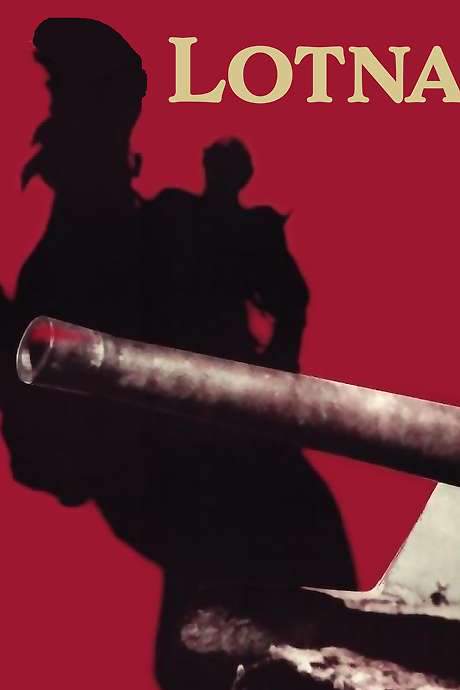
In 1917, British forces are stuck facing entrenched Turkish and German positions in Palestine. Desperate for a breakthrough, they call on an Australian Light Horse regiment. The cavalrymen mount a daring desert charge, using mobility and surprise to shatter the deadlock and turn the tide of the campaign.


Does The Lighthorsemen have end credit scenes?
No!
The Lighthorsemen does not have end credit scenes. You can leave when the credits roll.
Meet the Full Cast and Actors of The Lighthorsemen
Explore the complete cast of The Lighthorsemen, including both lead and supporting actors. Learn who plays each character, discover their past roles and achievements, and find out what makes this ensemble cast stand out in the world of film and television.

Steve Bastoni
Turkish Demolition Soldier

Anthony Andrews
Maj. Richard Meinertzhagen
Bill Stacey
German Artillery Officer
Tony Bonner
Col. Murray Bourchier
Grant Piro
Charlie
John Kelly
British Major
Tom O'Brien
'A' Trooper
Bill Kerr
Gen. Sir Harry Chauvel
Sigrid Thornton
Anne
Peter Browne
Arch
Gary Sweet
Frank
Scott Bradley
Lt. Frank Burton
Peter Phelps
Dave Mitchell
Patrick Frost
Sgt. Ted Seager
Tony Mack
Allenby's Sigs Officer
Peter Douglas
Cockney Lance Corporal
Steve Harrison
'A' Trooper
Shane Briant
Reichert
Simon Palomares
Turkish Officer
James Wright
Gerard Kennedy
Ismet Bey
Richard Stevens
'A' Trooper
Anthony Hawkins
Allenby
John Walton
Tas
Jack Heywood
Dave's Dad
Ralph Cotterill
Gen. Friedrich von Kressenstein
John Larking
Stationmaster
Adrian Wright
Lawson
Brenton Whittle
Padre
Tim McKenzie
Chiller
David Bracks
Turkish Range Finder
Peter Merrill
Young German Officer
Jon Blake
Scotty
Nick Waters
Lighthorse Sargeant
Jon Sidney
Grant
David Sadler
Dying Turk
Gary Stalker
Cpl. Nobby
Johnny Raaen
'A' Trooper
Robert Simper
German Trench Officer
Di O'Connor
Dave's Mum
Serge Lazareff
Rankin
Matthew Randell
British Sergeant
Jim Willoughby
Farrier Sergeant
Iain Strutt
Armourer Sergeant
Anne Scott-Pendlebury
Sister
Kingsley MacDonald
Bugler
Michael Kitschke
Trooper at Ruins
Graham Dow
Hodgson
Stephen Crockett
Chauvel's Aide
Mark Pretti
Ambulance Driver
Terry Brittingham
Ambulance Officer
Jason Dunn
Trooper In Demolition Room
Brendan Egan
'A' Trooper
Lou Horváth
'A' Trooper
Adrian Ireland
'A' Trooper
Kevin May
'A' Trooper
Tom Mudge
'A' Trooper
Ricky Noble
'A' Trooper
Vic O'Neal
'A' Trooper
Leo Scanders
'A' Trooper
Barry Stephan
'A' Trooper
Milton Stevens
'A' Trooper
Tamas Szegedi
'A' Trooper
Farah Mak
Daughter (uncredited)
External Links and Streaming Options
Discover where to watch The Lighthorsemen online, including streaming platforms, rental options, and official sources. Compare reviews, ratings, and in-depth movie information across sites like IMDb, TMDb, Wikipedia or Box Office Mojo.





Take the Ultimate The Lighthorsemen Movie Quiz
Challenge your knowledge of The Lighthorsemen with this fun and interactive movie quiz. Test yourself on key plot points, iconic characters, hidden details, and memorable moments to see how well you really know the film.
The Lighthorsemen (1987) Quiz: Test your knowledge of the 1987 war film *The Lighthorsemen*, covering characters, plot events, historical context, and production details.
Which actor portrays the Australian cavalryman Frank?
Full Plot Summary and Ending Explained for The Lighthorsemen
Read the complete plot summary of The Lighthorsemen, including all major events, twists, and the full ending explained in detail. Explore key characters, themes, hidden meanings, and everything you need to understand the story from beginning to end.
In 1917, four World War I Australian cavalrymen – Frank Gary Sweet, Scotty Jon Blake, Chiller Tim McKenzie, and Tas John Walton – serve in Palestine as part of the 4th Light Horse Brigade, a unit of the British and Commonwealth forces. When Frank dies, he is replaced by Dave Peter Phelps. Dave finds himself unexpectedly unable to fire his weapon in the heat of battle, a frailty that pushes him toward a different kind of service: he is transferred to the Medical Corps, where he won’t need to carry a gun, but where the dangers of the front lines still loom large.
The story widens to the strategic chessboard of Beersheba. The British mastermind the operation to capture the town, yet behind the scenes a key decision is quietly made: Major Richard Meinertzhagen Anthony Andrews deliberately leaves behind documents signaling that the Beersheba assault is only a diversion. The Australians press forward with scant water and limited supplies, pressing their advance while the town comes under heavy bombardment. The Turkish-German defenders number in the thousands, preparing for a determined stand. Yet among their ranks, Reichert Shane Briant, a German military advisor, doubts the plan, arguing that reinforcement isn’t necessary because the attack is a feint. Time is running out, and the British leaders, wary of a doomed mission, weigh the odds.
In the heat of the planning, the Australians press for more direct action. The British consent, albeit reluctantly, to what many perceive as a suicide mission, a reconnaissance-in-force that could tilt the balance in Palestine. On 31 October, the 4th and 12th Light Horse Regiments surge toward the Turkish lines. Dave and the medical detachment trail behind, prepared for the casualties that will surely follow, and they are ordered to move in with the main assault. The Turkish commander, recognizing the mounted force as light horse rather than heavy cavalry, initially holds fire, instructing his troops not to fire until the riders dismount. The Turks still underestimate what the Australians intend: speed, mobility, and a charging momentum that will overwhelm their defenses if the men can press through quickly enough.
As the charging Australians close in, the battle shifts into a fast, furious tempo. The cannons and rifles fire sporadically, their effects blunted by the rapid movement and the reduced range. The Turkish infantry, caught off guard by the speed and the Australian cavalry’s momentum, forget to recalibrate their aim, firing over the heads of the approaching riders. The charge becomes a test of nerve, endurance, and resolve. In the fog of battle, Tas is lost to an artillery shell, a brutal reminder of the costs of war. The rest of the Australians push forward with astonishing speed, and the first line of Turkish defenses falls under their assault.
Scotty and a handful of others seize the Turkish guns, turning the captured artillery to their own advantage. Chiller is wounded in the trench fighting that follows, while Dave is struck by a grenade as he shields Chiller from further harm. The dedication of these medical men—often serving amid the chaos of frontline combat—becomes a lifeline for many who would have otherwise faced harsher fates on the field. Despite the chaos, Scotty retains his stance, continuing the fight into the heart of the village. With the bulk of Turkish resistance crumbling, the attackers press deeper, moving through the town as the defenders struggle to adapt to the unorthodox method of attack.
The tide of the engagement turns decisively when Reichert is captured by Scotty and the Australians secure the wells, preventing a crucial resource from being used to prolong the defense. The mission, though costly, is deemed a success: a relatively small toll—thirty-one dead and thirty-six wounded—open a route to the next stage of the conflict in the region. The victory at Beersheba ushers in a broader advance, setting the stage for the subsequent capture of Jerusalem and the broader arc of Palestine’s liberation from Ottoman control.
The operation’s legacy resonates beyond the battlefield. In a symbolic gesture that underscores the shift in control and the end of a long struggle, General Allenby enters Jerusalem not as a conqueror, but as a liberator, a moment that carries equal weight for the soldiers who fought and for the communities who awaited relief. The campaign’s outcome redefines the map of the region and marks a turning point in the history of the Middle East during the Great War.
Throughout the campaign, the human dimension remains central. The four comrades—Frank, Scotty, Chiller, and Tas—each bring a distinct temperament and skill to the fight, from the grit of the frontline to the steadiness of the medical detachment. Dave’s transformation from gunner to medic captures the quieter, often overlooked heroism that threads through this chapter of the war. And behind the scenes, the figures who shaped the strategic decisions—the planners, the officers, and the improvisers—shape a narrative where courage, calculation, and sacrifice intersect on a battlefield that tested both strategy and spirit.
In the end, the Beersheba charge stands as a testament to the audacity of a cavalry force famed for mobility and resilience. It is a story of a night attack that pivoted the course of a campaign, a subtext of sacrifice carried by those who carried no rifles, and a reminder that victory on a map often rests on the willingness of those in the ranks to endure the days and nights of uncertainty that flank any bold operation. The tale closes on a note of cautious optimism, with the broader aim of freedom for Jerusalem and a broader peace for a region long shaped by conflict, as General Allenby’s entrance into the Holy City becomes a symbolic culmination of a hard‑fought campaign.

Coming soon on iOS and Android
The Plot Explained Mobile App
From blockbusters to hidden gems — dive into movie stories anytime, anywhere. Save your favorites, discover plots faster, and never miss a twist again.
Sign up to be the first to know when we launch. Your email stays private — always.
Explore the mobile appDiscover Film Music Concerts Near You – Live Orchestras Performing Iconic Movie Soundtracks
Immerse yourself in the magic of cinema with live orchestral performances of your favorite film scores. From sweeping Hollywood blockbusters and animated classics to epic fantasy soundtracks, our curated listings connect you to upcoming film music events worldwide.
Explore concert film screenings paired with full orchestra concerts, read detailed event information, and secure your tickets for unforgettable evenings celebrating legendary composers like John Williams, Hans Zimmer, and more.


The Lighthorsemen Themes and Keywords
Discover the central themes, ideas, and keywords that define the movie’s story, tone, and message. Analyze the film’s deeper meanings, genre influences, and recurring concepts.
The Lighthorsemen Other Names and Titles
Explore the various alternative titles, translations, and other names used for The Lighthorsemen across different regions and languages. Understand how the film is marketed and recognized worldwide.
Similar Movies To The Lighthorsemen You Should Know About
Browse a curated list of movies similar in genre, tone, characters, or story structure. Discover new titles like the one you're watching, perfect for fans of related plots, vibes, or cinematic styles.






Quick Links: Summary, Cast, Ratings, More

What's After the Movie?
Not sure whether to stay after the credits? Find out!
Check out our other apps:

SAT Sphere
Build confidence for the Digital SAT.

Mori Atlas
Discover wild places worth protecting.

Luntero
Search smarter for a home in Amsterdam.

Plot Explained
Unravel movie endings and hidden clues.

Pokechamp
Dive into Pokémon data and battle logic.

Driving Theory
Get ready for your European theory test.

Movie Dust
Plan your next cinema trip with ease.

Musemap
Find art and culture as you travel.

Selkobase
Compare credentials before committing.

Local Manual
Turn an unfamiliar country into practical next steps.

Lernavi
Compare school systems before your next move.

GymRoam
Find a workout stop wherever your plans take you.
Explore Our Movie Platform
New Movie Releases (2026)
Famous Movie Actors
Top Film Production Studios
Movie Plot Summaries & Endings
Major Movie Awards & Winners
Best Concert Films & Music Documentaries
Movie Collections and Curated Lists
© 2026 What's After the Movie. All rights reserved.
Privacy Policy