The Birdcatcher 2019


Norway, 1942, during World War II. When young Esther, a Jewish girl from Trondheim, is separated from her family, she finds refuge on an isolated farm. To protect herself from the ongoing Nazi persecution, she is forced to adopt a new identity and navigate a precarious existence, facing constant danger and uncertainty as she struggles to survive.


Does The Birdcatcher have end credit scenes?
No!
The Birdcatcher does not have end credit scenes. You can leave when the credits roll.
Meet the Full Cast and Actors of The Birdcatcher
Explore the complete cast of The Birdcatcher, including both lead and supporting actors. Learn who plays each character, discover their past roles and achievements, and find out what makes this ensemble cast stand out in the world of film and television.

Andrea Bræin Hovig
Rebecca

August Diehl
Herman
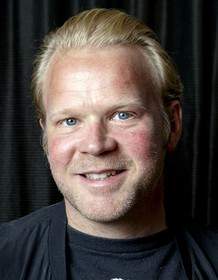
Anders Baasmo Christiansen
Tor
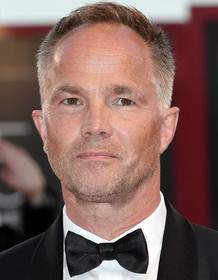
Jon Øigarden
Gestapo Officer

Jakob Cedergren
Johann

Tibo Vandenborre
Reichmann
Dag Malmberg
Hans
Laura Birn
Anna
Arthur Hakalahti
Aksel
Jonas Hoff Oftebro
Petter
Hans Petter Nilsen
Gregers
Jørgen Langhelle
Henry Gleditsch
Marte Germaine Christensen
The Veterinarian
Sarah-Sofie Boussnina
Esther
Bjørn Skagestad
Karlsen
Johannes Bah Kuhnke
Fred
Gerdi Schjelderup
Mrs. Jensen
Per Bogstad Gulliksen
Dr. Hansen
Janne Kokkin
Mrs. Henie
Trond-Ove Skrødal
Hay Truck Driver
Ewald Bos
Herman's Soldier #1
Are Bruvold
Herman's Soldier #2
Kjetil Nordø
Herman's Soldier #3
Odd Roald Horjem
Herman's Soldier #4
Claire Judic
Fugitive #1
Eshan Rajabi
Fugitive #2
Trond Abelsen
Fugitive #3
Maria Aronsen
Fugitive #4
Jon Vegard Hovdal
NS Official #1
Espen Sletvold
NS Official #2
Marit Kvitseth
NS Official's Wife #1
Mari Berger Skjøstad
Karlsen's Wife
Caroline Fredriksen
NS Official's Wife #2
Per Gunnar Merakerli
Man in a Suit
Olav Strand
Reichmann's Soldier
Jonetta Kviseth
Baby
Klaus Ulvestad
German Soldier #1
Henning Nilsen
German Soldier #2
Frode Stenhaug
Reichmann's Driver
Maja Guldberg
Daughter
Ragna Binde
Old Woman
Doula Lymniati
Mother
Tom Eikrem
Father
Stian Hovland Pedersen
Gestapo Officer #1
Ståle Tørring
Gestapo Officer #2
Gerd Aker
Script Supervisor
External Links and Streaming Options
Discover where to watch The Birdcatcher online, including streaming platforms, rental options, and official sources. Compare reviews, ratings, and in-depth movie information across sites like IMDb, TMDb, Wikipedia or Rotten Tomatoes.






Ratings and Reviews for The Birdcatcher
See how The Birdcatcher is rated across major platforms like IMDb, Metacritic, and TMDb. Compare audience scores and critic reviews to understand where The Birdcatcher stands among top-rated movies in its genre.

The Movie Echo Score
The Birdcatcher presents a mixed reception, with its visual strengths offset by narrative and emotional inconsistencies. Critics highlight striking photography and effective use of Norwegian winter landscapes, while many viewers acknowledge the atmospheric cinematography and period‑appropriate music. However, the direction and storyline are frequently described as uneven or implausible, limiting broader appeal. Consequently, the film offers a respectable but uneven experience that may satisfy viewers who prioritize visual craft over cohesive storytelling.
The Movie Echo Score Breakdown for The Birdcatcher

Art & Craft
Artistic execution stands out primarily through its cinematography and production design. Reviewers consistently commend the striking photography, the austere winter palette, and the effective framing of Norway’s landscapes. Directional choices receive mixed comments, with some noting heavy-handedness, yet the visual composition remains a clear strength. Overall, the film’s craft delivers a compelling aesthetic despite narrative flaws.

Character & Emotion
Character work delivers uneven results across the ensemble. Several viewers highlight Sarah‑Sofie Boussnina’s nuanced lead performance, while others critique the age miscasting and limited emotional depth. Supporting roles are noted as well‑developed by some, yet many reviewers find the acting overall fails to generate sustained empathy. Consequently, character engagement varies widely, weakening the film’s emotional impact.

Story & Flow
The narrative is frequently described as implausible and unevenly paced. Critics and several users point to problematic plot points, such as the heroine’s improbable disguise and melodramatic turns, which strain credibility. While some appreciate the thematic exploration of survival under occupation, the overall story cohesion suffers from contrived elements, reducing its persuasive power.

Sensory Experience
Sensory elements receive consistent praise, particularly the film’s soundscape and visual style. Reviewers note the evocative score, effective sound design, and the cohesive winter aesthetic that reinforces the period setting. Although a few comments mention occasional tonal mismatches, the majority view the auditory and visual presentation as a strong, immersive component that enhances the viewing experience.

Rewatch Factor
Rewatch potential appears limited due to the film’s narrative unevenness and emotional inconsistency. While its visual grandeur and occasional poignant moments may invite a second glance, many viewers report difficulty engaging with the story on repeat viewings, citing implausible plot developments and lacking depth. Consequently, the film is unlikely to sustain strong repeat appeal for most audiences.
Full Plot Summary and Ending Explained for The Birdcatcher
Read the complete plot summary of The Birdcatcher, including all major events, twists, and the full ending explained in detail. Explore key characters, themes, hidden meanings, and everything you need to understand the story from beginning to end.
Esther Albertsen, Sarah-Sofie Boussnina, grows up in a quiet Norwegian town on the eve of war, where the everyday routines of school and friendship start to bend under an unnerving new atmosphere. The first hints of danger arrive not with a bang, but with a calm, unsettling assurance from occupying soldiers that “things would only get better.” In those moments, the young girl clings to the steady ritual of daily life, even as the world around her begins to fracture.
“things would only get better,” the soldiers promise.
Esther’s family life quickly becomes a ledger of small disappointments and sharper wounds. Her father, a barber beloved by the town, is arrested without explanation, and her mother fights back in vain against a force that seems to grow stronger by the day. The house is invaded, and Esther learns a brutal truth about survival: sometimes you have to pretend to survive. Her sense of security dissolves as fear steps in where laughter used to live, and she is torn from the world she knows.
Her world narrows to the people who shelter her. Mrs. Jensen, an elderly neighbor with a warm heart, welcomes Esther in and tries to offer normalcy with cards, stories, and shared silences. But safety is fleeting. Esther is eventually moved to the Dalgaard farm, a place where complicity and danger drift together under the same roof. There, Johann, a man who collaborates with the occupiers, holds a nuanced, uneasy power over the house. Jakob Cedergren brings to life this morally gray figure, while the girl finds a hesitant light in Ola Jensen, a boy her age who shares small joys like sledding and dreams of a future beyond war.
Esther guards a deeply painful secret—her Jewish identity—as soldiers begin more frequent searches and arrests. The atmosphere thickens with fear, and she must often improvise to stay hidden. A tense moment, framed as a local election celebration, nearly exposes her, and she must cut her hair and dress like a boy just to blend in and endure. The farm becomes a crucible in which trust is tested and survival instincts sharpen, even as the risk of discovery gnaws at every quiet moment.
Reichmann’s presence lingers over the farm like a shadow. Tibo Vandenborre embodies the pressure and menace of the occupiers, a constant reminder that escape will require courage and cunning. The tension at the farm becomes unbearable, and Esther and Ola know they cannot stay indefinitely. Their bond deepens against the cold, the fear, and the sense that every small choice could change everything.
On Christmas night, they decide to run, trusting in a narrow, uncertain line to safety: neutral Sweden. They step onto the ice and begin a perilous crossing across a frozen lake, the cold biting at their bodies as distant bomber engines hiss in the sky. The journey is brutal and intimate, a test of endurance and hope, where two young people cling to the fragile promise of a new beginning.
“Outside of love, everything else seems to be a waste of time,” Esther reflects.
By dawn, Esther has crossed more than just a geographical border. The frightened girl who learned to hide and to endure has begun to discover an inner strength she didn’t know she possessed. The journey isn’t merely a flight from danger; it becomes a transformation in which she learns to see herself as more than the fears that once defined her. The voice she discovers within herself is a quiet, steady force—an assertion of agency that grows as the world expands beyond the town’s familiar streets.
“Once upon a time, I became what I pretended to be,” she says, acknowledging the line between performance and reality that war has blurred but also sharpened into something real and resolute.
In the aftermath of the crossing, Esther’s story remains a testament to resilience born from fear, community, and the stubborn will to imagine a future beyond the present darkness. The memory of the quiet town, the warmth of those who sheltered her, and the courage to face the unknown converge into a sustaining, hard-won strength. Her experience—full of small acts of defiance, moments of tenderness, and a deepening sense of self—speaks to the delicate balance between fear and hope that families, neighbors, and young people navigate in times of upheaval. The final reflection lingers: survival can be an act of imagination as much as a physical crossing, and the truth of Esther’s journey lies in the quiet courage it reveals within her.

Coming soon on iOS and Android
The Plot Explained Mobile App
From blockbusters to hidden gems — dive into movie stories anytime, anywhere. Save your favorites, discover plots faster, and never miss a twist again.
Sign up to be the first to know when we launch. Your email stays private — always.
Explore the mobile appDiscover Film Music Concerts Near You – Live Orchestras Performing Iconic Movie Soundtracks
Immerse yourself in the magic of cinema with live orchestral performances of your favorite film scores. From sweeping Hollywood blockbusters and animated classics to epic fantasy soundtracks, our curated listings connect you to upcoming film music events worldwide.
Explore concert film screenings paired with full orchestra concerts, read detailed event information, and secure your tickets for unforgettable evenings celebrating legendary composers like John Williams, Hans Zimmer, and more.


Cars Featured in The Birdcatcher
Explore all cars featured in The Birdcatcher, including their makes, models, scenes they appear in, and their significance to the plot. A must-read for car enthusiasts and movie buffs alike.
The Birdcatcher Other Names and Titles
Explore the various alternative titles, translations, and other names used for The Birdcatcher across different regions and languages. Understand how the film is marketed and recognized worldwide.
Quick Links: Summary, Cast, Ratings, More

What's After the Movie?
Not sure whether to stay after the credits? Find out!
Check out our other apps:

SAT Sphere
Build confidence for the Digital SAT.

Mori Atlas
Discover wild places worth protecting.

Luntero
Search smarter for a home in Amsterdam.

Plot Explained
Unravel movie endings and hidden clues.

Pokechamp
Dive into Pokémon data and battle logic.

Driving Theory
Get ready for your European theory test.

Movie Dust
Plan your next cinema trip with ease.

Musemap
Find art and culture as you travel.

Selkobase
Compare credentials before committing.

Local Manual
Turn an unfamiliar country into practical next steps.

Lernavi
Compare school systems before your next move.

GymRoam
Find a workout stop wherever your plans take you.
Explore Our Movie Platform
New Movie Releases (2026)
Famous Movie Actors
Top Film Production Studios
Movie Plot Summaries & Endings
Major Movie Awards & Winners
Best Concert Films & Music Documentaries
Movie Collections and Curated Lists
© 2026 What's After the Movie. All rights reserved.
Privacy Policy