The Thief of Paris 1967


Malle’s light touch and Belmondo’s charm bring this Parisian tale to life. Set in the early 1900s, a young man raised by his affluent uncle seeks revenge when his cousin is promised to a wealthy neighbour. He pilfers the fiancé’s family jewels, exhilarated by the heist, and begins a career of daring burglaries.



Does The Thief of Paris have end credit scenes?
No!
The Thief of Paris does not have end credit scenes. You can leave when the credits roll.
Meet the Full Cast and Actors of The Thief of Paris
Explore the complete cast of The Thief of Paris, including both lead and supporting actors. Learn who plays each character, discover their past roles and achievements, and find out what makes this ensemble cast stand out in the world of film and television.

Geneviève Bujold
Charlotte

Anne Vernon
Mrs Voisin (scenes deleted)
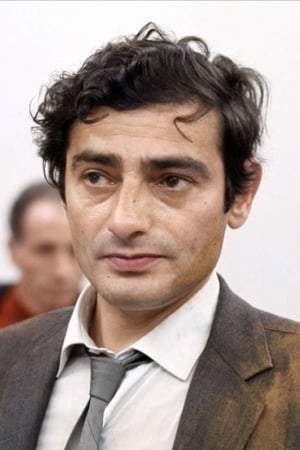
Charles Denner
Jean-François Cannonier

Bernadette Lafont
Marguerite, brazen maid

Marie Dubois
Geneviève Delpiels

Françoise Fabian
Ida
Jacques David
Robbed man (uncredited)
Nane Germon
Mrs. Voisin
Jean Champion
Boss of the Hôtel de la Biche
Julien Guiomar
Abbot Félix La Margelle
Jean-Paul Belmondo
Georges Randal
Jean-Luc Bideau
English bailiff (uncredited)
Fernand Guiot
Emiel Van Der Busch
Paul Le Person
Roger Voisin aka 'Roger-La-Honte'
Monique Mélinand
Mrs. de Montareuil
Martine Sarcey
Renée Mouratet
Nicole Chollet
Boss of the restaurant
Jacqueline Staup
Mrs. Van der Busch
Maurice Auzel
Marcel (uncredited)
Marlène Jobert
Broussaille
Gilbert Servien
Pickpocket's accomplice (uncredited)
Christian de Tillière
Armand de Montareuil
Madeleine Damien
Marie-Jeanne
Jacques Debary
Courbassol
Marc Dudicourt
Georges Antoine
Gabriel Gobin
Father Voisin
Paul Vally
Maître Vivonne, notary
Roger Crouzet
Mouratet
Christian Lude
Urbain Randal, Georges' uncle and guardian
Gaston Meunier
Guest at Mouratet (uncredited)
Jacques Gheusi
Professor Boileau
Duncan Elliott
English receiver
Irène Daix
Old English servant (uncredited)
Dario Meschi
Boss of the Hôtel du Roi Salomon (uncredited)
Odette Piquet
Fernande, boss of the Hôtel de la Biche (uncredited)
External Links and Streaming Options
Discover where to watch The Thief of Paris online, including streaming platforms, rental options, and official sources. Compare reviews, ratings, and in-depth movie information across sites like IMDb, TMDb, Wikipedia or Letterboxd.




Full Plot Summary and Ending Explained for The Thief of Paris
Read the complete plot summary of The Thief of Paris, including all major events, twists, and the full ending explained in detail. Explore key characters, themes, hidden meanings, and everything you need to understand the story from beginning to end.
Georges Randal, the thief of the title, opens the film by breaking into a sprawling house and methodically taking the valuable objects on display. This bold opening gesture sets the tone for a story that unfolds through a mosaic of memories, shifting between the past and the present in a way that keeps the viewer rediscovering who Georges truly is. The film uses these flashbacks to trace the arc of a life marked by loss, ingenuity, and a growing hunger for justice.
Raised as an orphan, Georges grows up under the care of his uncle, alongside his cousin Charlotte Charlotte. As the two children mature, Charlotte becomes a striking, witty, and perceptive young woman, and Georges finds himself drawn to her not just as a relative but as someone who awakens his most human feelings. The dynamic between them deepens into a complex affection, even as social boundaries keep threatening to pull them apart. Their bond is tested by the realities of class and opportunity, themes that will shape Georges’s choices in the years ahead.
When Georges reaches twenty-one and asks for the money his parents left him, he discovers a sting of betrayal: his unscrupulous uncle has already squandered the fortune. The blow is compounded by the social snobbery of the era, which instantly labels Georges as unsuitable for Charlotte because he lacks wealth. Charlotte’s father, eager to climb higher in society, arranges for her to marry a dim-witted aristocrat, further complicating Georges’s emotions and his sense of justice. The moment when Georges learns that the money has vanished and Charlotte’s future is being maneuvered by those who look down on him crystallizes his resolve. Charlotte, perceptive in a quiet way, senses the true thief but chooses not to reveal the truth, an act that plants the seed of Georges’s future path.
From this point, Georges does not simply react to circumstance; he channels his hurt into a calculated crusade. What begins as personal vengeance soon morphs into a formal pursuit of a new identity: a gentleman thief who operates at the edge of polite society while targeting its most protected circles—the haute bourgeoisie. The reversal feels almost folkloric: a life of crime becomes a critique of social pretensions, a means to reclaim dignity, and a method to expose the hollow wealth that sustains the world around him. The narrative posture—one part romance, one part social satire, and one part noirish caper—allows Georges to move with ease through rooms full of jewels, moneyed courtesies, and the subtle power plays of the upper class.
As the years pass, Georges’s plan culminates in a paradoxical success. He marries Charlotte, returns to the uncle’s house, and has regained the money his parents left him, all while amassing a fortune through his listed crimes. The life he builds sits on a precarious fulcrum: material security and emotional fulfillment coexist with an undeniable compulsion that speaks to a deeper, unfinished hunger. The film never pretends that Georges has fully shed his illicit impulse; rather, it questions whether social status and love can truly mollify a drive that began in pain and necessity.
In a telling moment of the narrative, Charlotte confronts the truth behind Georges’s world of theft. Her line lands with a quiet gravity, and his reply reveals the core tension that drives the story: > You don’t need to steal anymore. > You don’t understand! The exchange crystallizes the film’s central dilemma—whether personal happiness can coexist with an appetite that knows no final rest. The couple’s relationship becomes both a sanctuary and a battleground, a constant negotiation between trust, freedom, and the lure of the oldest impulse in human nature.
Visually and thematically, the film leans into a refined elegance that reflects Georges’s ascent and the elegance of the world he inhabits. The haunting elegance of grand houses, the gleam of jewels, and the measured rhythms of social life provide a stark counterpoint to the volatile drive that fuels Georges’s career. The juxtaposition of charm and danger keeps the viewer attentive to every choice Georges makes, every risk he calculates, and every smile that could melt into a plan. The flashbacks braid together with the present-day events to produce a layered portrait of a man who has both found and forfeited a semblance of control.
In the end, the story circles back to the train—an image that has become a motif for transition and the inherent tension between belonging and departure. Georges boards a train bound for Paris, carrying the latest haul yet still chasing something beyond wealth or marriage. The final scene lingers on movement rather than stillness, suggesting that for Georges, longing and compulsion are inseparable companions, and that the life he has built is as much a prison as a sanctuary. The film leaves the door open to interpretation: has he truly resolved to change, or is his fate written in the shadow of the life he has chosen?
Overall, the film presents a rich, character-driven tapestry that blends romance, crime, and social commentary with a nimble, non-linear structure. It invites viewers to consider how love and loyalty intersect with ambition, how wealth can both empower and entrap, and how the past can haunt the present in ways that reshuffle the boundaries between right and wrong. The performances, especially by Charlotte and Georges Randal, sustain a delicate balance between tenderness and danger, while the supporting cast contributes texture and nuance to a story that remains as captivating as it is morally intricate.

Coming soon on iOS and Android
The Plot Explained Mobile App
From blockbusters to hidden gems — dive into movie stories anytime, anywhere. Save your favorites, discover plots faster, and never miss a twist again.
Sign up to be the first to know when we launch. Your email stays private — always.
Explore the mobile appWatch Trailers, Clips & Behind-the-Scenes for The Thief of Paris
Watch official trailers, exclusive clips, cast interviews, and behind-the-scenes footage from The Thief of Paris. Dive deeper into the making of the film, its standout moments, and key production insights.
The Thief of Paris Themes and Keywords
Discover the central themes, ideas, and keywords that define the movie’s story, tone, and message. Analyze the film’s deeper meanings, genre influences, and recurring concepts.
The Thief of Paris Other Names and Titles
Explore the various alternative titles, translations, and other names used for The Thief of Paris across different regions and languages. Understand how the film is marketed and recognized worldwide.
Similar Movies To The Thief of Paris You Should Know About
Browse a curated list of movies similar in genre, tone, characters, or story structure. Discover new titles like the one you're watching, perfect for fans of related plots, vibes, or cinematic styles.





Quick Links: Summary, Cast, Ratings, More

What's After the Movie?
Not sure whether to stay after the credits? Find out!
Check out our other apps:

SAT Sphere
Build confidence for the Digital SAT.

Mori Atlas
Discover wild places worth protecting.

Luntero
Search smarter for a home in Amsterdam.

Plot Explained
Unravel movie endings and hidden clues.

Pokechamp
Dive into Pokémon data and battle logic.

Driving Theory
Get ready for your European theory test.

Movie Dust
Plan your next cinema trip with ease.

Musemap
Find art and culture as you travel.

Selkobase
Compare credentials before committing.

Local Manual
Turn an unfamiliar country into practical next steps.

Lernavi
Compare school systems before your next move.

GymRoam
Find a workout stop wherever your plans take you.
Explore Our Movie Platform
New Movie Releases (2026)
Famous Movie Actors
Top Film Production Studios
Movie Plot Summaries & Endings
Major Movie Awards & Winners
Best Concert Films & Music Documentaries
Movie Collections and Curated Lists
© 2026 What's After the Movie. All rights reserved.
Privacy Policy