The Last Black Man in San Francisco 2019

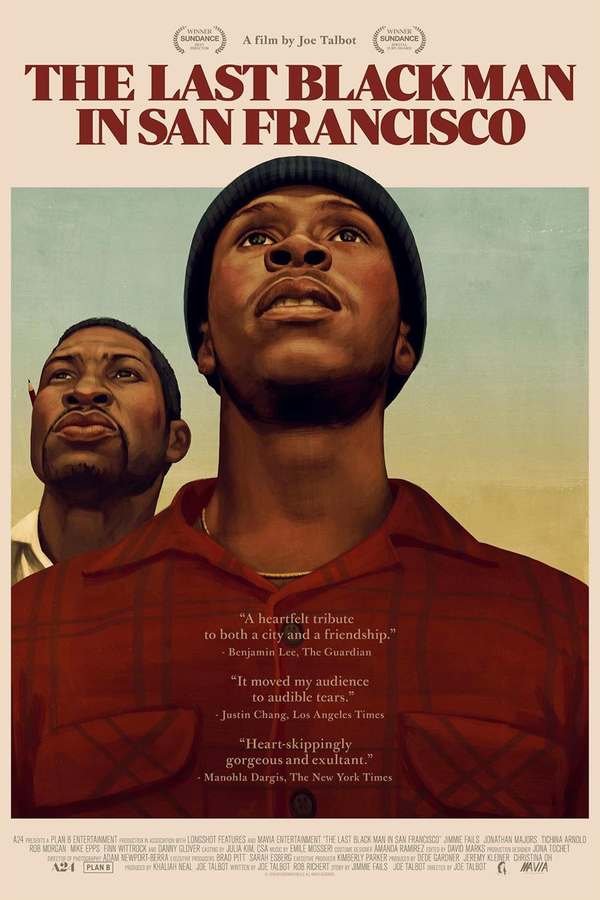
Amidst the changing landscape of San Francisco, Jimmie Fails grapples with his family's history and a disappearing community. He and his friend Mont are drawn to a grand Victorian house that once belonged to Jimmie’s grandfather, a celebrated writer. As they attempt to reclaim the house, they confront themes of displacement, memory, and the struggle to preserve identity in a rapidly evolving city, reflecting on what it means to belong.

Does The Last Black Man in San Francisco have end credit scenes?
No!
The Last Black Man in San Francisco does not have end credit scenes. You can leave when the credits roll.
Where to Watch The Last Black Man in San Francisco
See current US streaming, rental, and purchase options for The Last Black Man in San Francisco (2019) via JustWatch.








Meet the Full Cast and Actors of The Last Black Man in San Francisco
Explore the complete cast of The Last Black Man in San Francisco, including both lead and supporting actors. Learn who plays each character, discover their past roles and achievements, and find out what makes this ensemble cast stand out in the world of film and television.







External Links and Streaming Options
Discover where to watch The Last Black Man in San Francisco online, including streaming platforms, rental options, and official sources. Compare reviews, ratings, and in-depth movie information across sites like IMDb, TMDb, Wikipedia or Rotten Tomatoes.










Ratings and Reviews for The Last Black Man in San Francisco
See how The Last Black Man in San Francisco is rated across major platforms like IMDb, Metacritic, and TMDb. Compare audience scores and critic reviews to understand where The Last Black Man in San Francisco stands among top-rated movies in its genre.

The Movie Echo Score
In its overall design, The Last Black Man in San Francisco offers a poetic meditation on place and memory anchored by striking visual and sonic elements. Critics highlight its moving lament on gentrification and personal mythology even as they note occasional narrative drift and an unhurried pacing. Users report that the abstract, dreamlike structure can be both thought-provoking and demanding on attention. These varied impressions converge around a film whose lyrical strengths and deliberate rhythm resonate despite intermittent meandering.
The Movie Echo Score Breakdown for The Last Black Man in San Francisco

Art & Craft
In terms of art and craft, the film excels in its visual composition and precise framing. Critics praise its visually striking tone poem, noting rich color palettes and a distinct static rhythm that underscores thematic resonance. Users appreciate smart shot selection and meticulous editing that enhance the emotional undercurrents. Together, these elements cohere into a compelling aesthetic experience rooted in deliberate visual design.

Character & Emotion
When it comes to character and emotion, the film delivers nuanced performances that anchor its poetic ambitions. Critics note the depth of the central relationship and the emotional resonance of personal mythology, even as some view the pacing as undermining narrative momentum. Users commend the authenticity of performances and the chemistry between leads. Overall, character portrayals imbue the story with genuine emotional weight.

Story & Flow
In terms of story and flow, the film embraces an unconventional, meandering structure that emphasizes mood over linear progression. Critics describe a static rhythm and dreamlike passages that highlight thematic depth while occasionally hindering narrative clarity. Users find the pacing deliberately slow and note opportunities to tighten the runtime, though many recognize the abstraction as integral to its poetic intent. The net effect is an engaging yet uneven narrative rhythm.

Sensory Experience
When it comes to sensory experience, the film distinguishes itself through an evocative score and immersive sound design that reflect the city’s cultural tapestry. Critics praise the nuanced soundtrack and eclectic song choices, while users highlight the sweeping musical themes and atmospheric audio cues that heighten emotional impact. Combined with a cohesive visual style, these elements create a richly layered sensory landscape that resonates long after viewing.

Rewatch Factor
In terms of rewatch factor, the film offers lasting appeal through its thematic depth and poetic structure. Critics observe that its lyrical qualities and emotional core invite reflective viewing, even if the leisurely pace may divide audiences. Users report that memorable visual motifs and resonant moments reward multiple viewings, though some suggest the narrative could feel repetitive. On balance, it sustains a strong appeal for subsequent engagements.

82
Metascore
6.9
User Score


93%
TOMATOMETER

84%
User Score

7.2 /10
IMDb Rating
70
%
User Score

4.1
From 2.3K fan ratings

1.00/5
From 3 fan ratings
Take the Ultimate The Last Black Man in San Francisco Movie Quiz
Challenge your knowledge of The Last Black Man in San Francisco with this fun and interactive movie quiz. Test yourself on key plot points, iconic characters, hidden details, and memorable moments to see how well you really know the film.
The Last Black Man in San Francisco Quiz: Test your knowledge on the poignant story and themes of 'The Last Black Man in San Francisco'.
Who is Jimmie Fails' best friend?
Awards & Nominations for The Last Black Man in San Francisco
Discover all the awards and nominations received by The Last Black Man in San Francisco, from Oscars to film festival honors. Learn how The Last Black Man in San Francisco and its cast and crew have been recognized by critics and the industry alike.
Full Plot Summary and Ending Explained for The Last Black Man in San Francisco
Read the complete plot summary of The Last Black Man in San Francisco, including all major events, twists, and the full ending explained in detail. Explore key characters, themes, hidden meanings, and everything you need to understand the story from beginning to end.
Jimmie Fails, a young man navigating life in Bayview–Hunters Point, San Francisco, often roams around the vibrant city alongside his best friend, Montgomery (Mont) Allen, with whom he shares a home, living together with Mont’s grandfather, Danny Glover. Their daily routine includes waiting for the bus, a moment during which they witness the constant transformation of their beloved city and the passionate protests aiming to preserve its essence. One of their favorite destinations is a Victorian house located in the Fillmore District, a place steeped in Jimmie’s fond memories as it was where he grew up. Jimmie proudly asserts that this house was crafted by his grandfather in 1946, choosing to build on an empty lot instead of purchasing one of the homes made available due to the wartime internment of Japanese Americans. However, currently, the house is inhabited by an older white couple, which deeply troubles Jimmie as he often mourns to Mont about their apparent neglect, striving to maintain the property to the best of his ability.
Their concerns grow one day when they visit the house and discover the woman in tears, leaning on her husband as movers busily carry their belongings away. A mover reveals that the woman’s mother has passed away, and now a conflict arises between her and her sister regarding the fate of the house. Eager to reclaim their connection to the property, Jimmie and Mont seek the insight of Clayton Newsom, a realtor knowledgeable about the area. Though Newsom is unaware of the family’s predicament, he informs them that the situation seems to resemble an estate matter, which could result in the home being vacant for a prolonged period while the inheritance is sorted out. Seizing this chance, Jimmie and Mont explore the now-unoccupied house, passionately deciding to claim it as their new residence. They then visit Jimmie’s aunt, Wanda Fails, who generously offers them the furniture from her family’s former home, enabling them to bring in some cherished belongings.
As time passes, one fateful night, Mont invites Kofi, a childhood friend, to their new abode, leading to an evening filled with laughter and companionship. However, the next day, Kofi makes harsh comments to Jimmie, attempting to assert dominance due to his own insecurities after facing ridicule from peers. Tragically, the atmosphere darkens when Jimmie and Mont hear from Kofi’s friends that he has met an untimely demise following a confrontation. Returning to their home, they are devastated to find their possessions discarded on the sidewalk and a “For Sale” sign planted by Newsom. Feeling betrayed, Jimmie retaliates by moving everything back inside and confronts the bank in vain, hoping to purchase the house himself. In a twist of fate, Mont discovers from Newsom that the house’s true history reveals it wasn’t built by Jimmie’s grandfather after all; instead, the deed indicates it originates from the 1850s.
In the wake of these revelations, Mont channels his grief over Kofi’s passing into a poignant play that he stages in the house’s uppermost tower. On the performance day, Jimmie’s estranged father unexpectedly shows up. As Mont performs, he shares social media reactions regarding Kofi’s death, emphasizing that those present never genuinely knew him. Inviting audience members, including Jimmie, to voice their opinions about Kofi, Jimmie expresses that despite Kofi’s recent hurtful words, their shared experiences in a group home were filled with warmth, stating, > “People aren’t one thing.” However, a confrontation with Mont during the event exposes a painful truth about the house’s legacy, igniting Jimmie’s anger as he storms out, followed closely by the audience. Left to reflect, Jimmie finds solace as Wanda reassures him that leaving San Francisco wouldn’t be a loss for him—it would rather be the city’s loss.
Eventually, Jimmie confides in Mont by the dock, confessing he had always known the truth regarding his grandfather’s connection to the house. They share a peaceful evening watching TV with Grandpa Allen before Jimmie retires for the night. Upon waking, Mont discovers Jimmie’s departure, finding a note that poignantly expresses his inability to say goodbye and gratitude for their friendship. Now alone, Mont tries to engage in the activities they once enjoyed together, but they lack the same joy without Jimmie. The narrative concludes with Mont standing alone at the dock, gazing into the distance, while Jimmie drifts away, rowing quietly under the iconic Golden Gate Bridge, symbolizing his own journey and the deep emotional ties he leaves behind.

Coming soon on iOS and Android
The Plot Explained Mobile App
From blockbusters to hidden gems — dive into movie stories anytime, anywhere. Save your favorites, discover plots faster, and never miss a twist again.
Sign up to be the first to know when we launch. Your email stays private — always.
Explore the mobile appWatch Trailers, Clips & Behind-the-Scenes for The Last Black Man in San Francisco
Watch official trailers, exclusive clips, cast interviews, and behind-the-scenes footage from The Last Black Man in San Francisco. Dive deeper into the making of the film, its standout moments, and key production insights.
The Last Black Man in San Francisco Themes and Keywords
Discover the central themes, ideas, and keywords that define the movie’s story, tone, and message. Analyze the film’s deeper meanings, genre influences, and recurring concepts.
The Last Black Man in San Francisco Other Names and Titles
Explore the various alternative titles, translations, and other names used for The Last Black Man in San Francisco across different regions and languages. Understand how the film is marketed and recognized worldwide.
Similar Movies To The Last Black Man in San Francisco You Should Know About
Browse a curated list of movies similar in genre, tone, characters, or story structure. Discover new titles like the one you're watching, perfect for fans of related plots, vibes, or cinematic styles.


Quick Links: Summary, Cast, Ratings, More

What's After the Movie?
Not sure whether to stay after the credits? Find out!
Check out our other apps:

SAT Sphere
Build confidence for the Digital SAT.

Mori Atlas
Discover wild places worth protecting.

Luntero
Search smarter for a home in Amsterdam.

Plot Explained
Unravel movie endings and hidden clues.

Pokechamp
Dive into Pokémon data and battle logic.

Driving Theory
Get ready for your European theory test.

Movie Dust
Plan your next cinema trip with ease.

Musemap
Find art and culture as you travel.

Selkobase
Compare credentials before committing.

Local Manual
Turn an unfamiliar country into practical next steps.

Lernavi
Compare school systems before your next move.

GymRoam
Find a workout stop wherever your plans take you.
Explore Our Movie Platform
New Movie Releases (2026)
Famous Movie Actors
Top Film Production Studios
Movie Plot Summaries & Endings
Major Movie Awards & Winners
Best Concert Films & Music Documentaries
Movie Collections and Curated Lists
© 2026 What's After the Movie. All rights reserved.
Privacy Policy