The Insult 2018


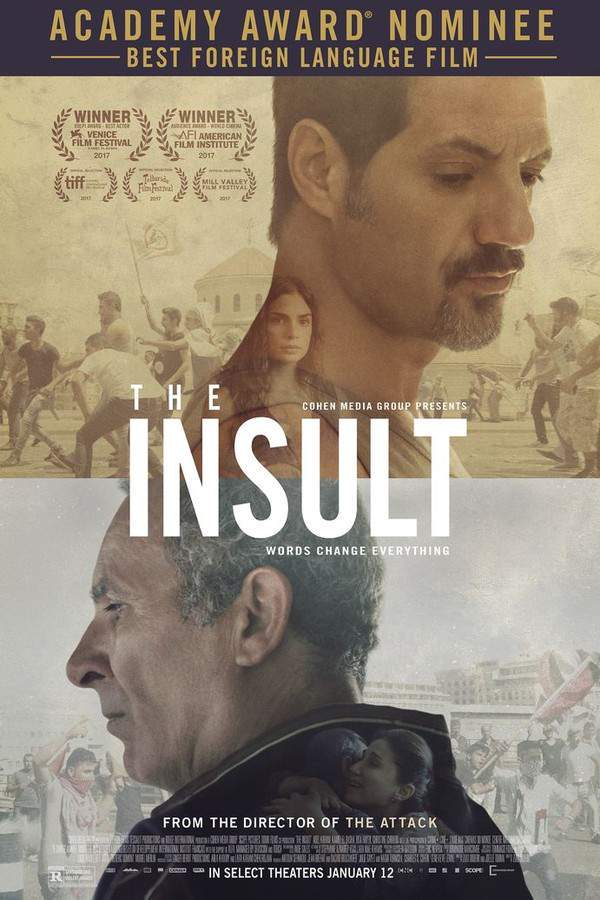
In modern-day Beirut, a minor argument between Lebanese Christian Tony and Palestinian refugee Yasser spirals into a significant legal case. The ensuing court battle and media attention force both men to examine their beliefs and confront painful experiences, highlighting the deep social divisions within Lebanon and raising complex questions about justice, prejudice, and understanding.


Does The Insult have end credit scenes?
No!
The Insult does not have end credit scenes. You can leave when the credits roll.
Where to Watch The Insult
See current US streaming, rental, and purchase options for The Insult (2018) via JustWatch.









Meet the Full Cast and Actors of The Insult
Explore the complete cast of The Insult, including both lead and supporting actors. Learn who plays each character, discover their past roles and achievements, and find out what makes this ensemble cast stand out in the world of film and television.








External Links and Streaming Options
Discover where to watch The Insult online, including streaming platforms, rental options, and official sources. Compare reviews, ratings, and in-depth movie information across sites like IMDb, TMDb, Wikipedia or Rotten Tomatoes.










Ratings and Reviews for The Insult
See how The Insult is rated across major platforms like IMDb, Metacritic, and TMDb. Compare audience scores and critic reviews to understand where The Insult stands among top-rated movies in its genre.

The Movie Echo Score
The Insult delivers a thought-provoking legal drama anchored by layered performances and timely themes. It offers a balanced portrayal of conflict and reconciliation through a personal dispute that resonates beyond its courtroom setting. Staged with measured pacing and occasional levity, the narrative unfolds with clear stakes though some sequences lean toward schematic development. The film’s grounded approach to suffering and empathy sustains engagement despite occasional formulaic moments. Ultimately, it presents a resonant examination of cultural tensions that invites reflection on justice and humanity.
The Movie Echo Score Breakdown for The Insult

Art & Craft
In terms of art and craft, the film demonstrates competent direction and a restrained visual style. The director’s framing emphasizes the emotional subtext of each exchange, while editing maintains the courtroom tension. Production design subtly underscores the cultural setting without distraction. Overall, the visual approach supports the story’s nuanced tone with consistency.

Character & Emotion
When it comes to character and emotion, The Insult excels in its nuanced performances. Lead actors convey restrained intensity through subtle gestures and layered expressions. Supporting roles contribute authentic interplay that highlights cultural tensions and personal stakes. Emotional resonance builds steadily, allowing character arcs to reflect broader themes of suffering and reconciliation. The net effect is a compelling portrayal of human complexity.

Story & Flow
In terms of story and flow, the film presents a coherent narrative anchored by clear stakes in the courtroom. Plot progression is paced deliberately, interspersing tension with moments of levity to maintain engagement. While the structure occasionally leans toward familiar legal-thriller tropes, the contextual framing of political and cultural issues adds originality. The journey remains engaging from opening to verdict.

Sensory Experience
When it comes to sensory experience, the film employs a restrained sound design and a subtle musical score that underscore the emotional stakes without overwhelming the drama. Visual cohesion is maintained through an understated color palette and consistent framing. Sound mixing balances dialogue clarity with ambient courtroom noise. The combined effect enhances immersion without drawing attention away from the performances.

Rewatch Factor
For rewatch factor, the film offers considerable lasting appeal through its thematic depth and cultural insights. The layered dialogue and nuanced confrontations reveal additional meaning on subsequent viewings. While the narrative structure is straightforward, repeated viewings shed light on subtleties in character interactions and political subtext. As a result, the film rewards attentive audiences with a deeper understanding of its moral layers.

72
Metascore
8.0
User Score


86%
TOMATOMETER

88%
User Score

7.6 /10
IMDb Rating

75
%
User Score

3.7
From 45 fan ratings

3.88/5
From 8 fan ratings
Take the Ultimate The Insult Movie Quiz
Challenge your knowledge of The Insult with this fun and interactive movie quiz. Test yourself on key plot points, iconic characters, hidden details, and memorable moments to see how well you really know the film.
The Insult (2018) Quiz: Test your knowledge of the film *The Insult* with these ten mixed‑difficulty questions covering characters, plot points, and themes.
What is the nationality and religious affiliation of the main character Tony Hanna?
Awards & Nominations for The Insult
Discover all the awards and nominations received by The Insult, from Oscars to film festival honors. Learn how The Insult and its cast and crew have been recognized by critics and the industry alike.
Full Plot Summary and Ending Explained for The Insult
Read the complete plot summary of The Insult, including all major events, twists, and the full ending explained in detail. Explore key characters, themes, hidden meanings, and everything you need to understand the story from beginning to end.
Tony Hanna is a Lebanese Christian and a devoted member of the Lebanese Forces, living with his pregnant wife, Shirine Hanna. From the start, his world is defined by a strict sense of order around his property: he doesn’t want workers near Shirine, especially when she is at home, and he notices contractors tinkering with the gutter on his balcony. In a burst of anger, he smashes the gutter, an act that triggers a chain of clashes and harsh judgments. The worker involved, Yasser Abdallah Salameh, dubs him a “fucking prick,” a moment that crystallizes the deep-seated tension between Tony’s world and the realities of a divided country. Tony instantly recognizes Yasser by his Palestinian accent, and his daily life becomes entangled with anti-Palestinian propaganda and a growing wish that Palestinians would leave the country. Though the balcony work violated building codes, Tony’s demand for an apology escalates the incident rather than defusing it.
The confrontation spills into the legal arena. The employers bring Yasser to Tony’s garage to offer a personal apology, but a recorded speech by Christian leader Bachir Gemayel interrupts what feels like a path toward reconciliation. In a311 moment of provocation, Tony expresses a violent, sweeping thought about Ariel Sharon’s supposed plan to exterminate Palestinians, which triggers a brutal punch from Yasser that leaves Tony with two fractured ribs. The incident becomes a lawsuit, and Tony chooses to represent himself with determination, hoping to win restitution and vindication.
The courtroom drama is caught between passion and evidence. When neither Tony nor Yasser can repeat the exact words Tony used about Sharon, the case is dismissed for inconclusive evidence by Judge Chahine. Tony erupts, accusing the judiciary of corruption and bias, and is removed from the courtroom, vowing to appeal. The physical strain of the day weighs on him; he collapses, Shirine rushes to his side, and soon she gives birth. The baby’s condition becomes dire, placed on life support, a consequence the family attributes to the contractions Shirine experienced during the shock of the assault. The trial is put on hold and reopens with the risk of manslaughter for Yasser if the child dies.
In this fragile moment, a new advocate enters the picture. Wajdi Wehbe, a pro-Christian attorney who carries memories of the Lebanese Civil War, takes on Tony’s case, while Wajdi’s daughter, Nadine Wehbe, with a less vivid memory of the conflict, represents Yasser. The dynamics of litigation shift as the courtroom becomes a stage for wounded histories and competing interpretations of what constitutes harm, responsibility, and speech. Tony’s remarks about Sharon are now presented in the courtroom again, but this time the argument centers on emotional distress provoked by the actions of others, and the broader trauma of a nation still healing from civil conflict. It is revealed that Shirine has a history of miscarriages, adding a personal dimension to the legal and emotional stakes. The case and the public discourse it fuels rekindle memories of the civil war, sparking clashes on the streets between Christians and Muslims and exposing the fault lines that still run through everyday life.
Throughout the retrial, Wajdi emphasizes a distinction between private thoughts and public action, contending that Tony’s words, however controversial, reflect private expression rather than intent to incite violence or libel. The defense strategy leans on freedom of thought, while the prosecution emphasizes the real-world harm caused by inflammatory statements in a charged environment. As the courtroom case unfolds, researchers and witnesses uncover a deeper, more personal history: Tony was born in Damour in 1970 and left in January 1976, making him a Damour refugee who survived a massacre with help from PLO units. This revelation, kept hidden from Tony’s legal team, is shown in documentary footage that Wajdi reveals in the courtroom, breaking Tony down with the weight of memory.
A pivotal confrontation occurs when Yasser and Tony meet again; Yasser claims that Christian suffering in the civil war was minor compared to Palestinian suffering, and Tony responds with a punch, prompting a sincere apology from Yasser. As the legal and emotional battles continue, Shirine and Tony’s child begin to recover, and the mood in the courtroom shifts from outright hostility to a tentative, fragile possibility of reconciliation. When the final verdict arrives, the judges declare Yasser not guilty of assault. The drama closes with a quiet, human moment: the two men exchange a wary smile and part ways, hinting at a future where past wounds might soften, even if the present remains complex and unresolved.

Coming soon on iOS and Android
The Plot Explained Mobile App
From blockbusters to hidden gems — dive into movie stories anytime, anywhere. Save your favorites, discover plots faster, and never miss a twist again.
Sign up to be the first to know when we launch. Your email stays private — always.
Explore the mobile appWatch Trailers, Clips & Behind-the-Scenes for The Insult
Watch official trailers, exclusive clips, cast interviews, and behind-the-scenes footage from The Insult. Dive deeper into the making of the film, its standout moments, and key production insights.
The Insult Themes and Keywords
Discover the central themes, ideas, and keywords that define the movie’s story, tone, and message. Analyze the film’s deeper meanings, genre influences, and recurring concepts.
The Insult Other Names and Titles
Explore the various alternative titles, translations, and other names used for The Insult across different regions and languages. Understand how the film is marketed and recognized worldwide.
Similar Movies To The Insult You Should Know About
Browse a curated list of movies similar in genre, tone, characters, or story structure. Discover new titles like the one you're watching, perfect for fans of related plots, vibes, or cinematic styles.








Quick Links: Summary, Cast, Ratings, More

What's After the Movie?
Not sure whether to stay after the credits? Find out!
Check out our other apps:

SAT Sphere
Build confidence for the Digital SAT.

Mori Atlas
Discover wild places worth protecting.

Luntero
Search smarter for a home in Amsterdam.

Plot Explained
Unravel movie endings and hidden clues.

Pokechamp
Dive into Pokémon data and battle logic.

Driving Theory
Get ready for your European theory test.

Movie Dust
Plan your next cinema trip with ease.

Musemap
Find art and culture as you travel.

Selkobase
Compare credentials before committing.

Local Manual
Turn an unfamiliar country into practical next steps.

Lernavi
Compare school systems before your next move.

GymRoam
Find a workout stop wherever your plans take you.
Explore Our Movie Platform
New Movie Releases (2026)
Famous Movie Actors
Top Film Production Studios
Movie Plot Summaries & Endings
Major Movie Awards & Winners
Best Concert Films & Music Documentaries
Movie Collections and Curated Lists
© 2026 What's After the Movie. All rights reserved.
Privacy Policy