The Falklands Play 2002


A dramatic reconstruction of the political events leading up to and including the 1982 Falklands War, written by playwright Ian Curteis. Commissioned by the BBC in 1983 for a 1986 broadcast, it was withdrawn by controller Michael Grade over alleged pro‑Thatcher, jingoistic tone, prompting a press outcry about bias. It finally aired in 2002 as separate TV and radio adaptations.


Does The Falklands Play have end credit scenes?
No!
The Falklands Play does not have end credit scenes. You can leave when the credits roll.
Where to Watch The Falklands Play
See current US streaming, rental, and purchase options for The Falklands Play (2002) via JustWatch.









Meet the Full Cast and Actors of The Falklands Play
Explore the complete cast of The Falklands Play, including both lead and supporting actors. Learn who plays each character, discover their past roles and achievements, and find out what makes this ensemble cast stand out in the world of film and television.
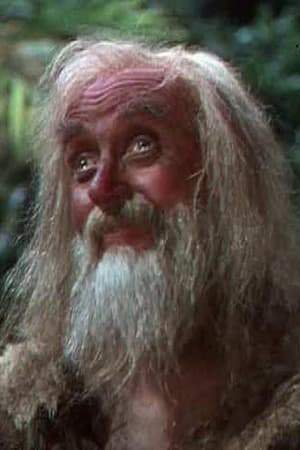
Geoffrey Wilkinson
Sir Anthony Meyer Bt MP (Conservative)
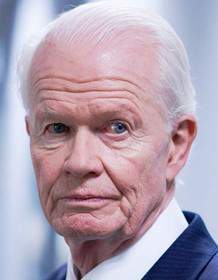
Michael Cochrane
Rt Hon Nicholas Ridley MP (Financial Secretary to the Treasury)
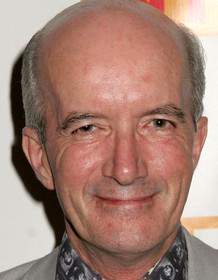
Clive Merrison
Rt Hon John Nott MP (Secretary of State for Defence)
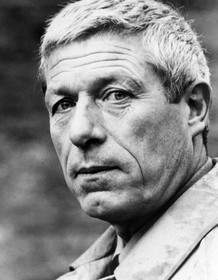
John Woodvine
Adm. of the Fleet Sir Terence Lewin

David Fleeshman
Denis Healey MP (Labour)

James Fox
Rt Hon Peter, 6th Baron Carrington KCMG MC (Foreign Secretary)
John Standing
Rt Hon William Whitelaw CH MC MP (Home Secretary)
Anthony Calf
Robin Fearn (Head of Falkland Islands Department, Foreign Office)
Rupert Vansittart
Sir Robert Armstrong (Cabinet Secretary)
Richard Cordery
Tom Enders
Vernon Dobtcheff
Nicanor Costa Méndez (Argentine Minister of External Relations)
Garrick Hagon
Vernon Walters (Senior Adviser to the US Secretary of State)
Robert Hardy
Sir Anthony Parsons
Patrick Godfrey
Rt Hon Michael Foot MP (Leader of the Opposition)
Colin Stinton
Alexander Haig (US Secretary of State)
Jeremy Clyde
Sir Nicholas Henderson (HM Ambassador to the United States)
Tom Chadbon
Adm. Sir John Fieldhouse (C-in-C Fleet)
Patricia Hodge
Rt. Hon Margaret Thatcher (Prime Minister)
Renny Krupinski
David Lambie MP (Labour)
Lorelei King
Jeanne Kirkpatrick (US Ambassador to the UN)
Jonathan Coy
Richard Luce MP (Minister of State, Foreign Office)
Martin Oldfield
Rt Hon Enoch Powell MP (Conservative)
Alan Rothwell
John Wells MP (Conservative)
Jeremy Child
Rt Hon Francis Pym MC MP (Foreign Secretary)
Peter Blythe
Rt Hon Sir Michael Havers QC MP (Attorney-General)
Shaughan Seymour
Adm. Sir Henry Leach (First Sea Lord)
Jasper Jacob
John Wilkinson MP (Parliamentary Private Secretary to John Nott)
Bob Sherman
President Ronald Reagan
Arturo Venegas
Javier Pérez de Cuéllar (UN Secretary-General)
Robert Bowman
Sir Hamilton Whyte (Member, British Mission to the UN)
Gordon Langford Rowe
Rt Hon George Thomas MP (Speaker of the House of Commons)
Ron Meadows
Rt Hon Peter Shore MP (Shadow Chancellor of the Exchequer)
Charles McCurdy
John Browne MP (Conservative)
Geoff Holman
Rt Hon Tony Benn MP (Labour)
External Links and Streaming Options
Discover where to watch The Falklands Play online, including streaming platforms, rental options, and official sources. Compare reviews, ratings, and in-depth movie information across sites like IMDb, TMDb, Wikipedia or Rotten Tomatoes.






Take the Ultimate The Falklands Play Movie Quiz
Challenge your knowledge of The Falklands Play with this fun and interactive movie quiz. Test yourself on key plot points, iconic characters, hidden details, and memorable moments to see how well you really know the film.
The Falklands Play Quiz: A ten‑question quiz that tests your knowledge of the 2002 television drama about the 1982 Falklands conflict and the political decisions behind it.
Which British Prime Minister is portrayed as leading the government during the Falklands crisis?
Full Plot Summary and Ending Explained for The Falklands Play
Read the complete plot summary of The Falklands Play, including all major events, twists, and the full ending explained in detail. Explore key characters, themes, hidden meanings, and everything you need to understand the story from beginning to end.
Prime Minister Patricia Hodge anchors this tightly wound portrait of the Thatcher government during the Falklands crisis, the United Kingdom’s largest foreign affairs emergency since the Suez Crisis of 1956. The play traces the behind-the-scenes negotiations and decisions that pull in the military, the Whitehall machinery, and international powers into a high-stakes standoff that threads toward war and, eventually, victory, all while the clock ticks on every diplomatic misstep and hard choice.
With the Argentinian invasion as a spark, Britain declares a maritime exclusion zone around the islands and dispatches a formidable naval task force toward the South Atlantic, signaling that restraint is no longer an option for a government under pressure from both parliament and public opinion. The scale of the crisis is matched by the pace of the decisions, and the drama captures how every vessel sent and every cable sent back becomes a line in the larger story of a nation at war.
Inside the Foreign Office, the resignation of Lord Carrington James Fox is presented as a watershed moment: a high-level admission of failure to foresee the invasion, a consequence Thatcher reluctantly accepts, and a signal that the cabinet will be forced to confront new realities on firsthand terms. The vacancy invites a wary voice into the room—Jeremy Clyde as Sir Francis Pym—who stands as a reticent figure in the war cabinet, urging measured action and warning against rushing into a full military escalation even as the situation intensifies.
The diplomat’s stage expands beyond London as American diplomacy steps onto the floor. Colin Stinton embodies Alexander Haig, the US Secretary of State, arriving to mediate between Thatcher and Argentina’s military leadership under Leopoldo Galtieri. Haig’s interventions introduce a complex, high-stakes dynamic where allies, rivals, and perennially shifting loyalties converge in a crowded room filled with microphones, maps, and moral imperatives.
On the British defence side, the weight of policy shifts toward a more direct line as Clive Merrison takes on John Nott, the Secretary of State for Defence, who presses for the withdrawal of Argentinian garrisons in accordance with UN Resolution 502. This insistence on a precise legal framework clashes with the urgency of the moment, and the play zeroes in on the tension between legalistic caution and strategic necessity.
The international thread continues with the involvement of the United Nations, where the figure of Pérez de Cuéllar enters the negotiations as a conduit for diplomacy and a buffer against unchecked action. In the drama’s dialogue, Arturo Venegas portrays Javier Pérez de Cuéllar, the UN Secretary-General, whose interactions with London and Buenos Aires test the limits of diplomacy as a bridge to de-escalation or, at times, a reluctant endorsement of force.
The narrative then widens to the war’s crucibles: the Argentine landings on South Georgia, the British countermeasures that reclaim the island, and the public theater of the House of Commons where government and opposition trade blows and explanations. The war at sea and in the air comes into sharper focus with two defining, costly moments: the sinking of the Argentine cruiser ARA General Belgrano and the losses suffered by the Royal Navy when the destroyer HMS Sheffield is struck by an Exocet missile. These events intensify political scrutiny and deepen the sense that the conflict will reshape Britain’s sense of security and international standing for years to come.
As hostilities unfold and negotiations thrash toward a conclusion, Thatcher’s stance hardens into a formal declaration that ends the fighting and frames the conflict within a hard-won narrative of national resolve and political chastisement. The play closes on the Prime Minister’s chamber, where the political theater of courage, risk, and responsibility leaves a lasting imprint on the nation’s memory and on the people who served under the shadow of a moment that tested every facet of leadership.

Coming soon on iOS and Android
The Plot Explained Mobile App
From blockbusters to hidden gems — dive into movie stories anytime, anywhere. Save your favorites, discover plots faster, and never miss a twist again.
Sign up to be the first to know when we launch. Your email stays private — always.
Explore the mobile appDiscover Film Music Concerts Near You – Live Orchestras Performing Iconic Movie Soundtracks
Immerse yourself in the magic of cinema with live orchestral performances of your favorite film scores. From sweeping Hollywood blockbusters and animated classics to epic fantasy soundtracks, our curated listings connect you to upcoming film music events worldwide.
Explore concert film screenings paired with full orchestra concerts, read detailed event information, and secure your tickets for unforgettable evenings celebrating legendary composers like John Williams, Hans Zimmer, and more.


Unlock the World of Movies with Our Comprehensive Wiki
Dive into our Movie Wiki for in-depth film encyclopedia entries, including cast biographies, production trivia, plot synopses, behind-the-scenes facts, and thematic analyses. Whether you’re researching iconic directors, exploring genre histories, or discovering hidden easter eggs, our expertly curated movie database has everything you need to fuel your cinematic passion.
Quick Links: Summary, Cast, Ratings, More

What's After the Movie?
Not sure whether to stay after the credits? Find out!
Check out our other apps:

SAT Sphere
Build confidence for the Digital SAT.

Mori Atlas
Discover wild places worth protecting.

Luntero
Search smarter for a home in Amsterdam.

Plot Explained
Unravel movie endings and hidden clues.

Pokechamp
Dive into Pokémon data and battle logic.

Driving Theory
Get ready for your European theory test.

Movie Dust
Plan your next cinema trip with ease.

Musemap
Find art and culture as you travel.

Selkobase
Compare credentials before committing.

Local Manual
Turn an unfamiliar country into practical next steps.

Lernavi
Compare school systems before your next move.

GymRoam
Find a workout stop wherever your plans take you.
Explore Our Movie Platform
New Movie Releases (2026)
Famous Movie Actors
Top Film Production Studios
Movie Plot Summaries & Endings
Major Movie Awards & Winners
Best Concert Films & Music Documentaries
Movie Collections and Curated Lists
© 2026 What's After the Movie. All rights reserved.
Privacy Policy