Take Your Pills 2018


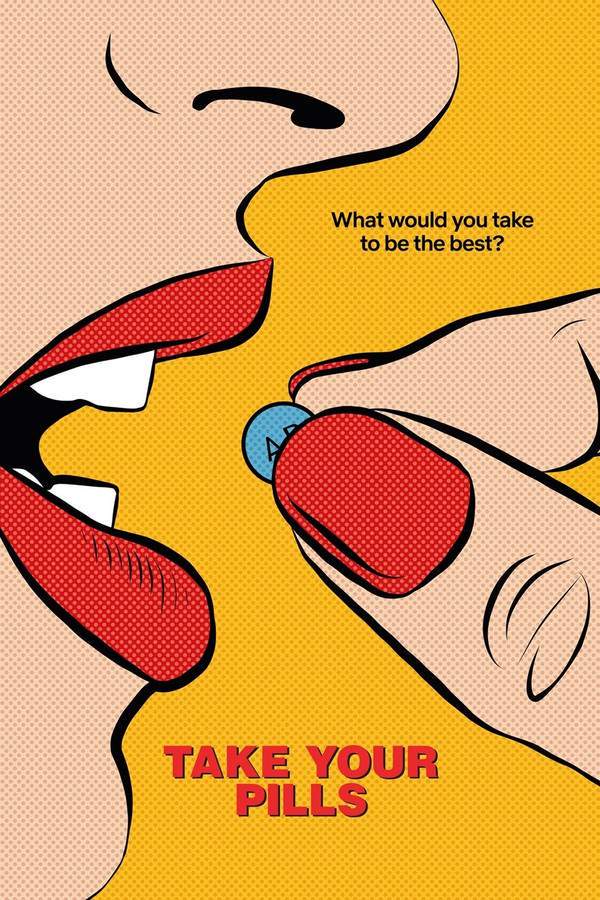
Fueled by a relentless drive for achievement, a growing number of Americans have turned to prescription stimulants like Adderall. This documentary explores a generation’s increasing dependence on these drugs, examining how the pursuit of success has blurred the lines between enhancing performance and struggling with addiction. It investigates the cultural pressures and personal stories behind this widespread phenomenon.


Does Take Your Pills have end credit scenes?
No!
Take Your Pills does not have end credit scenes. You can leave when the credits roll.
Where to Watch Take Your Pills
See current US streaming, rental, and purchase options for Take Your Pills (2018) via JustWatch.


Streaming availability powered by 
Meet the Full Cast and Actors of Take Your Pills
Explore the complete cast of Take Your Pills, including both lead and supporting actors. Learn who plays each character, discover their past roles and achievements, and find out what makes this ensemble cast stand out in the world of film and television.


External Links and Streaming Options
Discover where to watch Take Your Pills online, including streaming platforms, rental options, and official sources. Compare reviews, ratings, and in-depth movie information across sites like IMDb, TMDb, Wikipedia or Rotten Tomatoes.









Ratings and Reviews for Take Your Pills
See how Take Your Pills is rated across major platforms like IMDb, Metacritic, and TMDb. Compare audience scores and critic reviews to understand where Take Your Pills stands among top-rated movies in its genre.

The Movie Echo Score
Overall, the documentary presents a visually engaging examination of ADHD medication within contemporary performance culture, yet its reductive portrayal of personal experiences and uneven pacing undermine its impact. The film’s thematic connections between capitalist pressures and stimulant use are thoughtfully constructed, and its polished craft and clear audiovisual design support those arguments. Nevertheless, the reliance on talking-head interviews and speculative leaps can detract from narrative coherence and emotional resonance. The net impression is of an informative but stylistically uneven work.
The Movie Echo Score Breakdown for Take Your Pills

Art & Craft
Take Your Pills features a slick and energetic visual style. The film uses vibrant animations, intercut with archival footage and talking heads to maintain momentum, and its editing emphasizes a frenetic pace that reflects the subject matter. At times, the rapid cuts and dense graphics can feel cluttered, affecting overall clarity. Despite minor coherence issues, the craft remains a strength.

Character & Emotion
In terms of character depth, the documentary offers limited emotional engagement. It profiles prescription drug users and experts through talking‐head interviews, but these segments often lack personal context and nuanced portrayal. By focusing on broad social arguments rather than individual stories, the film undercuts the lived experience of those with ADHD. The result is a reductive rather than resonant character dimension.

Story & Flow
When considering story and flow, the film succeeds in linking performance culture to pharmaceutical dependence but falls short in narrative coherence. Its argument relies on thematic connections between capitalism, information overload, and stimulant use, yet it seldom integrates personal stories to ground these ideas. The pacing alternates between urgent exposé and deliberate analysis, which can disrupt engagement. Overall, the storytelling feels ambitious but uneven.

Sensory Experience
In terms of sensory experience, the documentary employs a measured audiovisual design punctuated by animated graphics and archival clips. The soundtrack is subdued, allowing the narrative to take precedence, while the visual style uses a consistent color palette and text overlays for emphasis. Occasional rapid cuts and dense infographics may overwhelm viewers, yet the cohesive use of sound and imagery largely supports the subject matter.

Rewatch Factor
Regarding rewatch factor, the film offers educational value through its exploration of amphetamine use and social critique, which may appeal on repeat viewings. However, the limited emotional resonance and reliance on talking‐head interviews reduce its lasting appeal. The documentary’s thematic focus and analytical approach provide insight, but the uneven pacing and lack of personal narrative lessen its potential for multiple viewings.

54
Metascore
4.0
User Score


58%
TOMATOMETER

46%
User Score

6.3 /10
IMDb Rating
65
%
User Score

3.1
From 3 fan ratings
Take the Ultimate Take Your Pills Movie Quiz
Challenge your knowledge of Take Your Pills with this fun and interactive movie quiz. Test yourself on key plot points, iconic characters, hidden details, and memorable moments to see how well you really know the film.
Take Your Pills Quiz: Test your knowledge on the documentary 'Take Your Pills' and the complex issues surrounding stimulant use.
What is the primary focus of the documentary 'Take Your Pills'?
Full Plot Summary and Ending Explained for Take Your Pills
Read the complete plot summary of Take Your Pills, including all major events, twists, and the full ending explained in detail. Explore key characters, themes, hidden meanings, and everything you need to understand the story from beginning to end.
The documentary opens by presenting a diverse array of individuals, each intricately linked to Adderall and stimulant medications. In the academic sphere, college students such as Jasper Holt, who was diagnosed with ADHD as a child, and Delaney, a junior reliant on the medication to maintain her performance, candidly share their experiences. Transitioning into the realm of professional sports, former NFL player Eben Britton offers a unique perspective on the use of these drugs.
Accompanying them are health professionals who provide essential historical insights and expert commentary, unraveling the intricate factors contributing to the rampant use of stimulants. Stories of personal struggle and triumph are prominently featured, showcasing family members who have become witnesses to the profound effects of Adderall on their loved ones.
Jasper reflects on his journey, reliving the transition from being prescribed medication in his youth to feeling embarrassed during his high school years, and currently striving to taper off his dosage. His story exemplifies the tension between personal choice and societal expectations. In contrast, Delaney offers a sobering critique of the academic landscape, presenting her reliance on Adderall as a response to the competitive pressures imposed by her education.
Another poignant narrative emerges through Rahiem, a high school student diagnosed with ADHD early in life. His mother’s heartfelt insights reveal how the medication has significantly influenced Rahiem’s behavior, providing a glimpse into their family dynamic. As these narratives intertwine, the documentary crafts a multifaceted depiction of the human experience, shedding light on the crucial role that Adderall occupies in contemporary society.
Prominent voices in this discourse include Dr. Wendy Brown, a noted political theorist from the University of California, Berkeley, who examines why so many students and adults resort to stimulants to cope within an intensely competitive environment. She argues that relentless academic and career pressures compel individuals to seek out performance-enhancing drugs to maintain their edge.
Furthermore, Martha Farah, a cognitive neuroscientist at the University of Pennsylvania, scrutinizes the historical and controversial facets of psychostimulant medications. She challenges the misconception that these drugs can enhance intelligence, advocating instead for responsible usage and accurate diagnosis.
Adding to the conversation, Anjan Chatterjee, chair of neurology at the University of Pennsylvania, reflects on the distinct differences in drug consumption between his generation and today’s youth. His insights trace the evolution of stimulant use over time and address the growing complexities surrounding medication.
However, perspectives vary within this debate. Alternascript co-founders, Matthew Piskorz and Lucas Siegel, assert that if students are increasingly resorting to prescription medications to maintain their academic performance, the marketplace for legal supplements must be expanded to ensure a level playing field.
The documentary ponders the ethical implications of medication use, as Dr. Chatterjee expresses caution regarding its misuse, while the founders’ proposals aim to democratize academic success. Through these contrasting viewpoints, the film weaves an intricate tapestry of ideas, inviting viewers to reflect on the nuanced balance between personal ambition and the quest for knowledge.

Coming soon on iOS and Android
The Plot Explained Mobile App
From blockbusters to hidden gems — dive into movie stories anytime, anywhere. Save your favorites, discover plots faster, and never miss a twist again.
Sign up to be the first to know when we launch. Your email stays private — always.
Explore the mobile appWatch Trailers, Clips & Behind-the-Scenes for Take Your Pills
Watch official trailers, exclusive clips, cast interviews, and behind-the-scenes footage from Take Your Pills. Dive deeper into the making of the film, its standout moments, and key production insights.
Cars Featured in Take Your Pills
Explore all cars featured in Take Your Pills, including their makes, models, scenes they appear in, and their significance to the plot. A must-read for car enthusiasts and movie buffs alike.
Take Your Pills Themes and Keywords
Discover the central themes, ideas, and keywords that define the movie’s story, tone, and message. Analyze the film’s deeper meanings, genre influences, and recurring concepts.
Take Your Pills Other Names and Titles
Explore the various alternative titles, translations, and other names used for Take Your Pills across different regions and languages. Understand how the film is marketed and recognized worldwide.
Similar Movies To Take Your Pills You Should Know About
Browse a curated list of movies similar in genre, tone, characters, or story structure. Discover new titles like the one you're watching, perfect for fans of related plots, vibes, or cinematic styles.










Quick Links: Summary, Cast, Ratings, More

What's After the Movie?
Not sure whether to stay after the credits? Find out!
Check out our other apps:

SAT Sphere
Build confidence for the Digital SAT.

Mori Atlas
Discover wild places worth protecting.

Luntero
Search smarter for a home in Amsterdam.

Plot Explained
Unravel movie endings and hidden clues.

Pokechamp
Dive into Pokémon data and battle logic.

Driving Theory
Get ready for your European theory test.

Movie Dust
Plan your next cinema trip with ease.

Musemap
Find art and culture as you travel.

Selkobase
Compare credentials before committing.

Local Manual
Turn an unfamiliar country into practical next steps.

Lernavi
Compare school systems before your next move.

GymRoam
Find a workout stop wherever your plans take you.
Explore Our Movie Platform
New Movie Releases (2026)
Famous Movie Actors
Top Film Production Studios
Movie Plot Summaries & Endings
Major Movie Awards & Winners
Best Concert Films & Music Documentaries
Movie Collections and Curated Lists
© 2026 What's After the Movie. All rights reserved.
Privacy Policy