Swimming Upstream 2005

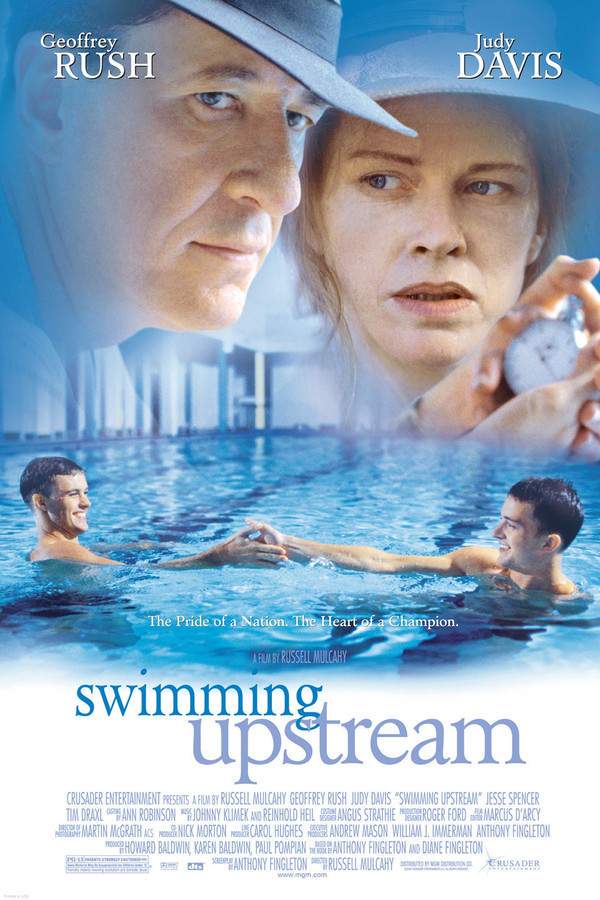
This Australian biographical film follows Tony Fingleton, who struggles to establish his identity within a large and challenging family, seeking his father’s approval. Driven to pursue competitive swimming, Tony’s journey is one of confronting personal insecurities and uncovering inner resilience. Through dedication and perseverance, he strives to earn his father's respect and ultimately finds a path to self-discovery.


Does Swimming Upstream have end credit scenes?
No!
Swimming Upstream does not have end credit scenes. You can leave when the credits roll.
Where to Watch Swimming Upstream
See current US streaming, rental, and purchase options for Swimming Upstream (2005) via JustWatch.

fuboTV
HD
MGM Plus
HD
MGM Plus Roku Premium Channel
HD
MGM+ Amazon Channel
HD
Philo
HD
The Roku Channel
HD
Tubi TV
SD
Amazon Video
HD
Apple TV Store
HD
Fandango At Home
HD Streaming availability powered by 
Meet the Full Cast and Actors of Swimming Upstream
Explore the complete cast of Swimming Upstream, including both lead and supporting actors. Learn who plays each character, discover their past roles and achievements, and find out what makes this ensemble cast stand out in the world of film and television.
No actors found
External Links and Streaming Options
Discover where to watch Swimming Upstream online, including streaming platforms, rental options, and official sources. Compare reviews, ratings, and in-depth movie information across sites like IMDb, TMDb, Wikipedia or Rotten Tomatoes.






Ratings and Reviews for Swimming Upstream
See how Swimming Upstream is rated across major platforms like IMDb, Metacritic, and TMDb. Compare audience scores and critic reviews to understand where Swimming Upstream stands among top-rated movies in its genre.

58
Metascore
tbd
User Score


%
TOMATOMETER

0%
User Score

7.0 /10
IMDb Rating
Take the Ultimate Swimming Upstream Movie Quiz
Challenge your knowledge of Swimming Upstream with this fun and interactive movie quiz. Test yourself on key plot points, iconic characters, hidden details, and memorable moments to see how well you really know the film.
Swimming Upstream Quiz: Test your knowledge on the inspiring life of Anthony Fingleton in 'Swimming Upstream'.
In which year was 'Swimming Upstream' released?
Full Plot Summary and Ending Explained for Swimming Upstream
Read the complete plot summary of Swimming Upstream, including all major events, twists, and the full ending explained in detail. Explore key characters, themes, hidden meanings, and everything you need to understand the story from beginning to end.
The cinematic narrative unfolds over a decade-long journey, tracing the life of Anthony Fingleton, starting from his childhood in Brisbane, Australia, during the mid-1950s, all the way to the significant day of the men’s 100m backstroke final at the 1964 Summer Olympics. As the second of five children in a working-class family led by his parents, Harold and Dora Fingleton, Tony grew up in a home plagued by dysfunction. The emotional scars left on Harold from his childhood, marked by the degradation of his mother as a prostitute, deeply impacted the familial dynamics. This trauma manifested itself in the form of physical and emotional abuse directed towards Dora and their children, with Tony suffering the most, especially given Harold’s tendency to favor those who excelled in sports.
In a desperate effort to cope, each of the five siblings devised their own means of self-preservation, sometimes at the cost of family unity. The local swimming pool became a sanctuary for the younger four, offering them a respite from their turbulent home life. However, things took a turn when Tony and his younger brother, John, showcased their swimming talents, garnering their father’s attention as he took it upon himself to train them. Despite Tony’s relentless efforts, he struggled to gain Harold’s approval, who instead directed his praise towards John, encouraging a rivalry that saw Tony pushed ever harder. Following a fierce competition between the brothers in state finals, their relationship deteriorated, leading Tony to retreat into solitary training, where he remarkably secured second place at the 1962 British Empire and Commonwealth Games without any support from his father, who had grown increasingly withdrawn and reliant on alcohol. Meanwhile, John’s failure to qualify for the Olympics only deepened the rift between them, prompting him to abandon competitive swimming.
As Tony approached a crossroads in life, he grappled with the immense pressure of upholding his father’s legacy while revealing to his mother that swimming had become his escape from the clutches of poverty in Brisbane. This realization dawned on him after his impressive medal achievement at the Commonwealth Games, which earned him a coveted sports scholarship to Harvard University. Faced with the opportunity to represent Australia on an international stage, Tony made the audacious choice to swap his national colors for a crimson and white varsity jacket, prioritizing his education at Harvard instead.
The film reaches its climax at the revered grounds of Cambridge, where Tony glides through the water with enviable skill, his backstroke a shining example of his hard work and dedication. Achieving a personal best, memories of his challenging childhood course through his mind like a cinematic montage, reflecting on his struggles, sacrifices, and unwavering resolve that propelled him to this point.
Simultaneously, the 1964 Olympics play out on nearby television screens, bringing with them the iconic image of Dawn Fraser, a poignant reminder of the unchosen paths in life. Tony’s coach poses a thought-provoking question, asking if he would have preferred to swim among the world’s elite at the Tokyo Games. However, Tony’s response is unwavering: > “I’m exactly where I want to be.” At last, he has liberated himself from the constraints of his dysfunctional upbringing, standing ready to embrace a promising academic and professional future, as indicated in the film’s closing credits.

Coming soon on iOS and Android
The Plot Explained Mobile App
From blockbusters to hidden gems — dive into movie stories anytime, anywhere. Save your favorites, discover plots faster, and never miss a twist again.
Sign up to be the first to know when we launch. Your email stays private — always.
Explore the mobile appWatch Trailers, Clips & Behind-the-Scenes for Swimming Upstream
Watch official trailers, exclusive clips, cast interviews, and behind-the-scenes footage from Swimming Upstream. Dive deeper into the making of the film, its standout moments, and key production insights.
Swimming Upstream Themes and Keywords
Discover the central themes, ideas, and keywords that define the movie’s story, tone, and message. Analyze the film’s deeper meanings, genre influences, and recurring concepts.

Unlock the World of Movies with Our Comprehensive Wiki
Dive into our Movie Wiki for in-depth film encyclopedia entries, including cast biographies, production trivia, plot synopses, behind-the-scenes facts, and thematic analyses. Whether you’re researching iconic directors, exploring genre histories, or discovering hidden easter eggs, our expertly curated movie database has everything you need to fuel your cinematic passion.

Similar Movies To Swimming Upstream You Should Know About
Browse a curated list of movies similar in genre, tone, characters, or story structure. Discover new titles like the one you're watching, perfect for fans of related plots, vibes, or cinematic styles.





Quick Links: Summary, Cast, Ratings, More

What's After the Movie?
Not sure whether to stay after the credits? Find out!
Check out our other apps:

SAT Sphere
Build confidence for the Digital SAT.

Mori Atlas
Discover wild places worth protecting.

Luntero
Search smarter for a home in Amsterdam.

Plot Explained
Unravel movie endings and hidden clues.

Pokechamp
Dive into Pokémon data and battle logic.

Driving Theory
Get ready for your European theory test.

Movie Dust
Plan your next cinema trip with ease.

Musemap
Find art and culture as you travel.

Selkobase
Compare credentials before committing.

Local Manual
Turn an unfamiliar country into practical next steps.

Lernavi
Compare school systems before your next move.

GymRoam
Find a workout stop wherever your plans take you.
Explore Our Movie Platform
New Movie Releases (2026)
Famous Movie Actors
Top Film Production Studios
Movie Plot Summaries & Endings
Major Movie Awards & Winners
Best Concert Films & Music Documentaries
Movie Collections and Curated Lists
© 2026 What's After the Movie. All rights reserved.
Privacy Policy