Strange Gardens 2003


Fourteen‑year‑old Lucien is baffled by his normally serious, respected teacher father, who suddenly dons a clown costume and performs a comic show. André, his father’s longtime friend, sympathizes with the confused teen and decides to share a secret from their shared past that sheds light on the father’s odd new behavior.


Does Strange Gardens have end credit scenes?
No!
Strange Gardens does not have end credit scenes. You can leave when the credits roll.
Meet the Full Cast and Actors of Strange Gardens
Explore the complete cast of Strange Gardens, including both lead and supporting actors. Learn who plays each character, discover their past roles and achievements, and find out what makes this ensemble cast stand out in the world of film and television.

Suzanne Flon
Marie Gerbier

Benoît Magimel
Emile Bailleul
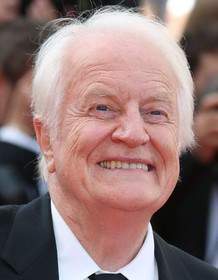
André Dussollier
André Designy

Jacques Villeret
Jacques Pouzay
Thierry Lhermitte
Thierry Plaisance
Isabelle Candelier
Louise, Jacques' wife
Victor Garrivier
Félix Gerbier
Alexander Held
SS officer
Michael Hanemann
Sergeant
Cédric Weber
Orderly
Bernard Bolzinger
Man in town hall
Ernst-Georg Schwill
Sergeant at the station
Christian Koerner
Otto
Mélanie Baxter-Jones
Emile's daughter in 1944
Damien Jouillerot
Lucien, Jacques's son
Jean-Claude Durand
Raoul, aka 'Cul Fanny'
Bernard Collins
Bernd
Michel Cordes
Boss of the shooting
Nina-Paloma Polly
Françoise, Jacques' daughter
Maxime Fouard
Paulo
Romain Provvedi
Maurice
Solène Chavanne
Suzy
Juliette Delfau
Girl at the village hall
Romaine Friess
Girl at the village hall
Jacques Giraud
Station master
Gilles Jacquet
Rural warden
Manfred Andrae
Major
Karl Jürgen Sihler
SS interpreter
Oliver Stern
Referral sentry
Rémi Thiberge
Karl
Markus Fennert
Fritz
External Links and Streaming Options
Discover where to watch Strange Gardens online, including streaming platforms, rental options, and official sources. Compare reviews, ratings, and in-depth movie information across sites like IMDb, TMDb, Wikipedia or Rotten Tomatoes.






Take the Ultimate Strange Gardens Movie Quiz
Challenge your knowledge of Strange Gardens with this fun and interactive movie quiz. Test yourself on key plot points, iconic characters, hidden details, and memorable moments to see how well you really know the film.
Strange Gardens Quiz: Test your knowledge of the 2003 film *Strange Gardens*, covering its characters, wartime events, and the emotional motivations behind the clown performances.
What profession does Jacques hold in the present-day scenes of the film?
Full Plot Summary and Ending Explained for Strange Gardens
Read the complete plot summary of Strange Gardens, including all major events, twists, and the full ending explained in detail. Explore key characters, themes, hidden meanings, and everything you need to understand the story from beginning to end.
In the 1950s, Jacques Jacques Villeret Pouzay, a local schoolteacher, returns every year to the small provincial town of Douai for the town fair, accompanied by his wife Louise Isabelle Candelier and their two children, Françoise Nina-Paloma Polly and Lucien Damien Jouillerot, to perform a clown routine before the crowd. On the road they pick up Jacques’ best friend, André André Dussollier Designy, and an elderly woman named Marie Suzanne Flon. The air is light, and the town welcomes the familiar faces with warmth as the show begins to unfold.
During the performance, André notices that Lucien does not enjoy the spectacle and asks him what troubles him. The boy confesses that he feels ashamed of his father’s actions and cannot understand why he humbles himself in front of an audience every year. Sensing a deeper truth behind the laughter, André takes the boy aside and begins to tell him the story of why Jacques performs as a clown, a tale that stretches back to another war-torn time.
Flashback to Douai in 1944, during the late stages of the German Occupation. Jacques and André are close friends who have long avoided any active involvement in the Resistance, fear weighing on them as the war rages on. After the D-Day landings, General de Gaulle calls for sabotage to aid the Allied advance through France, and the two men decide to strike a bold blow: they plan to blow up an interlocking tower at a train yard that supplies German reinforcements to the Normandy front. Jacques distracts the German lookout while André uses ordnance abandoned earlier by retreating French troops to destroy the tower. Unbeknownst to them, the tower is also home to Félix Gerbier, a local worker who operates the track switches, and he is gravely wounded in the blast.
Back at the café, the group toasts to their action, unaware of the danger looming in the shadows. German troops arrive and round up Jacques and André to form a four-person hostage team that could be shot if the saboteurs fail to surface within a day. Also in the grip of arrest are Emile, a Resistance fighter, and Thierry, a local insurance agent. The four men are thrown into a clay pit at a quarry, and the German commander insists that they are at the mercy of orders—either the saboteurs will come forward, or the hostages will be executed. As the captives realize they face a grim choice, their reputations for cowardice and pride cloud any chance of immediate trust among them.
A sentinel named Bernd [Bernard Collins], a genuine, good-natured German soldier, stands guard over the pit and gradually becomes a beacon of humanity in the bleakness. He entertains the hostages with a playful clown act and reveals a surprising past: he used to be a circus artist from Medrano in Paris before being drafted into the Wehrmacht. Bernd shares his food rations with the starving men, and his kindness becomes a stark reminder that not all soldiers are monsters. The four hostages learn to see him as more than an occupying figure, a man shaped by conflicting loyalties and fear as the hours tick by. On the night before the deadline, Bernd faces the brutal weight of command and chooses to refuse participation in the firing squad, a stand that costs him his life as his superior executes him for insubordination. His red clown nose falls into the clay pit, a small, poignant symbol of the fragile humanity that threads through the horror.
In a final twist of fate, Félix—the man who risked everything to save them—takes the blame upon himself on his deathbed, pretending to be the saboteur and injuring himself to shield the other four. The hostages survive the ordeal, and the war drifts toward the Allies’ advance. Jacques and André drift apart from the town, while Thierry returns to his work and Emile eventually joins the French army under Marshal De Lattre de Tassigny to help continue the liberation. When the war ends and Douai is freed, Jacques and André return to the quarry to erect a cross for Bernd, honoring the life he sacrificed for them all. They also visit Félix’s widow, who turns out to be Marie, to reveal the truth and express gratitude for his sacrifice; she forgives them. During the armistice celebrations, Jacques asks Louise to marry him, marking the closure of the old tensions and the hopeful continuation of their life together, especially as André withdraws from the lingering love triangle.
Back in the present, Lucien comes to a moving understanding: his father’s clown routine was never mere ridicule. It is a tribute to Bernd’s sacrifice and a way of honoring those who gave their lives at a moment when laughter seemed almost impossible. As the crowd laughs with Jacques on stage, Lucien chooses to join them, recognizing that humor can carry memory, courage, and forgiveness across generations. The annual ritual, once a source of embarrassment for a son, becomes a living memorial to a shared history and a bridge between past and present, a reminder that even in the darkest chapters, humanity and compassion endure.

Coming soon on iOS and Android
The Plot Explained Mobile App
From blockbusters to hidden gems — dive into movie stories anytime, anywhere. Save your favorites, discover plots faster, and never miss a twist again.
Sign up to be the first to know when we launch. Your email stays private — always.
Explore the mobile appDiscover Film Music Concerts Near You – Live Orchestras Performing Iconic Movie Soundtracks
Immerse yourself in the magic of cinema with live orchestral performances of your favorite film scores. From sweeping Hollywood blockbusters and animated classics to epic fantasy soundtracks, our curated listings connect you to upcoming film music events worldwide.
Explore concert film screenings paired with full orchestra concerts, read detailed event information, and secure your tickets for unforgettable evenings celebrating legendary composers like John Williams, Hans Zimmer, and more.


Strange Gardens Themes and Keywords
Discover the central themes, ideas, and keywords that define the movie’s story, tone, and message. Analyze the film’s deeper meanings, genre influences, and recurring concepts.
Strange Gardens Other Names and Titles
Explore the various alternative titles, translations, and other names used for Strange Gardens across different regions and languages. Understand how the film is marketed and recognized worldwide.
Similar Movies To Strange Gardens You Should Know About
Browse a curated list of movies similar in genre, tone, characters, or story structure. Discover new titles like the one you're watching, perfect for fans of related plots, vibes, or cinematic styles.


Quick Links: Summary, Cast, Ratings, More

What's After the Movie?
Not sure whether to stay after the credits? Find out!
Check out our other apps:

SAT Sphere
Build confidence for the Digital SAT.

Mori Atlas
Discover wild places worth protecting.

Luntero
Search smarter for a home in Amsterdam.

Plot Explained
Unravel movie endings and hidden clues.

Pokechamp
Dive into Pokémon data and battle logic.

Driving Theory
Get ready for your European theory test.

Movie Dust
Plan your next cinema trip with ease.

Musemap
Find art and culture as you travel.

Selkobase
Compare credentials before committing.

Local Manual
Turn an unfamiliar country into practical next steps.

Lernavi
Compare school systems before your next move.

GymRoam
Find a workout stop wherever your plans take you.
Explore Our Movie Platform
New Movie Releases (2026)
Famous Movie Actors
Top Film Production Studios
Movie Plot Summaries & Endings
Major Movie Awards & Winners
Best Concert Films & Music Documentaries
Movie Collections and Curated Lists
© 2026 What's After the Movie. All rights reserved.
Privacy Policy