Satan's Slaves: Communion 2022


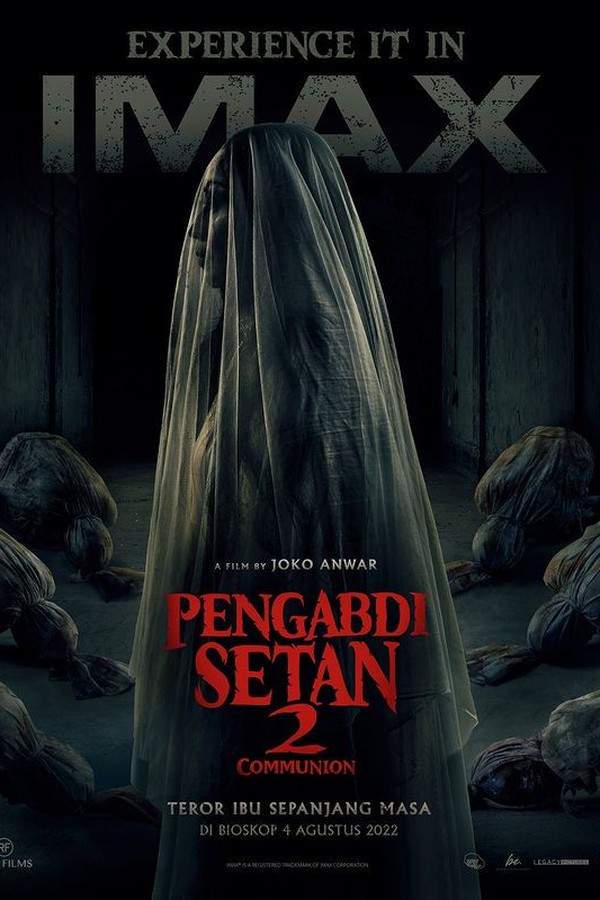
In 1955, investigative journalist Budiman Syailendra finds himself abducted by his friend, Chief Heru Kusuma, and taken to a remote, desolate location. There, he is confronted with a horrifying scene: numerous exhumed corpses arranged in a disturbing display within an observatory. This unsettling discovery plunges Budiman into a dark and foreboding mystery, challenging his sanity and resolve as he seeks to uncover the truth behind this macabre event.


Does Satan's Slaves: Communion have end credit scenes?
No!
Satan's Slaves: Communion does not have end credit scenes. You can leave when the credits roll.
Where to Watch Satan's Slaves: Communion
See current US streaming, rental, and purchase options for Satan's Slaves: Communion (2022) via JustWatch.










Meet the Full Cast and Actors of Satan's Slaves: Communion
Explore the complete cast of Satan's Slaves: Communion, including both lead and supporting actors. Learn who plays each character, discover their past roles and achievements, and find out what makes this ensemble cast stand out in the world of film and television.


External Links and Streaming Options
Discover where to watch Satan's Slaves: Communion online, including streaming platforms, rental options, and official sources. Compare reviews, ratings, and in-depth movie information across sites like IMDb, TMDb, Wikipedia or Rotten Tomatoes.









Ratings and Reviews for Satan's Slaves: Communion
See how Satan's Slaves: Communion is rated across major platforms like IMDb, Metacritic, and TMDb. Compare audience scores and critic reviews to understand where Satan's Slaves: Communion stands among top-rated movies in its genre.

The Movie Echo Score
Overall, Satan's Slaves: Communion is received as a solid addition to Indonesian horror, praised for its visual flair and effective scares while showing some narrative unevenness. Critics highlight the film's stylistic confidence and its ability to sustain tension, whereas a minority of users note pacing issues and overhyped expectations. The consensus points to a compelling, if not flawless, genre entry that delivers excitement and enough originality to merit repeat viewings.
The Movie Echo Score Breakdown for Satan's Slaves: Communion

Art & Craft
In terms of art and craft, the film is widely lauded for its confident direction and striking cinematography. Critics describe it as artfully accomplished, gorgeously shot, and stylistically bold, while users commend the director's mastery of craft and the expanded production values. The visual design consistently reinforces the horror tone, leading to a strong positive assessment of the film's artistic execution.

Character & Emotion
When evaluating character and emotion, the responses are moderately positive. Reviewers note a compelling family dynamic and effective performances that sustain audience empathy, though few comments address depth of individual roles. Users find the characters' struggles believable within the horror framework, but the lack of detailed discussion about acting nuance keeps the overall impression in the middle range of praise.

Story & Flow
Story and flow receive mixed feedback, balancing strong narrative momentum with noted shortcomings. Critics appreciate the expanded plot and smart thematic touches, yet some describe the storytelling as overly ambitious or thin. User opinions echo this split, with many praising the engaging continuation of the first film, while others criticize pacing and originality. Consequently, the story aspect lands in a lukewarm zone.

Sensory Experience
Sensory experience is a clear strength, with reviewers highlighting the film's potent sound design, atmospheric scoring, and cohesive visual style. Critics reference suspenseful soundscapes and ghoulish humor delivered with considerable style, while users emphasize perfectly timed jump scares and a claustrophobic setting that heightens tension. The consistent acclaim for auditory and visual elements places this aspect in the high‑praise category.

Rewatch Factor
Rewatch factor is viewed positively, though not uniformly enthusiastic. Critics suggest the film’s scares and humor will encourage multiple viewings, and users frequently label it a must‑watch for horror fans, anticipating future sequels. Some dissenting voices mention overhype and diminished impact on repeat viewings, which tempers the overall enthusiasm. The net impression indicates good replay value with room for varied audience response.


100%
TOMATOMETER

90%
User Score

6.7 /10
IMDb Rating

69
%
User Score

3.2
From 83 fan ratings

0.00/5
Take the Ultimate Satan's Slaves: Communion Movie Quiz
Challenge your knowledge of Satan's Slaves: Communion with this fun and interactive movie quiz. Test yourself on key plot points, iconic characters, hidden details, and memorable moments to see how well you really know the film.
Satan's Slaves: Communion Quiz: Test your knowledge on the intricate plot and chilling details of 'Satan's Slaves: Communion'.
In what year does the initial part of the movie take place?
Full Plot Summary and Ending Explained for Satan's Slaves: Communion
Read the complete plot summary of Satan's Slaves: Communion, including all major events, twists, and the full ending explained in detail. Explore key characters, themes, hidden meanings, and everything you need to understand the story from beginning to end.
As the year 1955 unfolds, seasoned newspaper journalist Budiman Syailendra receives an urgent summons to witness an enigmatic occurrence at Bosscha Observatory. His steadfast ally, Heru, a police commander, has been burdened with the task of managing a chilling discovery — a multitude of exhumed corpses lies in front of a framed portrait of the mysterious Mawaran, as if paying homage. With strict orders to keep this unnerving revelation under wraps in order to preserve the country’s reputation ahead of the significant Bandung Conference, Heru persuades Budiman to share the story through unconventional means, feeling deep down that the truth deserves to be revealed.
Fast-forward to 1984, where we find ourselves amid the dilapidated surroundings of Mandara Apartments in Jakarta. Rini has been struggling to make ends meet alongside her brothers Toni and Bondi, while their father Bahri Suwono remains shrouded in mystery, juggling odd jobs during the day while safeguarding a briefcase full of secrets. Meanwhile, Budiman, now the editor-in-chief of a prestigious occult magazine, receives a cryptic package containing a suicide note from Heru, alongside unsettling photographs and drawings signaling cult activities emerging within the ominous structure of Mandara. Concerningly, the unsettling images indicate that Bahri was among the police officers who escorted Budiman to the observatory years ago.
In a tragic turn of events, a malfunctioning lift at Mandara leads to catastrophe, claiming numerous lives. As the storm rages and floods engulf the building, trapping its residents, Rini offers solace to Wisnu, a young boy mourning his mother, who fell victim to the calamity. Their shared grief uncovers a connection that transcends ordinary understanding. Wisnu discloses the secret sign language he learned from an occult book, which allowed him and his mother to communicate in silence, evading the cruelty of his abusive father.
As the flooding stirs something malevolent, supernatural disturbances begin to torment the residents. The power grid fails, prompting Bondi and his friends to discover haunting photographs in the building manager’s apartment, illuminating the sinister truth of a cult congregation every 29 years on April 17th, a date now ominously drawing near. Meanwhile, Toni stumbles upon a hidden room revealing unsettling details of their deceased mother, Mawarni, who is intriguingly linked to a dark alter ego known as Raminom. This revelation triggers a cascade of memories for Rini, recalling her own mother’s metamorphosis into an unfamiliar figure following her musical aspirations.
As threat levels rise and paranormal forces unleash their fury, Rini dares to open Bahri’s briefcase, unveiling severed fingers that insinuate his connection to the occult. In desperate search of answers, the siblings ascend to the top floor where Ian, their youngest brother, is revealed to have been taken by the cult. Wisnu’s newfound sign language bridges the gap, allowing Ian to acknowledge his identity as a long-lost companion.
Just when it seems that despair reigns supreme, the eerie tranquillity of Mandara is shattered by the alarming return of the dead. Raminom orchestrates a relentless pursuit of destruction, targeting the siblings, Wisnu, and a few remaining survivors. An attempt to reach safety brings them face to face with Bahri, only to be ensnared by the cult’s fervent followers led by Ian. What unfolds is a grim spectacle as Ian, driven by dreadful joy, brutally executes Bahri in a horrific display of power. In the nick of time, Budiman intervenes, unleashing chaos through gunfire and providing the fleeting chance of escape. Wisnu uses his sign language for a desperate plea while Rini acts swiftly to incapacitate Ian. Amidst the chaos, they successfully break free via boat, where Budiman reveals the shocking history tethering Bahri to the cult — a web of manipulation and forced compliance with the Indonesian government, all initiated by Mawarni’s ominous promise of fame.
The subsequent day, Darminah and husband Batara arrive at Mandara, visibly disheartened for having missed the night’s grim rituals. Nonetheless, Batara reassures his wife that everything transpired perfectly, as evidenced by a photograph adorning the wall that depicts them alongside other dignitaries from the influential 1955 Bandung Conference, bearing testimony to their uncanny youthfulness.

Coming soon on iOS and Android
The Plot Explained Mobile App
From blockbusters to hidden gems — dive into movie stories anytime, anywhere. Save your favorites, discover plots faster, and never miss a twist again.
Sign up to be the first to know when we launch. Your email stays private — always.
Explore the mobile appWatch Trailers, Clips & Behind-the-Scenes for Satan's Slaves: Communion
Watch official trailers, exclusive clips, cast interviews, and behind-the-scenes footage from Satan's Slaves: Communion. Dive deeper into the making of the film, its standout moments, and key production insights.
Satan's Slaves: Communion Themes and Keywords
Discover the central themes, ideas, and keywords that define the movie’s story, tone, and message. Analyze the film’s deeper meanings, genre influences, and recurring concepts.
Satan's Slaves: Communion Other Names and Titles
Explore the various alternative titles, translations, and other names used for Satan's Slaves: Communion across different regions and languages. Understand how the film is marketed and recognized worldwide.
Similar Movies To Satan's Slaves: Communion You Should Know About
Browse a curated list of movies similar in genre, tone, characters, or story structure. Discover new titles like the one you're watching, perfect for fans of related plots, vibes, or cinematic styles.










Quick Links: Summary, Cast, Ratings, More

What's After the Movie?
Not sure whether to stay after the credits? Find out!
Check out our other apps:

SAT Sphere
Build confidence for the Digital SAT.

Mori Atlas
Discover wild places worth protecting.

Luntero
Search smarter for a home in Amsterdam.

Plot Explained
Unravel movie endings and hidden clues.

Pokechamp
Dive into Pokémon data and battle logic.

Driving Theory
Get ready for your European theory test.

Movie Dust
Plan your next cinema trip with ease.

Musemap
Find art and culture as you travel.

Selkobase
Compare credentials before committing.

Local Manual
Turn an unfamiliar country into practical next steps.

Lernavi
Compare school systems before your next move.

GymRoam
Find a workout stop wherever your plans take you.
Explore Our Movie Platform
New Movie Releases (2026)
Famous Movie Actors
Top Film Production Studios
Movie Plot Summaries & Endings
Major Movie Awards & Winners
Best Concert Films & Music Documentaries
Movie Collections and Curated Lists
© 2026 What's After the Movie. All rights reserved.
Privacy Policy