Rosemead 2025


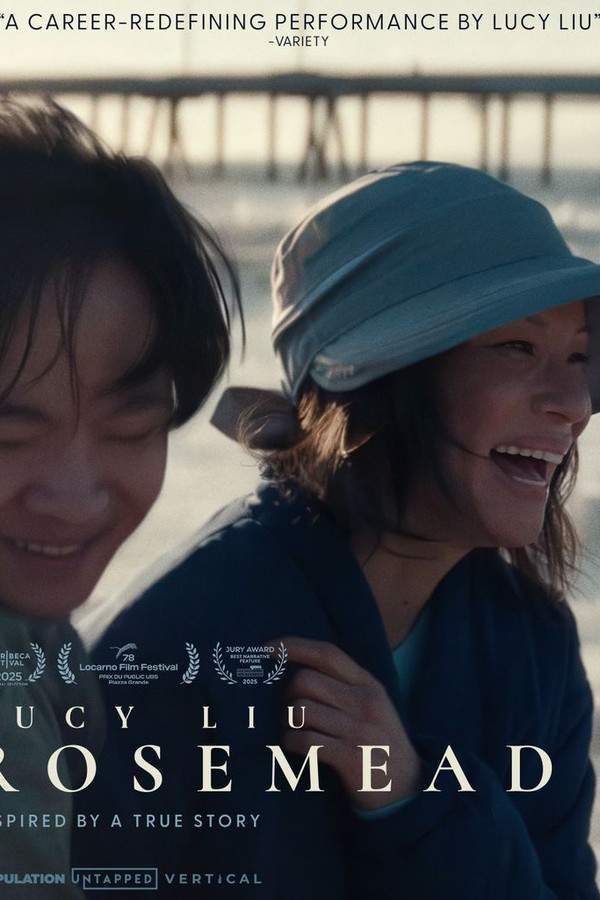
Ailing mother (Lucy Liu) takes desperate action to shield her troubled teenage son (Lawrence Shou) from his growing darkness. As his obsessive behavior escalates and time dwindles, she confronts impossible decisions, pushing the limits of what she’ll risk and sacrifice to keep him safe.


Does Rosemead have end credit scenes?
No!
Rosemead does not have end credit scenes. You can leave when the credits roll.
Where to Watch Rosemead
See current US streaming, rental, and purchase options for Rosemead (2025) via JustWatch.








Meet the Full Cast and Actors of Rosemead
Explore the complete cast of Rosemead, including both lead and supporting actors. Learn who plays each character, discover their past roles and achievements, and find out what makes this ensemble cast stand out in the world of film and television.

Madison Hu
Jeannie

Orion Lee
Charles
James Chen
Dr. Hsu

Lucy Liu
Irene

Susan Pourfar
Dr. Charlot

Grace Shen
Jane
Dana de Celis
Maria
Jennifer Lim
Kai-Li
Jason Tottenham
Mr. Hernandez
Dave Shalansky
Principal Stephens
Eric Leviton
Store Manager
Adam Chanler-Berat
Sam
Eleven Lee
Helen
Lawrence Shou
Joe
Anzi DeBenedetto
Stan
Anthony Comis
Officer Frumin
Cat Kaylin
Mrs. Wang
Zack Calderon
Cesar
Atticus Elsass
Rob
Shian Tomlinson
Dawn
Joseph Y. Lee
Young Joe
External Links and Streaming Options
Discover where to watch Rosemead online, including streaming platforms, rental options, and official sources. Compare reviews, ratings, and in-depth movie information across sites like IMDb, TMDb, Wikipedia or Rotten Tomatoes.








Ratings and Reviews for Rosemead
See how Rosemead is rated across major platforms like IMDb, Metacritic, and TMDb. Compare audience scores and critic reviews to understand where Rosemead stands among top-rated movies in its genre.

The Movie Echo Score
Rosemead delivers a deeply emotional portrait anchored by Lucy Liu’s powerful performance, yet its narrative weight often eclipses structural finesse. Critics commend its authenticity and thematic relevance, while several note a tendency toward bleakness and uneven pacing. Viewer reactions echo this split, praising the acting while questioning the story’s depth and replay appeal. Consequently, the film lands in the moderate range, reflecting both its striking strengths and notable shortcomings.
The Movie Echo Score Breakdown for Rosemead

Art & Craft
In terms of direction and visual execution, Rosemead presents a restrained aesthetic that serves its intimate subject matter without many stylistic flourishes. Critics acknowledge competent editing, though some point to a dragging cadence in later scenes. User commentary similarly notes occasional pacing lapses, suggesting the craftsmanship, while solid, does not elevate the film beyond its narrative core. Overall, the technical execution is adequate but unremarkable.

Character & Emotion
When evaluating performance and emotional depth, Rosemead excels, largely due to Lucy Liu’s nuanced portrayal of a terminally ill mother. Critics and users alike highlight her naturalistic turn as a central strength, and supporting actor Lawrence Shou receives commendation as well. Despite some remarks about limited character development for secondary figures, the dominant consensus affirms that the lead performances provide compelling resonance. Thus, character work stands as the film’s most robust element.

Story & Flow
The narrative structure of Rosemead intertwines cultural specificity with universal dilemmas, offering an earnest exploration of maternal sacrifice. Reviewers commend its thematic relevance, yet many cite uneven pacing and a propensity to linger in bleak moments, which can diminish engagement. User feedback mirrors this split, noting a powerful premise hampered by occasional dragging and limited depth in secondary arcs. Consequently, the story is perceived as emotionally potent but structurally inconsistent.

Sensory Experience
Rosemead’s auditory and visual ambience remains understated, aligning with its somber tone. Critics do not foreground soundtrack or cinematography, and user remarks seldom mention memorable sound design or striking visuals, implying a modest sensory footprint. While the subdued palette complements the film’s emotional gravity, the lack of distinctive sensory cues limits its immersive impact. Overall, the sensory dimension is serviceable yet unremarkable.

Rewatch Factor
The film’s lingering emotional weight makes it a compelling, though taxing, viewing experience. Critics acknowledge its lasting impression but also describe it as profoundly depressing, suggesting repeat viewings may be limited. User comments echo this sentiment, with several noting the film’s haunting effect alongside an aversion to revisiting its bleak narrative. Accordingly, the rewatch factor is modest, reflecting strong impact but low repeat appeal.

72
Metascore
6.4
User Score


%
TOMATOMETER

0%
User Score

6.5 /10
IMDb Rating

67
%
User Score
Full Plot Summary and Ending Explained for Rosemead
Read the complete plot summary of Rosemead, including all major events, twists, and the full ending explained in detail. Explore key characters, themes, hidden meanings, and everything you need to understand the story from beginning to end.
Irene Lucy Liu is a terminally ill widow who lives with her 17-year-old son, Joe Lawrence Shou, in the San Gabriel Valley, California. The film follows their strained day-to-day life as Irene hides the fact that she is battling cancer while caring for a son whose struggle with schizophrenia grows more volatile. Joe is a bright, former star student and swimmer, but his illness casts a heavier shadow as his symptoms flare up. He attends therapy and has started on medication, and the pair navigates the delicate balance of distance and closeness that defines their relationship.
Early on, Irene makes a bold choice to join Joe in a therapy session, hoping to understand his condition better and perhaps soothe his fears. The session unfolds with Joe revisiting a memory: a night in a motel where Irene, his father, and he danced and sang together, a moment that hints at a past happiness they both cling to. As the radio hums with chatter about recent school shootings, Joe’s sensitivity to danger amplifies. An active shooter drill at school becomes nearly overwhelming for him, and a cascade of symptoms follows: he flees through empty classrooms, shattering rooms, and lashing out in ways that alarm both Irene and the school. The school inventory of the disruptions is captured by security cameras, which ties Joe to the incidents and escalates the pressure on Irene from administrators who urge transferring him to another school with supposedly better resources.
Irene’s decisions grow more complicated as Joe’s episodes become more frequent and intense. The violence and destruction intensify—an iPad is shattered, rooms are wrecked, and self-harm becomes a part of the pattern. In parallel, Irene uncovers troubling signs around Joe’s online searches for mass shootings, a discovery that deepens her sense of urgency and fear. Her concern pushes her into proactive steps: she visits a local gun shop to learn whether Joe has visited it, and she learns he had shown interest in a gas mask. As her own cancer takes a sharper turn—tests reveal that the experimental drug she has been taking is no longer effective and offers only months to live—her view of the future shifts dramatically. On a separate front, Joe’s life advances toward adulthood when he turns 18, a milestone that will change the medical guardianship that Irene has held over him.
The search for Joe becomes a mission. Joe goes missing after another violent episode, and Irene drives the city in a determined, almost sleepless quest to locate him. She posts missing-person fliers and talks with locals, moving from one lead to another until a motel call finally reunites them. A visit to a friend who runs an herbal medicine shop yields a quiet moment of relief as Irene hands over the deed to her printing shop, an act that signals the end of one chapter and the practical preparations for another. She revisits the gun shop and engages in another tense conversation that underscores her mounting despair and the perilous path ahead.
As Joe’s 18th birthday arrives, Irene takes him to the motel that holds a deep, bittersweet memory for them. They share cake, and Joe suggests they stay in the motel room forever, away from the world’s noise and judgment. Irene, moved by the weight of their years together, begins to act with a chilling resolve. She cleans the motel room with methodical care, makes a private call to a friend about burning family photographs, and returns with a gun, intent on ending what she sees as an unbearable chain of suffering by killing her son. The moment is heavy with tragedy and moral complexity, as Irene, overwhelmed by fear and grief, ultimately calls the police to reveal what she has planned. She is arrested, yet her cancer advances, and she dies before she can stand trial.
In the end, the film presents a quiet, devastating portrait of love tested to a breaking point by illness, fear, and the unpredictable tides of mental illness. It asks hard questions about guardianship, the limits of care, and the boundaries of devotion when every path feels haunted by pain. The conclusion remains faithful to the stark emotional truth of Irene and Joe’s experience: a mother’s love, a son’s struggle, and a family’s unraveling in the face of an incurable illness.

Coming soon on iOS and Android
The Plot Explained Mobile App
From blockbusters to hidden gems — dive into movie stories anytime, anywhere. Save your favorites, discover plots faster, and never miss a twist again.
Sign up to be the first to know when we launch. Your email stays private — always.
Explore the mobile appWatch Trailers, Clips & Behind-the-Scenes for Rosemead
Watch official trailers, exclusive clips, cast interviews, and behind-the-scenes footage from Rosemead. Dive deeper into the making of the film, its standout moments, and key production insights.
Rosemead Other Names and Titles
Explore the various alternative titles, translations, and other names used for Rosemead across different regions and languages. Understand how the film is marketed and recognized worldwide.
Quick Links: Summary, Cast, Ratings, More

What's After the Movie?
Not sure whether to stay after the credits? Find out!
Check out our other apps:

SAT Sphere
Build confidence for the Digital SAT.

Mori Atlas
Discover wild places worth protecting.

Luntero
Search smarter for a home in Amsterdam.

Plot Explained
Unravel movie endings and hidden clues.

Pokechamp
Dive into Pokémon data and battle logic.

Driving Theory
Get ready for your European theory test.

Movie Dust
Plan your next cinema trip with ease.

Musemap
Find art and culture as you travel.

Selkobase
Compare credentials before committing.

Local Manual
Turn an unfamiliar country into practical next steps.

Lernavi
Compare school systems before your next move.

GymRoam
Find a workout stop wherever your plans take you.
Explore Our Movie Platform
New Movie Releases (2026)
Famous Movie Actors
Top Film Production Studios
Movie Plot Summaries & Endings
Major Movie Awards & Winners
Best Concert Films & Music Documentaries
Movie Collections and Curated Lists
© 2026 What's After the Movie. All rights reserved.
Privacy Policy