Rembetiko 1983

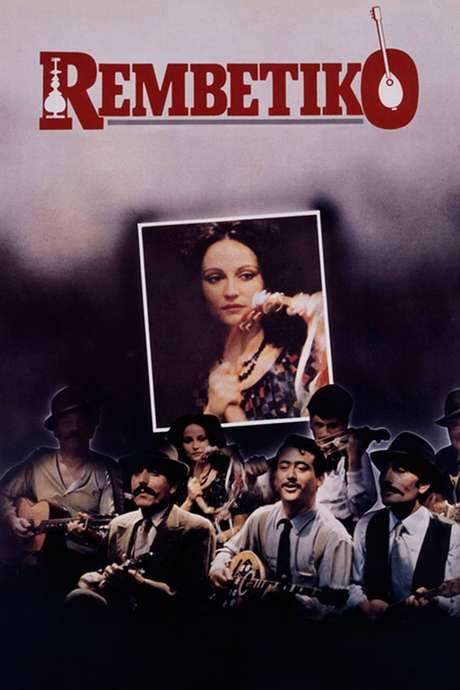
Set in the early decades of the 20th century, the film portrays a community of Rembetes—Greek singers and musicians whose folk style is the country's counterpart to the blues. Their lives and music are observed through the eyes of a young female vocalist, who serves as the story’s narrator and guide.

Does Rembetiko have end credit scenes?
No!
Rembetiko does not have end credit scenes. You can leave when the credits roll.
Meet the Full Cast and Actors of Rembetiko
Explore the complete cast of Rembetiko, including both lead and supporting actors. Learn who plays each character, discover their past roles and achievements, and find out what makes this ensemble cast stand out in the world of film and television.

Joseph
Black Marketeer
Konstantinos Tzoumas
Giannis
Themis Bazaka
Andriana
Nikos Kalogeropoulos
Bambis
Vicky Vanita
Roza
Nikos Fronimopoulos
Kroustos
Michalis Maniatis
Giorgakis
Nikos Dimitratos
Panagis
Nikos Birbilis
Iordanis
Sotiria Leonardou
Marika
Nikolas Asimos
Diogenis
Athina Mertyri
Midwife
Giorgos Zorbas
Thomas
Lina Babatsia
Matina
Spyros Mavides
Fondas
Popi Katsabani
Young Marika
Katerina-Danai Ferri
Young Andriana
Vaso Alexandridou
Efterpi
Takis Binis
Singer
Eirini Lymberopoulou
Little Andriana
Costas Ferris
Man at Carnival
Soulis Manisalis
Singer (as Giannis 'Manisalis' Soulis)
Nikos Maragopoulos
Singer
Kostas Mantzopoulos
Singer
Thodoros Polykandriotis
Singer
Petros Raptis
Man at Carnival
Memi Spyratou
Singer
Kostas Tsigos
Singer
Stavros Xarhakos
Singing Pianist
External Links and Streaming Options
Discover where to watch Rembetiko online, including streaming platforms, rental options, and official sources. Compare reviews, ratings, and in-depth movie information across sites like IMDb, TMDb, Wikipedia or Letterboxd.




Take the Ultimate Rembetiko Movie Quiz
Challenge your knowledge of Rembetiko with this fun and interactive movie quiz. Test yourself on key plot points, iconic characters, hidden details, and memorable moments to see how well you really know the film.
Rembetiko (1983) Quiz: Test your knowledge of the 1983 Greek musical drama *Rembetiko*, covering its characters, plot events, and historical context.
In what year was the film *Rembetiko* released?
Full Plot Summary and Ending Explained for Rembetiko
Read the complete plot summary of Rembetiko, including all major events, twists, and the full ending explained in detail. Explore key characters, themes, hidden meanings, and everything you need to understand the story from beginning to end.
This musical drama sweeps through a turbulent four-decade span in the life of Marika Sotiria Leonardou, a celebrated Greek singer whose public ascent mirrors the changing tides of her homeland. Born in Smyrna, Asia Minor, in 1917, Marika’s early years are shaped by displacement when she is seven and deported to Greece along with countless others from her community. Her parents soon forge a path in music, building a nightclub life that will foreshadow Marika’s own future on stage. In flashbacks, a younger Marika appears on stage in early life, portrayed by Popi Katsabani, hinting at the talent and determination that will define her career.
In the following decade, tragedy and ambition collide. Marika watches her father murder her mother, a moment that scars her and drives a complicated path forward. She runs away, becomes a mother, and returns to the nightclub world to sing in a show with her childhood friend Yorgos and a bouzouki player named Babis Nikos Kalogeropoulos. The circle of performers around her grows, and the stage becomes a proving ground where she can carve out a name for herself.
The ascent comes with a brutal cost: the club is shaken by the suicide of another female singer named Roza Vicky Vanita. The tragedy reverberates through the crew, and political upheaval follows as Yorgos is exiled for reasons beyond the club’s lights. Marika and Babis keep moving from venue to venue, their professional partnership deepening even as personal harmony between them remains elusive.
Although Marika harbors strong feelings for Babis, their romance never fully finds its footing. The couple’s bond is tested by time, war, and shifting loyalties as Greece endures upheaval before and after World War II. After years of turbulence, Marika sends her daughter away to a convent school, hoping for safety or a better future, only to discover that the daughter will later become a cabaret dancer—a development that sits uneasily with Marika. A tour in America marks another chapter in her life, an outward journey that contrasts with the intimate costs borne at home.
When Marika returns to Greece, she finds herself unexpectedly supplanted by a younger singer named Matina Lina Babatsia, who has captured Babis’s attention and a share of the spotlight. The dynamic of the stage and the heart grows even more complex as time presses on, and the audience watches a star confront aging, relevance, and the changing soundscape of Greek popular music.
The film’s closing act is both tragic and ceremonial. On the night of a reunion concert, Marika is stabbed in the stomach, and she dies from her wounds. Her close collaborators gather at the cemetery to sing in memory of the life they shared on stage, a testament to the power of music to sustain memory even after a performer is gone.
Scholars and observers have debated the film’s possible foundation in the life of Marika Ninou, with Babis interpreted as a stand-in for Vasilis Tsitsanis in a composite portrait rather than a strict biographical reconstruction. Yet the film makes deliberate departures from history, notably in the sequence of events after World War II and in the real-life dynamics of who accompanied Ninou on her American sojourn. The narrative emphasizes the emotional and artistic beats rather than presenting a literal, documentary chronology.
The story also nods to a suggested conflict with a singer named Roza, but the film itself flags that there is no documented incident to support that exact clash in the historical record. What remains clear is the emotional arcs—the rise, the heartbreak, and the enduring pull of the stage—that drive Marika’s long, searching career and its ultimate, poignant farewell.

Coming soon on iOS and Android
The Plot Explained Mobile App
From blockbusters to hidden gems — dive into movie stories anytime, anywhere. Save your favorites, discover plots faster, and never miss a twist again.
Sign up to be the first to know when we launch. Your email stays private — always.
Explore the mobile appDiscover Film Music Concerts Near You – Live Orchestras Performing Iconic Movie Soundtracks
Immerse yourself in the magic of cinema with live orchestral performances of your favorite film scores. From sweeping Hollywood blockbusters and animated classics to epic fantasy soundtracks, our curated listings connect you to upcoming film music events worldwide.
Explore concert film screenings paired with full orchestra concerts, read detailed event information, and secure your tickets for unforgettable evenings celebrating legendary composers like John Williams, Hans Zimmer, and more.


Rembetiko Themes and Keywords
Discover the central themes, ideas, and keywords that define the movie’s story, tone, and message. Analyze the film’s deeper meanings, genre influences, and recurring concepts.
Rembetiko Other Names and Titles
Explore the various alternative titles, translations, and other names used for Rembetiko across different regions and languages. Understand how the film is marketed and recognized worldwide.
Similar Movies To Rembetiko You Should Know About
Browse a curated list of movies similar in genre, tone, characters, or story structure. Discover new titles like the one you're watching, perfect for fans of related plots, vibes, or cinematic styles.









Quick Links: Summary, Cast, Ratings, More

What's After the Movie?
Not sure whether to stay after the credits? Find out!
Check out our other apps:

SAT Sphere
Build confidence for the Digital SAT.

Mori Atlas
Discover wild places worth protecting.

Luntero
Search smarter for a home in Amsterdam.

Plot Explained
Unravel movie endings and hidden clues.

Pokechamp
Dive into Pokémon data and battle logic.

Driving Theory
Get ready for your European theory test.

Movie Dust
Plan your next cinema trip with ease.

Musemap
Find art and culture as you travel.

Selkobase
Compare credentials before committing.

Local Manual
Turn an unfamiliar country into practical next steps.

Lernavi
Compare school systems before your next move.

GymRoam
Find a workout stop wherever your plans take you.
Explore Our Movie Platform
New Movie Releases (2026)
Famous Movie Actors
Top Film Production Studios
Movie Plot Summaries & Endings
Major Movie Awards & Winners
Best Concert Films & Music Documentaries
Movie Collections and Curated Lists
© 2026 What's After the Movie. All rights reserved.
Privacy Policy