Rapt 2011

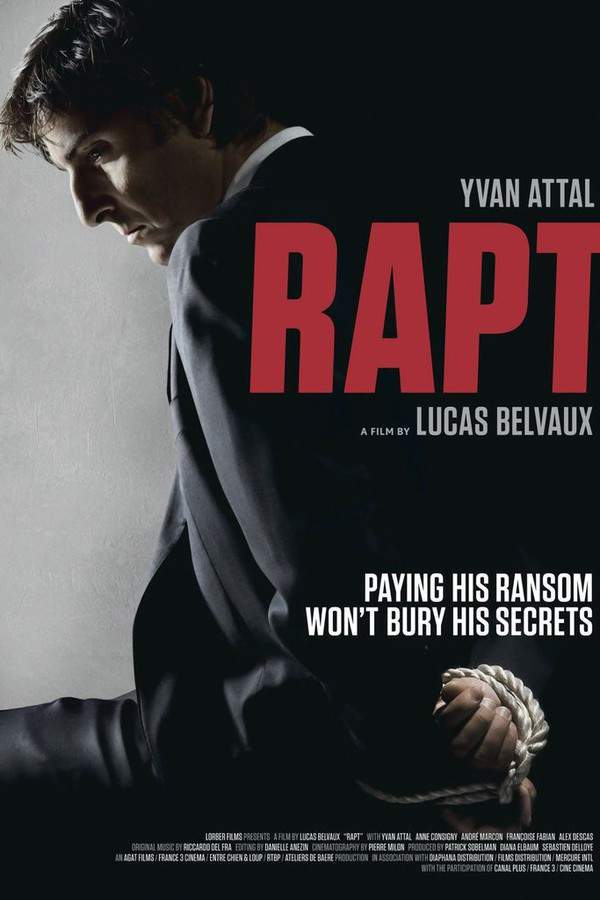
When a wealthy playboy is abducted, his privileged life is shattered as he's plunged into a terrifying ordeal. Held captive for 60 days, he must fight to survive a dangerous game of cat and mouse. Meanwhile, his family and friends desperately search for him, determined to bring him home safely. The experience tests his limits and reveals unexpected truths about himself and those closest to him.


Does Rapt have end credit scenes?
No!
Rapt does not have end credit scenes. You can leave when the credits roll.
Meet the Full Cast and Actors of Rapt
Explore the complete cast of Rapt, including both lead and supporting actors. Learn who plays each character, discover their past roles and achievements, and find out what makes this ensemble cast stand out in the world of film and television.
No actors found
External Links and Streaming Options
Discover where to watch Rapt online, including streaming platforms, rental options, and official sources. Compare reviews, ratings, and in-depth movie information across sites like IMDb, Wikipedia, Rotten Tomatoes or Metacritic.





Ratings and Reviews for Rapt
See how Rapt is rated across major platforms like IMDb, Metacritic, and TMDb. Compare audience scores and critic reviews to understand where Rapt stands among top-rated movies in its genre.

71
Metascore
6.7
User Score


97%
TOMATOMETER

66%
User Score

6.7 /10
IMDb Rating

4.00/5
From 2 fan ratings
Take the Ultimate Rapt Movie Quiz
Challenge your knowledge of Rapt with this fun and interactive movie quiz. Test yourself on key plot points, iconic characters, hidden details, and memorable moments to see how well you really know the film.
Rapt (2011) Quiz: Test your knowledge of the French thriller Rapt, focusing on the characters, plot details, and key events.
What is the name of the wealthy businessman who is kidnapped?
Full Plot Summary and Ending Explained for Rapt
Read the complete plot summary of Rapt, including all major events, twists, and the full ending explained in detail. Explore key characters, themes, hidden meanings, and everything you need to understand the story from beginning to end.
Stanislas, a wealthy and high-profile businessman, is kidnapped and held for ransom. The captors amputate one of his fingers and mail it to his company as a stark warning, demanding 50 million euros. He is kept in darkness, unwashed, with little food, and is repeatedly forced to write desperate notes to his family. The ordeal tightens its grip on everyone around him as the clock ticks and the pressure to respond grows.
The family’s world begins to fracture under the weight of the crime. His wife and teenage daughters are thrust into the glare of media attention, while his corporate associates wrestle with how to handle the situation. The financial response becomes a point of contention: his colleagues refuse to use corporate funds for the ransom, offering instead a loan that would allow him to repay roughly 20 million, a figure that stings both pride and practicality. As the ransom saga unfolds, the family and the business circle become entangled in a web of mistrust and competing loyalties, and Stanislas’s once-solid position looks increasingly precarious.
Behind the headlines, the private life of the man in danger spills into public view. Details about his mistresses and gambling losses emerge in the press, amplifying the trauma for Francoise and the two daughters. His business peers seize the moment to reassert control or to distance themselves, and even his mother voices a rebuke to Francoise, alleging shortcomings at home. The family’s instinct to protect themselves clashes with the realities of a high-stakes crisis, and the authorities find themselves navigating a fraught social landscape where reputations matter as much as evidence.
Initial attempts at delivering the ransom collide with police intervention. The family initially resists cooperating with law enforcement, but when a delivery is attempted, police surveillance disrupts the exchange. After two months, a second attempt is arranged. The exchange is again thwarted by authorities, and at least one kidnapper is taken into custody, underscoring how precarious the operation remains and how quickly the balance of power can shift.
A chilling new scheme redefines the kidnapper’s leverage. The criminals propose releasing Stanislas on the condition that he pays them in secret, but they threaten an even darker enforcement tactic: they will kill a random person to dramatize and compel his compliance if he fails to honor the agreement. The threat intensifies the pressure on him to navigate an increasingly dangerous landscape where every decision bears consequences beyond his own life.
Release and reunion bring little relief. Stanislas is released to a distraught Francoise and their two daughters, who demand full explanations for the affairs, gambling, and the long months of turmoil they endured. The sense of betrayal is palpable, and the family’s burden feels crushing as the public scrutiny continues to mount. His business allies reiterate that his damaged reputation makes a return to leadership improbable; when he resists stepping down, they warn that he will be removed. In this tense calculus, a loyal yet solitary figure among the wreckage is his loyal dog, whose simple happiness at his return offers a small, incongruent comfort.
The legal and strategic pressure tightens around him. Authorities entertain the unsettling possibility that Stanislas orchestrated the kidnapping to manipulate his gambling debts and to force a confrontation with investigators. A crucial meeting with his attorney leads to the signing of documents that sell his shares and postpone any talk of divorce, while the attorney counsels a clean break and a fresh start—wealthy, unattached, and with fewer ties to the past. Yet even as he charts a path toward a new life, a final note lands in his mailbox, reinforcing the grim demand: prepare to pay the ransom, no matter the cost.
Throughout this ordeal, the story tracks a man and a family under extraordinary pressure, caught between the demands of crime, the anxieties of public exposure, and the shifting loyalties of friends, foes, and fortune. The tension persists as the truth about motive, control, and consequence slowly unfolds, leaving questions about identity, responsibility, and what it takes to reclaim a life after being marked by a crisis of this magnitude.

Coming soon on iOS and Android
The Plot Explained Mobile App
From blockbusters to hidden gems — dive into movie stories anytime, anywhere. Save your favorites, discover plots faster, and never miss a twist again.
Sign up to be the first to know when we launch. Your email stays private — always.
Explore the mobile appDiscover Film Music Concerts Near You – Live Orchestras Performing Iconic Movie Soundtracks
Immerse yourself in the magic of cinema with live orchestral performances of your favorite film scores. From sweeping Hollywood blockbusters and animated classics to epic fantasy soundtracks, our curated listings connect you to upcoming film music events worldwide.
Explore concert film screenings paired with full orchestra concerts, read detailed event information, and secure your tickets for unforgettable evenings celebrating legendary composers like John Williams, Hans Zimmer, and more.


Rapt Themes and Keywords
Discover the central themes, ideas, and keywords that define the movie’s story, tone, and message. Analyze the film’s deeper meanings, genre influences, and recurring concepts.

Unlock the World of Movies with Our Comprehensive Wiki
Dive into our Movie Wiki for in-depth film encyclopedia entries, including cast biographies, production trivia, plot synopses, behind-the-scenes facts, and thematic analyses. Whether you’re researching iconic directors, exploring genre histories, or discovering hidden easter eggs, our expertly curated movie database has everything you need to fuel your cinematic passion.
Similar Movies To Rapt You Should Know About
Browse a curated list of movies similar in genre, tone, characters, or story structure. Discover new titles like the one you're watching, perfect for fans of related plots, vibes, or cinematic styles.







Quick Links: Summary, Cast, Ratings, More

What's After the Movie?
Not sure whether to stay after the credits? Find out!
Check out our other apps:

SAT Sphere
Build confidence for the Digital SAT.

Mori Atlas
Discover wild places worth protecting.

Luntero
Search smarter for a home in Amsterdam.

Plot Explained
Unravel movie endings and hidden clues.

Pokechamp
Dive into Pokémon data and battle logic.

Driving Theory
Get ready for your European theory test.

Movie Dust
Plan your next cinema trip with ease.

Musemap
Find art and culture as you travel.

Selkobase
Compare credentials before committing.

Local Manual
Turn an unfamiliar country into practical next steps.

Lernavi
Compare school systems before your next move.

GymRoam
Find a workout stop wherever your plans take you.
Explore Our Movie Platform
New Movie Releases (2026)
Famous Movie Actors
Top Film Production Studios
Movie Plot Summaries & Endings
Major Movie Awards & Winners
Best Concert Films & Music Documentaries
Movie Collections and Curated Lists
© 2026 What's After the Movie. All rights reserved.
Privacy Policy