Racing Dreams 2010

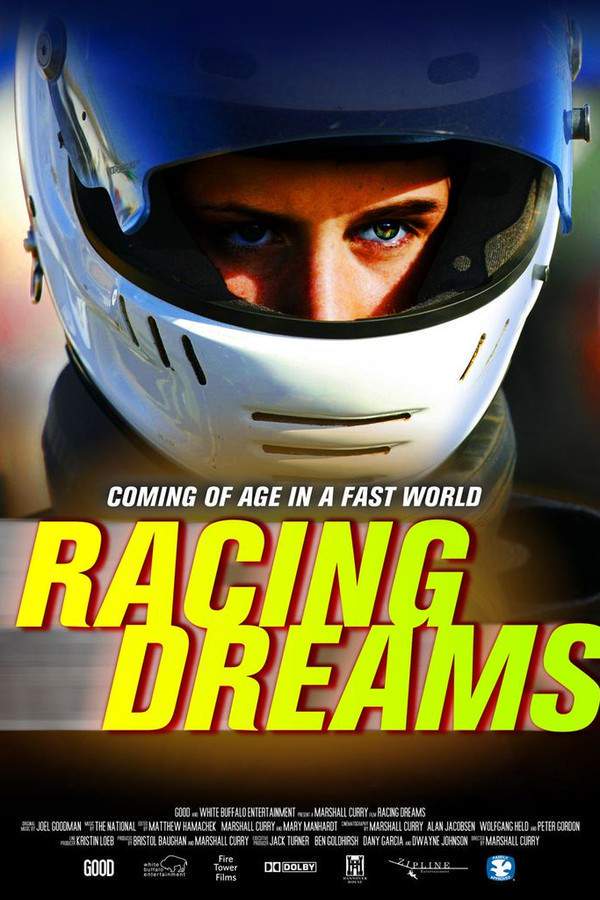
Three young racers—Brandon, Joshua, and Annabeth—dedicate themselves to the World Karting Association's National Pavement Series, striving for the championship title. Reaching speeds of up to 70 mph, the determined drivers pursue their aspirations of racing in NASCAR. The film highlights their passion, skill, and the unwavering dedication required to chase ambitious dreams from a young age.


Does Racing Dreams have end credit scenes?
No!
Racing Dreams does not have end credit scenes. You can leave when the credits roll.
Where to Watch Racing Dreams
See current US streaming, rental, and purchase options for Racing Dreams (2010) via JustWatch.

Streaming availability powered by 
Meet the Full Cast and Actors of Racing Dreams
Explore the complete cast of Racing Dreams, including both lead and supporting actors. Learn who plays each character, discover their past roles and achievements, and find out what makes this ensemble cast stand out in the world of film and television.
No actors found
External Links and Streaming Options
Discover where to watch Racing Dreams online, including streaming platforms, rental options, and official sources. Compare reviews, ratings, and in-depth movie information across sites like IMDb, TMDb, Wikipedia or Rotten Tomatoes.










Ratings and Reviews for Racing Dreams
See how Racing Dreams is rated across major platforms like IMDb, Metacritic, and TMDb. Compare audience scores and critic reviews to understand where Racing Dreams stands among top-rated movies in its genre.

78
Metascore
6.2
User Score


100%
TOMATOMETER

93%
User Score

7.1 /10
IMDb Rating

73
%
User Score
Full Plot Summary and Ending Explained for Racing Dreams
Read the complete plot summary of Racing Dreams, including all major events, twists, and the full ending explained in detail. Explore key characters, themes, hidden meanings, and everything you need to understand the story from beginning to end.
The film opens with a quiet narrator reflecting on a life that spans eight decades, inviting us into the world of Robert Grainier, a man who grows up largely without knowing his real family. As a child, he bears witness to sweeping historical moments, from the harsh upheavals of the era to the tense presence of violence, including the mass deportation of Chinese immigrants in Idaho. Early on, he crosses paths with a troubled man named Boomer, who has just been shot and left for dead, a moment that foreshadows the haunting images that will shadow Robert for years to come.
Without a clear path or direction after leaving school, Robert’s life begins to shift when he meets his future wife, Gladys Olding. The two start a family, welcoming their daughter Kate, and they carve out a life together by building a log cabin along the Moyie River. This intimate domestic dream stands in contrast to the economic forces around them, offering Robert a sense of purpose even as the world outside grows more complex.
Work calls him to the Spokane International Railroad, and there he witnesses a brutal act: some of the men grab an Asian man named Fu Sheng and push him from a bridge to his death. The image sears itself into Robert’s memory, and he is left with persistent visions of the man that linger through the years. When his job is eventually rendered obsolete, Robert returns home, seeking to spend more time with Gladys and Kate, trying to hold on to a sense of stability.
Another season of logging draws him away from home again, and this time he meets new men who will leave an impression on him. Among them is Arn Peeples, whose presence will prove to be “useful in specific ways” for Robert. A colorful, talkative logger known as “Apostle Frank” and the stranger Elijah Brown introduce a darker thread to the story: Elijah accuses Frank (whose real name is Sam Loving) of killing his black brother, prompting Frank to flee. Elijah shoots him dead, and the other loggers do not intervene. In the aftermath, Robert forms a quiet bond with Arn, a companionship born out of shared labor and survival in a harsh, unforgiving environment.
Tragedy strikes when a rolling tree sends three men to their deaths, and the crew buries them together. Robert considers joining Gladys and Kate to keep them from danger, but he fears the risks of a life spent apart from his work and the world. He tries to find work closer to home, but the post-World War I economy makes that difficult. The loss of Arn comes when a falling branch collapses him, and the story carries the weight of that moment for Robert as he mourns his friend years later.
The end of a season brings a devastating wildfire that destroys the cabin and all that Robert has built. When the smoke clears, Gladys and Kate are missing, and he faces the most painful possibility: they may be gone. He is joined by his Indigenous friend Ignatius Jack, and together they walk through the charred landscape. In the wake of the loss, Robert rebuilds the cabin, clinging to a fragile hope that his family might someday return. Yet the brutal truth of his aging body makes it clear that he cannot master the tools of modern lumbering, like the chainsaw, as easily as in his youth. He meets with a former coworker, Billy, who seems to be losing his memory about Arn’s death, and Robert tells him he hasn’t seen Arn either. Eventually, Robert decides to retire from logging.
A new life awaits as he becomes a carriage driver, a role that brings him closer to the townsfolk while gently underscoring his isolation. On one ride, he picks up Claire Thompson, a woman from the United States Forest Service, and their conversations reveal their shared feelings of loneliness and the sense that the world has moved on without them. He often wanders the forest, hoping for a sign of Gladys and Kate, even as the years press on.
One night, Robert encounters an injured young girl who might be Kate. He brings her to the cabin, tends to her wounds, and falls asleep beside her. He dreams of baby Kate playing by the river, a memory that feels more real than the present. When he wakes, the girl is gone and the window stands open. He vows to stay by the cabin in case she returns, clinging to the possibility of reunion.
Time marches forward and the world continues to evolve around him: televisions appear, the moon landing happens, a theater becomes a place of spectacle, and Robert even sees his own aging reflection for the first time in years. He takes a plane ride, a moment of scale and perspective that becomes a turning point in the narrative. The film’s voiceover summarizes his journey: he dies alone in his cabin in November 1968, never remarrying and having no children, yet in the moment he soars through the sky, he feels “at last, connected to it all.”
Rooted in quiet resilience and the passage of time, the story traces how a man who started with little by way of family or direction finds connections to people, memories, and the wider world—connections that arrive, sometimes slowly, sometimes suddenly, and sometimes only in the moments when he finally looks up and sees the expanse around him. The result is a reflective meditation on loss, endurance, and the quiet ways a life can touch others even when one remains alone.

Coming soon on iOS and Android
The Plot Explained Mobile App
From blockbusters to hidden gems — dive into movie stories anytime, anywhere. Save your favorites, discover plots faster, and never miss a twist again.
Sign up to be the first to know when we launch. Your email stays private — always.
Explore the mobile appDiscover Film Music Concerts Near You – Live Orchestras Performing Iconic Movie Soundtracks
Immerse yourself in the magic of cinema with live orchestral performances of your favorite film scores. From sweeping Hollywood blockbusters and animated classics to epic fantasy soundtracks, our curated listings connect you to upcoming film music events worldwide.
Explore concert film screenings paired with full orchestra concerts, read detailed event information, and secure your tickets for unforgettable evenings celebrating legendary composers like John Williams, Hans Zimmer, and more.


Cars Featured in Racing Dreams
Explore all cars featured in Racing Dreams, including their makes, models, scenes they appear in, and their significance to the plot. A must-read for car enthusiasts and movie buffs alike.
Racing Dreams Themes and Keywords
Discover the central themes, ideas, and keywords that define the movie’s story, tone, and message. Analyze the film’s deeper meanings, genre influences, and recurring concepts.

Unlock the World of Movies with Our Comprehensive Wiki
Dive into our Movie Wiki for in-depth film encyclopedia entries, including cast biographies, production trivia, plot synopses, behind-the-scenes facts, and thematic analyses. Whether you’re researching iconic directors, exploring genre histories, or discovering hidden easter eggs, our expertly curated movie database has everything you need to fuel your cinematic passion.
Similar Movies To Racing Dreams You Should Know About
Browse a curated list of movies similar in genre, tone, characters, or story structure. Discover new titles like the one you're watching, perfect for fans of related plots, vibes, or cinematic styles.








Quick Links: Summary, Cast, Ratings, More

What's After the Movie?
Not sure whether to stay after the credits? Find out!
Check out our other apps:

SAT Sphere
Build confidence for the Digital SAT.

Mori Atlas
Discover wild places worth protecting.

Luntero
Search smarter for a home in Amsterdam.

Plot Explained
Unravel movie endings and hidden clues.

Pokechamp
Dive into Pokémon data and battle logic.

Driving Theory
Get ready for your European theory test.

Movie Dust
Plan your next cinema trip with ease.

Musemap
Find art and culture as you travel.

Selkobase
Compare credentials before committing.

Local Manual
Turn an unfamiliar country into practical next steps.

Lernavi
Compare school systems before your next move.

GymRoam
Find a workout stop wherever your plans take you.
Explore Our Movie Platform
New Movie Releases (2026)
Famous Movie Actors
Top Film Production Studios
Movie Plot Summaries & Endings
Major Movie Awards & Winners
Best Concert Films & Music Documentaries
Movie Collections and Curated Lists
© 2026 What's After the Movie. All rights reserved.
Privacy Policy