
Nouvelle Vague 2025

This is the story of Godard making ”Breathless”, told in the style and spirit in which Godard made “Breathless”.

Does Nouvelle Vague have end credit scenes?
No!
Nouvelle Vague does not have end credit scenes. You can leave when the credits roll.
Meet the Full Cast and Actors of Nouvelle Vague
Explore the complete cast of Nouvelle Vague, including both lead and supporting actors. Learn who plays each character, discover their past roles and achievements, and find out what makes this ensemble cast stand out in the world of film and television.
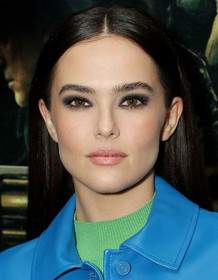
Zoey Deutch
Jean Seberg
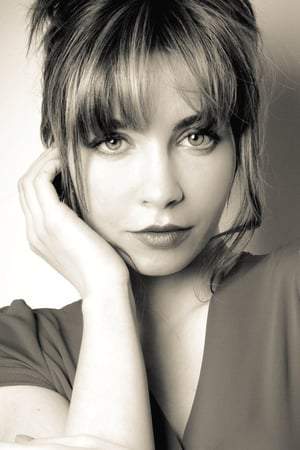
Alix Bénézech
Juliette Greco

Laurent Mothe
Roberto Rossellini
Jade Phan-Gia
Phuong Maittret
Pauline Belle
Suzon Faye
Benjamin Cléry
Pierre Rissient
Jean-Jacques Le Vessier
Jean Cocteau
Bruno Dreyfürst
Georges de Beauregard
Tom Novembre
Jonas Marmy
Jacques Rivette
Blaise Pettebone
Marc Pierret
Paolo Luka Noé
Francois Moreuil
Guillaume Marbeck
Jean-Luc Godard
Aubry Dullin
Jean-Paul Belmondo
Nicolas Dozol
Adrien Rouyard
François Truffaut
Jodie Ruth-Forest
Suzanne Schiffman
Matthieu Penchinat
Raoul Coutard
Côme Thieulin
Eric Rohmer
Roxane Rivière
Agnès Varda
Niko Ravel
Michel Fabre
Antoine Besson
Claude Chabrol
Léa Luce Busato
Liliane David
Benoît Bouthors
Claude Beausoleil
External Links and Streaming Options
Discover where to watch Nouvelle Vague online, including streaming platforms, rental options, and official sources. Compare reviews, ratings, and in-depth movie information across sites like IMDb, TMDb, Wikipedia or Rotten Tomatoes.





Ratings and Reviews for Nouvelle Vague
See how Nouvelle Vague is rated across major platforms like IMDb, Metacritic, and TMDb. Compare audience scores and critic reviews to understand where Nouvelle Vague stands among top-rated movies in its genre.

The Movie Echo Score
Nouvelle Vague delivers a spirited homage that resonates strongly with cinephiles, leveraging Linklater’s playful reverence for the French New Wave. Critics highlight its stylish visual flourishes, witty dialogue, and infectious energy that collectively elevate the film beyond mere nostalgia. Its deft balance of reverent tribute and contemporary humor ensures lasting appeal.
The Movie Echo Score Breakdown for Nouvelle Vague

Art & Craft
Direction and visual craftsmanship stand out as the film’s core strength. Reviewers note the elegant black‑and‑white cinematography, grainy sound design, and meticulous production design that successfully evoke 1950s French cinema. These technical choices combine to create a polished yet nostalgic aesthetic, reinforcing the film’s artistic ambition.

Character & Emotion
Acting and on‑screen chemistry receive consistent praise, with critics highlighting witty dialogue and lively interactions among the ensemble. Performances are described as nuanced enough to convey the playful spirit without overwhelming the homage. While depth remains secondary to the film’s stylistic aims, the cast’s rapport sustains audience engagement.

Story & Flow
Plot structure leans heavily on homage, prioritizing stylistic tribute over narrative innovation. Critics acknowledge the conceit’s self‑awareness, noting that the measured pacing and clever intertextual references keep the story engaging despite limited originality. The result is an enjoyable, if familiar, viewing experience that satisfies its intended purpose.

Sensory Experience
Soundtrack and sound design reinforce the period feeling through grainy audio textures and era‑appropriate musical cues. Visual styling, particularly the stark black‑and‑white palette, receives commendation for its precise contrast and evocative composition. Together these sensory elements immerse viewers in a convincingly recreated 1950s cinematic atmosphere.

Rewatch Factor
Replay value stems from the film’s layered references and spirited execution, rewarding repeated viewings with new discoveries. Critics point out that its breezy nature and affectionate tribute sustain enjoyment beyond the initial novelty. Consequently, the movie holds a solid rewatch factor for both enthusiasts and casual audiences.


90%
TOMATOMETER

84%
User Score

7.3 /10
IMDb Rating
74
%
User Score

3.7
From 106 fan ratings
Full Plot Summary and Ending Explained for Nouvelle Vague
Read the complete plot summary of Nouvelle Vague, including all major events, twists, and the full ending explained in detail. Explore key characters, themes, hidden meanings, and everything you need to understand the story from beginning to end.
In 1959, Jean-Luc Godard, François Truffaut, and Claude Chabrol—three Cahiers du Cinéma critics—attend the premiere of La Passe du diable, produced by Georges de Beauregard. At the afterparty, Godard fires off a sharp critique of the film and brushes aside its flaws, vowing to join the ranks of directors who are reshaping cinema. The moment marks a defining pivot: the switch from analyzing films to shaping them, a move that will set the tone for the group’s future work and influence a generation of filmmakers.
At the Cannes Film Festival, Truffaut’s The 400 Blows rises to meteoric prominence, signaling a new wind in French cinema and inspiring countless aspiring directors to pursue bold, personal visions. This triumph deepens the sense of possibility among the Cahiers crew and solidifies the belief that a fresh, immediate form of storytelling can resonate with wide audiences.
Godard decides to direct a film inspired by Truffaut’s short outline, drawing on the real-life spark of Michel Portail, a petty car thief, and his American journalist girlfriend Beverly Lynette. He casts Michel Poiccard as the lead, a choice that will shape the movie’s kinetic energy and ethical ambiguities. The choice of actor—Aubry Dullin—frames a performance built on quick judgments and improvisational instinct, aligning with Godard’s appetite for spontaneity. Behind the scenes, Cahiers continues to buzz with ideas as the project begins to take form.
Back at Cahiers, Italian director Roberto Rossellini urges the staff to shed unnecessary artistic ornament and shoot efficiently, advocating a lean, purposeful approach that would later influence Godard’s aesthetic. The production also draws on the guidance of Pierre Rissient as assistant director, with Godard receiving additional counsel from veteran filmmaker Jean-Pierre Melville, whose pragmatic sensibilities shape the crew’s working methods. Meanwhile, Jean Seberg promotes her latest film Bonjour Tristesse, bringing a glamorous American presence into the orbit of the project. Godard meets Seberg through her husband, François Moreuil, and advances the idea of casting her as Patricia, a central figure in the film’s narrative.
With Seberg in mind, Godard assembles the crew and establishes his camera philosophy, aiming for a guerrilla-style shoot and a restrained Academy aspect ratio. He hires cinematographer Raoul Coutard to capture quick, direct scenes that prioritize momentum over meticulous continuity. The production begins to feel like a living experiment, where the line between planning and improvisation blurs, and each day yields fragments that could redefine the project’s arc.
On the first day of filming, only a single scene is captured as Godard pushes for authenticity over polish. The cast and crew grapple with continual script rewrites, an emphasis on spontaneity, and deliberately short shooting days that leave many participants unsettled yet intrigued. As scenes unfold between Patricia and the character inspired by Michel Poiccard, Jean Seberg grows frustrated with Godard’s direction and briefly contemplates leaving the production. Belmondo’s career path itself seems precarious, with insiders warning that a misstep could ruin him.
After a week, a drink-fueled conversation among Godard, Truffaut, and Schiffman reveals new possibilities as Godard contemplates placing Truffaut in a key informant role within the story. By the second week, mounting production delays prompt Beauregard to confront Godard and threaten to pull the plug if the schedule cannot be realigned. Under mounting pressure, Godard accelerates the pace, pressing ahead with additional scenes that deepen the relationship between Seberg’s Patricia and the film’s male lead.
During the middle of the second week, Godard even casts himself as the informant after Truffaut declines the part, adding a meta-textual layer to the film’s construction. He schedules a cameo by Jean-Pierre Melville near an airport, a fleeting moment that underscores the project’s desire to blend real personalities with fiction. The production also includes a stark sequence in which Belmondo’s character meets a fatal end on a crowded street, amplifying the movie’s sense of risk and consequence. A tension-driven moment arises when Seberg’s Patricia resists a particular beat—she questions the meaning of the term “dégueulasse” (disgusting) and refuses to perform the scene in a manner that would strip away the character’s humanity. After her final scene, Seberg returns to Hollywood to pursue Let No Man Write My Epitaph, continuing a storied career.
After 23 days of principal photography, Godard wraps production, signaling the end of a wild, overlapping process that tested everyone’s patience and creativity. In post-production, Godard pushes editor Cécile Decugis toward brisk jump cuts, a move that divides opinion but ultimately reshapes the film’s rhythm. When Breathless is screened for Truffaut, Chabrol, Schiffman, and Beauregard, initial reactions are cautious—yet the movie’s later influence becomes undeniable, as it comes to be regarded as one of cinema’s most transformative works.
An epilogue ties together the personal trajectories sparked by this chaotic shoot: Belmondo rises to international stardom, Seberg’s prolific career continues and, tragically, ends early, and Godard’s own filmmaking career endures for more than six decades. The production’s restless, improvisational spirit helped redefine what a film could be—an unpredictable synthesis of spontaneity, realism, and audacious formal experimentation that would echo through the decades.
- If you’re exploring the intertwined careers behind this story, you can visit the pages of key contributors such as Jean-Luc Godard, François Truffaut, Claude Chabrol, Georges de Beauregard, Jean Seberg, Michel Poiccard, Patricia, Raoul Coutard, Agnès Varda, Jacques Rivette, Pierre Rissient, Roberto Rossellini, Jean Cocteau, and more, as this remarkable chapter in film history continues to inspire new generations.

Discover Film Music Concerts Near You – Live Orchestras Performing Iconic Movie Soundtracks
Immerse yourself in the magic of cinema with live orchestral performances of your favorite film scores. From sweeping Hollywood blockbusters and animated classics to epic fantasy soundtracks, our curated listings connect you to upcoming film music events worldwide.
Explore concert film screenings paired with full orchestra concerts, read detailed event information, and secure your tickets for unforgettable evenings celebrating legendary composers like John Williams, Hans Zimmer, and more.


Nouvelle Vague Other Names and Titles
Explore the various alternative titles, translations, and other names used for Nouvelle Vague across different regions and languages. Understand how the film is marketed and recognized worldwide.
Quick Links: Summary, Cast, Ratings, More

What's After the Movie?
Not sure whether to stay after the credits? Find out!




Explore Our Movie Platform
New Movie Releases (2025)
Famous Movie Actors
Top Film Production Studios
Movie Plot Summaries & Endings
Major Movie Awards & Winners
Best Concert Films & Music Documentaries
Movie Collections and Curated Lists
© 2025 What's After the Movie. All rights reserved.