Nocturne 2019


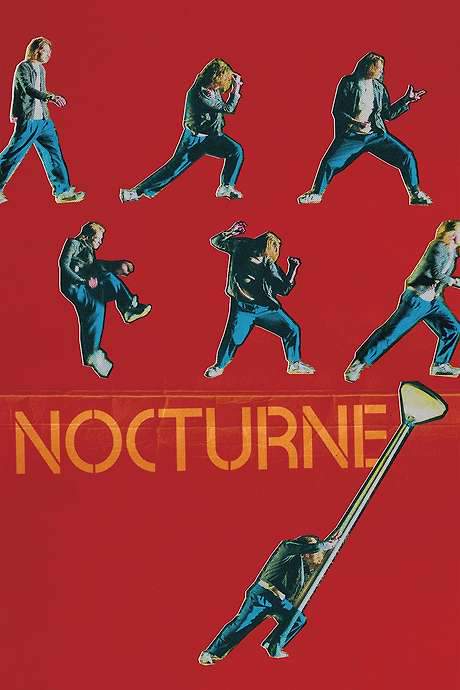
As a young director prepares for his first film, he finds himself increasingly lost between the demands of his project and the chaos of his own life. During one long night, he grapples with creative struggles and blurs the lines between reality and the story he's trying to tell, desperately seeking the spark of inspiration he needs.


Does Nocturne have end credit scenes?
No!
Nocturne does not have end credit scenes. You can leave when the credits roll.
Where to Watch Nocturne
See current US streaming, rental, and purchase options for Nocturne (2019) via JustWatch.








Meet the Full Cast and Actors of Nocturne
Explore the complete cast of Nocturne, including both lead and supporting actors. Learn who plays each character, discover their past roles and achievements, and find out what makes this ensemble cast stand out in the world of film and television.

External Links and Streaming Options
Discover where to watch Nocturne online, including streaming platforms, rental options, and official sources. Compare reviews, ratings, and in-depth movie information across sites like IMDb, TMDb, Wikipedia or Rotten Tomatoes.







Ratings and Reviews for Nocturne
See how Nocturne is rated across major platforms like IMDb, Metacritic, and TMDb. Compare audience scores and critic reviews to understand where Nocturne stands among top-rated movies in its genre.

The Movie Echo Score
Nocturne delivers a moody, atmospheric horror experience that leans more toward strength than flaw. Critics and many viewers commend its striking visual style, unsettling climax, and solid craftsmanship, while noting occasional convolution and pacing slowness. Performances, especially by Sydney Sweeney, are widely praised, though the narrative is viewed as predictable by some. The film’s sensory design and overall tone maintain interest, resulting in a respectable, if not groundbreaking, entry in the Blumhouse lineup.
The Movie Echo Score Breakdown for Nocturne

Art & Craft
In terms of direction and visual composition, Nocturne is frequently praised for its eye‑catching cinematography and atmospheric production design. Critics highlight striking color palettes and a moody aesthetic that elevate the horror tone, while some note moments of flatness or overly pale imagery. Overall, the craft demonstrates a solid, stylistic ambition that generally succeeds.
Character & Emotion
When evaluating acting and emotional depth, reviewers consistently commend Sydney Sweeney’s nuanced performance and the chemistry among the leads. The cast is described as well‑acted, delivering believable tension and psychological nuance. A few critics, however, feel the dramatic impact is muted, suggesting the characters lack sufficient development to fully engage the audience.

Story & Flow
Regarding plot and pacing, opinions are mixed. Some critics and users appreciate the film’s measured storytelling and thematic focus on ambition, calling the narrative coherent and engaging despite a slow build. Others criticize predictability, an uneven script, and a disappointing conclusion, labeling the story as mediocre and lacking fresh ideas.

Sensory Experience
In terms of sound and visual atmosphere, Nocturne is widely praised for its bleak, cold tone and effective sound design that reinforce the tension. Reviewers note the score’s deft composition and the film’s overall sensory cohesion, though a minority feel the atmosphere is under‑utilized in certain sequences.

Rewatch Factor
Assessing replay value, the film’s strong visual style and Sweeney’s performance give it enough intrigue for a second viewing, especially for fans of psychological horror. However, the predictable plot and uneven pacing limit broader rewatch appeal, resulting in a moderate but not compelling incentive to return.
Full Plot Summary and Ending Explained for Nocturne
Read the complete plot summary of Nocturne, including all major events, twists, and the full ending explained in detail. Explore key characters, themes, hidden meanings, and everything you need to understand the story from beginning to end.
Juliet and Vivian Lowe are twin sisters navigating their final year at Lindberg Academy, a prestigious boarding school dedicated to the performing arts. Both are steeped in classical music, with Vivian already seen as a prodigy who has earned a spot at Juilliard, while Juliet, often in her sister’s shadow, chooses to take a gap year to forge her own path. The campus hums with ambition and pressure, bound together by competition, collaboration, and the unspoken ache of being compared.
The mood darkens when the violinist scheduled to perform at the senior showcase, Moira, dies by suicide. With the coveted slot suddenly empty, auditions are organized to find a replacement, turning the focus onto Juliet and Vivian. Each sister signs up, but in a twist of rivalry and fate, Juliet decides at the last minute to perform the same piece as Vivian: the powerful and technically demanding Saint-Saëns Piano Concerto No. 2.
After a late practice session, Juliet follows the haunting sound of a violin into Moira’s room and discovers a sun symbol on the wall that mirrors one found in Moira’s theory notebook. She dares to play an untitled piece from the notebook, only to be interrupted by Dr. Cask, who reveals the actual title—The Devil’s Trill by Giuseppe Tartini—and questions why Juliet altered her audition without informing Vivian. The moment is charged with tension, as Juliet’s choices become a measure of her own ambition versus her sister’s established path.
During the audition, Juliet slips into a dreamscape where she envisions herself at the showcase receiving roses, a moment that feels both intoxicating and out of reach. She awakens to realize she fainted during the audition and discovers a drawing of three balls in her hand, a clue connected to the tablets she had ingested earlier. The emotional strain between the sisters reaches a breaking point: Vivian lands the showcase, and Juliet’s sense of betrayal and inadequacy thickens the unease that binds them.
Juliet’s relationship with her mentor Roger grows fraught as she accuses him of underestimating her talent. The clash ends with Roger slapping her and facing suspension, a scandal that frees Juliet to collide with Dr. Cask, who becomes her new mentor and a direct link to Vivian. In a startling discovery, Juliet finds bloody tampons on her shelf, a detail that hints at the unsettling things happening beneath the surface. When she confronts Vivian about the incident, Vivian’s curt reply—“they’re now ‘even’”—leaves Juliet feeling more isolated than ever. Dr. Cask asks about Juliet’s motive for changing the piece, and Juliet admits she simply wanted to outdo her sister; Dr. Cask counters that Juliet can rival Vivian technically but lacks her passion.
The tension crescendos at a secret senior party, where Juliet overhears Vivian on a call claiming she’s “done fucking” someone. Juliet flirts with Vivian’s boyfriend Max and shares information about Moira’s notebook, only to be caught by Vivian, which triggers a heated confrontation and a desperate flight from the scene. A blinding light, reminiscent of the one depicted in Moira’s notebook, stops Juliet, while Vivian, unaware of the danger, chases after her and tragically falls off a cliff. The next day, Juliet awakens at her desk to find pages in which Vivian’s name appears repeatedly, with the second page hinting at Roger’s downfall and the third paralleling Moira’s fate. Juliet is offered Vivian’s role in the showcase, a twist that earns her both acclaim and a heavy burden as Vivian is suspended.
Seeking truth, Juliet revisits Moira’s notebook online and learns about her family’s past—her mother’s fall from a ski-lift leaving her in a coma, and her father’s burning of the family home and himself. Juliet confides in Max about Moira and the notebook, revealing that Vivian had cheated on him; the ensuing breakup leads to a complicated, charged night in which Juliet engages with Max. On Juliet’s birthday, she hosts a dinner for Dr. Cask and Vivian; a furious Vivian flings the cake at Dr. Cask and storms away. A drunk father and a tense household push Juliet into a private moment with Dr. Cask, who rejects her advances. In retaliation, Juliet reveals the affair between Dr. Cask and Vivian and burns the trophy that once symbolized his prestige. The notebook’s disturbing drawings continue to pull Juliet toward a reckoning she can’t ignore.
As the senior showcase approaches, Vivian confronts Juliet about her perceived sabotage, and Juliet experiences a paralyzing panic on stage. She bolts to the roof, where a vision of a different outcome—one in which she finishes the performance to a standing ovation—haunts her. In the chilling final moment, Juliet’s lifeless body is found on a statue, bloodied and smiling, while the campus carries on around her as if unaware of the tragedy that has unfolded.
- Note: In this narrative, Moeder is portrayed by Bien de Moor.

Coming soon on iOS and Android
The Plot Explained Mobile App
From blockbusters to hidden gems — dive into movie stories anytime, anywhere. Save your favorites, discover plots faster, and never miss a twist again.
Sign up to be the first to know when we launch. Your email stays private — always.
Explore the mobile appWatch Trailers, Clips & Behind-the-Scenes for Nocturne
Watch official trailers, exclusive clips, cast interviews, and behind-the-scenes footage from Nocturne. Dive deeper into the making of the film, its standout moments, and key production insights.
Nocturne Other Names and Titles
Explore the various alternative titles, translations, and other names used for Nocturne across different regions and languages. Understand how the film is marketed and recognized worldwide.
Quick Links: Summary, Cast, Ratings, More

What's After the Movie?
Not sure whether to stay after the credits? Find out!
Check out our other apps:

SAT Sphere
Build confidence for the Digital SAT.

Mori Atlas
Discover wild places worth protecting.

Luntero
Search smarter for a home in Amsterdam.

Plot Explained
Unravel movie endings and hidden clues.

Pokechamp
Dive into Pokémon data and battle logic.

Driving Theory
Get ready for your European theory test.

Movie Dust
Plan your next cinema trip with ease.

Musemap
Find art and culture as you travel.

Selkobase
Compare credentials before committing.

Local Manual
Turn an unfamiliar country into practical next steps.

Lernavi
Compare school systems before your next move.

GymRoam
Find a workout stop wherever your plans take you.
Explore Our Movie Platform
New Movie Releases (2026)
Famous Movie Actors
Top Film Production Studios
Movie Plot Summaries & Endings
Major Movie Awards & Winners
Best Concert Films & Music Documentaries
Movie Collections and Curated Lists
© 2026 What's After the Movie. All rights reserved.
Privacy Policy