Natsamrat 2016

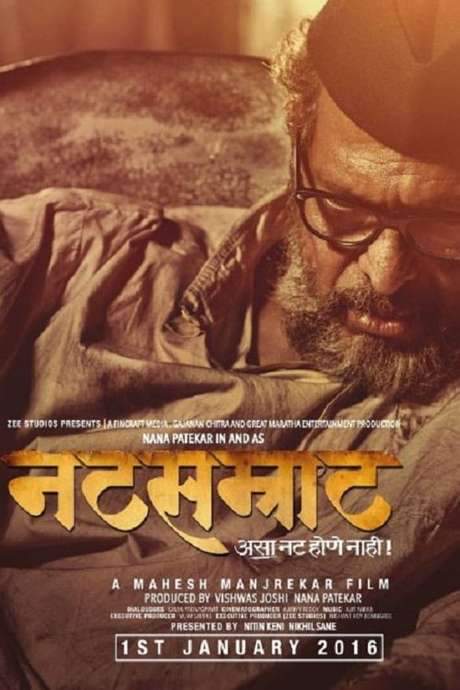
The King Of Theatre Appa, a veteran theatre actor who has primarily worked in adaptations of Shakespeare’s plays, falls upon hard times in his old age.

Does Natsamrat have end credit scenes?
No!
Natsamrat does not have end credit scenes. You can leave when the credits roll.
Meet the Full Cast and Actors of Natsamrat
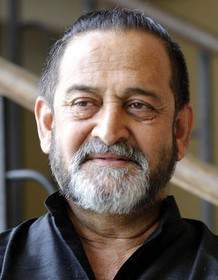
Explore the complete cast of Natsamrat, including both lead and supporting actors. Learn who plays each character, discover their past roles and achievements, and find out what makes this ensemble cast stand out in the world of film and television.

External Links and Streaming Options
Discover where to watch Natsamrat online, including streaming platforms, rental options, and official sources. Compare reviews, ratings, and in-depth movie information across sites like IMDb, TMDb, Wikipedia or Rotten Tomatoes.







Take the Ultimate Natsamrat Movie Quiz
Challenge your knowledge of Natsamrat with this fun and interactive movie quiz. Test yourself on key plot points, iconic characters, hidden details, and memorable moments to see how well you really know the film.
Natsamrat (2016) Quiz: Test your knowledge of the 2016 Marathi drama film Natsamrat with these 10 questions ranging from easy to difficult.
What is the full name of the veteran theatre actor known as Appa?
Full Plot Summary and Ending Explained for Natsamrat
Read the complete plot summary of Natsamrat, including all major events, twists, and the full ending explained in detail. Explore key characters, themes, hidden meanings, and everything you need to understand the story from beginning to end.
Ganpat Ramchandra Belwalkar Nana Patekar, known to friends and family as Appa, is a celebrated veteran theatre actor whose career flourishes on stage, with a special affinity for Shakespearean works. His talent earns him fame, fortune, and the coveted title of Natsamrat, a symbol of mastery in his craft. His artistry is not merely entertainer’s craft; it is a way of life, a lineage of performance that colors how he sees the world and his place within it.
Appa’s wealth and status are generous gifts he shares with his family, yet his blunt candor and fearless honesty set him apart. Only his wife Kaveri Medha Manjrekar and his close friend Rambhau Vikram Gokhale truly understand the man behind the limelight. His son Makrand and daughter-in-law Neha do not always appreciate his unvarnished nature, and their discomfort surfaces in socially awkward moments—whether guests are present or their granddaughter imitates his way of speaking and moving.
A turning point comes when their granddaughter performs a folk dance taught by Appa, a moment that triggers a clash with Neha’s sensibilities. An argument erupts at home, culminating in Neha slapping her daughter. The next day, Neha proposes to part ways and move out, hoping to give Appa and Makrand their space. Appa, who sees through the ploy, decides to leave as well, quietly resolute that the world is a stage and that his own role has become a sorrowful one. The sense of performance lingers in every choice he makes, even in heartbreak.
With Kaveri standing by him, Appa and his wife relocate to the home of his son-in-law Rahul and daughter Vidya. Rahul, a high-ranking engineer, is caring and steady, while Vidya faces embarrassments similar to Neha’s, yet Rahul’s support never wavers. On Vidya’s anniversary, an intoxicated Appa inadvertently embarrasses Rahul’s boss, an incident he apologizes for the next day, and Rahul treats it as an unfortunate but forgivable lapse. Throughout this stretch, Appa’s blunt sensibilities remain intact, and his poetry and recitations continue to enchant those around him.
Time passes, and Appa longs for Rambhau, visiting his old friend who is shattered by the death of his wife Kumud. Rambhau vents his pain and anger at being left alone in his final days, and a quiet, moving exchange unfolds between them. In the hospital, Rambhau performs a dialogue that blends Karna with Krishna, and Appa responds with a counter-performance that is both compassionate and haunting. Moved by Rambhau’s fragility, Appa fulfills his friend’s last wish in a deeply personal way.
The next chapter finds Appa returning to his son-in-law’s house, where a grim truth emerges: Rambhau has overdosed on sleeping pills. Kaveri reveals that Rambhau is gone, and Appa confesses that he had given him the pills, offering them as Rambhau’s final wish. The weight of this act haunts him, adding to the sense that the stage of life has become a treacherous, intimate space where responsibility and sorrow intertwine.
Another blow comes when Appa insults Rahul’s boss’s son during a clash over a botched adaptation of Othello, prompting Vidya to confront him once more. She fashions an outhouse for Appa and his wife so they can be independent, and Rahul remains supportive, even as he admits that this arrangement mirrors a family fracture that can’t easily be repaired. Vidya’s finances become a focal point as she misplaces cash given by her husband, triggering a rift that she eventually reconciles, but not before the emotional damage lingers.
The family’s next move takes them to their ancestral village and an old, dilapidated house. On the journey, Kaveri falls ill with fever and dies, leaving Appa bereft and more vulnerable than ever. A boot polishwala named Raja becomes a quiet pillar of support for him, as Appa drifts between memories and a painful present. He recites poetry and scenes from his plays at a street tea stall, captivating customers, while a young admirer named Siddharth—who holds acting in high esteem—follows him, convinced that Appa is the true Natsamrat Ganpatrao, even as Appa tries to hide his past from the devoted follower.
A startling news item confirms that Appa’s beloved theatre has burned down, reducing the stage he cherished to ashes. He hurries to the ruin, and Siddharth arrives beside him, having followed him there. Among the ashes, Appa relives the grandeur of his former life, and his family, along with Raja, joins him, pleading for him to return home. He resists, caught between the pull of memory and the demands of a fragile present. On that desolate stage, Appa delivers one final performance for Siddharth, arguing that theatre is truly about fulfilling one’s longing. Then, in a moment of raw vulnerability, he clutches his throat and collapses. The crowd rushes to help, but the life he lived on stage has ended, and Appa passes away, leaving a resonant legacy of art, longing, and humanity.

Coming soon on iOS and Android
The Plot Explained Mobile App
From blockbusters to hidden gems — dive into movie stories anytime, anywhere. Save your favorites, discover plots faster, and never miss a twist again.
Sign up to be the first to know when we launch. Your email stays private — always.
Explore the mobile appWatch Trailers, Clips & Behind-the-Scenes for Natsamrat
Watch official trailers, exclusive clips, cast interviews, and behind-the-scenes footage from Natsamrat. Dive deeper into the making of the film, its standout moments, and key production insights.
Natsamrat Other Names and Titles
Explore the various alternative titles, translations, and other names used for Natsamrat across different regions and languages. Understand how the film is marketed and recognized worldwide.
Quick Links: Summary, Cast, Ratings, More

What's After the Movie?
Not sure whether to stay after the credits? Find out!
Check out our other apps:

SAT Sphere
Build confidence for the Digital SAT.

Mori Atlas
Discover wild places worth protecting.

Luntero
Search smarter for a home in Amsterdam.

Plot Explained
Unravel movie endings and hidden clues.

Pokechamp
Dive into Pokémon data and battle logic.

Driving Theory
Get ready for your European theory test.

Movie Dust
Plan your next cinema trip with ease.

Musemap
Find art and culture as you travel.

Selkobase
Compare credentials before committing.

Local Manual
Turn an unfamiliar country into practical next steps.

Lernavi
Compare school systems before your next move.

GymRoam
Find a workout stop wherever your plans take you.
Explore Our Movie Platform
New Movie Releases (2026)
Famous Movie Actors
Top Film Production Studios
Movie Plot Summaries & Endings
Major Movie Awards & Winners
Best Concert Films & Music Documentaries
Movie Collections and Curated Lists
© 2026 What's After the Movie. All rights reserved.
Privacy Policy