
Model Minority (2012): Cast & Plot
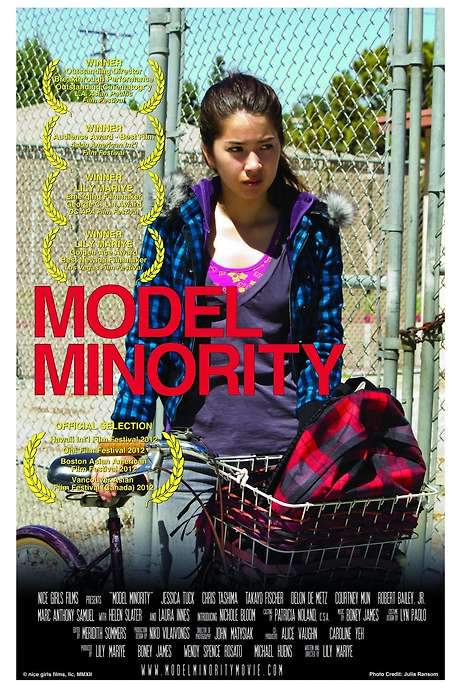
Model Minority is a 2012 drama directed by Lily Mariye, starring Nichole Sakura as Kayla Tanaka, Takayo Fischer and Courtney Mun. It runs 1 hour 34 minutes.
- Released
- Runtime
- 1h 34m (94 min)
- Director
- Lily Mariye
- Genre
- Drama
- Original language
-
 English
 - Studio
- Nice Girls Films
- After the credits
- No No extra scene
What Is Model Minority About?
The premise of Model Minority without spoilers. The whole story is in the plot summary further down.
Kayla, an underprivileged Japanese American 16 year old, endangers her promising future as an aspiring artist when she becomes involved with a drug dealer.
Model Minority Cast & Characters
Nichole Sakura leads the cast as Kayla Tanaka, with Takayo Fischer as Grandma Reiko Tanaka and Courtney Mun as Amberlyn Tanaka. Directed by Lily Mariye; 11 actors are credited in all.
- Director Lily Mariye
- Nichole Sakura as Kayla Tanaka
- Takayo Fischer as Grandma Reiko Tanaka
- Courtney Mun as Amberlyn Tanaka
- Chris Tashima as Ken Tanaka
Also Starring in Model Minority
· 7 more- Jessica Tuck Angie Tanaka
- Delon de Metz Treyshawn Doty
- Marc Anthony Samuel Dionte
- Helen Slater Mrs. Ambrose
- Robert Bailey Jr. J.J.
- Laura Innes Judge Keaton
- Erin Sanders Josie
Model Minority Plot Summary
What happens in Model Minority from start to finish, spoilers included, with a timeline of 12 key events. The opening is below; the full summary is a 2-minute read.
Spoilers ahead
Kayla Tanaka [Nichole Sakura], 16, is half-Japanese, half-white, and fully American. She and her sister Amberlyn Tanaka [Courtney Mun], 14, live with their parents, Ken Tanaka [Chris Tashima], Japanese American, and Angie Tanaka [Jessica Tuck], white, in Jefferson Park, a low-income corner of Los Angeles that sits surprisingly close to Beverly Hills yet feels a world apart in daily life. When her parents announce their divorce, Ken moves in with his mother, Reiko Tanaka [Takayo Fischer], Kayla’s Baachan, and the girls remain with Angie, setting the stage for a family fracture that pushes Kayla toward turbulence and risk.
Full summary
The whole story of Model Minority, scene by scene
Model Minority Trailers & Videos
The trailer of Model Minority.
How Well Do You Know Model Minority?
10 questions about the story, each with a hint if you get stuck. Pick an answer to see whether you were right.
Question 1 of 10
- Question 1: not answered
- Question 2: not answered
- Question 3: not answered
- Question 4: not answered
- Question 5: not answered
- Question 6: not answered
- Question 7: not answered
- Question 8: not answered
- Question 9: not answered
- Question 10: not answered
What is Kayla Tanaka's age at the beginning of the film?
Model Minority Also Known As
Also known as “모델 마이너리티”.
- Also known as
-
- 모델 마이너리티
Seen Model Minority?
Model Minority FAQ: Cast, Runtime & Release Date
Runtime, release date, director, cast and post-credit scenes of Model Minority, each answered in a sentence.
How long is Model Minority?
Model Minority runs 1 hour 34 minutes (94 minutes).
When was Model Minority released?
Model Minority was released on May 11, 2012.
Who directed Model Minority?
Model Minority was directed by Lily Mariye.
More films by Lily Mariye Who is in the cast of Model Minority?
Model Minority stars Nichole Sakura as Kayla Tanaka, Takayo Fischer as Grandma Reiko Tanaka and Courtney Mun as Amberlyn Tanaka, among 11 credited actors.
Does Model Minority have a post-credit scene?
No. Model Minority has no extra scene during or after the credits.
Coming soon to your phone
The Plot Explained Movie Summary App
From blockbusters to hidden gems: plot summaries, endings explained and timelines on your phone. Save your favorites and never miss a twist again.
Be the first to know when it launches. Your email stays private, always. Learn more about the app
