
Maa 2025

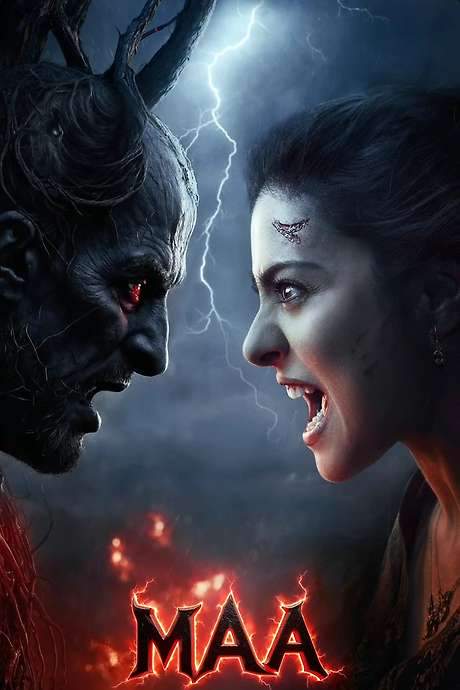
Hell is here, so is the goddess. A mother and daughter encounter a demon in a village where girls have been disappearing.


Does Maa have end credit scenes?
No!
Maa does not have end credit scenes. You can leave when the credits roll.
Meet the Full Cast and Actors of Maa
Explore the complete cast of Maa, including both lead and supporting actors. Learn who plays each character, discover their past roles and achievements, and find out what makes this ensemble cast stand out in the world of film and television.


External Links and Streaming Options
Discover where to watch Maa online, including streaming platforms, rental options, and official sources. Compare reviews, ratings, and in-depth movie information across sites like IMDb, TMDb, Wikipedia or Rotten Tomatoes.







Ratings and Reviews for Maa
See how Maa is rated across major platforms like IMDb, Metacritic, and TMDb. Compare audience scores and critic reviews to understand where Maa stands among top-rated movies in its genre.

The Movie Echo Score
Maa elicits a mixed response, with strengths in visual composition and occasional performances offset by uneven storytelling and pacing. Critics commend the cinematography, practical effects, and Kajol's commitment, while many note repetitive plot beats and sluggish rhythm that diminish tension. The soundtrack and atmospheric design receive praise, but the narrative’s predictability and uneven character work impede lasting impact. Overall, the film offers a modestly engaging folk‑horror experience that may satisfy genre fans but struggles to sustain broader appeal.
The Movie Echo Score Breakdown for Maa

Art & Craft
The film’s art direction displays a blend of competent and uneven elements. Reviewers highlight strong editing, cinematography, and production design that reinforce the folk‑horror atmosphere. However, several critics point to pacing issues and artificial set pieces that weaken visual credibility. The mixed feedback suggests the technical execution is adequate but not consistently polished, resulting in an overall moderate appraisal of the film’s artistry.

Character & Emotion
Character work emerges as one of the stronger facets of Maa. Kajol’s performance is frequently described as intense and convincing, with supporting actors providing solid, if not spectacular, contributions. Some reviewers, however, cite moments of over‑acting and limited range in the lead role. The balance of praise for core performances and isolated criticism yields a generally positive view of the film’s characterisation.

Story & Flow
Narrative structure receives a largely lukewarm assessment. While the mythological premise is acknowledged as intriguing, many critics find the plot predictable, the pacing sluggish, and the screenplay overly reliant on familiar horror tropes. A few reviewers note occasional engaging moments, yet the overall consensus points to a story that fails to sustain momentum, resulting in a mixed to negative perception of the film’s storytelling.

Sensory Experience
Sensory elements garner generally favorable comments. The background score and ambient sound design are praised for amplifying tension, and the visual style, including practical VFX and makeup, is described as effective. Nonetheless, some critiques target cheap CGI and inconsistent audio cues that detract from immersion. The predominant positive remarks lead to an overall moderately high rating for the sensory experience.

Rewatch Factor
Rewatch potential is viewed as limited. Viewers acknowledge that the film offers moments of cultural interest and occasional scares that may appeal to genre enthusiasts, yet many cite repetitive pacing, uneven drama, and a lack of lasting suspense as barriers to repeat viewings. The balance of modest intrigue against notable drawbacks results in a mixed assessment of the film’s replay value.


14%
TOMATOMETER

39%
User Score

4.9 /10
IMDb Rating

67
%
User Score

2.2
Take the Ultimate Maa Movie Quiz
Challenge your knowledge of Maa with this fun and interactive movie quiz. Test yourself on key plot points, iconic characters, hidden details, and memorable moments to see how well you really know the film.
Maa (2025) Quiz: Test your knowledge of the film Maa with these 10 mixed‑difficulty questions.
In which Indian state is the village of Chandrapur located?
Full Plot Summary and Ending Explained for Maa
Read the complete plot summary of Maa, including all major events, twists, and the full ending explained in detail. Explore key characters, themes, hidden meanings, and everything you need to understand the story from beginning to end.
During Kali Puja at a secluded ancestral mansion in Chandrapur, Ambika, Kajol, brings twins into the world—a boy and a girl. The rite is conducted by a woman priestess who claims Kali spoke to her in a dream, lending an eerie gravity to the proceedings. Joydev, Ronit Roy, a local figure of authority who grows up alongside the ritual, watches with his friends and notes that the son of the sarpanch should be the one to lead the puja. The second newborn is announced to be a girl, and a tense moment follows as the father, the scion of the zamindar family, seizes the infant from the new mother to take her for a sacrificial rite. The priestess advances the sword toward the baby, but Kali’s demand is clear—the goddess cannot ask for a baby girl’s sacrifice. In a shocking turn, Joydev snatches the sword from the priestess, asserts it as his right, and sacrifices the girl himself, sinking the ceremony into a silence heavy with unspoken fear.
Forty years pass, and Ambika lives in Kolkata with her husband Shuvankar, Indraneil Sengupta, and their twelve-year-old daughter Shweta, a life that feels outwardly content yet is haunted by a hidden family truth. Shuvankar is the same son who had the female twin long ago, a fact that has always hovered between concealment and revelation. He wrestles with the dilemma of when—or if—to tell his daughter the truth about her lineage and the shadow that still lingers over their family estate. The family’s quiet existence is disrupted when Joydev, now an older man and still a central village figure, sends word that his father has died. The news pulls Shuvankar toward Chandrapur to oversee the cremation and the sale of the ancestral property, a plan Ambika initially opposes but gradually considers to secure their future.
On the return journey, Shuvankar dies in a mysterious fire—an accident that seems to be caused by a splinter from the roots of the same haunted tree behind the palatial house, a tree tied to the earlier tragedy. The splinter lodges in his shoe, and as the flames engulf the vehicle, Ambika and Shweta travel to Chandrapur to complete the sale and confront the living memory of the past. In Chandrapur, Shweta befriends Deepika, the caretaker’s daughter, and the two begin to explore the area around the haunted tree, despite warnings that a demon—or daitya—might dwell there. When Shweta insists on visiting the tree, Ambika intervenes, only to learn that Deepika has just had her first period, a detail that coincides with rumors of the daitya’s influence drawing girls away and returning them unharmed.
The disappearances grow more alarming as several village girls vanish after their first menstruation, then return without their cycles, prompting Ambika to dig deeper. A seasoned police officer, Sarfaraz, becomes involved, convinced that the rumors of a demon mask a more human series of machinations. The investigation bears fruit when a manuscript—belonging to Shuvankar’s father’s generation—lands in Ambika’s hands through the old caretaker and caretaker’s son. Reading it, she uncovers a centuries-old curse centered on a blood daitya named Aamsaja, a being tied to the Kali Puja rite and the haunted tree. The demon is revealed to be after Shweta, aiming to procreate through her, and Ambika must act to shield her daughter and the other missing girls.
As the truth comes to light, Joydev’s role becomes horrifyingly clear: he is the human face of the daemon Amsaja, the malevolent force behind the century-old curse. Ambika, now confronted with a choice steeped in ritual and survival, experiences a prophetic dream of Goddess Kali. Guided by that vision, she resolves to perform Kali Puja in the family temple, a temple that unlocks only when a village dream connects with the goddess. With the demon’s influence growing ever stronger inside Joydev, Ambika undergoes a dramatic transformation, channeling Kali’s wrath and becoming a fierce matriarchal protector who fights to save Shweta and the abducted girls.
The battle culminates in a tense confrontation where the demon is driven back, and the immediate danger to Shweta is averted. Yet a grim twist remains: an ancient priestess reveals that Shweta carries the demon’s potential birth, and thus a sacrifice would be required to stop it. Ambika faces the unbearable choice, preparing to sacrifice her own daughter for the greater good. Just as she braces for the ritual, the priestess intervenes, declaring that Goddess Kali has tested her and that the threat within Shweta is no more. The revelation marks a fragile victory, a moment of relief that comes with the acknowledgment of a long, painful history finally addressed.
In the final moments, the story lingers on the aftermath of the ordeal. The forest around Chandrapur bears the scars of the ordeal, and a post-credits scene shows Vanraj, wearing a hoodie and boots, walking through the ashy remains of the once-haunted land, seemingly absorbing what remained of Amsaja’s powers. The film closes on a note of unresolved tension, a reminder that the legacy of blood and ritual can echo through generations, reshaping lives and testing the limits of family loyalty, faith, and courage.

Discover Film Music Concerts Near You – Live Orchestras Performing Iconic Movie Soundtracks
Immerse yourself in the magic of cinema with live orchestral performances of your favorite film scores. From sweeping Hollywood blockbusters and animated classics to epic fantasy soundtracks, our curated listings connect you to upcoming film music events worldwide.
Explore concert film screenings paired with full orchestra concerts, read detailed event information, and secure your tickets for unforgettable evenings celebrating legendary composers like John Williams, Hans Zimmer, and more.


Maa Themes and Keywords
Discover the central themes, ideas, and keywords that define the movie’s story, tone, and message. Analyze the film’s deeper meanings, genre influences, and recurring concepts.
Maa Other Names and Titles
Explore the various alternative titles, translations, and other names used for Maa across different regions and languages. Understand how the film is marketed and recognized worldwide.
Similar Movies To Maa You Should Know About
Browse a curated list of movies similar in genre, tone, characters, or story structure. Discover new titles like the one you're watching, perfect for fans of related plots, vibes, or cinematic styles.













Quick Links: Summary, Cast, Ratings, More

What's After the Movie?
Not sure whether to stay after the credits? Find out!




Explore Our Movie Platform
New Movie Releases (2026)
Famous Movie Actors
Top Film Production Studios
Movie Plot Summaries & Endings
Major Movie Awards & Winners
Best Concert Films & Music Documentaries
Movie Collections and Curated Lists
© 2026 What's After the Movie. All rights reserved.