Kantara 2022


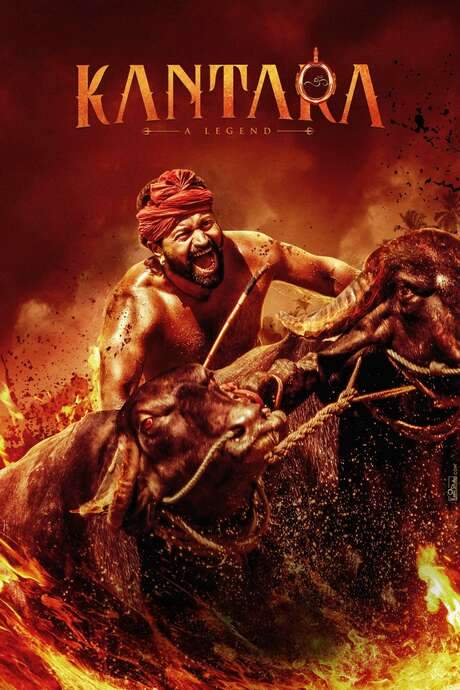
Shiva, a tribal drifter living with his mother in a remote hamlet, shuns the ancestral Daivaradhane and Bhoota Kola rites after a traumatic childhood incident. He idles with friends and takes odd jobs for his landlord. When forest officer Murali arrives, the simple man‑vs‑nature clash deepens, forcing Shiva to decide whether he can save the forest or if Murali is merely a pawn in a larger scheme.

Does Kantara have end credit scenes?
No!
Kantara does not have end credit scenes. You can leave when the credits roll.
Where to Watch Kantara
See current US streaming, rental, and purchase options for Kantara (2022) via JustWatch.

Amazon Prime Video
4K
Amazon Prime Video with Ads
HD
Netflix
HD
Netflix Standard with Ads
HD Streaming availability powered by 
Meet the Full Cast and Actors of Kantara
Explore the complete cast of Kantara, including both lead and supporting actors. Learn who plays each character, discover their past roles and achievements, and find out what makes this ensemble cast stand out in the world of film and television.

Achyuth Kumar
Devendra Suttooru
Kishore
Murali
Sukanya
Ammakka
Rishab Shetty
Kaadubettu Shiva / Shiva's Father
Pramod Shetty
Sudhakar
Prabhakar Kunder
Madhavacharya
Raghu Pandeshwar
Raghu
Prakash Tuminadu
Raampa
Vinay Bidappa
The King
Sapthami Gowda
Leela
Deepak Rai Panaje
Sundara
Mime Ramdas
Naaru
Athish S Shetty
Atish Shetty as Devendra's specially-abled son
Manasi Sudhir
Shiva's Mother
Naveen D. Padil
Lawyer
Shine Shetty
Devendra's father
Suchan Shetty
Ravi
Swaraj Shetty
Guruva
Shanil Guru
Bulla
Pradeep Shetty Bellala
Mohana
Rakshith Ramachandra Shetty
Devendra's Henchman
Chandrakala Udupi
Sheela
Satish Achar
Tabara
Pushparaj Bollar
Garnall Abbu
Basuma Kodagu
Guruva's father
Ranjan Saju
Lacchu
Rajeev Shetty
Rajeev Bhandari
Radhakrishna Kumble
Native resident
Naveen Bondel
Demigod Interpreter
Pragathi Rishab Shetty
The King's wife
External Links and Streaming Options
Discover where to watch Kantara online, including streaming platforms, rental options, and official sources. Compare reviews, ratings, and in-depth movie information across sites like IMDb, TMDb, Wikipedia or JustWatch.






Ratings and Reviews for Kantara
See how Kantara is rated across major platforms like IMDb, Metacritic, and TMDb. Compare audience scores and critic reviews to understand where Kantara stands among top-rated movies in its genre.

The Movie Echo Score
Overall, Kantara delivers a compelling cinematic experience that resonates strongly with audiences. The film’s mythic narrative, vibrant cultural portrayal, and striking visual craftsmanship are consistently highlighted across reviews, while occasional critiques focus on pacing and character treatment. Praise for direction, performances, and sound design underscores its impact, whereas minor concerns about editing and certain portrayals temper enthusiasm. Consequently, the movie achieves a high but not flawless standing.
The Movie Echo Score Breakdown for Kantara

Art & Craft
Regarding art and craft, critics commend the film’s direction and cinematography as visually arresting, noting the authentic depiction of Dakshina Karnataka’s landscapes and folklore. The production design, artwork, and stunt choreography receive particular praise for immersing viewers in the mythic setting. Minor remarks mention occasional overbearing sound effects and possible editing trims, but the overall artistic execution is regarded as outstanding.

Character & Emotion
Character and emotion receive strong commendation, especially for Rishabh Shetty’s nuanced lead performance and the supporting cast’s depth. Reviewers highlight authentic portrayals of regional personalities and the emotive resonance of key scenes. However, some criticism points to problematic treatment of female characters and limited development for certain roles. Overall, the acting is viewed as a major strength despite these concerns.

Story & Flow
The story’s mythic premise and cultural grounding are praised for originality and immersive world‑building. Critics appreciate the narrative arc that juxtaposes ecological conflict with spiritual folklore, delivering a resonant climax. Nonetheless, several reviewers cite predictable plot beats and suggest tighter editing could improve pacing. In sum, the film offers a compelling, though occasionally conventional, narrative experience.

Sensory Experience
Sensory elements, particularly the soundtrack and sound design, receive high accolades for evoking visceral reactions and enhancing the film’s atmospheric depth. Reviewers note the music’s blend of folk traditions and the cinematography’s vivid depiction of forest locales as standout features. A few critiques mention excessive screaming, yet the overall sensory impact is described as powerful and memorable.

Rewatch Factor
Rewatch factor is emphasized by multiple viewers who describe Kantara as an experience that rewards repeated viewings. The film’s cultural depth, immersive climax, and evocative music are cited as elements that linger and invite further appreciation. While some suggest the theatrical setting is essential, the consensus is that the movie maintains strong lasting appeal, making it highly rewatchable.
Take the Ultimate Kantara Movie Quiz
Challenge your knowledge of Kantara with this fun and interactive movie quiz. Test yourself on key plot points, iconic characters, hidden details, and memorable moments to see how well you really know the film.
Kantara Quiz: Test your knowledge about the 2022 film Kantara with these ten questions ranging from easy to difficult.
Who is the forest officer assigned to turn the villagers' land into a forest reserve?
Full Plot Summary and Ending Explained for Kantara
Read the complete plot summary of Kantara, including all major events, twists, and the full ending explained in detail. Explore key characters, themes, hidden meanings, and everything you need to understand the story from beginning to end.
In 1847, a The King lives along the coast of Karnataka with his devoted wife Ammakka, [Sukanya], and their children, yet true peace remains elusive. He embarks on a spiritual quest that leads him to a sacred forest stone guarded by the demigod Panjurli. In a gesture meant to bless the land and its people, the king donates a vast portion of his own land to the villagers in exchange for keeping the holy stone with him. Panjurli communicates a stern warning through a human-medium: the king’s family and their descendants must honor their vow and not reclaim the land; if they break this agreement, Guliga, the fearsome demigod who accompanies Panjurli, will unleash his wrath. The tale then shifts to the consequences of that ancient pact, shaping fortunes across generations.
Fast forward to 1970, and the story expands beyond one village. Murali is a forest officer charged with turning the villagers’ land into a forest reserve. He faces stiff resistance from Shiva, a bold Kambala athlete and the missing son of the Kaadubettu performer who once spoke in Panjurli’s voice. Shiva is supported by his patron, Devendra Suttooru, the king’s descendant and the village’s powerful landlord, who backs his ally in the face of government intervention. The young man’s trauma—rooted in his father’s disappearance after refusing to perform Bhoota Kola—casts a long shadow over his choices, while his cousin Guruva takes up the mantle in his stead. On Murali’s side, Leela, Leela and Murali’s childhood friend, is swept into a conflict that pits loyalty against duty as she is appointed as forest guard with the hope of protecting the land. This appointment comes with its own tensions, as Shiva’s influence and Devendra’s schemes threaten to upend the villagers’ way of life.
As tensions rise, the police and forest guards—Leela among them—crack down on the villagers who resist the fencing of the forest reserve. A deepening rift forms between Leela and Shiva, even as she follows orders and tries to stand up for the people in her own way. Murali moves to arrest Shiva and his companions, and the two sides collide when Murali’s jeep is crushed under a fallen tree trunk during a dangerous chase. Shiva and his group flee into the forest, only to surface again months later to reconcile with their families and pledge to surrender. Yet the law closes in the next morning, and Guruva pleads with Devendra to bail Shiva out. A chilling turn occurs when Devendra attempts to coerce Guruva into posing as Panjurli’s emissary to force the villagers to surrender the land, exposing Devendra’s real motive of seizing the land for himself. Guruva refuses, and Devendra murders him, intensifying the conflict and drawing Shiva and Murali into a direct confrontation.
With Guruva gone, Shiva learns from a trusted blacksmith friend that Devendra was the killer. Enraged, he confronts Devendra, while Murali reveals the broader conspiracy to the villagers. The two leaders join forces to rally the community, revealing Devendra’s true plan to loot the land. A brutal battle erupts, in which many villagers lose their lives. In a moment of near-death intensity, Shiva strikes his head against Panjurli’s sacred stone, and Guliga possesses him, granting supernatural power to defeat Devendra and his henchmen. The tide of the fight shifts as the villagers unite behind the duo and defend their home.
Months after the climactic clash, Shiva and Leela marry and begin to raise a family, embodying hope for the future they fought to protect. The Bhoota Kola ritual returns, this time with Shiva possessed by Panjurli, signaling a renewed connection between the living world and the forest’s ancient protectors. Together with Murali and the community, they perform a symbolic gesture of solidarity, reclaiming a sense of harmony. In a quiet mid-credits moment, a glimpse of the future emerges: Shiva and Leela’s son asks Sundara about his father’s mysterious disappearance, leaving a lingering question that echoes the enduring mystery of Panjurli’s influence. Sundara stands as a small but poignant bridge to the past, reminding viewers that the forest’s legends continue to live on in the hearts of those who remain.
The tale is a sweeping saga of faith, land, and resilience, where a sacred pact binds generations, a community fights for its home, and a fearless bond between a forest officer, a vexed hero, and the people they vow to defend helps heal old wounds. The film threads myth and reality into a vivid tapestry, asking whether belief alone can safeguard a community or if action is the only language that will truly protect what is owed to those who came before.

Coming soon on iOS and Android
The Plot Explained Mobile App
From blockbusters to hidden gems — dive into movie stories anytime, anywhere. Save your favorites, discover plots faster, and never miss a twist again.
Sign up to be the first to know when we launch. Your email stays private — always.
Explore the mobile appDiscover Film Music Concerts Near You – Live Orchestras Performing Iconic Movie Soundtracks
Immerse yourself in the magic of cinema with live orchestral performances of your favorite film scores. From sweeping Hollywood blockbusters and animated classics to epic fantasy soundtracks, our curated listings connect you to upcoming film music events worldwide.
Explore concert film screenings paired with full orchestra concerts, read detailed event information, and secure your tickets for unforgettable evenings celebrating legendary composers like John Williams, Hans Zimmer, and more.


Unlock the World of Movies with Our Comprehensive Wiki
Dive into our Movie Wiki for in-depth film encyclopedia entries, including cast biographies, production trivia, plot synopses, behind-the-scenes facts, and thematic analyses. Whether you’re researching iconic directors, exploring genre histories, or discovering hidden easter eggs, our expertly curated movie database has everything you need to fuel your cinematic passion.
Quick Links: Summary, Cast, Ratings, More

What's After the Movie?
Not sure whether to stay after the credits? Find out!
Check out our other apps:

SAT Sphere
Build confidence for the Digital SAT.

Mori Atlas
Discover wild places worth protecting.

Luntero
Search smarter for a home in Amsterdam.

Plot Explained
Unravel movie endings and hidden clues.

Pokechamp
Dive into Pokémon data and battle logic.

Driving Theory
Get ready for your European theory test.

Movie Dust
Plan your next cinema trip with ease.

Musemap
Find art and culture as you travel.

Selkobase
Compare credentials before committing.

Local Manual
Turn an unfamiliar country into practical next steps.

Lernavi
Compare school systems before your next move.

GymRoam
Find a workout stop wherever your plans take you.
Explore Our Movie Platform
New Movie Releases (2026)
Famous Movie Actors
Top Film Production Studios
Movie Plot Summaries & Endings
Major Movie Awards & Winners
Best Concert Films & Music Documentaries
Movie Collections and Curated Lists
© 2026 What's After the Movie. All rights reserved.
Privacy Policy