Justice Is Done 1950


Elsa Lundenstein stands trial for the alleged murder of her lover. As the jury deliberates, the courtroom becomes a crucible of personal bias: each juror brings their own life experiences, interpreting the evidence in divergent ways. The vivid discussion exposes how prejudice can shape perception of facts and influence the search for truth.


Does Justice Is Done have end credit scenes?
No!
Justice Is Done does not have end credit scenes. You can leave when the credits roll.
Meet the Full Cast and Actors of Justice Is Done
Explore the complete cast of Justice Is Done, including both lead and supporting actors. Learn who plays each character, discover their past roles and achievements, and find out what makes this ensemble cast stand out in the world of film and television.
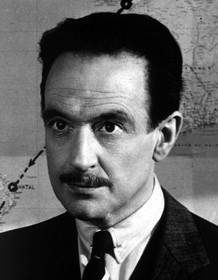
Pierre Fresnay
Narrator (uncredited)

Jean d'Yd
Superior of the religious school
Maurice Schutz
Old man who comforts the little girl (uncredited)
Émile Genevois
Server of the Roi Soleil (uncredited)
Marcelle Hainia
Angèle Popélier, other hotelier
Marcel Pérès
Évariste Malingué, farmer, second juror
Jacques Castelot
Gilbert de Montesson, first juror
Paul Frankeur
Monsieur Jouvillon (uncredited)
Nane Germon
Marie Malingré
Michel Auclair
Serge Cremer
Frédéric Mariotti
Édouard Pichon, first substitute juror (uncredited)
Dominique Marcas
(uncredited)
Jean Morel
(uncredited)
Robert Rollis
Hotel boy (uncredited)
Annette Poivre
Lulu, Felix's fiancée
Raymond Bussières
Félix Noblet, 5th juror
Pierre Morin
Defense attorney (uncredited)
Anouk Ferjac
Denise Jouvillon
Albert Michel
Gendarme carrying the summons (uncredited)
Colette Régis
Hortense, Lucie's mother
Camille Guérini
Furniture salesman (uncredited)
Sylvain
Customer at the Le Roi Soleil bar
René Pascal
(uncredited)
Marcel Rouzé
Gendarme on duty (uncredited)
Jean Debucourt
Michel Caudron, 7th juror
Madeleine Suffel
Vaudrémonts' maid
Léonce Corne
Bailiff of the court
André Numès
Police secretary (uncredited)
Geneviève Morel
Hortense, Flavier's maid (uncredited)
Marie-Louise Godard
Madame de Montesson
Noël Roquevert
Théodore Andrieux, retired commander, juror
Robert Moor
Professor Georges Limousin (uncredited)
Paul Faivre
Monsieur Michaud, boss of the Roi Soleil
Gustave Gallet
Gaston, Lucie's father
Henri Coutet
Albert Blavette, substitute juror (uncredited)
Alain Raffael
(uncredited)
Jean-Pierre Grenier
Jean-Luc Flavier, 3rd juror
Françoise Hornez
Monique Andrieux
Benoîte Labb
(uncredited)
Antoine Balpêtré
President of the tribunal
Jimmy Perrys
Gendarme escorting the accused
Valentine Tessier
Marceline Micoulin, antique dealer, juror
Albert Malbert
(uncredited)
Juliette Faber
Danièle Andrieux
Nicolas Amato
Juror rejected (uncredited)
Roger Vincent
Albert Lavette, second substitute juror (uncredited)
Cécile Didier
Miss Popélier, hotelier
Fernand Gilbert
Eloi Pichot, substitute juror (uncredited)
Dita Parlo
Elisabeth
Émile Drain
Professor Dutoit
Maryse Paillet
Juliette Sedan, juror rejected (uncredited)
Claude Nicot
Roland
Jean Vilar
Priest at the printing press
Marguerite Garcya
Amélie Andrieux
Maurice Marceau
(uncredited)
Renée Gardès
(uncredited)
Elisabeth Hardy
Béatrice Flavier
Marcel Mouloudji
Amadeo, Malingré farmhand
Claude Nollier
Elsa Lundenstein, pharmaceutical director, the accused
Georges Demas
Dancer at the evening
Madeleine Gérôme
Madame Michaud, boss of Roy Solei
Marcel Lestan
(uncredited)
Lucien Guervil
(uncredited)
Nina Myral
Béatrice’s mother
Agnès Delahaie
Nicole Vaudrémont aka 'Yvonne'
Robert Hennery
Lucien Pascal
Prosecution lawyer (uncredited)
Jean-Claude Rameau
(uncredited)
External Links and Streaming Options
Discover where to watch Justice Is Done online, including streaming platforms, rental options, and official sources. Compare reviews, ratings, and in-depth movie information across sites like IMDb, TMDb, Wikipedia or Letterboxd.




Full Plot Summary and Ending Explained for Justice Is Done
Read the complete plot summary of Justice Is Done, including all major events, twists, and the full ending explained in detail. Explore key characters, themes, hidden meanings, and everything you need to understand the story from beginning to end.
Gilbert de Montesson, Jacques Castelot, a successful businessman haunted by a messy marriage, sits among the seven citizens drafted to judge a crucial case at the Versailles Court of Assizes. Beside him, Noël Roquevert portrays Théodore Andrieux, a stern, faith-driven farmer and war veteran whose rigid sense of right and wrong anchors his every thought. Across the box, Marceline Micoulin, played by Valentine Tessier, appears as a devoted middle-class housewife juggling duty to family with the pull of personal conscience. The young intellect Jean-Luc Flavier, shown by Jean-Pierre Grenier, arrives burdened by financial strains that touch his professorial pride, while Raymond Bussières’ Félix Noblet embodies a working-class waiter who has endured losses and hardship. The seventh juror, Michel Caudron, is brought to life by Jean Debucourt, a reserved engineer whose precise nature surfaces in his measured response to every hint of motive.
The trial centers on Elsa Lundenstein, the accused, a pharmacist whose life has intertwined with Roland Lundenstein, a powerful director in the pharmaceutical world and a man tormented by a terminal illness. Elsa, portrayed by Claude Nollier, stands trial for the premeditated murder of her husband. She admits to administering a fatal morphine dose, insisting that she did so only as a response to Roland’s desperate pleas to end the pain of his decline; her testimony frames the case as a struggle between mercy and murder, and the courtroom becomes a chamber where ethics clash with law.
The prosecution layers the narrative with suspicion. A sister, Élisabeth de Sutter, accuses Elsa of an affair with a colleague and hints at a potential inheritance motive, while the family maid Agnès Deluca recounts overheard arguments about money. The social worker Mlle Point and the pharmacist M. Point provide context about Elsa’s demeanor and the legality of the morphine supply, raising questions about intent and opportunity. Medical experts debate euthanasia, presenting a spectrum of interpretation: one doctor asserts Roland’s terminal condition justifies mercy, another questions whether the final dose was truly compassionate or calculated.
On the defense side, a counter-narrative highlights Elsa’s devotion. A priest who counseled the couple, and a nurse who knew Roland’s suffering, testify to a fragile bond forged in care. Elsa herself takes the stand, recounting the husband’s deterioration—his coughing fits, the steady weight loss, and his repeated pleas for relief—and describes her inner conflict before fulfilling his request that fateful night in their home.
As days unfold, the jurors’ box becomes a forum for parallel lives. Between recesses, they exchange impressions and moral stances. Théodore clings to a religious frame, equating euthanasia with a transgression against divine law, while Eguermont, a figure who bears a personal memory of his wife’s end, offers a more sympathetic view. Gilbert probes the possibility of infidelity as a motive, echoing his own fraught marriage, and Marceline hesitates between maternal compassion and the harsh glare of legal judgment. The deliberation room becomes a compressed world where personal history bleeds into legal interpretation.
The deliberations intensify as the jurors scrutinize the motives, the evidence, and the boundaries between mercy and murder. Initial votes tilt toward guilt, then shift as arguments sway the box. Théodore’s voice centers on moral inevitability; Félix offers a counterpoint rooted in suffering and the human cost of death; Jean-Luc leans on logic, highlighting ambiguities in motive; Michel dissents from bias and seeks a more humane read of the facts; Eguermont’s recount of his wife’s death tips the balance toward compassion. Through layered rounds of discussion, the group edges toward a consensus that appears both cautious and humane.
Eventually the box delivers a verdict of not guilty, grounded in the notion that Elsa’s act arose from compassionate intent rather than malice. The courtroom murmurs rise as Elsa is released, her embrace with her attorney punctuating a moment of relief and ambiguity. As the jurors disperse to their ordinary lives—Gilbert returning to a strained home, Théodore returning to his farm, and the others resuming their routines—the narrator returns with a closing meditation: justice, in this setting, remains inherently subjective, and the same act could be read in starkly different ways depending on who tells the story and under what circumstances.
In this thoughtful portrayal, the film uses courtroom drama not merely to assign blame but to examine how personal history, faith, and social context color every legal decision. The denouement leaves a lingering question about truth and mercy, inviting viewers to consider how much of a verdict is shaped by the jurors’ own lives as much as by the letter of the law. The result is a meticulous meditation on justice, responsibility, and the fragile line between helping and judging, with every character’s arc contributing to a chorus that asks: what does it mean to do the right thing when the right thing is not clear?

Coming soon on iOS and Android
The Plot Explained Mobile App
From blockbusters to hidden gems — dive into movie stories anytime, anywhere. Save your favorites, discover plots faster, and never miss a twist again.
Sign up to be the first to know when we launch. Your email stays private — always.
Explore the mobile appDiscover Film Music Concerts Near You – Live Orchestras Performing Iconic Movie Soundtracks
Immerse yourself in the magic of cinema with live orchestral performances of your favorite film scores. From sweeping Hollywood blockbusters and animated classics to epic fantasy soundtracks, our curated listings connect you to upcoming film music events worldwide.
Explore concert film screenings paired with full orchestra concerts, read detailed event information, and secure your tickets for unforgettable evenings celebrating legendary composers like John Williams, Hans Zimmer, and more.


Justice Is Done Themes and Keywords
Discover the central themes, ideas, and keywords that define the movie’s story, tone, and message. Analyze the film’s deeper meanings, genre influences, and recurring concepts.

Unlock the World of Movies with Our Comprehensive Wiki
Dive into our Movie Wiki for in-depth film encyclopedia entries, including cast biographies, production trivia, plot synopses, behind-the-scenes facts, and thematic analyses. Whether you’re researching iconic directors, exploring genre histories, or discovering hidden easter eggs, our expertly curated movie database has everything you need to fuel your cinematic passion.
Similar Movies To Justice Is Done You Should Know About
Browse a curated list of movies similar in genre, tone, characters, or story structure. Discover new titles like the one you're watching, perfect for fans of related plots, vibes, or cinematic styles.





Quick Links: Summary, Cast, Ratings, More

What's After the Movie?
Not sure whether to stay after the credits? Find out!
Check out our other apps:

SAT Sphere
Build confidence for the Digital SAT.

Mori Atlas
Discover wild places worth protecting.

Luntero
Search smarter for a home in Amsterdam.

Plot Explained
Unravel movie endings and hidden clues.

Pokechamp
Dive into Pokémon data and battle logic.

Driving Theory
Get ready for your European theory test.

Movie Dust
Plan your next cinema trip with ease.

Musemap
Find art and culture as you travel.

Selkobase
Compare credentials before committing.

Local Manual
Turn an unfamiliar country into practical next steps.

Lernavi
Compare school systems before your next move.

GymRoam
Find a workout stop wherever your plans take you.
Explore Our Movie Platform
New Movie Releases (2026)
Famous Movie Actors
Top Film Production Studios
Movie Plot Summaries & Endings
Major Movie Awards & Winners
Best Concert Films & Music Documentaries
Movie Collections and Curated Lists
© 2026 What's After the Movie. All rights reserved.
Privacy Policy